
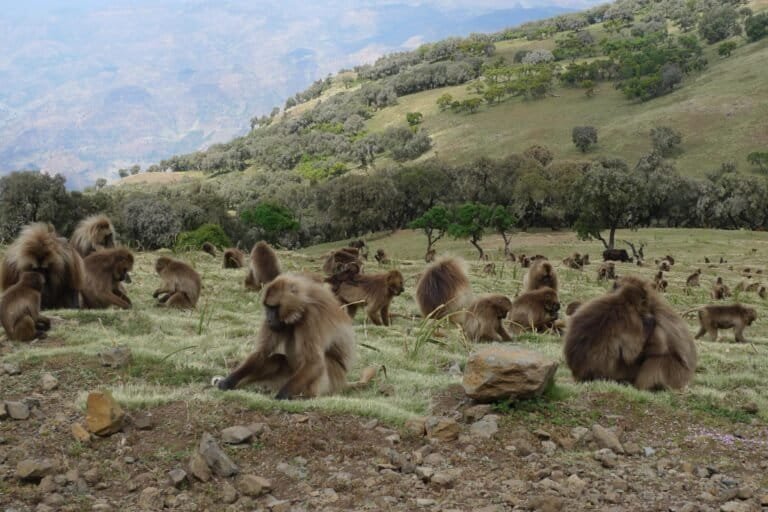
A groundbreaking analysis exposes tensions between ambitious carbon dioxide removal projects and the preservation of vital biodiversity hotspots worldwide.
Surprising Scale of Overlapping Priorities
Researchers uncovered that climate models aligned with the Paris Agreement’s 1.5° C target allocate up to 13% of global areas critical for biodiversity to land-intensive carbon removal strategies.[1][2]
The study examined five integrated assessment models and focused on practices like forestation – encompassing afforestation, reforestation, and forest restoration – and bioenergy crops paired with carbon capture. These approaches promise substantial CO2 absorption but demand vast land areas. Lead author Ruben Prütz, a postdoctoral researcher at Germany’s Potsdam Institute for Climate Impact Research, expanded the analysis to 135,000 species, including fungi and invertebrates, for a comprehensive view.[2]
Forestation emerged as the primary concern, overlapping with up to 11% of remaining climate refugia, compared to 4% for bioenergy cropland. Climate refugia represent zones where at least 75% of baseline species richness persists under projected warming. Such findings highlight how well-intentioned climate actions could inadvertently displace ecosystems if sites lack careful evaluation.
Uneven Impacts Burden Developing Regions
Non-Annex I countries, largely in the Global South, face disproportionate pressure, with models assigning up to 15% of their climate refugia to forestation – nearly double the 7% in wealthier Annex I nations.[1]
This pattern raises equity issues, as these nations contributed minimally to historical emissions yet shoulder removal burdens. Prütz emphasized the Global North’s greater responsibility in addressing climate change. Regions like Eastern China for forestation, West Africa for bioenergy, parts of the United States, and Indo-Pacific islands show model consensus on high-risk allocations.
- Eastern China: Strong agreement on forestation in refugia.
- West Africa: Bioenergy cropland overlaps with hotspots.
- Indo-Pacific islands: Limited refugia at stake.
- U.S. areas: Mixed but notable forestation plans.
Protecting current biodiversity hotspots alone would render more than 50% of projected carbon removal land unavailable by 2050, urging a rethink of deployment scales.
Balancing Benefits and Risks
Carbon removal could yield net positives by averting up to 25% of warming-induced habitat loss, though recovery assumptions remain uncertain.[1]
“It’s unfortunate that we face multiple global problems all at once, including both climate change and biodiversity loss,” noted Mark Urban, a University of Connecticut ecology professor uninvolved in the research. “When we try to fix one, we can make things worse for the other.”[2]
Experts advocate prioritizing emissions cuts to lessen CDR dependence, alongside using native species and degraded lands. Christian Hof of the University of Würzburg praised the work as an “elegant” alert to combined climate and land-use threats. For details, see the full study in Nature Climate Change.[1]
Charting a Smarter Path Forward
Policymakers must integrate biodiversity data into climate modeling from the outset. Lower emissions create flexibility for low-conflict sites, while synergies – like restoration on degraded lands – offer dual gains.
The core lesson demands holistic planning: emissions reductions remain paramount, with carbon removal as a targeted supplement. What strategies would you prioritize to resolve this climate-nature tension? Share your thoughts in the comments.
Key Takeaways
- Up to 13% biodiversity refugia risks overlap with CDR in 1.5° C paths.
- Avoiding hotspots halves available CDR land by 2050.
- Global South bears heavier load; prioritize emissions cuts for equity.


