

You know that moment when you turn on the vacuum cleaner and your dog vanishes into thin air? Or when the microwave beeps and you catch that subtle flinch, that quick ear twitch that makes you wonder what’s really going on in their head? Let’s be real. Most of us brush it off as quirky dog behavior, maybe even something amusing to share with friends. Yet what if I told you that those seemingly harmless household sounds might actually be triggering genuine stress in your beloved companion?
Think about it for a second. Your home is supposed to be a sanctuary, a place where your dog feels safe and secure. The reality, though, can be quite different. Dogs experience the world through their ears in ways we can barely imagine, and what sounds ordinary to us can feel overwhelming, even painful, to them. I honestly think we underestimate how much noise affects our furry friends every single day.
The Hidden World of Your Dog’s Super Hearing

Here’s something that might surprise you. While most adults hear sounds up to 20,000 Hertz, dogs can hear sounds that reach frequencies as high as 47,000 to 65,000 Hz. That’s an incredible difference when you stop and consider it.
Your dog is basically walking around with built-in superhero ears. Dogs have particularly high sensitivity for hearing in the range 1,000 to 8,000 Hz, which means sounds that barely register on your radar might be blaring in their sensitive ears. This isn’t just about volume either.
When sounds are between 3,000 and 12,000 Hz in frequency, dogs can hear those sounds when they’re between -5 dB and -15 dB on average. Essentially, they’re picking up noises that aren’t even loud enough for human ears to detect. That smoke detector battery warning that you slept right through last night? Your dog heard it crystal clear and probably spent hours anxious about it.
This evolutionary advantage served their wolf ancestors brilliantly when hunting tiny, squeaking rodents. In your modern home filled with appliances and electronics, though, it creates a very different challenge. Their sensitivity to high frequency sounds is greater than humans, and thus the high frequency sounds made by electronic beeps or chirps may be particularly unpleasant, even painful, for dogs.
Everyday Culprits You Never Suspected

So which innocent household items are secretly stressing your dog out? Honestly, you might be shocked by the list.
Even common noises, such as a vacuum or microwave, can be a trigger. Research has revealed something fascinating and slightly disturbing. High-frequency, intermittent noises such as the battery warning of a smoke detector are more likely to cause a dog anxiety, rather than low-frequency, continuous noise.
Picture this scenario: your smoke detector starts chirping at three in the morning. You groan, roll over, and promise yourself you’ll change the battery tomorrow. Your dog, meanwhile, is experiencing what could be genuine distress. Smoke alarms that are somewhat loud to most humans are likely to be painfully loud to most dogs.
Most of us have high-frequency sounds in our homes, electronic doorbells, smoke detectors, microwave ovens, vehicle backup alerts, carbon monoxide test beeps, Roombas, electric fences, and many dogs don’t like the sound of vacuum cleaners, nail guns, electric drills, loud blenders, and high-efficiency washers that have a loud spin cycle. Even that beloved coffee grinder you use every morning might be creating a moment of panic for your pup.
Reading the Signs Your Dog Is Trying to Tell You

Dogs are masters of communication, yet we often miss their messages entirely. We underestimate their fearfulness to noise we consider normal because many dog owners can’t read body language. This communication gap matters more than you might realize.
What should you actually watch for? The most commonly reported reaction to household sounds was barking, followed by retreating and pacing. These are the more obvious signals, the ones even inexperienced dog owners might notice.
The subtle signs, though? Those are where things get interesting. If the fear is mild, the dog may seek out the owner or a safe space and may show a low body posture with tail down or tucked and ears retracted or may engage in yawning or lip licking. These whisper quiet distress signals often go completely unnoticed.
Dog behaviors in response to these noises included proximity-seeking directed toward their owners, as well as other recognized signs of canine fear and anxiety, such as panting, howling, and lip licking. When your dog suddenly appears at your feet during a thunderstorm or when you’re running the blender, they’re not just being clingy. They’re asking for help.
In severe cases? A very fearful dog may tremble, cower, try to escape from the house, urinate or defecate, pace, pant, drool, and have a rapid heart rate. These extreme reactions demand immediate attention and professional intervention.
Why This Problem Is More Common Than You Think
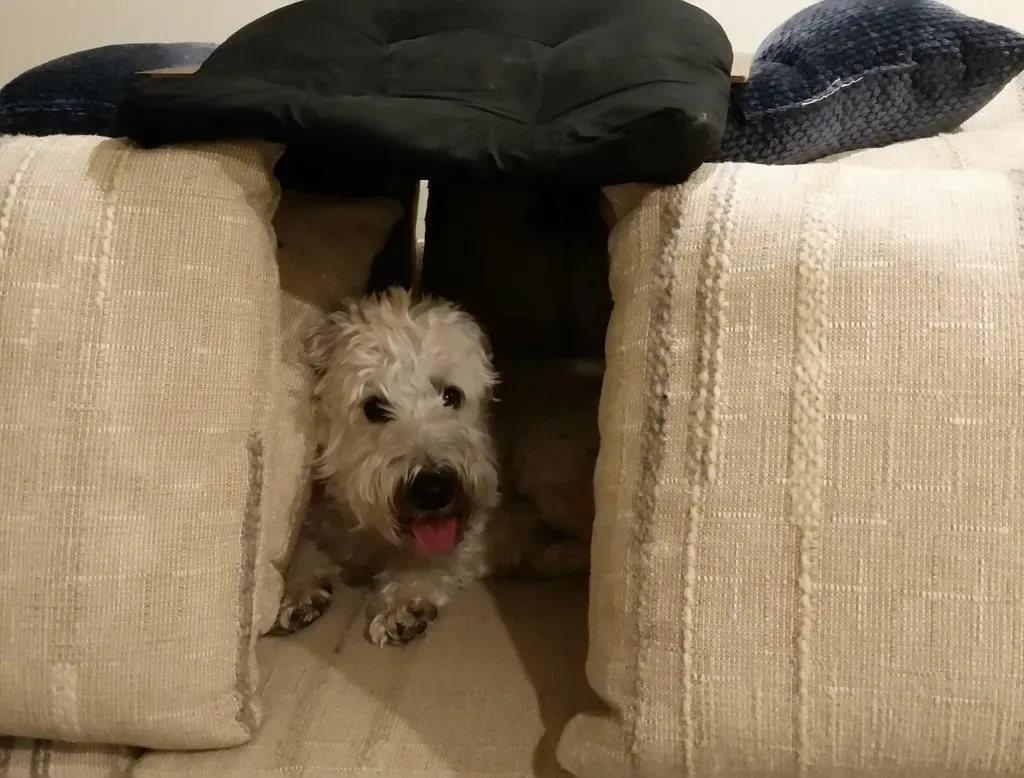
Up to 50% of dogs may experience noise sensitivity and extreme reactions to noise in their lifetimes. That statistic alone should give every dog owner pause. We’re talking about roughly half of all dogs struggling with this issue at some point.
What makes certain dogs more vulnerable? Several factors play a role. There may be a genetic component to noise sensitivity, which often begins in very young dogs. If your dog’s parents were noise-sensitive, there’s a decent chance your pup inherited that trait.
There also appears to be a correlation between a lack of socialization and noise sensitivity. Puppies who aren’t gradually exposed to various sounds during their critical developmental period often grow into anxious adults.
Here’s something that caught my attention during my research. Dogs suffering from physical pain may be at increased risk of noise sensitivity, with fear responses to loud noises occurring in all noise-sensitive dogs concurrently experiencing pain, versus in only some noise-sensitive control dogs not experiencing pain. Pain amplifies everything, including sensitivity to sound.
The really concerning part? There is a mismatch between owners’ perceptions of the fearfulness and the amount of fearful behavior actually present, and some react with amusement rather than concern. We’re literally laughing at our dogs’ distress because we don’t recognize it for what it is.
Simple Steps to Create a Calmer Home Environment

Alright, so what can you actually do about this? The good news is that small changes can make a meaningful difference in your dog’s daily experience.
Start with the basics. Minimizing exposure may be as simple as changing batteries more frequently in smoke detectors or removing a dog from a room where loud noises might occur. Sometimes the simplest solutions are the most effective.
Provide a safe and comfortable space for your dog to retreat to before a noise event occurs or when they are feeling anxious, such as a crate (only if your dog is already happily crate-trained), a room with soft bedding, or a quiet corner of the house. Every dog deserves their own safe haven, a place where they can escape when the world feels too loud.
Consider environmental modifications as well. Try to reduce the noise level in your home by closing windows and doors, drawing curtains, and playing calming music or white noise, which can help muffle noise and create a soothing environment. These strategies work because they create layers of sound barriers between your dog and the stress-inducing noises.
For dogs with more serious anxiety, professional help becomes essential. There are particular anxiety medications made for noise anxiety specifically, and your veterinarian can explain the options and help you decide whether to explore short-acting medication for event-specific noise anxiety or long-acting medication for ongoing noise anxiety.
Behavior modification techniques like desensitization and counterconditioning show real promise. The process requires patience and consistency, though. You gradually expose your dog to recorded versions of scary sounds at very low volumes, pairing them with positive experiences like treats or play. Over time, you slowly increase the volume as your dog learns to associate those once-frightening sounds with good things.
Conclusion
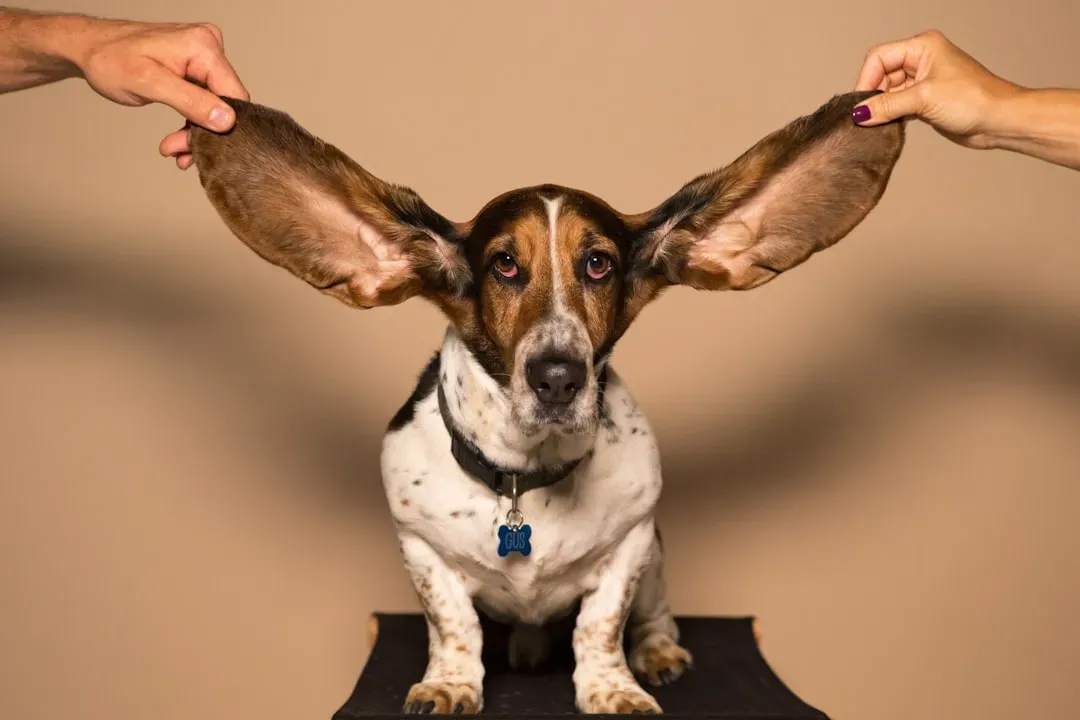
Your dog’s ears are simultaneously their superpower and their vulnerability. Those incredible hearing abilities that let them detect a treat bag opening from three rooms away also make them susceptible to stress from sounds you barely notice. The vacuum cleaner, the microwave beep, the smoke detector chirp, even your beloved coffee grinder could be sources of genuine distress for your furry companion.
The reality is that many of us are inadvertently creating stressful environments for our dogs simply because we’re unaware of how they experience sound. We laugh when they run from the vacuum, not realizing they might be genuinely frightened. We ignore those subtle body language cues because we’ve never learned to read them properly.
Creating a calmer home doesn’t require a complete lifestyle overhaul. Simple changes like maintaining smoke detector batteries, providing safe spaces, and being mindful of when and how you use loud appliances can significantly improve your dog’s quality of life. For dogs with more severe noise sensitivities, professional support from veterinarians and certified behaviorists can be truly life-changing.
Take a moment today to observe your dog during your normal household routines. Watch their body language when you turn on the blender or when the doorbell rings. Those small observations might reveal a stress pattern you never noticed before. What sounds in your home might be affecting your dog? Have you noticed any subtle signs of anxiety that you previously dismissed? Your awareness and willingness to make adjustments could be exactly what your dog needs to finally feel completely safe in their own home.


