
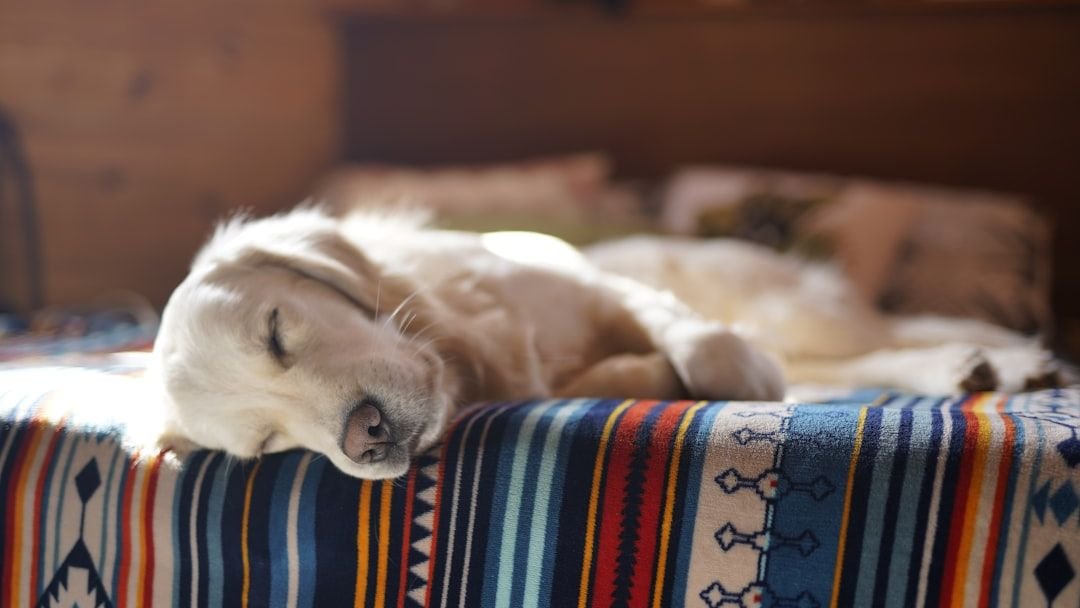
Picture this. It’s a quiet evening, and your dog is curled up on the sofa, legs gently paddling, nose twitching, letting out the softest little whimper. You watch, heart melting, wondering – is there actually a whole world playing out inside that sleeping head?
Honestly, it’s one of the most touching questions dog lovers ever ask. We share our beds, our walks, our softest moments with these animals. The idea that they might carry fragments of those moments into their sleep feels nothing short of magical. Science, as it turns out, has a lot to say about it. So let’s dive in.
The Science That Proves Dogs Really Do Dream
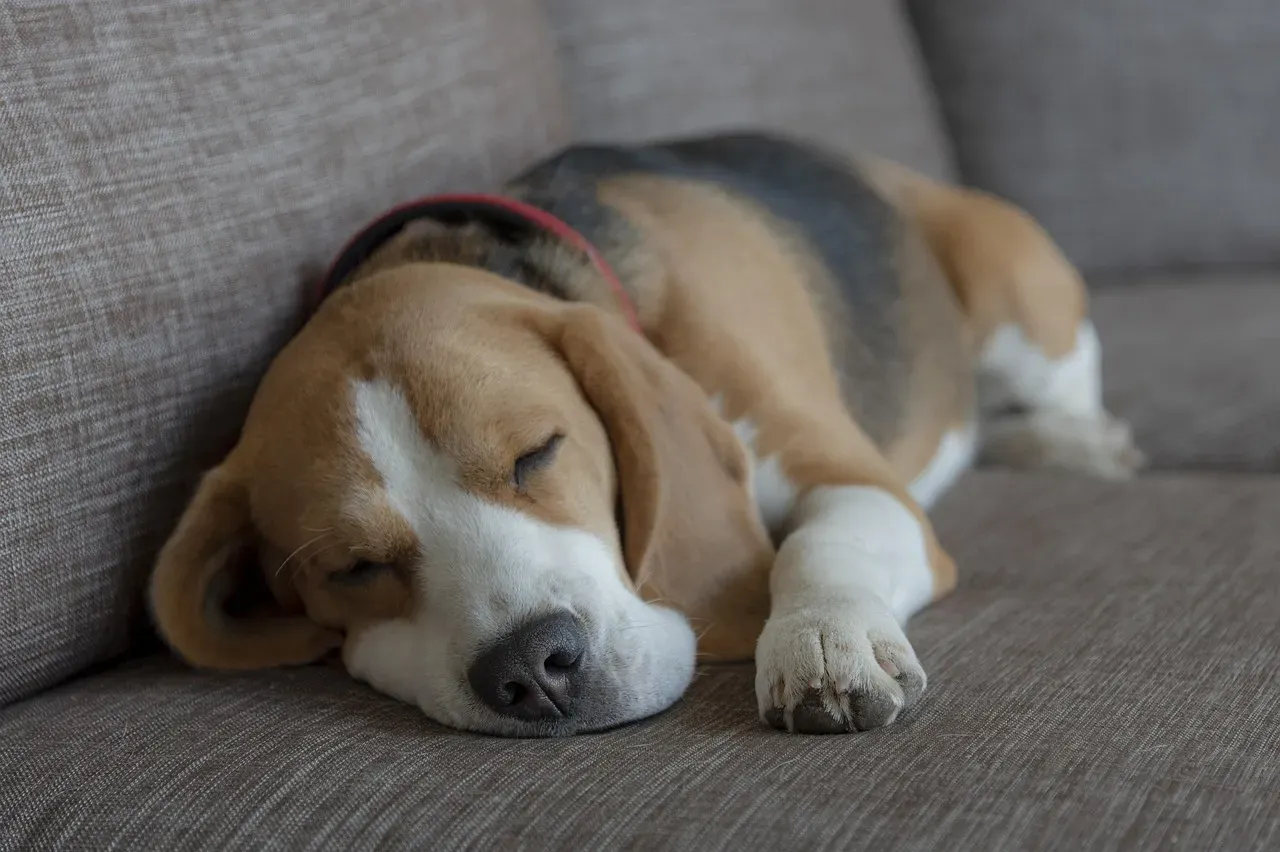
Scientific research demonstrates comparable brain wave patterns in humans and dogs, which forms the bedrock of everything we now understand about canine dreaming. This isn’t wishful thinking from sentimental dog owners. It’s hard, measurable neuroscience.
During a deeper stage of sleep marked by rapid eye movements, called REM sleep, brain waves become faster and more irregular. Unlike earlier sleep stages, muscles are more relaxed, but the mind is far more active and the eyes dart rapidly beneath the eyelids. Sound familiar? That’s exactly what happens in a dreaming human brain.
One landmark study from MIT in the early 2000s explored how animals dream by monitoring the brain activity of rats during both waking and sleeping hours. When rats ran through mazes during the day, their brain patterns matched up almost perfectly with patterns recorded during REM sleep. Scientists concluded that rats, and by extension, dogs, likely dream about their daily activities.
Since dogs have much more intellectual capability than rats, researchers made the conclusion that dogs also dream. So the next time someone dismisses the idea as pure fantasy, you can politely point them toward decades of neuroscience.
What Your Dog Is Actually Dreaming About
Here’s the part that will genuinely warm your heart. One popular theory of dreaming is the continuity hypothesis, which holds that dreams are built from the stuff of waking life. Dogs dream about what they pay attention to while awake, and for them that includes food, toys, running, chasing squirrels, and, of course, their humans.
Research into sleep behaviour finds that dogs aren’t just dreaming of chasing rabbits. Dogs dream lovingly of their human owner’s face and smell. Think about that for a second. When your dog is sleeping peacefully beside you, there is a real chance you are the star of the show.
Watching a dog dream can even be indicative of their breed. Researchers found that a dreaming Pointer may immediately start searching for game and may even go on point, while a sleeping Springer Spaniel may flush an imaginary bird in their dreams. It’s like their instincts are so deeply wired that they show up even in sleep.
Scientists and psychologists believe that dogs dream about their everyday adventures, replaying things like play sessions, walks, or favorite games. Think of it like a highlight reel. Your morning run together, the squirrel chase at the park, the belly rub before bed, all potentially looping through their mind overnight.
Reading the Signs: What Does a Dreaming Dog Look Like?
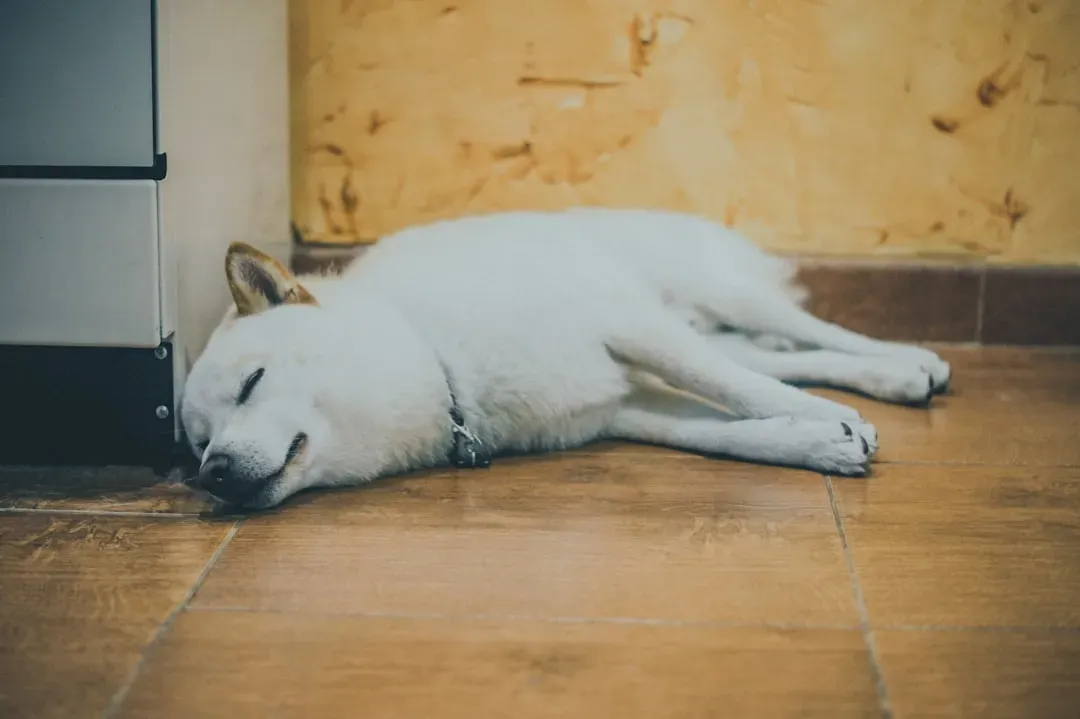
If you’ve ever hovered over your sleeping dog wondering what’s going on, here’s your guide. REM sleep usually begins 20 to 30 minutes after falling asleep. During this stage, your dog’s eyes move rapidly beneath closed lids, their muscles may twitch, and you might notice soft vocalizations or gentle paddling motions. These are classic signs of dreaming.
During this stage of heightened mental activity, your dog may whine, breathe rapidly, and move their legs. It can look alarming the first time you witness it, especially if you see your dog’s paws running in mid-air. Let’s be real, it’s also one of the most adorable things you’ll ever see.
Smaller dogs tend to enter REM more frequently but for shorter periods, while larger dogs experience fewer but longer dream cycles. So if you have a tiny Chihuahua who seems to be constantly “running” in their sleep, that is entirely normal and actually scientifically expected.
When Dreams Turn Dark: Dog Nightmares and What to Do
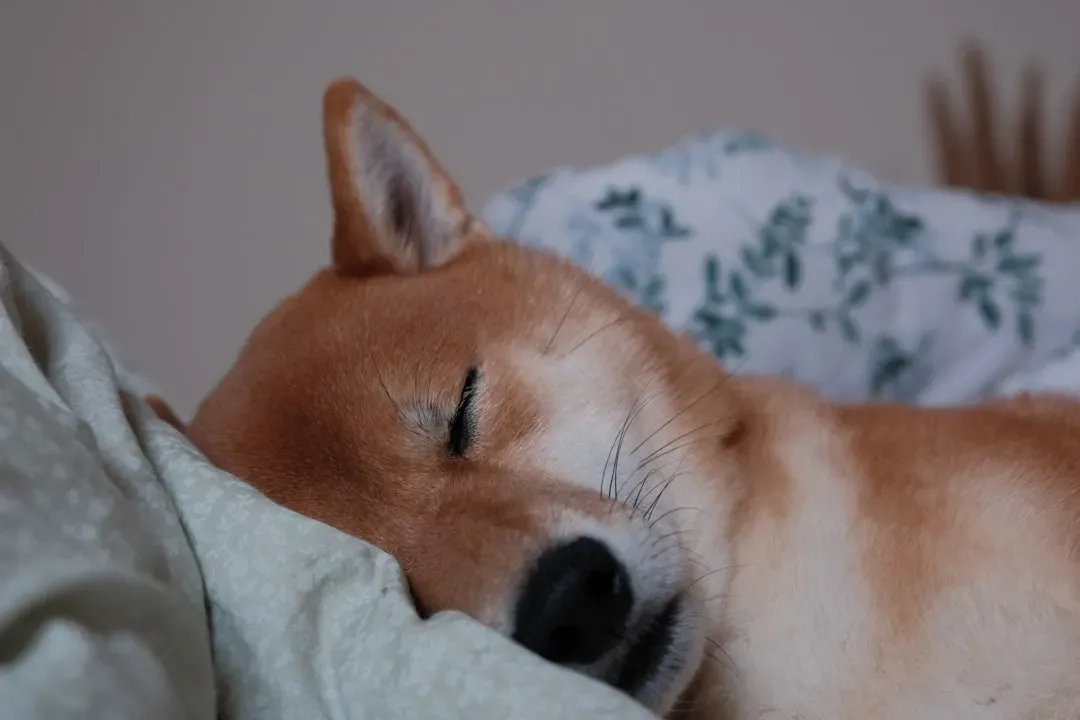
Not every dream is a joyful romp through the park, and that’s important to acknowledge. Because a dog’s dreams usually have something to do with what occurred during their waking hours, bad dreams are certainly possible. If your dog had an unpleasant encounter during their daily trip to the dog park, it seems likely they could have a bad dream related to it later. Negative emotions have a way of following us into our dreams, and the same is likely true for a dog’s fears and anxieties.
Your canine companion may be having a scary dream if they kick, growl, or whine in their sleep. Like humans, dogs may have nightmares about stressful situations they encountered recently, something they are afraid of, or a traumatic event. If your dog has had a rough day, that context matters at night too.
So what do you do? Dogs cannot control their actions in REM sleep and if they are woken abruptly, they may bite. Roughly six percent of dog bites occur while a dog is sleeping or when a dog is woken abruptly. It’s best to let the dream play out and allow your dog to wake up on their own to avoid an accidental incident.
If you must wake them, gently call your dog’s name until they respond. Speak calmly and reassure them that they are safe and secure after they wake up. A soft voice, not a sudden touch, is always the safer approach.
How to Support Better, Healthier Sleep for Your Dog
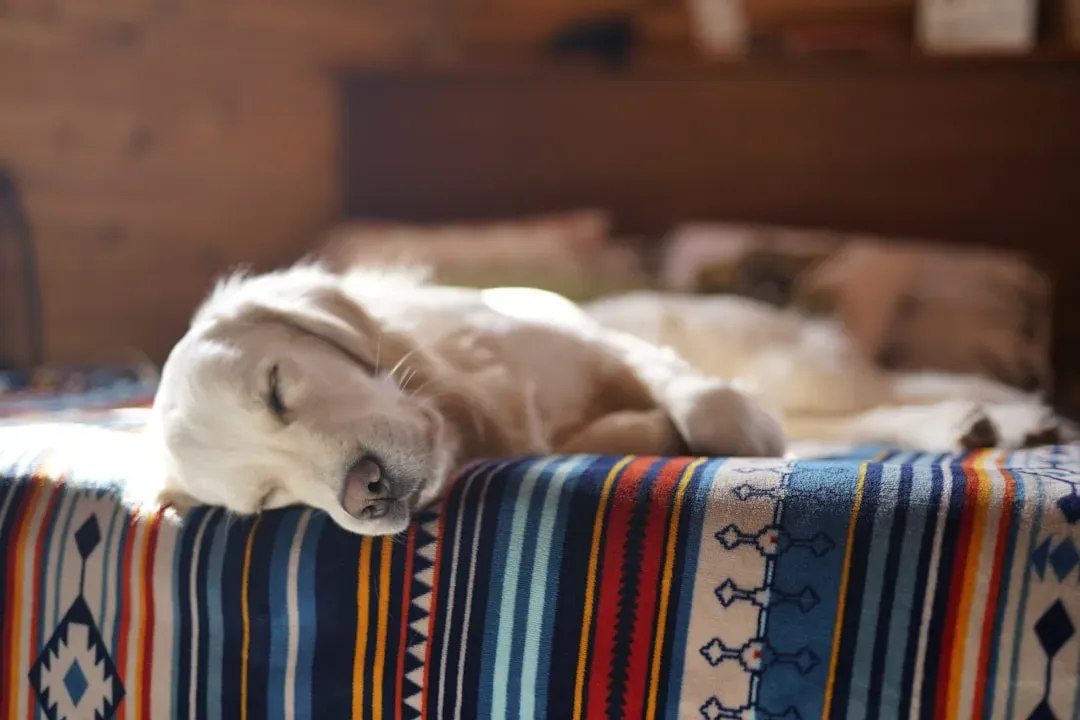
Scientists believe that sleep plays a big role in memory consolidation, helping dogs retain information about what’s significant in their lives. A quiet dog crate or comfortable dog bed can certainly help with sleep, but routinely waking your sleeping dog could hinder their ability to learn and make them grumpy. Sleep really is that important.
Dogs thrive on routine. Feeding, exercise, and bedtime at consistent times each day promote better-quality sleep. Regular physical activity also helps dogs burn energy, so they settle down more easily at night. Think of it like setting the conditions for a great night, for both of you.
Dogs who feel safe and emotionally balanced tend to sleep better. Providing affection, mental stimulation, and social interaction during the day can help reduce stress and support peaceful sleep at night. It’s a beautiful reminder that a loved, well-exercised dog is a deeply rested one.
One more thing worth watching: if your dog is experiencing full-body tremors that last longer than a quick spasm or that make their body go rigid, they may be having a seizure. Normal dreaming twitches are brief and rhythmic. Anything prolonged, stiff, or happening while your dog is awake deserves a vet conversation without delay.
Conclusion: The Dreaming Dog Is a Window Into Something Beautiful
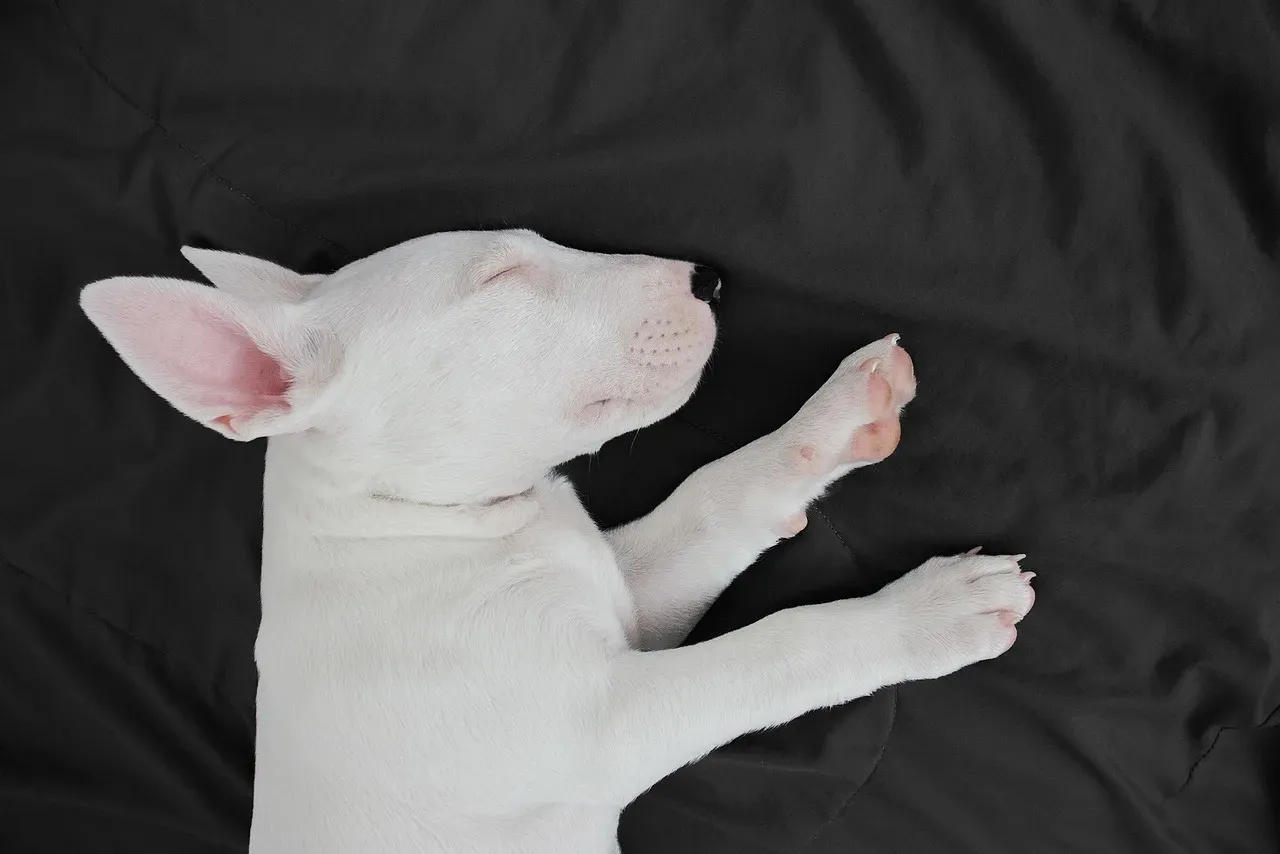
There is something deeply moving about knowing that the creature who adores you unconditionally may carry your face, your smell, and your shared memories into the quiet hours of their sleep. Watching your dog dream is more than a heartwarming moment. It’s a glimpse into how their brain processes the world around them.
The science is clear, and honestly, it only deepens the bond. A well-rested dog is a happier, healthier, more emotionally balanced companion. Give them a cozy spot, a consistent routine, a day full of love and activity, and then let them sleep undisturbed.
Because somewhere in that sleeping mind, there’s a very good chance they’re dreaming of you. What could be more worth protecting than that? Share this with a fellow dog lover and let them know what their pup might be dreaming about tonight.


