
You’re mid-conversation with your partner, and suddenly your dog bolts upright, ears perked, tail going wild. You haven’t moved. You haven’t grabbed the leash. You just said the word “walk.” Sound familiar? Most of us have been there, laughing at how unnervingly tuned in our dogs seem to be. But here’s the thing: it’s not magic, and it’s definitely not your imagination.
Science has been quietly catching up to what dog lovers have suspected for years. Dogs are listening more carefully than we ever gave them credit for, and the research coming out of labs right now is, honestly, jaw-dropping. From brain scans to eavesdropping experiments, researchers are peeling back the mystery of what actually happens in your dog’s mind when you speak. Get ready, because what they’re finding might just change how you talk to your dog forever.
Your Dog’s Brain on Words: What Neuroscience Reveals
Think about the last time you said “good boy” in a flat, tired voice after a long day. Did your dog seem a little… underwhelmed? There’s a fascinating reason for that. When dogs hear speech, they seem to separate the meaning of words from intonation, and each aspect of speech is analyzed independently. In other words, your dog is processing what you say and how you say it as two totally separate things, and then combining them to figure out the full picture.
A dog uses the left hemisphere of its brain to interpret words, whether it’s praise or not, and the right hemisphere to interpret intonation, whether the voice is excited or not. Scientists discovered this by training dogs to lie completely still inside fMRI scanning machines. That alone is impressive. Andics and his team discovered that dogs only recognized a praise word as actual praise when the intonation matched. When dogs were told “well done” in an excited voice, the brain’s pleasure center lit up. However, it remained dark when a praise word was said in a monotone voice, or a neutral word was said in an excited voice.
Dogs are not merely learning a specific behavior to certain words, but they might actually understand the meaning of some individual words as humans do. That’s a groundbreaking shift in how we think about our dogs. It means the next time you lavish praise on your pup, make sure your voice matches the words. Your dog is definitely checking.
They’re Listening Even When You’re Not Talking to Them
Here’s something that should make you glance over at your dog right now: they might be eavesdropping on you. Genuinely. Dogs have a remarkable ability to understand human speech, even when it is not directed at them and spoken in a monotone voice. They can identify meaningful content, such as their names, within streams of irrelevant speech. So that casual conversation you were having across the room? Your dog was likely sifting through it for anything relevant.
A new study conducted by animal behavior and mammalian cognition experts at the Universities of Lincoln and Sussex, and Jean Monnet University, reveals that dogs may be far better at understanding human speech than previously understood. Their research paper explains that dogs actually “listen in” when we are speaking, even if the speech is not directed at them. According to the findings, dogs possess the neurological capacity to passively sift through information and commands relevant to them when humans are talking.
Think of it like a cocktail party: even when surrounded by noise, humans can suddenly tune in the moment they hear their own name. Dogs appear to do something remarkably similar. When dogs heard the language they were most familiar with, their brains showed stronger activity, suggesting that not only can dogs recognize human language, but they also process the specific language spoken most often by their families. So go ahead and talk to your dog throughout the day. They really are paying attention.
The “Gifted Word Learner” Dogs That Are Blowing Scientists’ Minds
Now, brace yourself for this one. Eavesdropping on their owners seems to help some highly gifted dogs learn new words, a complex cognitive and social ability that may put them on par with human toddlers. New research published in the journal Science suggests some canines are even smarter than previously thought. The findings also add to the growing body of work that suggests language may not be entirely unique to humans.
Some special pups can remember the names of specific objects, amassing large vocabularies for all the toys in their households. These pups, called “gifted word learners,” are relatively rare and seem to be able to remember labels for years. In one particularly stunning experiment, ten gifted dogs watched their owners hold a new toy and talk to another person about it. Then the pups were told to go to another room and retrieve that specific toy from a pile of many others. Seven out of the ten dogs successfully learned the names of their new toy stingrays and armadillos from passively listening to their owners.
Researchers found that “eight minutes was enough for the dogs to learn the name of two new toys,” and seven out of the ten dogs reliably identified and retrieved the new toys when asked to do so by their owners. Honestly, some humans take longer than that to learn a new coworker’s name. Not all dogs are gifted, though. While earlier research has shown that most dogs excel at reading human communication, the ELTE University study demonstrates to what extent some dogs can bring this skill.
It’s Not Just Words, It’s Your Whole Communication Package
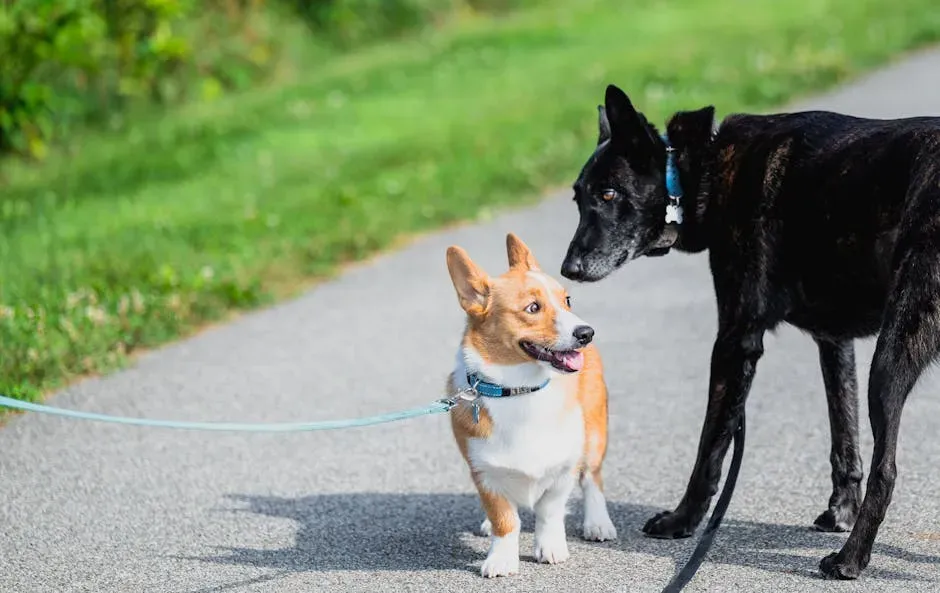
Let’s be real: your dog isn’t just a fur-covered audio recorder tuned only to spoken words. Dogs arguably get more from our tone and body language than our actual words. They observe our physical clues to determine what we want them to do or not do. They watch our facial expressions, posture, and body movements. Your dog is running a full sensory analysis on you every time you open your mouth.
A new wave of studies using brain scans and clever sound experiments shows that domestic dogs are not just reacting to our tone. They’re picking up specific words, emotional shading, and even mismatches between what we say and how we say it. This is why a forced, cheerful “it’s okay!” before a vet visit rarely fools your dog. They sense the tension underneath the words. The studies are blunt on this point: dogs weigh emotional tone heavily, especially from the people they know best. Calm, confident, warm voices lead to better responses. Flat or tense voices confuse them, no matter how clear the actual words are.
It’s a full package deal. Imagine sending a text that says “I’m fine” in all caps with an exclamation point. The words say one thing, the energy says another. Your dog, incredibly, picks up on exactly that kind of mixed message. The practical takeaway? Try to align your voice, your body, and your words when communicating with your pup. Consistency is kindness.
What This Means for How You Raise and Connect with Your Dog
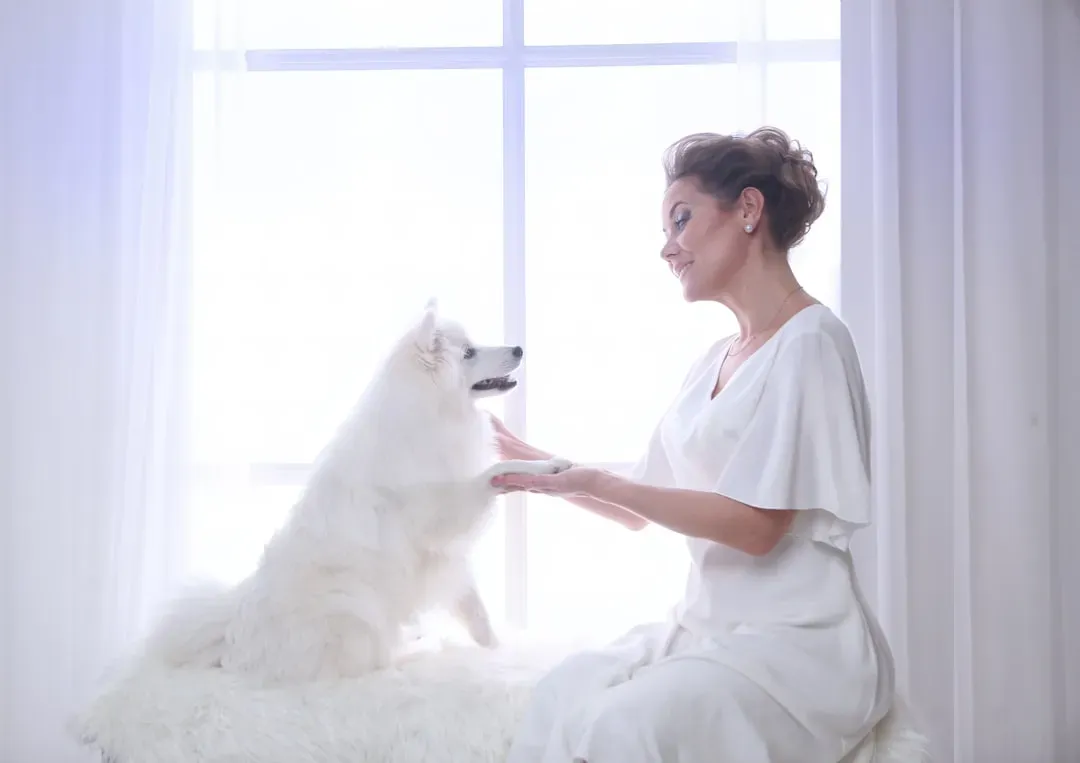
More time spent together provides more opportunities to observe instances of language comprehension. The more time a dog spends in an active lingual environment, the more it is exposed to human language, and the more opportunities it has to learn word-meaning associations. Simply put: talk to your dog. Narrate your day. Say their name warmly and consistently. It genuinely matters.
It is also important to utter a request just once. If you say “Come, come, come,” your dog may respond only when he hears the third “come.” In other words, “come” means nothing, but “Come, come, come” means come here! Say it once, and give your dog time to respond. I know it’s tempting to repeat yourself when your dog seems to be ignoring you, but that repetition actually teaches them to tune out the first two requests.
A dog is not a child, but that doesn’t mean it might not have cognitive abilities resembling the cognitive abilities of a young child. If that is the case, better communication could improve welfare, reduce frustration, and strengthen the human-animal bond. The research doesn’t just change what we know about dogs. It changes what we owe them. Speak thoughtfully, respond to their cues, and give them credit for the rich inner lives the science is increasingly revealing.
Conclusion: Your Dog Has Been Listening All Along

The question was never really whether dogs understand us. It was whether we were paying close enough attention to understand them back. Science is now confirming what every devoted dog owner has felt in their bones: these animals are genuinely tuned into our words, our voices, our moods, and even our overheard conversations.
That’s not just heartwarming. It’s a responsibility. Speak kindly to your dog, be consistent with your words, match your tone to your message, and never underestimate how much they’re absorbing from your everyday life. Researchers hope these findings might encourage all pet parents to respect their pooches’ social and cognitive abilities a bit more, saying: “This can really give us more appreciation to how exceptional dogs can be.”
So the next time your dog lifts their head while you’re chatting across the room, maybe give them a little nod of acknowledgment. They earned it. Have you ever caught your dog responding to something you said without meaning to? We’d love to hear your story in the comments below.


