
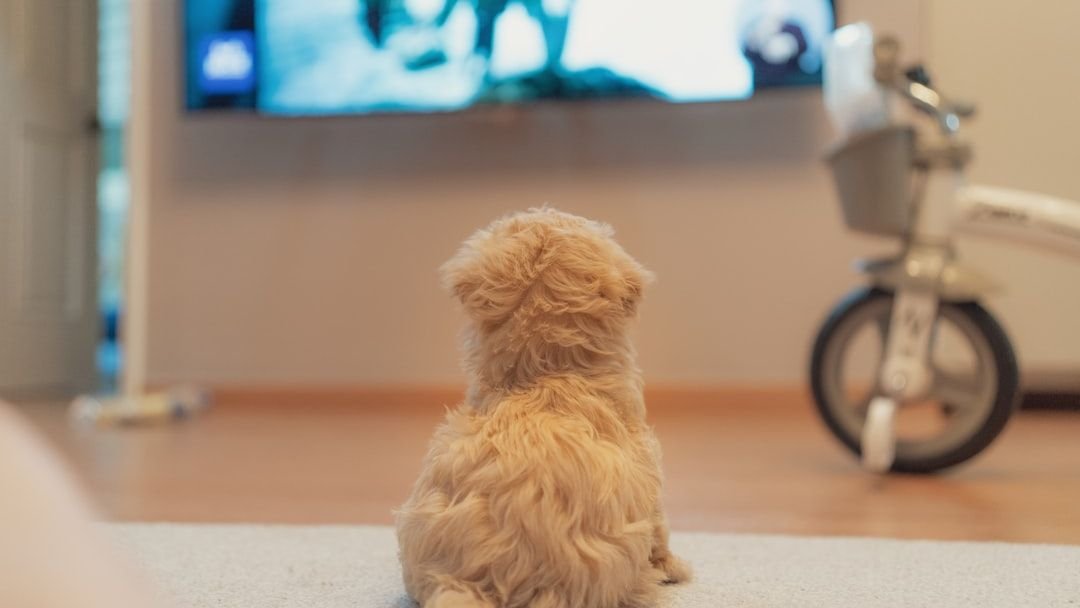
You’ve settled onto the couch with your favorite drama queued up, snacks in hand. Within moments, your dog pads over and parks himself right in front of the screen. His head tilts. His ears perk up. Maybe he lets out a soft whine or two. You laugh it off, but here’s the thing: maybe he’s not just chilling with you. Maybe he’s actually weighing in on your questionable taste in reality television.
We all wonder what goes through our dogs’ minds when they stare at the TV, right? Is it fascination? Boredom? Judgment? Turns out, dogs genuinely engage with what’s on the screen, and the latest research suggests they have surprisingly specific preferences about programming. They might not be writing reviews online, but they’re absolutely reacting, processing, and yes, possibly forming opinions about your viewing choices.
So let’s dive into the surprisingly rich world of canine television habits. You might discover that your dog’s a more discerning viewer than you thought.
Your Dog Can Actually See and Process Television Images

Let’s be real: your dog’s vision works differently than yours. Dogs have dichromatic vision, which means they see a limited range of colors compared to humans. They primarily perceive blues and yellows, but have difficulty distinguishing between reds and greens. That field of red poppies in your nature documentary? It probably looks like a muddy blur to your pup. However, that bright blue ocean scene or yellow tennis ball flying across the screen definitely catches their attention.
Their vision isn’t as sharp, being closer to 20/75 than 20/20, which may explain why they prefer to sit closer to the TV than we do. Think about it: when was the last time your dog watched TV from across the room? Probably never. They’re usually right up in your face, blocking your view. There’s a reason for that. They need proximity to keep images crisp.
Modern screens have actually changed the game for our dogs. If we’re watching an average TV show at 60 hertz, it will look smooth to us, but the image will appear to flicker for dogs. Older televisions with lower refresh rates looked like flickering silent films to them. Fortunately, newer TVs are refreshed at a higher rate, and laptops and desktops have higher refresh rates, so not only do we enjoy a better picture, but so do our pups.
Dogs Really Do Have Strong Opinions About What You Watch

The most engaging subjects were animals, and within the animal category, perhaps unsurprisingly, dogs were the most popular animal and attracted several viewers. Your dog isn’t judging your taste in medical dramas or political thrillers because, honestly, they couldn’t care less about human storylines. What they want is movement, animals, and interesting sounds.
Videos containing humans ranked ninth out of 17 predetermined categories, just ahead of cartoons or animations. Movement on the screen was in and of itself not sufficient to capture the attention of dogs since inanimate objects in motion, like cars moving on a highway, did not draw much viewing time. So if you’re binge-watching a car chase thriller, your dog’s probably napping or staring at you with mild disappointment.
Herding and sporting breeds tend to be the most avid TV watchers. Herding and sporting breeds were the most likely to be TV watchers, while nonsporting and working dog breeds were least likely to become couch potatoes addicted to television. If you’ve got a Border Collie or a Golden Retriever, chances are they’re glued to nature documentaries. Meanwhile, your English Bulldog might snore right through it all.
What catches their eye most? Real animals in motion. In general, dogs will prefer shows that feature animals in motion, and they’d rather see a real animal than a cartoon.
Their Ears Are Always Listening – Maybe Too Much

Dogs can hear frequencies ranging from 40 Hz to 60,000 Hz, while humans can only hear between 20 Hz and 20,000 Hz. This acute hearing enables them to detect sounds that we might miss, from high-pitched noises to low-frequency vibrations. That means your dog is picking up on all sorts of audio details you’re completely oblivious to.
Many dog owners notice that their dogs will react strongly to certain sounds on television. This could be the sound of another dog barking, the doorbell ringing, or a scene with high-pitched noises. Dogs often react to these familiar TV sounds as if they are real, responding with barking, growling, or even looking toward the screen. Ever had your dog launch into full-on alert mode when a doorbell rings in a commercial, even though nobody’s at your actual door? That’s their superior hearing at work.
The most popular sounds are dog sounds, which cause a response in 78 percent of the dogs in the sample. The sounds of other animals are significantly less attractive, and the sounds that people make don’t capture much canine attention, attracting only 11 percent of the dogs. Your emotional monologue in that tearjerker film? Your dog’s probably tuning it out. Another dog’s bark? Full attention activated.
Some Dogs Get Stressed by Your Viewing Choices
Not all TV time is relaxing for your furry friend. Excessive volume can startle or stress your dog, so it’s best to keep the volume at a level that is comfortable for them. What sounds moderately loud to you might feel overwhelming to your dog’s sensitive ears. Think about action movies with constant explosions or horror films with sudden screeching sounds. Your dog isn’t enjoying the adrenaline rush like you are.
Watch for stress signals during TV time. Stressed dogs, like stressed people, may have dilated pupils and blink rapidly. They may open their eyes wide and show more sclera (white) than usual, giving them a startled appearance. Their ears may be pinned back against their head. If you notice your dog panting excessively, pacing, or tucking their tail while the TV is on, they’re telling you they’re uncomfortable.
Dogs do often respond to the sounds made by animals on TV, and this clearly communicates information to them, even across species lines. So it might be wise to avoid shows involving distressed animals when your dog is sharing screen time. That wildlife documentary showing predators hunting prey might be too intense for sensitive pups. They can’t always tell it’s not real, and hearing the distress calls of other animals can genuinely upset them.
How to Choose Programming Your Dog Will Actually Enjoy

Want to win your dog over with your viewing choices? Start with nature documentaries. Many pups prefer to look at animals they’re familiar with – such as squirrels, rabbits, and fellow dogs – making nature documentaries a favorite among doggy audiences. Programs featuring wildlife, especially those with lots of movement and animal sounds, tend to hold their attention best.
Color matters more than you’d think. If the colors featured on the screen are shades of blues, yellows, and greens, your dog will be able to see them better. Shows filmed in forests, near water, or on sunny days with blue skies work brilliantly for canine viewers. That monochrome noir film you love? Your dog finds it visually boring.
There are even channels designed specifically for dogs. DOGTV, launched in 2012 and claiming to help with separation anxiety and stress, offers a high number of frames per second and is specially colored for dogs. These programs are scientifically designed with canine vision and hearing in mind. Worth trying if you’re heading out and want to leave something soothing on.
Using TV Wisely: When It Helps and When It Doesn’t

Having a radio or TV on can give the impression of normality and a presence in the home, which can be reassuring. It can also be useful in training and desensitizing dogs to the sound of unusual noises that might be frightening, or to disguise and drown out external noises that might disturb them. Background television can actually comfort anxious dogs when left alone, particularly if they’re used to a bustling household.
However, TV is never a replacement for real interaction. While short periods of watching TV occasionally might be entertaining or stimulating, dogs still need physical exercise, mental stimulation and social interaction as their primary sources of engagement. Your dog would much rather take a walk with you than watch the most perfectly curated animal documentary alone.
Here’s the thing: every dog is different. Some dogs are glued to the screen, tracking every movement with laser focus. Others couldn’t care less and would rather snooze through your entire Netflix binge. Just like humans have their own preferences, dogs have theirs too. This means that while one dog may like to sit in front of the television screen, another may not even glance at it. Pay attention to your dog’s individual reactions and adjust accordingly.
Conclusion: Your Dog’s Verdict Is In

So does your dog secretly judge your TV habits? Absolutely. They’ve got opinions about what’s interesting, what’s stressful, and what’s worth paying attention to. The good news is that you can easily become their favorite viewing companion by choosing programs featuring animals, keeping the volume reasonable, and making sure screen time doesn’t replace quality time together.
Watch your dog’s body language during your next binge session. Are their ears relaxed? Is their tail wagging gently? Then you’ve nailed it. Are they pacing, whining, or hiding? Time to switch channels. Remember, the best viewing experience for your dog includes you right there beside them, sharing the moment.
What’s your dog’s favorite show? Have you noticed them perking up during certain programs? It’s honestly fascinating how much they engage with what’s on screen when we really pay attention to their reactions.


