
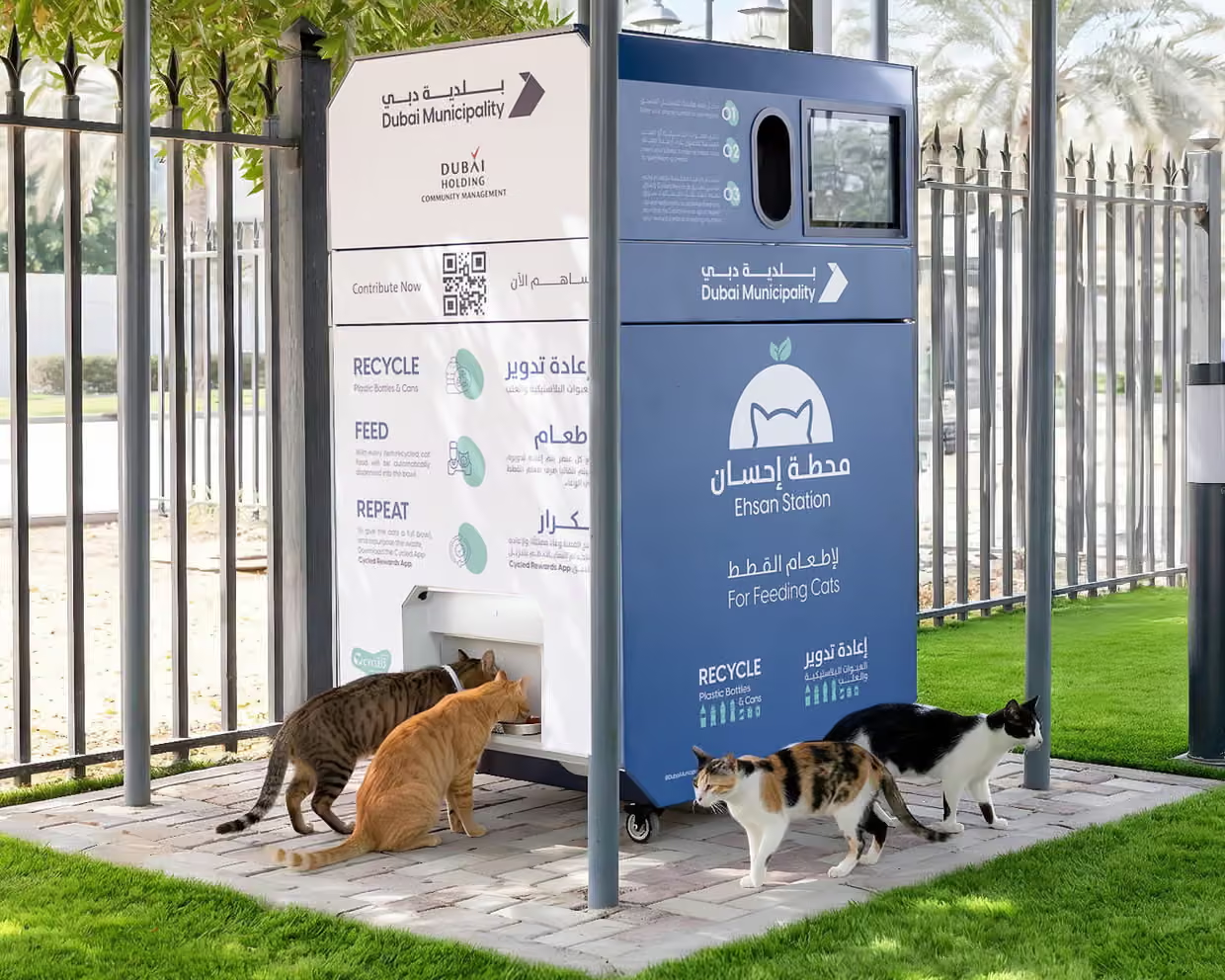
Animal News: There’s something quietly remarkable about a city best known for its gleaming skyscrapers and luxury excess making headlines for feeding stray cats in a park. Dubai has a way of surprising you like that. The emirate is not simply chasing innovation for its own sake anymore. It’s channeling that same energy toward something genuinely compassionate.
According to a media release: Dubai Municipality has launched the ‘Ehsan Stations’ initiative, the first of its kind in the region dedicated to feeding stray animals through AI-powered smart devices installed across the emirate. It’s a move that blends technology, urban management, and a very human instinct – the desire to look after the creatures we share our cities with. So let’s dive in and see what this initiative is really about.
A Region-First Initiative with a Meaningful Name
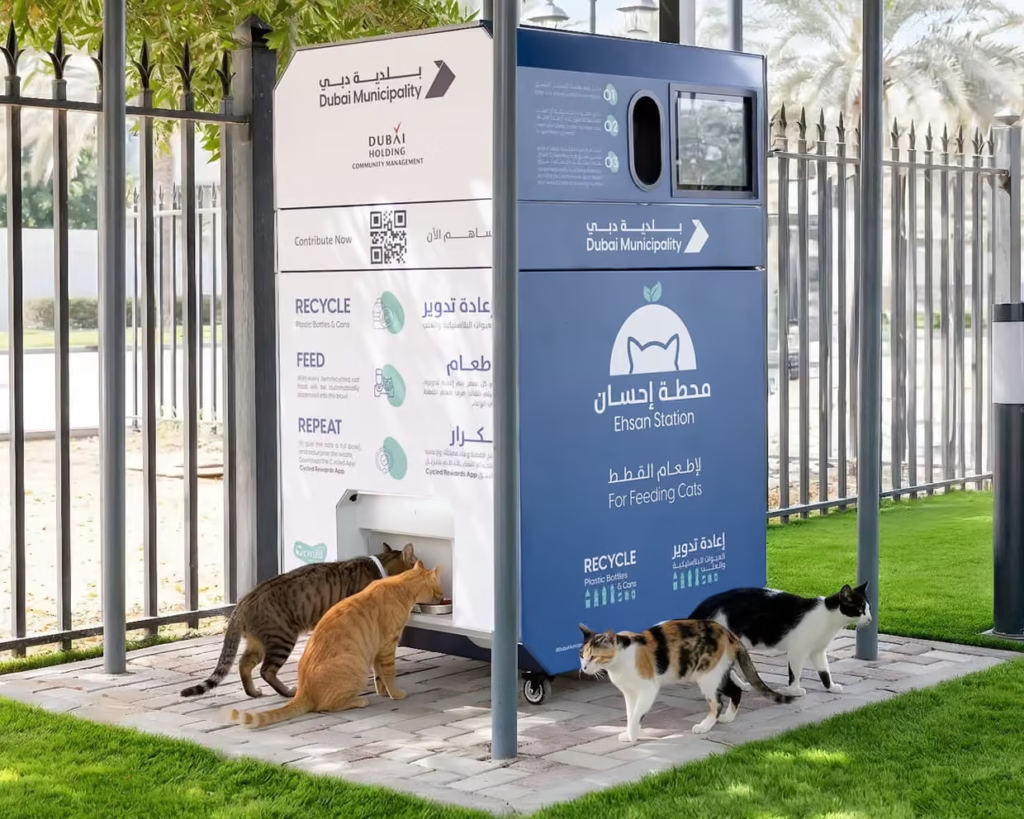
The name “Ehsan” is no accident. In Arabic, the word carries deep meaning, roughly translating to benevolence or doing good. The initiative reflects the municipality’s ongoing efforts to foster a culture of compassion and generosity in Dubai, while advancing animal welfare, environmental sustainability, and the preservation of the emirate’s urban landscape.
Honestly, naming a public infrastructure project after an act of moral goodness sets the tone immediately. The move by Dubai Municipality is a first of its kind in the region. That distinction matters. It signals that the emirate is not just keeping pace with global best practices on animal welfare. It is actively setting them.
How the AI-Powered Stations Actually Work
Here’s where things get genuinely fascinating. These are not simple food bowls bolted to a pole. The ‘Ehsan Stations’ rely on an AI-based system capable of identifying stray animals, collecting relevant data, and dispensing food accordingly. Think of it like a smart vending machine, except the beneficiaries are wandering cats and other animals, and they never need to carry a wallet.
The devices identify animals using AI, dispense food, collect data, promote recycling and support a cleaner, more sustainable feeding approach. The data collection aspect is particularly interesting. Over time, the system can build a clearer picture of stray animal activity, population patterns, and feeding behaviour across different locations. That’s genuinely useful intelligence for urban wildlife management.
Where Will the Stations Be Placed?
As part of the initiative, Dubai Municipality will install 12 smart devices across key locations in the emirate, including ten units in public parks and two within facilities operated by Dubai Holding. Public parks are a smart choice. They are among the most frequented spots in the city and also places where stray animals tend to congregate most visibly.
All stations have been designed and manufactured in the UAE using advanced technologies. That’s a detail worth appreciating. This is not an imported solution. It is homegrown innovation serving a local need. The programme is currently being introduced as a pilot phase, allowing the municipality to assess performance and gather insights before potential expansion. So the 12 stations are not the ceiling. They are the starting point.
Tackling the Problem of Random Feeding
Let’s be real – if you have lived in Dubai, you have probably seen residents feeding stray cats with leftover food scattered on pavements or in parking lots. It comes from a good place, but the consequences for hygiene, public space, and even the animals themselves can be complicated. Advanced technology will be combined with strategic partnerships to support the responsible management of stray animal populations, while helping to reduce random feeding practices that can negatively affect public spaces and the city’s appearance.
By reducing random feeding, the initiative contributes to proactive public health protection, upholds animal welfare principles, and supports environmental sustainability and biodiversity balance. It is a thoughtful reframe of the problem. Instead of discouraging people from caring about animals, the initiative channels that impulse into something structured and beneficial for everyone. The concept also promotes a culture of recycling and supports a more organised and sustainable approach to feeding stray animals.
Complementing Dubai’s Wider Animal Welfare Programmes
The Ehsan Stations do not exist in isolation. They slot into a broader and surprisingly comprehensive ecosystem of animal welfare policies in Dubai. Dubai Municipality already operates shelters for stray animals and runs Trap–Neuter–Return (TNR) and Trap–Neuter–Vaccinate–Return (TNVR) programmes that help control stray populations while ensuring humane treatment.
Some animals are also made available for adoption through the Dubai Municipality website in support of animal welfare initiatives. That is a meaningful layer on top of the feeding and neutering programmes. The initiative builds on Dubai Municipality’s broader animal welfare efforts, including the ‘Fountains of Mercy’ project, which plans to install 50 fountains for birds and wildlife, 25 in urban areas and 25 in desert environments, using sustainable materials and environmentally sound practices. Water fountains for desert wildlife. Feeding stations in parks. It’s a surprisingly holistic vision.
Reporting, Responsibility, and What Residents Can Do
The initiative is not designed to be a passive, set-and-forget solution. Dubai Municipality is actively calling on its residents to participate and stay engaged. Dubai Municipality urges residents who own pets to follow best health practices in caring for them and to treat them humanely, particularly when leaving home or travelling, in order to ensure their safety and wellbeing.
The municipality also calls on residents and community members to report any risks, negative practices, or concerns related to stray animals by contacting 800900. It’s a simple but important step. The hotline gives residents a direct role in the system. During the pilot phase, Dubai Municipality will closely monitor how the devices perform in real-world conditions, and the insights gathered will help authorities evaluate their effectiveness and determine how to further improve and expand the system.
What do you think – is this the kind of smart city thinking other global cities should be borrowing? Let us know in the comments.


