
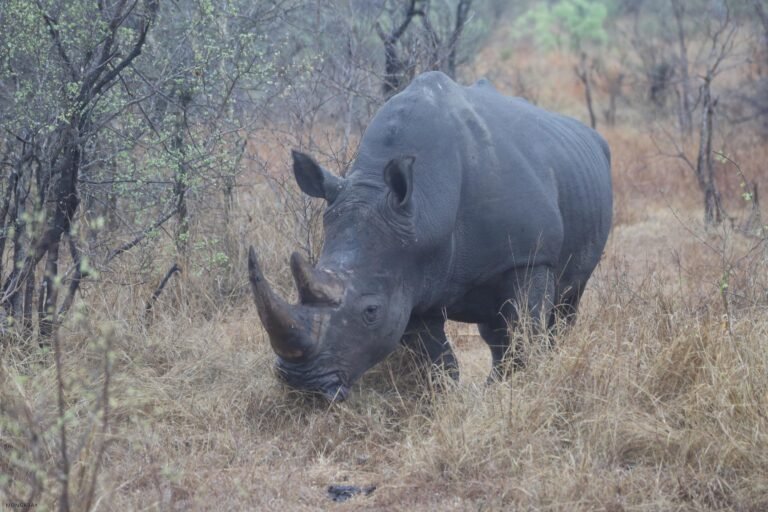
A Desperate Health Scare in a Key Conservation Project (Image Credits: Imgs.mongabay.com)
Zimbabwe — Animal behavior specialists from Florida collaborated with local conservationists to treat a wild rhinoceros suffering from a severe eye infection, preserving its vision through an innovative voluntary training method.
A Desperate Health Scare in a Key Conservation Project
Thuza, a male southern white rhino, developed bleeding eyes from a parasitic infection last year, rubbing them constantly in a way that threatened permanent blindness. Such a loss would have doomed the animal in the wild, where a blind rhino stands little chance of survival. The incident occurred amid the Community Rhino Conservation Initiative, a pilot program reintroducing southern white rhinos to communal lands near Hwange National Park for the first time in Zimbabwe’s history.[1][2]
Mark Butcher, managing director of Imvelo Safari Lodges, spotted the problem during routine monitoring. He contacted Margo McKnight, CEO of the Palm Beach Zoo & Conservation Society, whom he had met previously. With only a handful of rhinos in the area, every individual mattered profoundly to the project’s future.[1]
“This rhino had bleeding eyes. He was rubbing his eyes,” Butcher explained. “And I was looking at a potential where this guy was gonna lose his eyesight.”[1]
Devising a ‘Ridiculous’ Yet Practical Solution
Palm Beach Zoo leaders partnered with Precision Behavior, a firm founded by Thad and Angi Lacinak, to adapt zoo training techniques for the wild. The core idea involved luring Thuza into a narrow chute using his favorite foods and gradually desensitizing him to human proximity. This mirrored methods used at the Florida zoo, where animals learn to participate willingly in medical procedures.[2]
In August, the behaviorists traveled to Zimbabwe to implement the plan alongside anti-poaching scouts and Imvelo staff. Daniel Terblanche, the lodges’ security manager, initially dismissed the approach. “Believe me, we didn’t think of it; it was a completely ridiculous idea to us,” he said.[1]
Step-by-Step Training Turns Skepticism into Success
The team began by associating the chute with positive rewards, drawing Thuza inside repeatedly. Next came tolerance for human touch near his face, followed by squirting water to mimic drops. Progress accelerated quickly.
Within a week, technicians administered actual eye drops as Thuza stood calmly. By the two-week mark, Terblanche and the guards mastered the routine independently. “Within about a week, we were actually putting the eye drops strategically in his eyes while he held for it,” Angi Lacinak reported.[1]
- Food lures to enter chute voluntarily.
- Desensitization to touch and water spray.
- Precise drop application during stillness.
- Skill transfer to local teams for sustainability.
- Daily treatments now routine for Thuza and others.
Thriving Rhinos and Broader Conservation Hope
Thuza’s eyes healed, and he receives daily medications without issue. Other rhinos in the program benefit similarly, bolstering the initiative’s viability. Southern white rhinos, near threatened with about 16,000 left in the wild, face ongoing perils from poaching and habitat loss, making such interventions crucial.[2]
“They’re consistently getting the medications into his eyes every day. And the rhinos are just thriving now,” Lacinak added.[1]
Key Takeaways
- A voluntary training model bridged zoo expertise and wild conservation needs.
- Local teams now handle treatments, ensuring long-term independence.
- Success supports rhino reintroduction efforts across Africa.
This cross-continental effort demonstrates how unconventional ideas can safeguard endangered species precisely when traditional methods fall short. What do you think about applying zoo training to wild animals? Tell us in the comments.


