
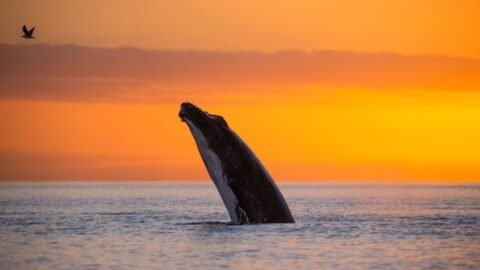
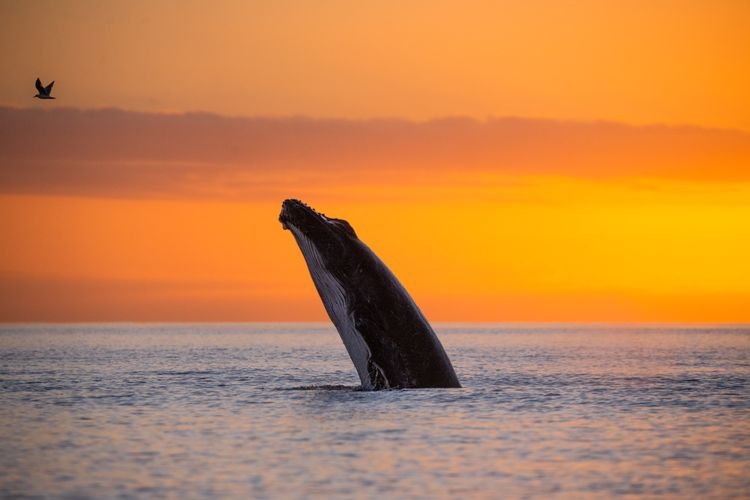
A Historic Response to Overexploitation (Image Credits: Imgs.mongabay.com)
The global moratorium on commercial whaling marked its 40th anniversary in January 2026, a milestone that underscores decades of progress for the world’s largest marine mammals.[1]
A Historic Response to Overexploitation
The International Whaling Commission established the moratorium in 1982 with a vote requiring a three-quarters majority, and it took effect for the 1985/86 pelagic and 1986 coastal seasons.[2][1] Formed in 1946 to regulate whaling among initial member nations, the IWC grew to 88 members by addressing severe declines in whale populations caused by intensive hunting.
Commercial operations had peaked dramatically, with Antarctic catches reaching over 66,000 whales in the 1961/62 season alone.[3] Across the 20th century, whalers killed nearly 3 million whales, including hundreds of thousands of fin and sperm whales.[4] Global catches averaged 70,000 annually at their height, pushing many species toward extinction.[4]
Populations Bounce Back
The ban dramatically reduced kills, dropping from nearly 15,000 in 1980 to about 700 by 1991, and further to 6,361 in 1986.[5][4] This pause allowed stocks to recover, with humpback whales among those showing notable rebounds from 95% depletion.[6]
Conservationists credit the measure with preventing extinction for several species, transforming a dire outlook into one of gradual restoration.[1] The IWC’s Scientific Committee developed tools like the Revised Management Procedure in 1994, aiding assessments even without active commercial quotas.[2]
Persistent Commercial Hunts
Despite the moratorium, a few nations continued whaling through objections, reservations, or withdrawal. Norway lodged a formal objection and has harvested North Atlantic minke whales, exceeding 500 annually in recent years despite declining demand.[2][7]
Iceland rejoined the IWC in 2002 with a reservation, targeting minke and fin whales in its waters. Japan conducted scientific whaling until leaving the IWC in 2019, shifting to coastal commercial operations.[2][1] These countries set their own limits but report data to the IWC.
| Country | Primary Species | Status |
|---|---|---|
| Norway | Minke | Objection to moratorium |
| Iceland | Minke, Fin | Reservation |
| Japan | Various | Withdrew from IWC |
New Threats Eclipse Old Ones
Bycatch and entanglements now pose the greatest risks, killing over 300,000 cetaceans yearly – far surpassing remaining whaling.[1][4] Ship strikes particularly endanger surface-feeding species like humpbacks.
- Climate change accelerates ocean warming and acidification.
- Plastic pollution projected to triple by 2040 without intervention.
- Noise and chemical pollution disrupt habitats.
- Fishery interactions cause entanglements.
- Vessel traffic increases collision risks.
Key Takeaways
- The moratorium saved whales from extinction and enabled recoveries.
- Three nations still hunt commercially outside full IWC bounds.
- Bycatch kills more cetaceans annually than all whaling combined.
The whaling moratorium stands as a conservation triumph, proving collective action can reverse ecological damage. Yet emerging perils demand renewed global commitment through the IWC. What steps should follow to safeguard these ocean icons? Share your thoughts in the comments.


