
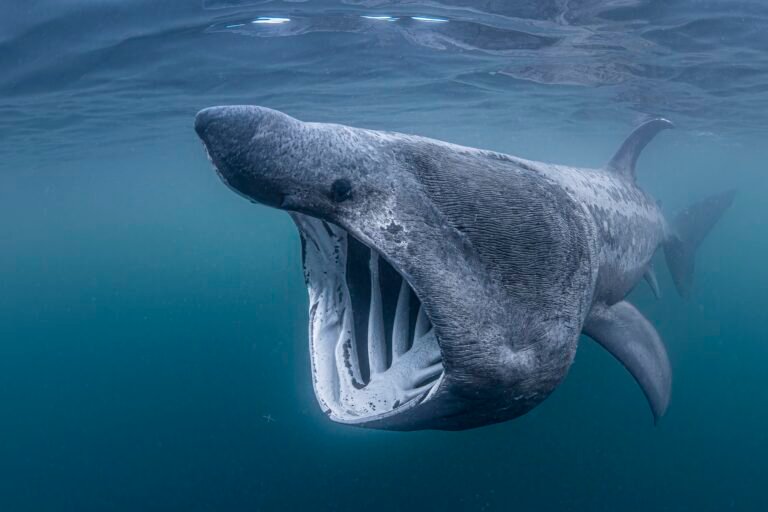
One-Third of Species Face Extinction Risk (Image Credits: Imgs.mongabay.com)
Oceans worldwide harbor struggling shark and ray populations now armed with a groundbreaking scientific blueprint for recovery.
One-Third of Species Face Extinction Risk
Sharks and rays ranked as the second most threatened vertebrate group on Earth, with over one-third of species at risk of extinction.[1][2] Overfishing emerged as the primary driver, compounded by habitat degradation and climate change impacts on migration patterns and ocean currents. A 2021 study documented a more than 70% decline in the abundance of 31 oceanic sharks and rays since 1970.[2]
These elasmobranchs reproduce slowly and mature late, making populations vulnerable to even moderate fishing pressure. The endangered shortfin mako shark exemplified this challenge, as its North Atlantic population would require decades to rebound even without further fishing mortality. Conservationists highlighted that targeted protections could reverse these trends before more species vanish.
Birth of the Important Shark and Ray Areas Initiative
The IUCN Species Survival Commission Shark Specialist Group launched the ISRA project in 2021 to identify habitats critical for survival. Experts defined ISRAs based on sites for reproduction, feeding, aggregation, and migration. The effort built on prior regional mappings, such as the Central and South American Atlantic in 2023.[2]
Over 1,330 scientists from more than 100 countries contributed data, synthesizing decades of research into a standardized framework. The resulting online atlas offered public access to these zones, serving as a policy tool rather than automatic protections. Rima Jabado, chair of the group, emphasized the data’s role: “We’re doing the work for the government, so they don’t need to do it.”[2]
Key Revelations from Ocean Travellers Report
The “Ocean Travellers” report, published in December 2025 and announced on January 14, 2026, detailed 816 ISRAs across nine of 13 ocean regions.[2][3] These areas supported 327 shark and ray species, with a focus on all 42 legally protected under the Convention on Migratory Species. Coverage spanned 70% of global oceans, from coastal shelves to high seas seamounts.
ISRAs occupied less than 3% of the ocean surface in completed regions, underscoring the feasibility of safeguards. Examples included 27 small zones around the Maldives and a vast area south of Hawai‘i, roughly Colombia-sized, for vulnerable bigeye thresher sharks. In the Red Sea off Sudan, three ISRAs targeted the critically endangered green sawfish, one of its last strongholds.[2]
- Reproductive sites for slow-maturing species like sawfishes (family Pristidae).
- Migratory corridors linking South Africa and Mozambique.
- Feeding grounds in Eastern Tropical Pacific upwelling systems.
- Aggregation hotspots in Pacific Islands and French Polynesia.
- Overlaps with fishing grounds, shipping lanes, and development zones.
Overlaps and Gaps in Current Protections
Many ISRAs coincided with high human activity areas, yet protections remained sparse. In the Western Indian Ocean, only 1.2% overlapped with no-take marine protected areas. The report urged integration into marine spatial planning, fisheries management, and environmental assessments.
Ahead of the CMS meeting in Brazil this March, the findings aligned with global targets like the 30×30 goal under the Convention on Biological Diversity. Regional fisheries bodies and the new high-seas biodiversity treaty offered avenues for action. Jabado noted the potential for overlaying ISRAs with maps for other marine life to maximize biodiversity gains.[2]
Key Takeaways
- 816 ISRAs cover essential habitats for 327 species across 70% of oceans.
- Less than 3% ocean surface needed, making protection practical.
- Urgent policy tool for CMS, fisheries, and 30×30 targets.
This comprehensive mapping marked a pivotal step toward connected ocean conservation, offering governments precise science to avert collapse. Targeted actions in these zones could secure the future of these vital predators. What do you think about prioritizing these ISRAs? Tell us in the comments.


