
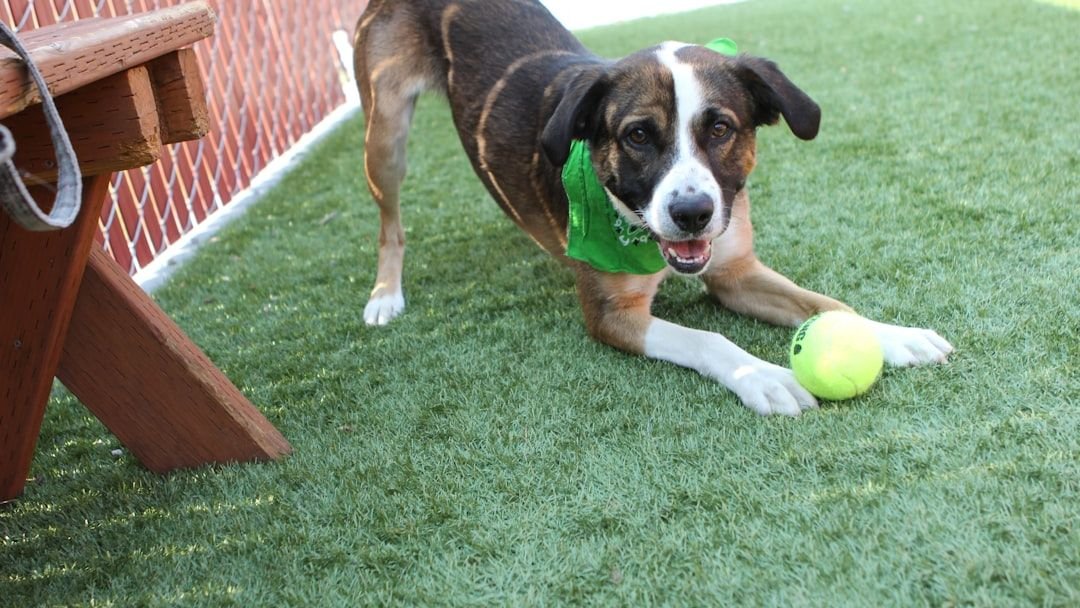
Picture this: you walk into the living room after a long day, and your dog suddenly drops their front legs to the floor, hips shooting up into the air, tail going absolutely wild. You probably laughed. Maybe you grabbed a toy. But here’s the thing most dog owners don’t realize – that goofy little move is one of the most sophisticated forms of communication in the entire animal kingdom.
The play bow is far more than a cute dog quirk. It’s a deliberate, deeply rooted signal your dog uses to say things you’ve never fully decoded – until now. So let’s dive in.
What the Play Bow Actually Is (and Why It Looks the Way It Does)
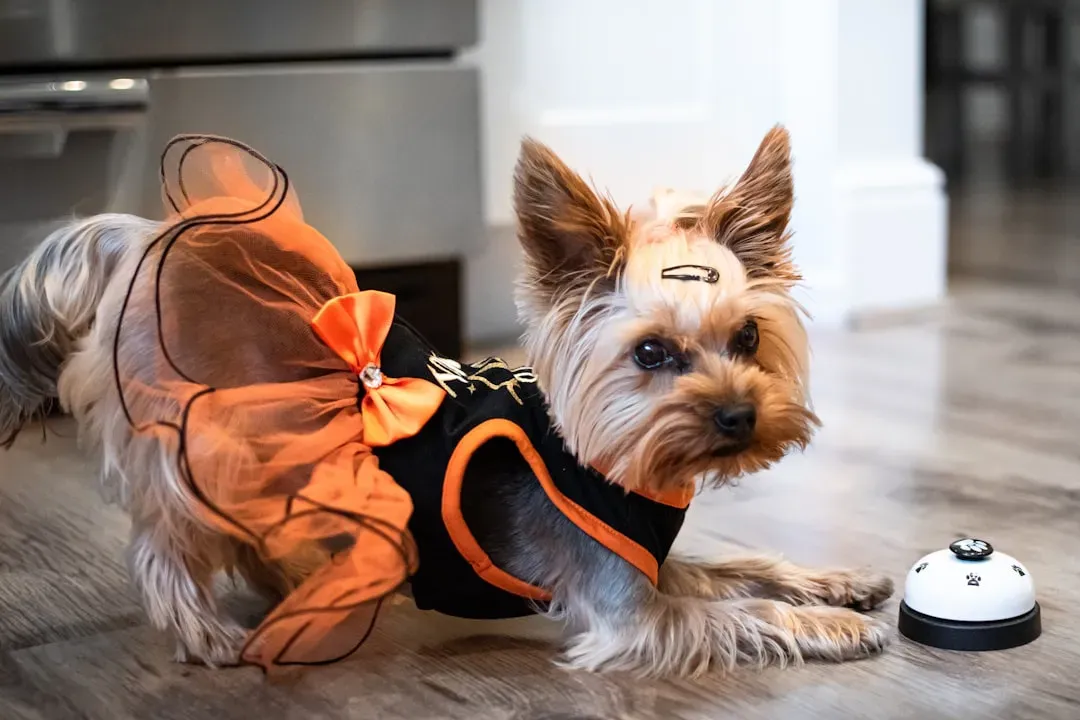
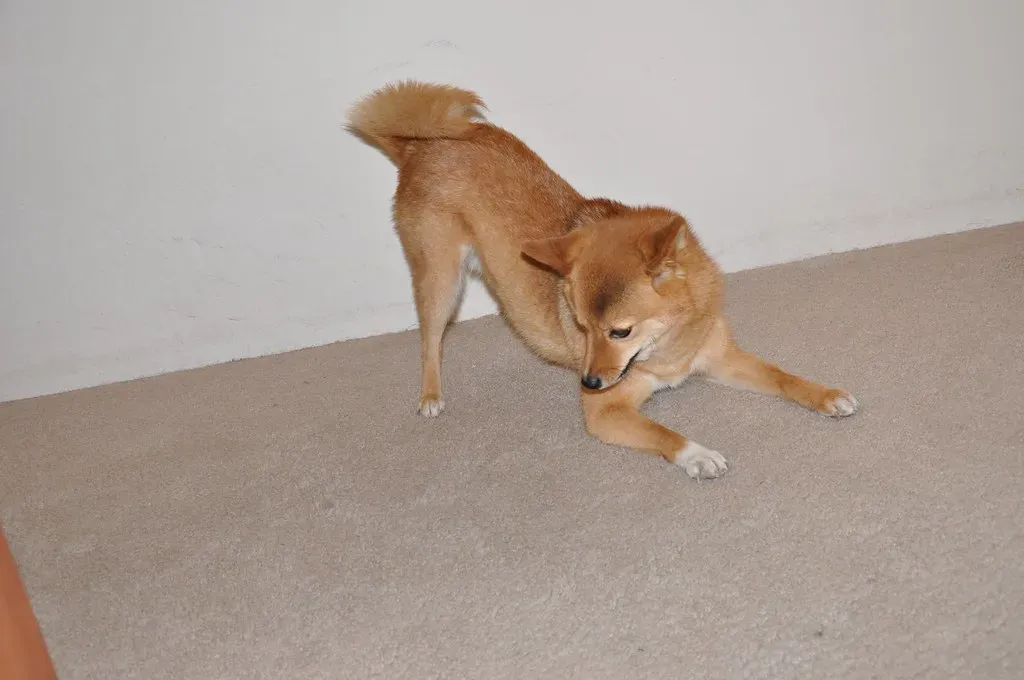
The play bow is a distinctive posture where a dog lowers their front end while keeping their rear end raised, and it is often accompanied by tail wagging. Think of it like a dog’s version of raising your hand to say “I come in peace.” It’s unmistakable, and honestly, it’s kind of brilliant.
When dogs stand up from lying down and resting, they often stretch their forelimbs and loosen up their body. When they do this, it looks like they are bowing, and they are able to move around in different directions or spring here and there. When others see the bow, play may ensue – and through the process of ritualization, a bow can take on communication value to tell other individuals “I want to play with you.”
Bowing by stretching the forelimbs evolved to become a highly ritualized signal for inviting dogs to play, have fun, or continue to play if things get rough or otherwise testy. So the next time your pup does it, know that millions of years of evolution went into that adorable pose.
The Play Bow Is an Honest, Strategic Signal – Not a Random Wiggle
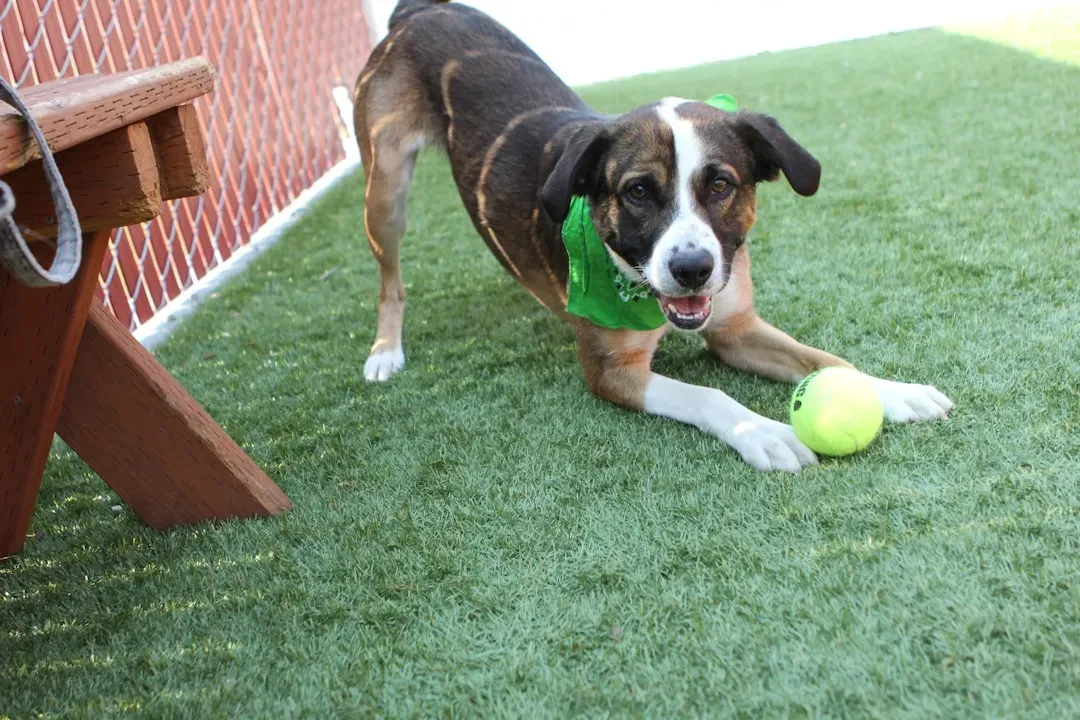
Here’s where it gets really fascinating. For a long time, people assumed the play bow was just a general “I’m in a playful mood” gesture. Science had other ideas. Research suggests that play bows do not occur at random and do not simply enhance the play atmosphere in a general way. Instead, their association with particular behaviors before and after the play bow suggests strategic use of this play signal to accomplish immediate goals, including continuation of play by enticing the partner into a runaway or chase interaction.
Play bows are honest signals, a sign of trust. Even when an individual follows a play bow with seemingly aggressive actions such as baring teeth, growling, or biting, their companions demonstrate submission or avoidance only about 15% of the time, which suggests they trust the bow’s message that whatever follows is meant in fun.
The data is remarkably compelling: in one study, 409 of the 414 play bows recorded were performed when the dogs could actually see one another. In other words, your dog waits until you’re watching. They want to make sure the message lands. That’s not instinct running on autopilot – that’s intentional communication.
Reading the Full Picture – Body Language Beyond the Bow
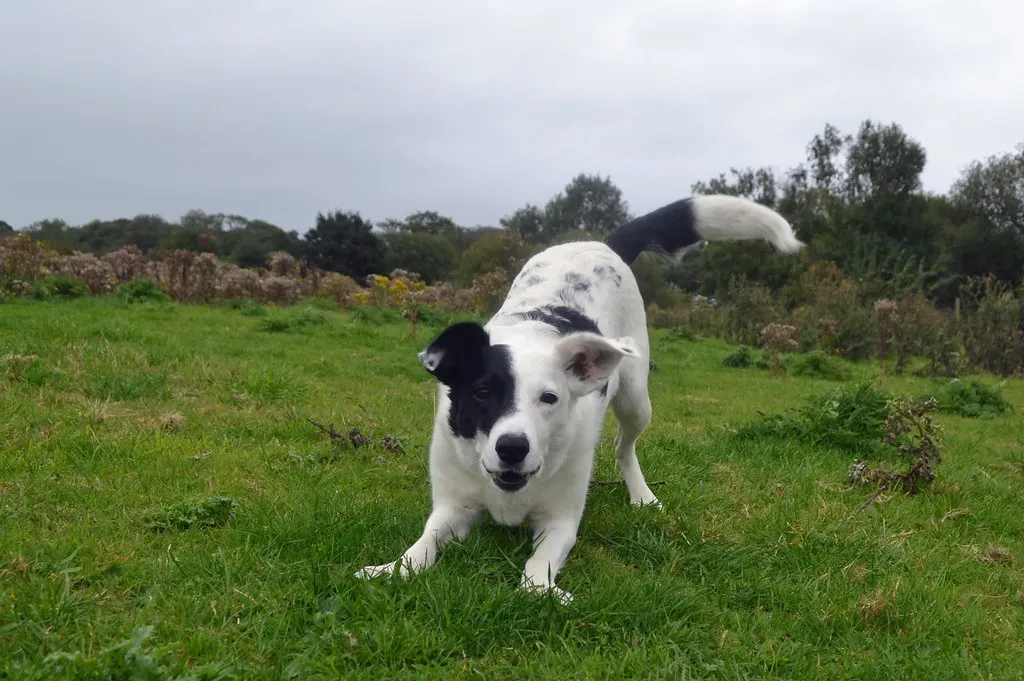
The play bow doesn’t work alone. It’s part of a full-body conversation, and learning to read the rest of the signals around it can completely change how you understand your dog. Some dogs offer a lower-key version – a front-leg-stretch without as much height in the hips, a slower wag, perhaps a glance toward you with soft eyes. This might indicate readiness to play, but maybe also a hint of caution or a “just checkin’ in” style invite. Recognizing this gentler version is useful because it means your dog is open to interaction, but maybe not full throttle.
Although play bows are overwhelmingly positive, context still matters. A bow paired with a tucked tail, pinned ears, closed mouth, or reluctance to engage might signal discomfort, fear, or overstimulation. I think this is the part most owners skip over. We see the bow and immediately think “game time!” – but your dog might be telling a much more layered story.
Body language during good play involves loose, bouncy body movements rather than stiff, controlled movements. So always look at the whole dog, not just the bow. Loose and wiggly? Great. Stiff and tense? Worth a second look.
When the Bow Is a Reset Button – and When to Watch More Carefully
Dogs also use bows to signal “I didn’t mean to play too rough – let’s keep going!” functioning as a kind of reset during play. It’s basically a canine apology wrapped in an invitation. Honestly, dogs might be better at conflict resolution than most of us.
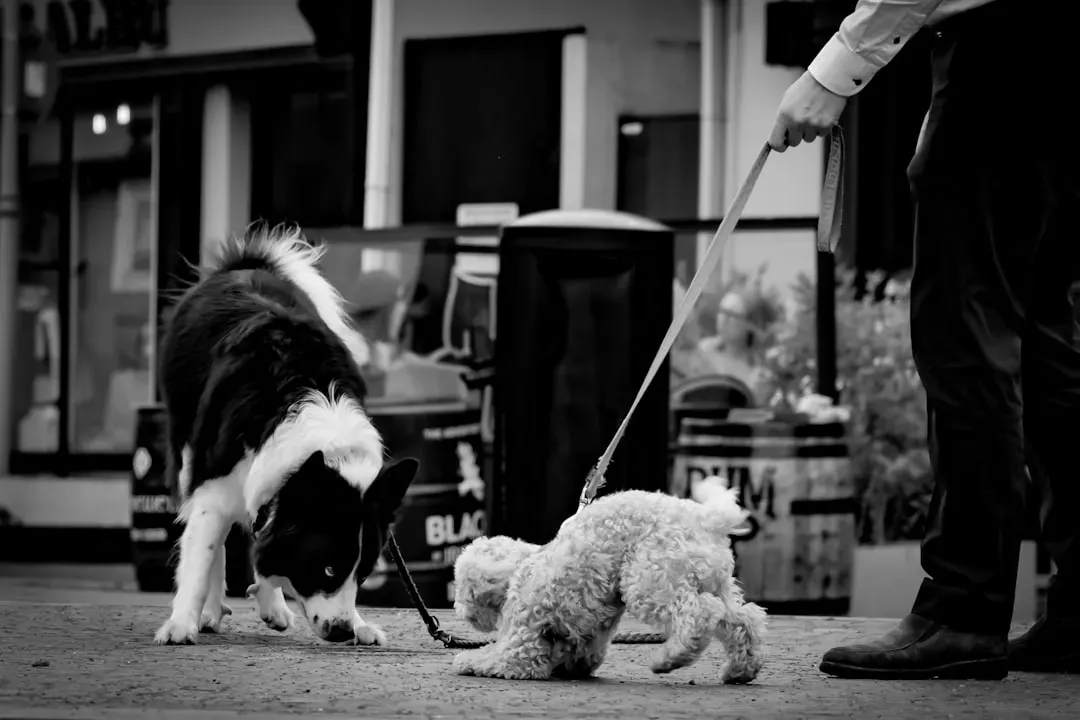
In more intense games, especially dog-to-dog, you might see a dog bow mid-sequence or after a nudge that went a little too far. In that moment the bow functions like a little “Oops, it’s still fun” signal – “Hey, we’re still okay, this is just play.” This helps keep things friendly and prevents a shift into rougher or unwanted behavior.
However, not every bow-like posture is a feel-good moment. In some cases, repeated prayer bows can signal pain or stomach issues. When dogs display a prayer bow frequently, especially after meals, it could point to gastrointestinal issues like bloating or pancreatitis. If paired with signs like lethargy, vomiting, or abnormal bowel movements, a vet consultation is essential. So if your dog seems to be “bowing” frequently after dinner rather than at playtime, it’s worth paying attention. That’s not an invitation – that’s a health signal.
How You Can Play Bow Back – and Why It Matters
Ultimately, a play bow shows that your dog trusts you and feels safe communicating with you. The best way to respond is to reciprocate those feelings back with a greeting, skritches, or by playing with your dog. Yes, it really is that simple – and that powerful.
The play bow is a universal invitation to play among dogs, and people can do it too. A pet parent can imitate this action by getting down on all fours, putting both elbows on the ground, and leaving your rear in the air. It sounds ridiculous. It absolutely is. Your dog will love every second of it.
Dogs who frequently play rough-and-tumble games with their humans have fewer problems with separation anxiety and are more self-confident. They also score higher in “obedient attentiveness” after play sessions than before the sessions, according to researchers Nicola Rooney and John Bradshaw, which suggests that training after play can be highly effective. So responding to that play bow isn’t just sweet – it’s genuinely good for your dog’s mental health and your training goals.
Conclusion: Your Dog Is Talking – Are You Listening?
The play bow is one of the clearest, most honest things your dog will ever say to you. It’s an invitation wrapped in trust, a social skill honed over thousands of years, and a window straight into how your dog is feeling right now in this moment.
Learning to read it – really read it, not just smile and move on – changes everything. You start to notice when your dog is joyful versus cautious, when they need you to engage versus when something feels off. That awareness deepens your bond in ways no training class can fully replicate.
Your dog has been trying to talk to you since the day they walked through your door. The play bow is just one of the most beautiful sentences in that language. Now that you know what it means, will you bow back? Share your thoughts in the comments – we’d love to hear how your dog invites you to play!


