
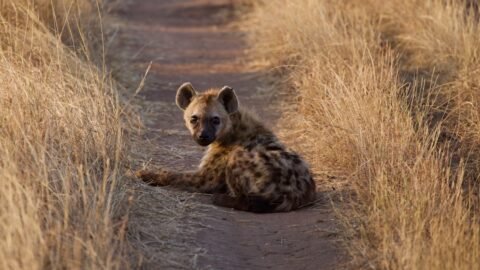
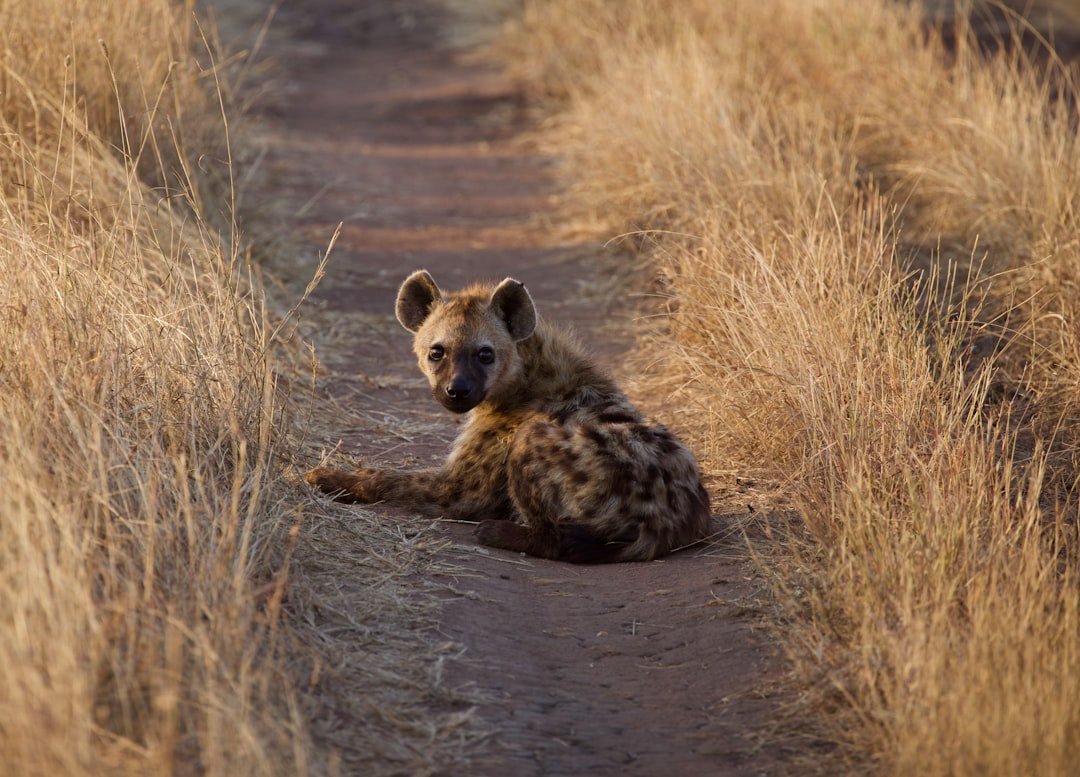
Hyenas Thrive Where Worlds Collide (Image Credits: Unsplash)
Lake Eyasi, Tanzania – Amid the seasonal shifts of northern Tanzania’s Eastern Rift Valley, spotted and striped hyenas navigate a landscape intertwined with pastoralists and hunter-gatherers, revealing patterns of adaptation that challenge traditional views of predator-human conflict.
Hyenas Thrive Where Worlds Collide
Researchers uncovered startling evidence of hyena clans adjusting their ranges seasonally around Lake Eyasi, a saline body flanked by the Serengeti Plateau and Ngorongoro Conservation Area.
The non-profit United Tansania e.V. led efforts to track these movements, highlighting how hyenas persist in areas dominated by human activity. Local Hadza hunter-gatherers and Datoga pastoralists share the savanna-steppe with these carnivores, where livestock enclosures and grazing lands overlap with predator territories. This project mapped spatial distributions and temporal behaviors, exposing the hyenas’ resilience in unprotected zones.
Such findings underscore the need for conservation approaches that account for these dynamic interactions rather than isolation in reserves.
Field Tools Reveal Hidden Patterns
Teams deployed camera traps, conducted track and scat surveys, and used photo-identification to catalog individual hyenas and their clans.
United Tansania e.V. also ran a Carnivore Conflict Monitoring program across six villages, recording details of livestock attacks like species involved, locations, and timings. Complementing this, the Community Camera Scout Program engaged locals to gather more data on carnivore presence, while rewarding villages based on wildlife sightings. These methods estimated home ranges and pinpointed overlaps with human settlements prone to conflict.
The approach not only boosted data accuracy but also shifted community views toward wildlife.
Seasonal Shifts and Strategic Hunts
Spotted hyenas demonstrated behavioral flexibility by altering hunting, denning, and social structures in response to wet-dry cycles and human pressures.
During dry seasons, competition for water intensified as habitats opened, while wet periods brought migratory prey that redrew clan boundaries. Livestock depredation peaked at night and in dense vegetation, aiding stealthy approaches to bomas and pastures. Striped hyenas, rarer and classified as Near Threatened by the IUCN, added another layer to the conservation puzzle.
These patterns showed hyenas as masters of adaptation, not mere threats.
Steps Toward Sustainable Harmony
Studies from nearby Ngorongoro Crater indicated hyenas tolerate routine human presence without major fitness impacts, as long as encounters stayed non-violent.
Practical solutions emerged, including reinforced livestock enclosures and community reporting systems to curb conflicts. The United Tansania e.V. hyena project integrated spatial data with local involvement, promoting strategies that benefit both species.
- Camera traps and community scouts expand monitoring reach.
- Seasonal behavior mapping predicts conflict hotspots.
- Engagement programs foster tolerance and data sharing.
- Targeted enclosures reduce depredation risks.
- Focus on striped hyenas addresses rarity concerns.
Key Takeaways
- Hyenas adapt dynamically to human-dominated landscapes, peaking conflicts predictably at night and in certain seasons.
- Combined tech and community efforts yield precise data for targeted conservation.
- Non-violent strategies pave the way for long-term predator-human balance.
The Lake Eyasi project proves wildlife conservation succeeds when it views hyenas as active players in a shared ecosystem, not adversaries. What strategies have you seen work for human-wildlife coexistence? Share in the comments.


