
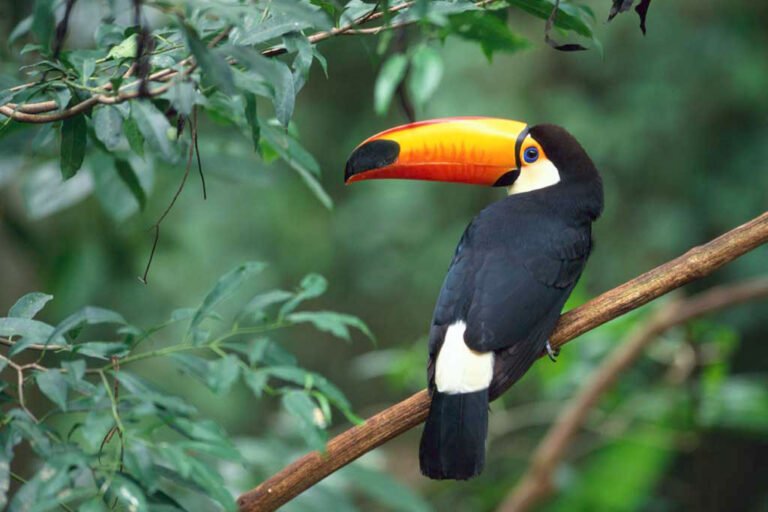
 lders Recall Forests Once Alive with Large Birds (Image Credits: Imgs.mongabay.com)
Generations of people living in harmony with nature have observed birds growing noticeably smaller over decades, a pattern now backed by systematic analysis of their experiences.[1][2]
Elders Recall Forests Once Alive with Large Birds
Researchers first heard the stories during fieldwork in the Bolivian Amazon. Knowledge holders among the Tsimané people described large birds that filled their childhood forests but had grown scarce. Lead author Álvaro Fernández-Llamazares, an ethnobotanist at Spain’s Autonomous University of Barcelona, noted these accounts during his PhD research starting in 2013. Similar reports emerged from distant ecosystems, prompting a deeper investigation.
Participants consistently remembered bigger species from their youth. One Daasanach elder in Kenya captured the sentiment: “All the big birds are now gone.”[2] These oral histories aligned with scientific trends of declining large bird populations, yet lacked quantitative backing until this effort.[1]
A Coordinated Effort Across Three Continents
Teams surveyed 1,434 adults from 10 communities in 10 countries as part of the Local Indicators of Climate Change Impacts project. Respondents recalled the three most common birds around age 10 and those today. The effort yielded 6,914 reports on 283 species, covering 1940 to 2020.
Sites ranged from tropical forests to deserts. Communities included the Tsimané in Bolivia, Timucuy in Mexico, Juruá River in Brazil, Bassari Country in Senegal, Kumbungu in Ghana, Turkana in Kenya, Vavatenina in Madagascar, Lonquimay in Chile, Bulgan soum in Mongolia, and Ordos Desert in China.[1] Researchers matched local names to scientific species and pulled body mass data from established databases.
- Tsimané territory, Bolivia: Significant decline noted.
- Timucuy, Mexico: Clear shift to smaller birds.
- Vavatenina, Madagascar: Marked reduction.
- Ordos Desert, China: Statistical drop confirmed.
- Other sites: Consistent trends, varying significance.
Numbers Paint a Dramatic Shift
Analysis showed mean body mass fell roughly 72% overall. In the 1940s, reported birds averaged 1,580 grams; by the 2020s, that figure dropped to 535 grams. Statistical models confirmed the trend across sites, with decadal declines accelerating in some areas.[1]
Past reports featured heavyweights over 1,000 grams, like certain macaws. Present lists favored lighter species. Four sites displayed statistically significant changes, underscoring the pattern’s reliability despite memory variations.[3]
Factors Driving the Large Bird Decline
Large birds reproduce slowly, heightening vulnerability to pressures. Hunters target them for greater yields, while habitat fragmentation and infrastructure like power lines claim more lives. Social changes in communities also altered interactions with wildlife.
Fernández-Llamazares explained the dual drivers: local extinctions of big species and shifts in human ecologies. A Mongolian herder linked fewer nests to livestock expansion and electrocutions. These factors compounded over decades, reshaping assemblages.[4]
Losses Echo in Ecosystems and Traditions
Ecologically, large birds disperse seeds, control pests, and regenerate forests. Their absence disrupts balances long sustained by communities. Culturally, these species wove into identities, stories, and rituals, now fading from collective memory.
Pam McElwee of Rutgers University praised the approach. “This study is a great example of how Indigenous science and knowledge and Western science can be woven together,” she said.[2] The work urges equitable partnerships to inform policy.
Key Takeaways
- 72% average drop in bird body mass from 1940s to 2020s across 10 global sites.
- 1,434 voices documented shifts through 6,914 species reports.
- Urgent need to protect large birds amid hunting, habitat loss, and development.
This convergence of knowledges reveals a crisis felt deeply by those closest to the land. Conservation must now integrate these insights to halt further losses. What changes have you noticed in local wildlife? Share in the comments.


