
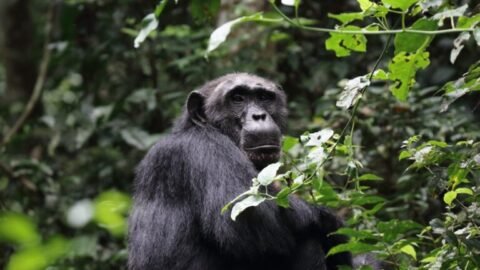
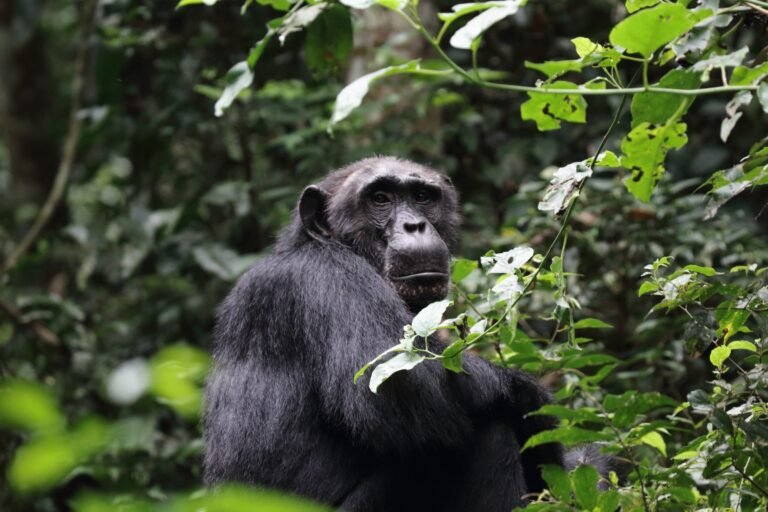
Bold Moves from the Youngest Explorers (Image Credits: Imgs.mongabay.com)
Uganda’s Kibale National Park served as the backdrop for observations that upended assumptions about risk-taking among chimpanzees, our closest primate relatives.
Bold Moves from the Youngest Explorers
Researchers documented infant chimpanzees hurtling through the forest canopy in ways that defied predictions. These young primates, barely out of constant maternal contact, launched into leaps and drops from heights exceeding 10 meters. Such maneuvers, termed “free flight,” exposed them to real dangers like falls, which previous analyses linked to injuries in about one-third of examined chimpanzee skeletons.
The team expected risk levels to surge during adolescence, mirroring human patterns. Instead, the data revealed a peak among the tiniest tree-dwellers. Infants proved three times more prone to these aerial gambits than adults. This pattern held regardless of sex or proximity to the ground, highlighting age as the dominant factor.
Behind the Canopy Observations
Video footage captured over 100 wild chimpanzees, aged 2 to 65 years, at the Ngogo Chimpanzee Project. Lead author Bryce Murray, a recent University of Michigan graduate, pored over hours of recordings from 2020 and 2021. He categorized behaviors frame by frame, focusing on intentional releases from branches during locomotion.
Chimpanzees under 2 years old stayed excluded, as they clung tightly to mothers. From age 2 onward, independence brought immediate boldness. Co-senior authors Laura MacLatchy of the University of Michigan and Lauren Sarringhaus of James Madison University oversaw the effort, published in January 2026 in iScience.
Risk Patterns by Life Stage
The study quantified daring across developmental phases. A clear decline emerged with maturity.
| Age Group | Risk Likelihood vs. Adults |
|---|---|
| Infants (up to 5 years) | 3 times higher |
| Juveniles (5-10 years) | 2.5 times higher |
| Adolescents (10-15 years) | 2.1 times higher |
| Adults (over 15 years) | Baseline |
These multipliers underscored a steady drop-off. Males and females showed equal propensity, unlike some human trends.
Bridging Primate and Human Worlds
Human adolescents often claim the spotlight for recklessness, facing higher injury rates from bold choices. Chimpanzee findings suggested otherwise for our evolutionary kin. “There’s this really intricate network in humans that we really don’t see in chimpanzees,” Murray noted.
Intensive oversight defined the difference. Chimp mothers loosen reins around age 2, allowing unchecked exploits. Human caregivers, alongside alloparents and institutions like schools, curb infant impulses. Sarringhaus observed, “We were surprised that we found such a significant difference in the young ones compared to the juveniles and compared to the adolescents.” Relaxed supervision might shift human peaks earlier, the authors proposed.
Thrill-seeking play likely honed motor skills and bone strength for arboreal life. Lighter bodies and flexible skeletons buffered young chimps from worst outcomes.
Key Takeaways
- Chimpanzee risk-taking crests in infancy, not adolescence, driven by reduced maternal vigilance.
- No sex-based disparities appeared in canopy dares.
- Human protective networks delay peak risks, potentially altering developmental trajectories.
These insights from Uganda’s forests illuminate how parenting shapes survival strategies across species. Protective measures safeguard human young but may redirect daring to later years. What role does supervision play in your view of childhood exploration? Share in the comments.


