

You’ve probably had one of those days. The kind where everything quietly falls apart, and you haven’t said a word to anyone. Then your dog walks over, puts their head in your lap, and just stays there. No barking, no tail-spinning chaos. Just… presence. And somehow, it feels like they knew.
It’s not your imagination. Science is increasingly confirming what dog owners have felt in their bones for years. Dogs have a remarkable ability to tune into our emotional world in ways that are genuinely surprising, even to researchers. From reading the micro-expressions on our faces to literally smelling our stress, these animals are far more emotionally switched-on than we ever gave them credit for.
So if you’ve ever wondered whether your pup is picking up on more than you’re letting on, you’re in for a fascinating read. Let’s dive in.
They Can Literally Smell Your Feelings
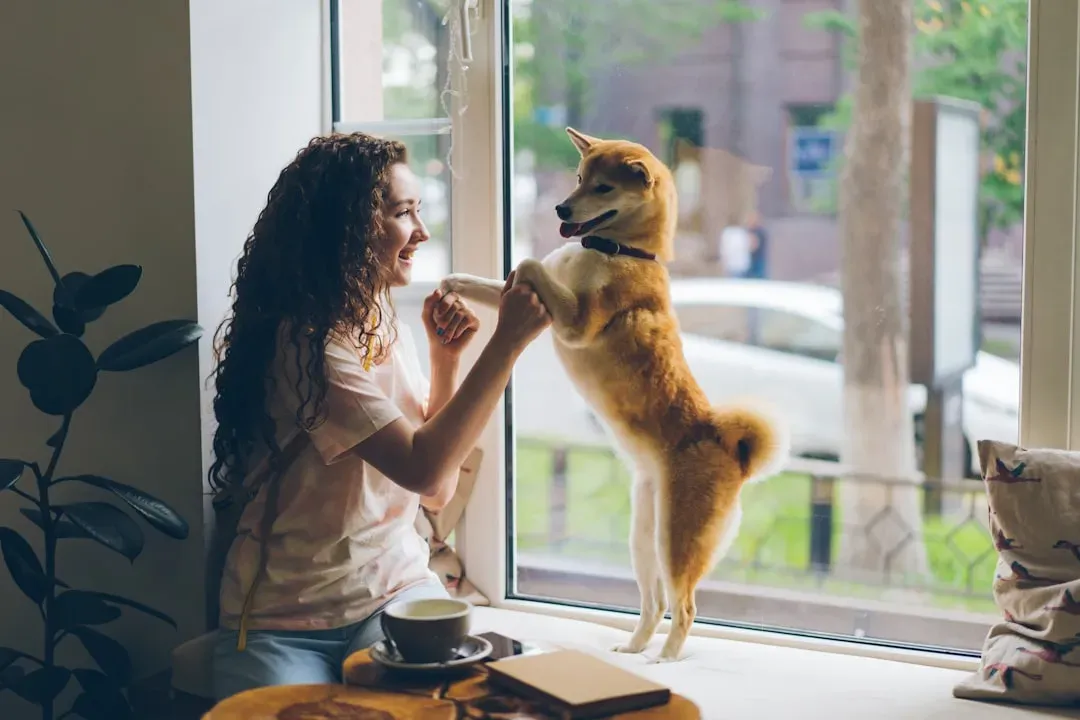
Here’s something that still blows my mind. Your dog doesn’t just observe that you’re stressed – they can actually smell it. Dogs experience emotional contagion from the smell of human stress, and a University of Bristol-led study, published in Scientific Reports, was the first to test how human stress odours affect dogs’ learning and emotional state. That’s not a metaphor. It’s chemistry.
Research out of the United Kingdom suggests that the smell of human stress affects dogs’ emotions as well as their decisions, leading them to make more pessimistic choices. Think about that the next time you walk through the door after a rough workday. Your dog already knows before you’ve even sat down.
Dogs can even detect changes in your scent caused by stress hormones like cortisol, which influences their behavior. So the next time your dog acts a little clingy after you’ve had a hard meeting, they’re not being needy. They’re being perceptive.
They Read Your Face Like an Open Book

Most people assume dogs respond mostly to tone of voice. True, but the story goes deeper. Dogs are surprisingly skilled at reading human body language and facial expressions, and experiments demonstrate that pet dogs can distinguish a smiling face from an angry face, even in photos. Even in a photograph. Let that sink in.
Dogs use different sides of their brains to process human emotions. They tend to look at the left side of our faces first – the side humans express emotion more strongly on – and this “left gaze bias” is something even chimpanzees don’t show, highlighting how specialized dogs have become in reading us. Honestly, it’s almost unsettling how good they are at this.
They Mirror Your Emotional Energy

Ever noticed how a calm dog becomes a ball of chaos the moment you get excited? Or how your typically zippy pup settles quietly beside you when you’re sick? That’s emotional mirroring in action. Dogs often reflect the energy levels of their owners – if you’re full of energy, excited, and playful, they’ll likely match your vigor. Conversely, if you’re calm or tired, they’ll adapt to that pace, mirroring your emotional and physical state.
Research has shown that dogs can distinguish different emotions and react accordingly. When humans are happy, dogs tend to be more playful; when humans are upset, they become comforting. It’s like living with the world’s most responsive emotional companion, one who adjusts their whole vibe around yours.
They Come to You When You’re Crying
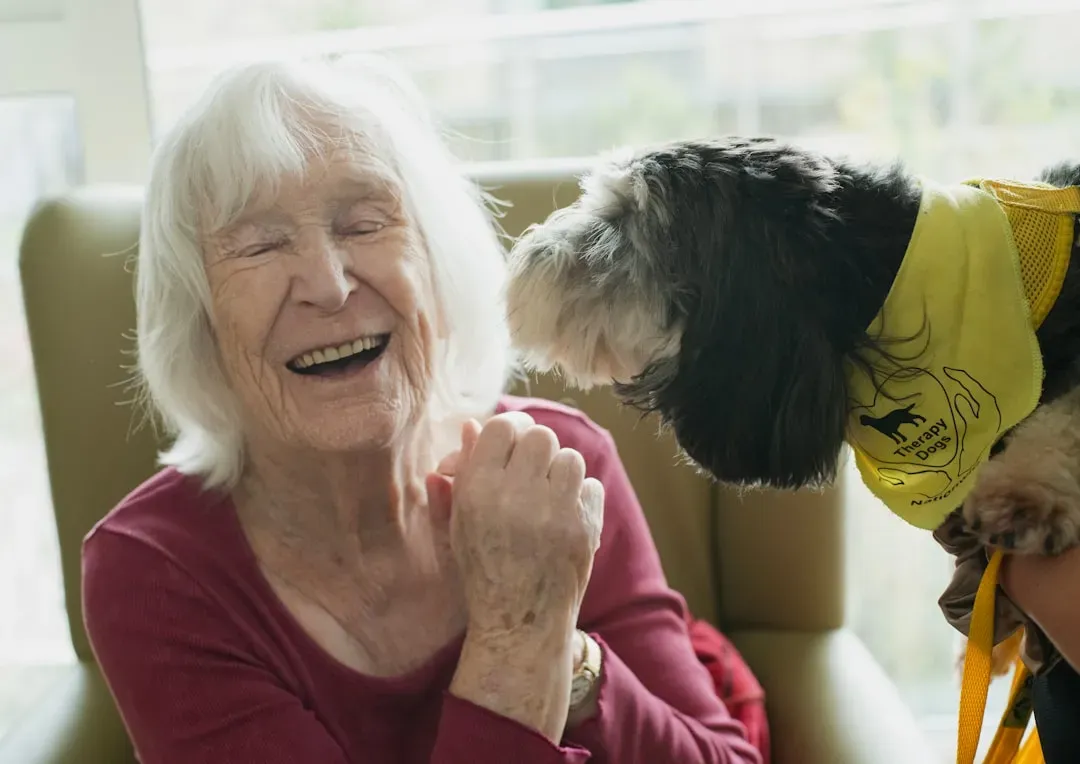
This is the one most dog owners know from personal experience. You cry, and suddenly there’s a warm body pressed against yours. Researchers found that dogs not only approached and tried to comfort their owner when they cried, but also approached strangers who displayed unhappiness, seeming to offer sympathy and support in much the way that humans display empathy for each other. This is a big deal. They went to a stranger. Not just their beloved human.
Another study in Animal Cognition revealed that dogs display empathetic behavior toward strangers who are pretending to cry – rather than shying away, the dogs nuzzled and even licked the people who they perceived to be in distress. Whether you call it empathy or emotional contagion, the result is the same: your dog shows up for you.
Their Brain Lights Up to Your Voice

It’s not just what you say. It’s how you say it – and your dog’s brain is wired to notice the difference. Dogs’ brains have dedicated areas that are sensitive to voice, similar to those in humans. In a brain imaging study, researchers found that dogs possess voice-processing regions in their temporal cortex that light up in response to vocal sounds, and dogs respond not just to any sound, but to the emotional tone of your voice.
Brain scans reveal that emotionally charged sounds – a laugh, a cry, an angry shout – activate dogs’ auditory cortex and the amygdala, a part of the brain involved in processing emotions. So when you call your dog’s name in a frustrated tone versus a joyful one, they are processing a genuinely different emotional signal. Speak kindly. It lands deeper than you think.
They Behave Differently Based on Your Mood
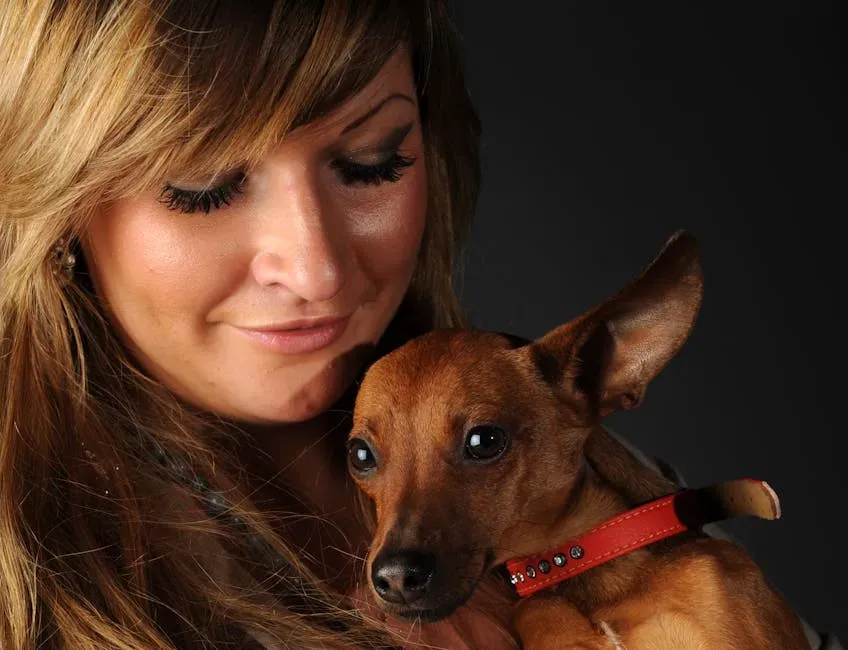
This one is fascinating because it’s been measured in controlled lab settings, not just observed by loving owners. Dogs behaved differently depending on the owner’s emotional state – they gazed and jumped less at owners when they were sad, and their compliance with commands was also diminished. It’s like they sense it’s not the right time for play.
The study confirms that dogs might be less likely to think a reward is coming if they know their human is in a bad mood. Think of it this way: your dog is constantly running a real-time emotional weather forecast about you, adjusting their behavior like a seasoned co-pilot reading the cockpit instruments.
They Comfort Strangers, Not Just You

Here’s the thing that really sets dogs apart from simply “trained companions”: their emotional responsiveness extends beyond their own household. Dogs have been empirically shown to be particularly sensitive to human emotions. They discriminate and show differential responses to emotional cues expressed through body postures, facial expressions, vocalisations and odours. It doesn’t matter who you are.
Research suggests that dogs can pick up on emotions in both species and even distinguish between positive and negative feelings, implying they might possess one of the key building blocks for empathy. This is why therapy dogs work so extraordinarily well with patients they’ve never met before. The emotional sensitivity isn’t personal. It’s built-in.
Eye Contact Actually Creates a Chemical Bond

When your dog stares into your eyes, something genuinely magical is happening on a biochemical level. Eye contact plays a huge role in how dogs read our emotions. Studies show that mutual gaze between dogs and their owners increases levels of oxytocin – the bonding hormone responsible for attachment and trust – the same hormone released between parents and infants during nurturing moments.
This effect is unique to domesticated dogs: hand-raised wolves did not respond the same way to human eye contact. As dogs became domesticated, they evolved this interspecies oxytocin loop as a way to glue them emotionally to their humans. Those soft, soulful eyes gazing up at you? They are literally bonding chemicals flowing between two species. I find that completely remarkable.
They Absorb Your Anxiety – and That’s a Warning Sign Too

Let’s be real: the emotional connection between you and your dog runs both ways, and not always in a good direction. There are indications that your dog’s behavior changes as a result of your emotions. If you’re scared of the sound of thunder, your dog may recognize that fear and interpret it as something they should also be fearful of and start to shake or hide when a thunderstorm rolls in. Your anxiety can literally transfer to them.
We already knew that positive training, heavy on the rewards, is good for owner-dog relationships. This research suggests that the reverse is also true: approaching the process while stressed could have a negative effect on how a dog feels and learns. This is important. If your dog seems anxious, hypervigilant, or clingy during tense periods in your home, they may be absorbing more than their fair share of your emotional load. Protecting your own mental state is, genuinely, an act of care for your dog too.
Conclusion: The Most Emotionally Intelligent Being in Your Home May Have Four Legs

Dogs don’t need language to understand us. Dogs probably aren’t pondering why you’re upset or realizing that you have distinct thoughts and intentions. Instead, they excel at picking up on what you’re projecting and respond accordingly – so dogs may not be able to read our minds, but by reading our behavior and feelings, they meet us emotionally in a way few other animals can.
They smell your stress before you acknowledge it. They read your face even in a photograph. They comfort strangers who are crying. They bond with you through eye contact on a hormonal level. The depth of what’s happening between you and your dog every single day is extraordinary, and it deserves to be honored.
The next time your dog presses close during a hard moment, don’t dismiss it as coincidence. Recognize it for what it is: a living, breathing emotional radar who has chosen, repeatedly and instinctively, to be by your side. The real question worth sitting with is this – are you as tuned in to them as they are to you?


