
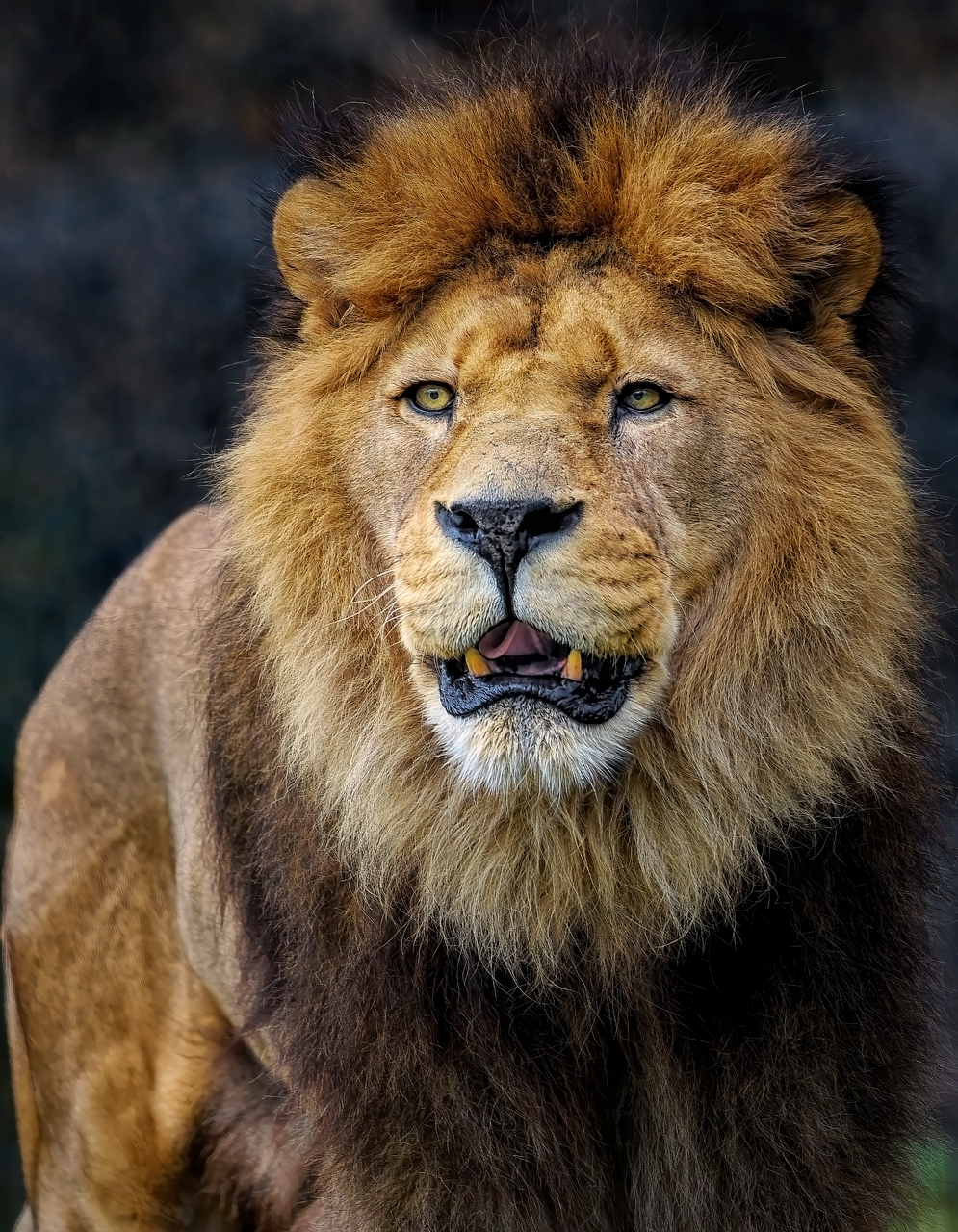
A Split-Second Escape Caught on Camera (Image Credits: Pixabay)
Junagadh – A factory watchman faced a lion mere feet away during a late-night intrusion that underscored the expanding presence of Asiatic lions near human settlements.
A Split-Second Escape Caught on Camera
The incident unfolded on the outskirts of Junagadh, close to the Girnar hills. Stray dogs dashed toward a factory gate, pursued by a lion that had ventured from the nearby jungle. Their frantic barking drew the watchman from his post. He approached to secure the entrance, unaware of the predator closing in.[1]
Factory CCTV footage captured the tense moment. The lion appeared suddenly, standing just a few feet from the man. With remarkable reflexes, the watchman slammed the heavy gate shut. The animal paused briefly before retreating into the darkness. The video quickly spread across social media, drawing millions of views and amplifying concerns over wildlife proximity.[1]
Asiatic Lions: From Gir Forest to New Frontiers
Girnar’s forests, now a sanctuary, host a growing number of Asiatic lions. These big cats once roamed vast Asian territories but now thrive primarily in Gujarat’s Gir landscape. Junagadh’s location near these habitats explains frequent nighttime movements. Lions seek prey like stray dogs, drawn by easy access near industrial areas.[2][3]
Experts point to natural roaming instincts combined with shrinking wild spaces. Human expansion fragments habitats, pushing lions toward fringes. Such forays highlight how conservation efforts have bolstered populations, leading lions to reclaim adjacent territories like Girnar.[1]
Conservation Success Fuels Conflict Challenges
Gujarat’s Asiatic lion numbers reached 891 in the 2025 census, a 32 percent rise from 674 in 2020.[4][5] This growth spans over 35,000 square kilometers, far beyond Gir National Park’s core. Amreli district leads with the largest share, but lions now occupy diverse districts including Junagadh.[6]
While officials celebrate the rebound, encounters with humans increase. Livestock losses and rare human injuries prompt calls for expanded habitats. Illegal tourism in buffer zones exacerbates tensions, as does food availability from settlements.[7] Forest departments track movements via collars, yet rapid population gains strain coexistence strategies.
Strategies for Safer Coexistence
Authorities promote barriers like sturdy fencing around factories and villages. Awareness campaigns educate residents on avoiding night outings and securing livestock. Relocation of stray dogs reduces attractants for predators.
- Install motion-sensor lights at perimeters to deter wildlife.
- Support corridor creation linking Girnar to core forests.
- Enhance compensation for conflict victims to build community tolerance.
- Monitor via camera traps for early warnings.
- Promote eco-tourism to fund habitat expansion.
| Year | Lion Population | Range (sq km) |
|---|---|---|
| 2020 | 674 | ~20,000 |
| 2025 | 891 | 35,000 |
Data reflects Gujarat Forest Department censuses.[8]
Key Takeaways
- Conservation doubled lion numbers since 2010, but demands better human-animal buffers.
- Girnar’s lions signal successful range expansion amid habitat pressures.
- Quick actions like the watchman’s save lives; proactive measures prevent future scares.
This Junagadh close call reveals the double-edged sword of wildlife recovery: thriving lions test human resolve. Balancing protection with safety remains crucial as populations grow. What steps should communities take next? Share your thoughts in the comments.
Details drawn from India Today Trending Desk.


