
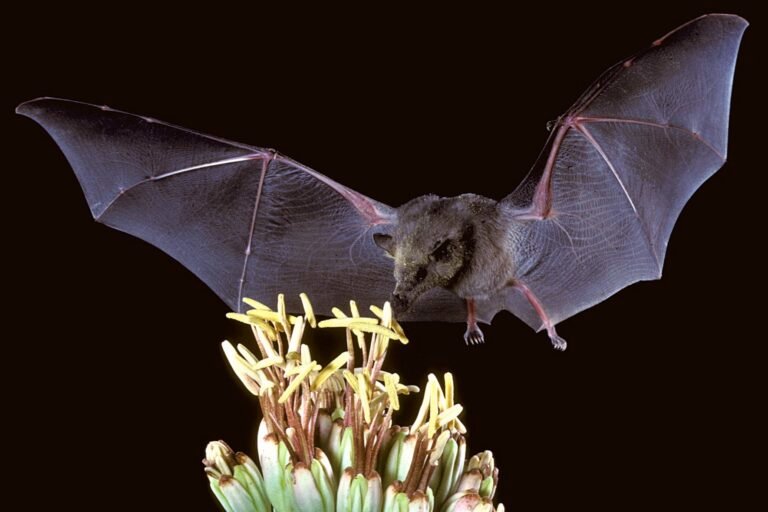
DNA Evidence Uncovers Bold New Territory (Image Credits: Imgs.mongabay.com)
Albuquerque, N.M. – Endangered Mexican long-nosed bats are extending their summer migrations deeper into the United States, driven by the search for reliable agave nectar amid persistent drought conditions.[1][2]
DNA Evidence Uncovers Bold New Territory
Bat Conservation International recently confirmed the bats’ presence on the fringes of New Mexico’s Gila National Forest through environmental DNA sampling. Researchers swabbed agave plants and even hummingbird feeders, detecting traces that placed the bats about 100 miles beyond their previously known roosts in the state.[1]
This marks the farthest north the species has ventured. Traditional stops included Big Bend National Park in Texas and Hidalgo County in New Mexico’s Bootheel region. Arizona joined the list last year based on similar DNA findings. Each extra 30 miles of travel adds a full night to the bats’ demanding flights.
Drought Alters Ancient Migration Paths
Severe drought has ravaged agave populations in New Mexico’s Bootheel, reducing flowering and nectar availability. Kristen Lear, director of the Agave Restoration Initiative at Bat Conservation International, noted that the bats appear to seek out healthier plants farther north, where drought impacts remain lighter.[2]
“We think these bats are trying to look for healthy agave food sources elsewhere,” Lear said. “So that’s kind of driving them farther north, where the agaves are a little bit less hit by drought.” These nectar specialists rely on the desert plant’s sugary reward not just for meals, but to power their long-distance journeys from Mexico.
A Delicate Partnership Under Threat
Listed as endangered since 1988, fewer than 10,000 Mexican long-nosed bats survive today. The species produces only one pup per year, slowing any potential recovery. Agaves face similar hurdles, often requiring a decade or more to bloom and set seeds, with the bats serving as their primary pollinators.
“So you’re not going to get huge population rebounds quickly. You have to really work to maintain those levels,” Lear explained. This mutual reliance heightens the stakes, as declining nectar sources threaten both the bats’ survival and the plants’ genetic diversity across the borderlands.
Conservation Builds a Lifeline Nectar Corridor
Since 2018, teams have planted roughly 185,000 agaves along a vital “nectar corridor” stretching from Mexico into the U.S. Volunteers collect seeds, nurture seedlings in nurseries for up to two years, then transplant them to priority sites. Rachel Burke, the organization’s U.S. agave restoration coordinator, emphasized how these detections guide efforts.
More than 100 partners – from ranchers and communities to government agencies – collaborate with Bat Conservation International on DNA sampling and habitat surveys. Restoration targets desert grasslands at migration edges to sustain nectar flow.
- Seed collection and nursery propagation
- Targeted planting in high-need areas
- Grassland restoration for long-term blooms
- Citizen science for ongoing monitoring
- Cross-border coordination for corridor continuity
Key Takeaways
- Bats now roam 100 miles beyond prior New Mexico limits due to drought-driven nectar shortages.
- 185,000 agaves planted since 2018 support the nectar corridor.
- Slow reproduction in bats and plants demands sustained, collaborative conservation.
As these nocturnal travelers adapt to shifting landscapes, their expanded range signals both resilience and urgency. Protecting this intricate ecosystem could secure a brighter future for bats and agaves alike. What steps should communities take next to aid these vital pollinators? Share your thoughts in the comments.


