
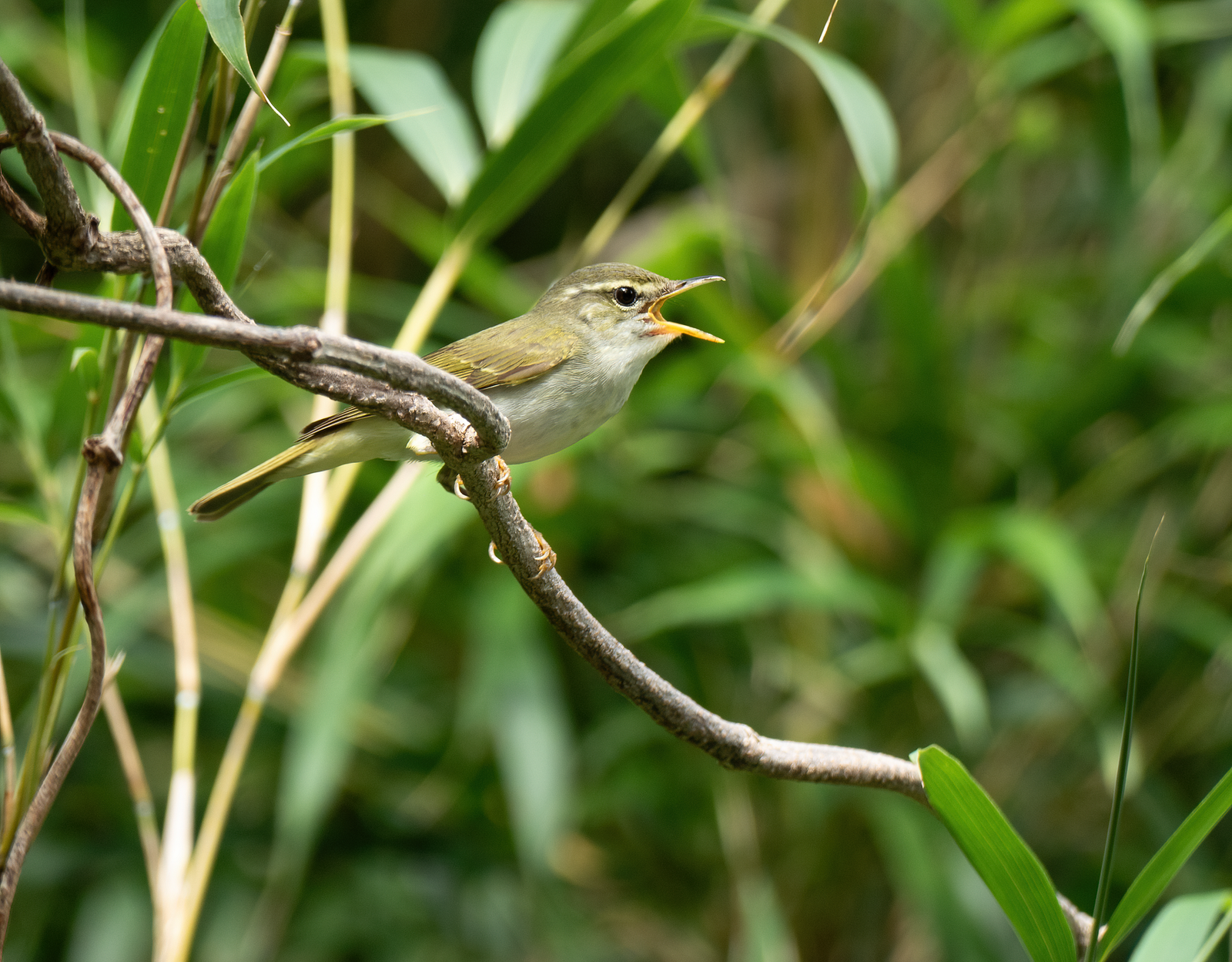
Nature has a way of hiding its secrets in the most unexpected places. Sometimes a species that has been observed, catalogued, and studied for decades turns out to be something else entirely – something new to science, wearing a familiar face. That is exactly what happened when a team of international researchers took a closer look at a small, inconspicuous warbler flitting through the remote islands of Japan.
What started as a quiet scientific curiosity has now become one of the most exciting ornithological discoveries in over four decades. The story involves genomics, birdsong, isolated islands, and a reminder that even in a well-studied world, nature still surprises us. Let’s dive in.
A Bird That Was Hiding in Plain Sight for Decades
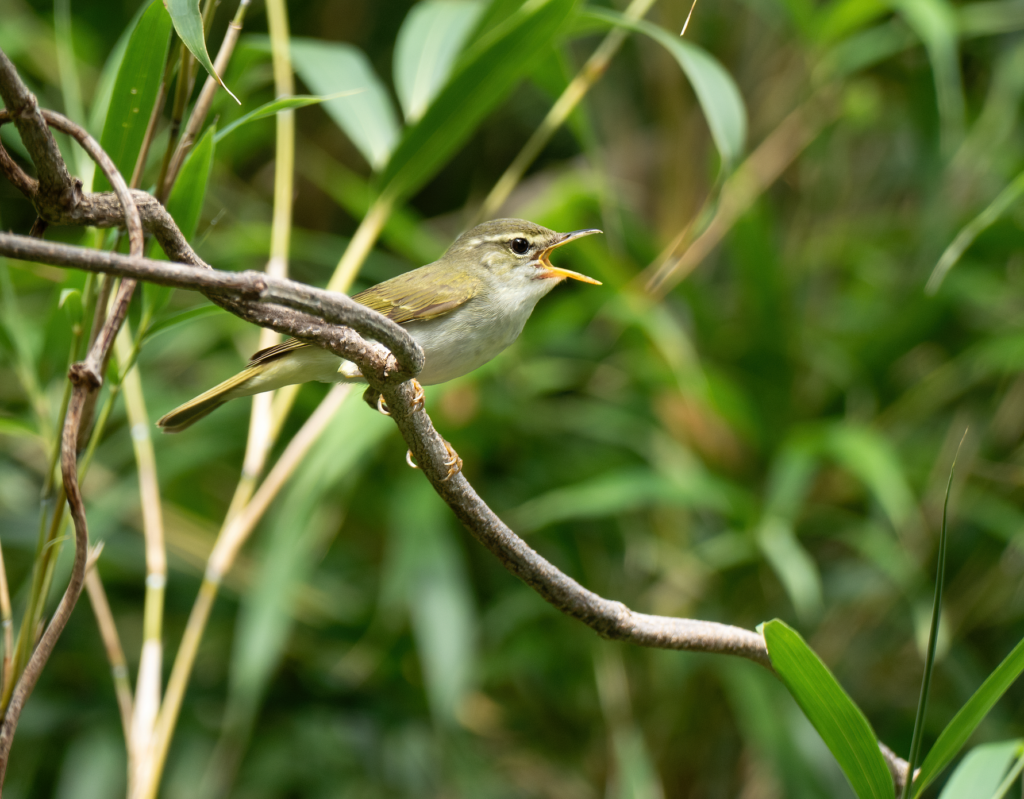
Here’s the thing – this discovery wasn’t made in some unexplored jungle or a remote corner of Antarctica. For decades, the Ijima’s Leaf Warbler was believed to inhabit both the Izu Islands and the Tokara Islands as a single species, and the birds’ similar appearance gave little reason to suspect otherwise. Traditional classification methods simply never challenged that assumption.
The Ijima’s Leaf Warbler is a rare migratory bird found only on the Izu Islands south of Tokyo, Japan, and on the Tokara Islands approximately 1,000 kilometers to the southwest. That’s a massive geographic gap between two populations that everyone assumed were the same creature. Honestly, it’s the kind of oversight that makes you wonder what else we might be missing out there.
Every year, a few new bird species are identified around the world, but the unusual aspect in this case is that it is not primarily the appearance that reveals that two species are involved – it is above all DNA analyses that prove it. This discovery genuinely rewrites how we think about species identification in the modern era.
The Role of DNA and Birdsong in Cracking the Case
Scientists had already discovered that the birds on these two groups of islands were clearly distinct from one another ten years ago, when they analyzed their DNA sequences, which led to extensive studies on the islands, in museum collections and in the DNA lab. Analyses based on the entire genome showed that the birds on the Tokara Islands are very unlike those on the Izu Islands, a finding that was corroborated by careful comparisons of their songs.
Despite their near-identical appearance, scientists confirmed the Tokara Leaf Warbler as a distinct species through detailed genetic analysis and acoustic studies. Variations in DNA sequences, combined with differences in song patterns, played a decisive role in distinguishing it from its relative. Think of it like two people who look identical as twins but speak completely different languages – the outward similarity masks a profound underlying difference.
Across the genome, the Tokara and Izu leaf warblers fell into separate clusters with no sign of recent mixing. Mitochondrial evidence placed their split at roughly 2.8 to 3.2 million years ago, a deep divide for such similar birds. That is an astonishing timeline. These two birds have been living separate evolutionary lives since before our own human ancestors walked upright.
Meet the Tokara Leaf Warbler – Japan’s Newest Species
Scientists from Uppsala University, the University of Gothenburg, and two Japanese institutions have now formally identified the Tokara Leaf Warbler (Phylloscopus tokaraensis) as a separate species. It’s a modest-looking little bird, nothing flashy about it. Yet it represents something extraordinary.
The last time a new species was discovered in Japan was in 1982, when the Okinawa Rail was first described. That means this discovery breaks a scientific silence lasting over 40 years. I think that context alone makes this find genuinely jaw-dropping.
Fieldwork across the Tokara’s twelve small islands, totaling just over 100 square kilometers, documented breeding primarily on Nakanoshima and nearby sites. Despite the potential for seasonal migration bringing the two populations closer together, no gene flow has been detected, indicating long-term reproductive isolation. Two birds, side by side in the same sky, belonging to entirely different species. Nature, it turns out, is far more complex than it looks.
Tiny Islands, Fragile Populations, and a Looming Conservation Crisis
The genomic data show that both species have low genetic diversity and evidence of past population declines, consistent with small, isolated populations. At the same time, the genomes bear signs of limited recent inbreeding and possible recovery from earlier bottlenecks. That is a cautiously hopeful signal, though it is far from reassuring.
The Tokara Leaf Warbler faces risks including habitat loss from deforestation, invasive predators like weasels, and climate pressures, and experts urge immediate Vulnerable listing and monitoring. Splitting one species into two made that conservation recommendation more urgent, because each bird now stands on its own numbers. In other words, what was once counted as one relatively small population is now revealed to be two even smaller ones.
The Tokara chain offers very little room, and breeding has been confirmed only on Nakanoshima, one of its islands. Researchers had heard singing males on five islands, yet a recent survey failed to find the birds on Tairajima, one of the Tokara Islands. That kind of absence is a quiet alarm bell for scientists who study endangered wildlife.
What This Discovery Means for Science and Conservation Worldwide
The finding highlights the increasing role of molecular biology alongside traditional field observation in species identification. We are living in an era where a bird that looks exactly like another bird can be unmasked as something entirely distinct, simply by reading its genome. That is genuinely transformative for how biodiversity is studied and protected.
Formal recognition matters here because conservation rules and priorities usually attach to named species, not hidden lineages. Without a name, without official recognition, a species can effectively vanish without anyone noticing it was ever there. This discovery gave the Tokara Leaf Warbler the identity it needed to be protected.
Despite the escalating biodiversity crisis, many species remain unknown to science and may even disappear unnoticed, which is particularly true for many island populations. The unusual aspect of this case is that it is not primarily appearance that reveals two species are involved, and this shows how important it is to use genetic methods to reveal hidden biodiversity at a time of global biodiversity crisis.
Conclusion: The World Still Has Secrets Worth Protecting
The discovery of the Tokara Leaf Warbler is a stunning reminder that biodiversity is not just something found in distant rainforests or deep ocean trenches. It can be hiding right in front of us, on a small Japanese island, in the song of a bird that we thought we already knew. The fact that it took decades of DNA research to uncover this distinction should make us genuinely humble about how much we still don’t understand about life on Earth.
I think the most powerful takeaway here is not just the science itself, but what it represents for the future of conservation. Every unidentified species is a potential conservation blind spot. Every “known” population that hasn’t been tested with modern genomic tools might still be hiding a secret. The Tokara Leaf Warbler wasn’t a new creature that appeared overnight – it was always there, always distinct, simply waiting for science to catch up.
In a world where species are disappearing faster than we can name them, tools like whole-genome sequencing and acoustic analysis are no longer optional extras. They are absolutely essential. The little warbler of the Tokara Islands has made that case more powerfully than any academic argument ever could. What do you think – how many more hidden species might still be out there, waiting to be found? Tell us in the comments.


