
Dorking, Surrey – Two children stumbled upon a striking albino squirrel during playtime in a neighborhood churchyard, capturing a genetic rarity that occurs only once in every 100,000 squirrels.
A Serendipitous Encounter Sparks Excitement
The young explorers froze in awe as the creature darted across the grass, its pristine white fur gleaming under the daylight. This chance meeting turned an ordinary afternoon into a memorable adventure. Churchyards often serve as quiet havens for wildlife, but few visitors expect such an extraordinary find.
Local residents later confirmed the sighting, noting the squirrel’s distinctive pink eyes that set it apart from common grey varieties. The event quickly spread through community channels, drawing attention to the area’s biodiversity.
The Science Behind the White Wonder
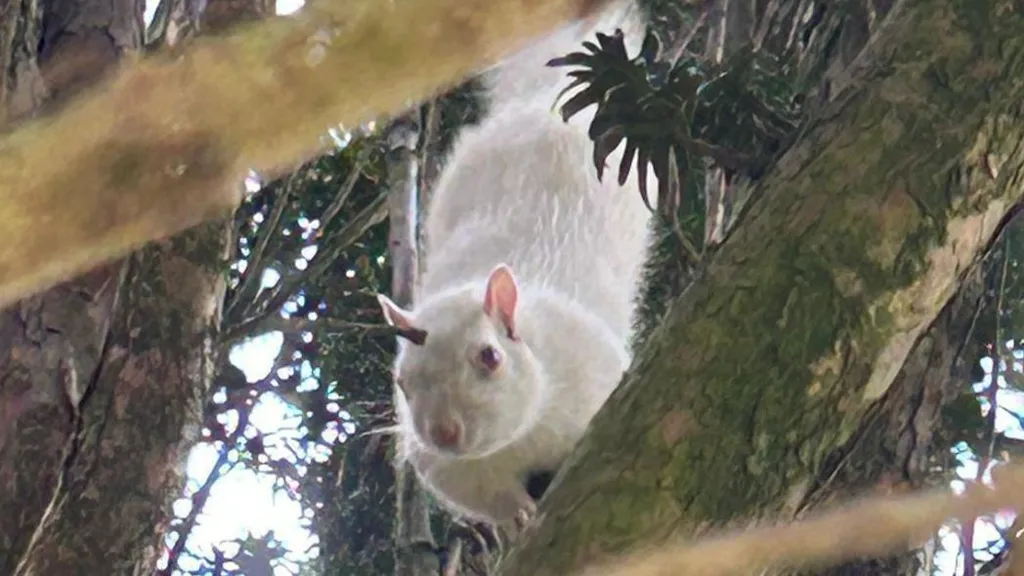
Albinism results from a recessive gene that inhibits melanin production, leaving the animal with a pale coat and sensitive pink eyes. Squirrels affected by this condition face unique challenges in the wild. Their lack of camouflage makes evasion from predators more difficult.
Experts estimate the odds at one in 100,000, underscoring why encounters remain so infrequent. In the United Kingdom, confirmed populations exist in only a handful of locations, making this Dorking appearance particularly noteworthy.
Characteristics That Define Albino Squirrels
Beyond their appearance, these squirrels exhibit behaviors adapted to their vulnerability. They often seek shaded areas during peak sunlight hours to protect their eyes.
- White fur lacking typical pigmentation
- Pink or red eyes due to visible blood vessels
- Increased sensitivity to sunlight
- Potential vision impairments
- Shorter lifespan in the wild compared to pigmented peers
These traits highlight the delicate balance of nature, where rarity comes at a cost.
Community Buzz and Conservation Thoughts
News of the squirrel prompted families to visit the churchyard, hoping for a glimpse. While no formal protection measures followed, the incident raised awareness about urban wildlife. Residents expressed delight at the natural spectacle unfolding in their midst.
Similar sightings have boosted local tourism in other regions, though experts urge observers to maintain distance. Feeding or disturbing the animal could harm its well-being.
Key Takeaways
- Albino squirrels represent a one-in-100,000 genetic event.
- Their pink eyes and white fur demand careful, non-intrusive observation.
- Churchyards like Dorking’s offer unexpected wildlife encounters.
This rare sighting reminds us that extraordinary moments hide in everyday places. What wildlife wonders have you spotted in your neighborhood? Share your stories in the comments.


