
Imagine driving down a wooded road in northern Wisconsin, spotting a fast-moving creature dart across the pavement, and then watching it disappear straight up a tree. That is almost exactly what happened in March 2026, and the footage is sending ripples through the wildlife conservation community. The animal in question is one of the rarest, most elusive mammals in the entire state, and most people have never heard of it.
This is the kind of sighting that biologists dream about. The story involves a dedicated wildlife professional, a massive aspen tree, and a creature so secretive that trail cameras rarely pick it up. Let’s dive in.
The Unforgettable Moment in the Northwoods
The Wisconsin Department of Natural Resources shared a video from Alexander Streitz, one of their biologists, who was out in the field tracking American Martens. What unfolded was something most wildlife watchers go entire careers without witnessing. A fleeting glimpse on the road turned into a jaw-dropping close encounter.
Streitz described how he observed the animal on the road and got out to see where it had gone, only to discover it had run up a large aspen tree near the road and was vocalizing directly at him. The creature did not just hide. It stood its ground. Honestly, there is something both adorable and slightly intimidating about an endangered animal the size of a small cat deciding to yell at a biologist from a treetop.
Meet the American Marten: Wisconsin’s Most Secretive Mammal
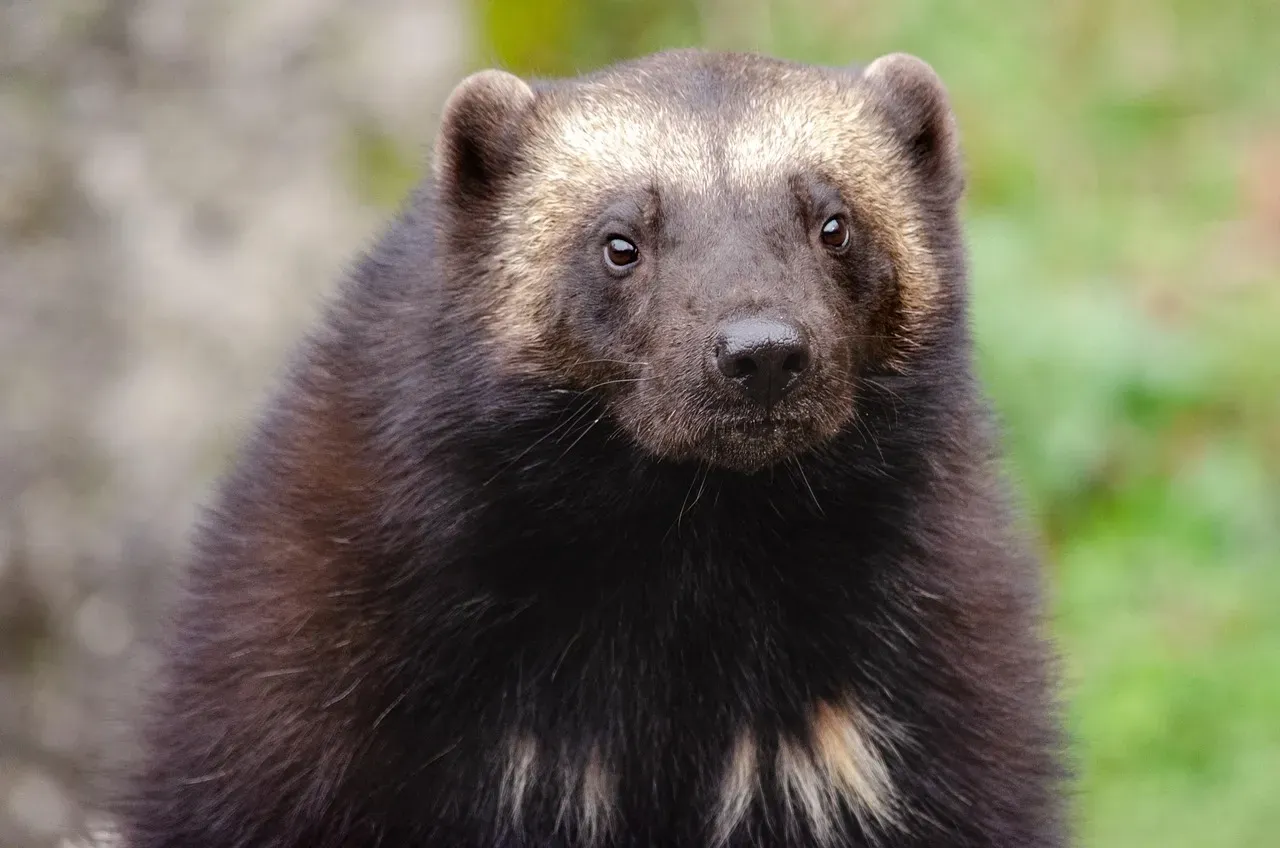
The American marten is the only state-endangered mammal in Wisconsin, and martens were wiped out from the state in the 1920s due to unregulated trapping and extensive habitat loss from logging. Think about that for a moment. A whole species, gone from an entire state, in less than a generation. The damage done by the fur trade era is still being felt today.
Pine martens, also known as American martens, are nocturnal weasels that are excellent climbers. Agile, fast, and small, females are typically 18 to 22 inches long and stand almost six inches high, about three-quarters the size of the male. Females weigh around two pounds, while males can reach up to three pounds. They are compact, fierce little hunters built for dense forest life. Picture a sleek, reddish-brown weasel with a bushy tail and sharp eyes. That is your marten.
They have soft, thick, and dense fur perfectly suited for cold Wisconsin winters, and are yellow to reddish-brown with bushy tails that extend one-third the length of their bodies.
Why Spotting One Is So Incredibly Rare
The marten is currently endangered in Wisconsin, which is why it is so rarely detected even on trail cameras. In addition, it has a fairly small range within the state and exhibits behavior that lends itself to laying low. Here’s the thing: these animals are not just rare in number. They are genuinely masters of avoidance. Getting one on camera, let alone seeing one in person, is the wildlife equivalent of winning a lottery.
Martens spend a significant amount of their time denning within trees where they raise young, or hiding in underbrush and woody debris throughout the day. Their preference for mature, dense, and complex forest habitats makes them extremely difficult to locate. It is a bit like searching for a single needle in the entire Wisconsin Northwoods. Which, if you have ever seen how enormous those forests are, is saying quite a lot.
Where American Martens Live and How Far They Roam

The species can essentially be divided into three separate populations within Wisconsin: the eastern and western units of the Chequamegon-Nicolet Forest and the Apostle Islands. These are small, isolated pockets of survival in a state where the marten once ranged much more freely. It is a fragile foothold, not a thriving comeback, at least not yet.
Martens build dens in hollow trees, with shore pines and fir trees often serving as their homes. Outside of Wisconsin, they can be found from Alaska and Canada into northern New Mexico, especially within the Olympic Mountains, the Cascade Range, the Blue Mountains of Washington, and Oregon’s higher elevations. So while the species is struggling in Wisconsin, it actually has a wide range across North America. The contrast is striking, and it raises real questions about what specifically is holding this Wisconsin population back.
A Long Road Back: The History of Marten Conservation in Wisconsin
The first reintroduction of martens in Wisconsin occurred in 1953 and 1956 with the release of ten individuals to Stockton Island in the Apostle Islands. The last reported observation came in 1969 and the effort was considered a failure. Since 1975, reintroductions have occurred in the Chequamegon and Nicolet National Forests with the release of 139 and 172 martens respectively, though population viability and connectivity has remained uncertain.
Conservation groups have been working to save this species from extinction by protecting forests like the Chequamegon-Nicolet National Forest, and the marten population has grown since those efforts began. It is slow, painstaking work. But the fact that a biologist can still stumble upon one on a random road in 2026 tells you that something is working, even if it is fragile. Meanwhile, Minnesota has described the full recovery of the marten population within its borders as a DNR management success story, which shows that recovery is possible when conditions are right.
What This Sighting Means for the Future
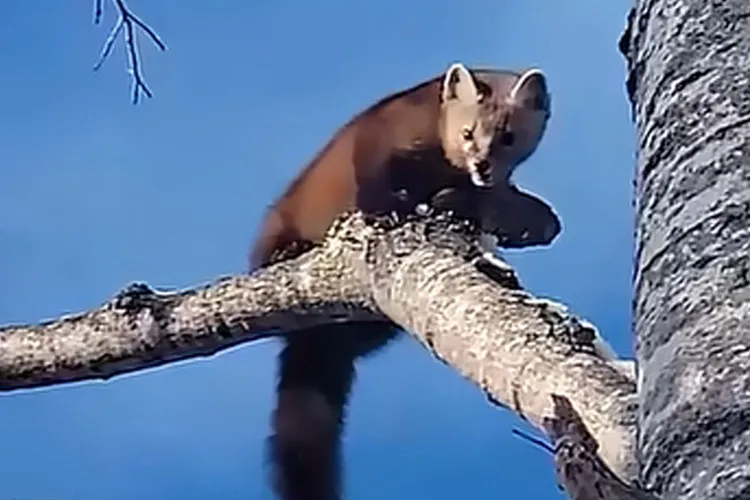
American martens are a rare and statewide endangered species that need the mature forests of the Northwoods to survive. Every confirmed sighting matters enormously for researchers trying to track population trends and distribution. It is not just a cool video moment. It is a real data point in an ongoing scientific effort to understand whether this species can truly stabilize in Wisconsin.
The Natural Resources Foundation of Wisconsin has supported conservation of the American marten, including distribution surveys, analysis of potential habitat, and the reintroduction and monitoring of martens in northern Wisconsin. I think moments like Alexander Streitz’s aspen-tree encounter are genuinely powerful, not just for researchers but for the broader public. When a wild, endangered animal stares you down from a treetop and hollers at you, it becomes impossible to stay detached or indifferent about its survival.
Recent discoveries indicate that the Apostle Islands can serve as a refuge for American martens, providing them with preferable habitat during a changing climate. That is a hopeful sign in a story that has had far too few of them. The marten is scrappy, elusive, and apparently loud when provoked. Honestly? You have to respect it.
A Rare Moment Worth Celebrating, and Protecting
Let’s be real: wildlife conservation news is often grim. Population crashes, habitat loss, silent extinctions that slip by without headlines. So when a DNR biologist captures video of Wisconsin’s only state-endangered mammal perched in a tree and talking back to him, that deserves more than a passing scroll. It deserves attention, investment, and action.
The American marten’s story is one of near-extinction, stubborn survival, and painfully slow recovery. It is a story about what happens when we strip forests bare and trap without limits, and it is also a story about what becomes possible when humans decide to course-correct. Pine martens are recovering in Wisconsin after nearing extinction because of over-trapping and habitat loss, and these furry, agile weasels are seeing a population upturn as environmental officials take steps to secure the pine forests they call home.
That aspen tree in northern Wisconsin held something extraordinary this past week. A tiny, fierce, endangered creature with every reason to hide instead chose to make itself heard. Maybe there is a lesson in that. What would you have done if that reddish-brown blur on the road turned out to be one of the rarest mammals in your state? Tell us in the comments below.


