

For years, scientists believed sharks were silent creatures, communicating only through body language and electrical signals. Generally, relying on their stealth capabilities in order to hunt their prey.
However, a surprising accidental discovery has upended that long-standing assumption—sharks, it turns out, can make sounds.
A Startling Find in a Marine Laboratory
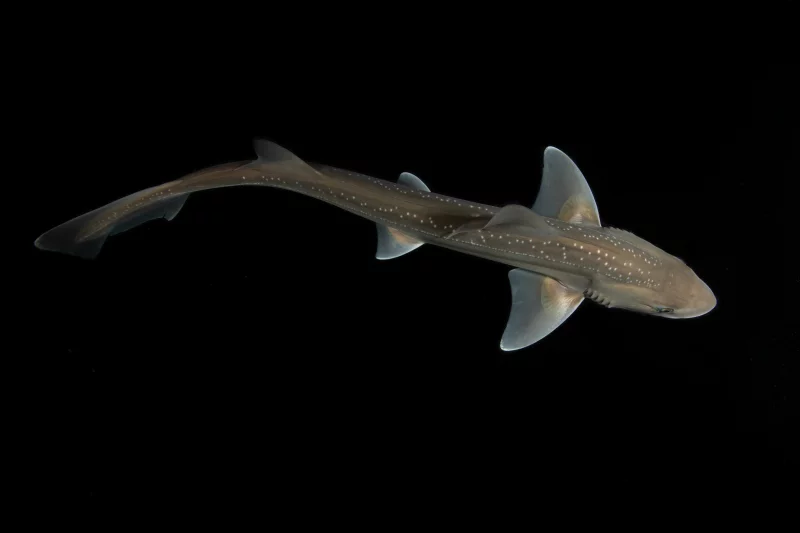
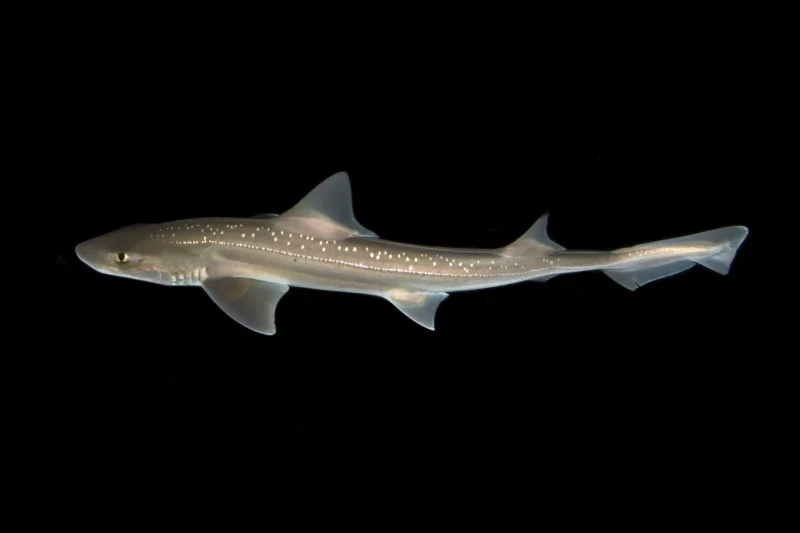
The groundbreaking discovery was made when researchers at the University of Auckland in New Zealand noticed an unexpected clicking noise while handling rig sharks in a controlled environment.
Initially puzzled, the team set up audio recording equipment to capture and analyze the sounds. To their amazement, the recordings provided the first known evidence of sharks producing deliberate noises.
According to NPR, researcher Carolin Nieder said the discovery of the clicking noise was found purely by accident and described the sound as similar to an electrical spark. Although the noises were first recorded four years ago, it wasn’t until March 26 that the scientists published their findings.
What Do Shark Sounds Mean?
The discovery has opened a new frontier in understanding shark communication. The recorded clicks appear to be intentional, potentially serving as a means of signaling stress, deterring predators, or coordinating movements with other sharks. However, much remains unknown about their purpose.
“How sharks maintain social groupings or communicate was thought to be largely body language and possibly through chemical signals; but for the most part has been a mystery,” said Neil Hammerschlag, executive director of the Shark Research Foundation, in a CNN Science article. “This study opens up a whole new possibility of communication via sound.”
The Science Behind the Sounds
Unlike many marine animals such as whales and dolphins, sharks lack vocal cords. This has led scientists to assume they were incapable of producing sounds. However, the study hypothesizes that the noises may originate from air movement within their bodies, muscle contractions, or other biological mechanisms yet to be fully understood.
According to NPR, fish have something called a swim bladder that helps with buoyancy and can also produce sound. Since sharks lack this organ, it was previously assumed they also didn’t make noise. Nieder noted that there are roughly 500 shark species in the world, many of which are similar to the rig shark—bottom feeders that are prey for larger predators.
What’s Next for Shark Sound Research?
The discovery has sparked excitement among marine researchers, who are now eager to investigate whether other shark species also produce sounds. Future studies will focus on recording shark noises in the wild to determine how widespread this ability is across different species and whether it plays a role in their social interactions.
The study suggests that “forceful snapping of the teeth is the likely sound producing mechanism, but further studies are necessary to confirm this hypothesis. Our observations suggest that rigs produce these sounds in response to disturbance or distress. Future behavioral studies are warranted to address as to whether clicks represent a biological meaningful signal.”
As researchers explore this new dimension of shark behavior, it’s becoming clear that the ocean’s most iconic predators may be more complex—and vocal—than we ever imagined.


