
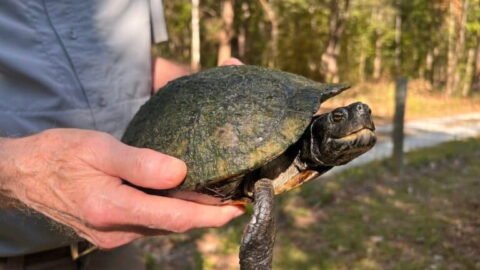
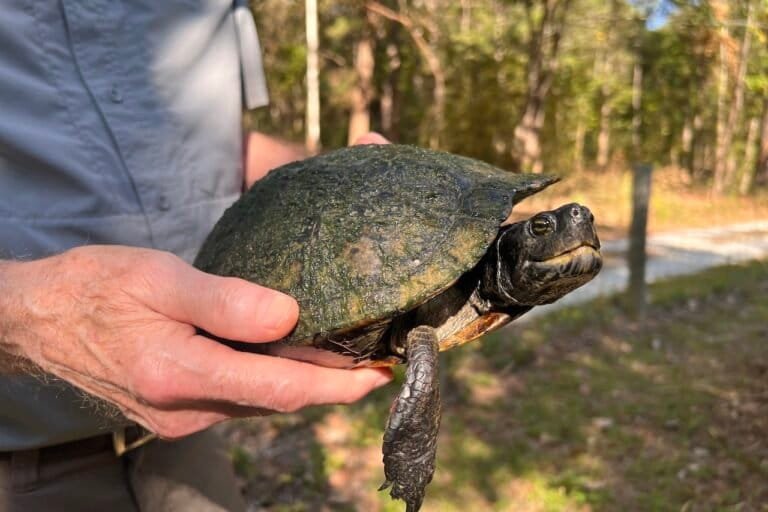
A Desperate Fight Against Vanishing Populations (Image Credits: Imgs.mongabay.com)
Cross, South Carolina – Deep in this rural setting, the Turtle Survival Center operates as a fortified sanctuary dedicated to preserving some of the planet’s most imperiled turtle and tortoise species.
A Desperate Fight Against Vanishing Populations
More than half of all turtle and tortoise species face extinction threats from habitat destruction, illegal wildlife trade, and their inherently slow reproductive rates.[1]
Many mature only after decades and produce few offspring each year, leaving populations vulnerable to rapid declines. Traffickers harvest them faster than they can recover, especially in Asia where demand persists for food, pets, and traditional medicine. Females removed from the wild halt future generations entirely. Roads, dams, and climate shifts compound these pressures. The Turtle Survival Center emerged to counter this crisis head-on.
Founding a Global Conservation Hub
Established in 2013 by the Turtle Survival Alliance, the center began as a response to escalating extinction risks for freshwater turtles and tortoises.[1]
The Turtle Survival Alliance pursues a vision of zero turtle extinctions worldwide through coordinated efforts. Staff developed the facility in Cross to serve as North America’s primary captive breeding site. It quickly evolved into a model for ex-situ conservation, housing assurance colonies that safeguard genetic diversity. Key figures like Cris Hagen played pivotal roles in its creation and expansion.[2]
Today, the site supports broader TSA initiatives, including programs in Madagascar.
Sheltering the Rarest of the Rare
The center now protects over 800 individuals across 27 species, many classified as critically endangered.[3][4]
Residents include species no longer found in the wild, such as the Rote Island snake-necked turtle (Chelodina mccordi).[5]
- Bourret’s box turtle (Cuora bourreti)
- Indochinese box turtle (Cuora galbinifrons)
- Burmese star tortoise (Geochelone platynota)
- Arakan forest turtle (Heosemys depressa)
- Southeast Asian box turtle variants
- Rote Island snake-necked turtle (Chelodina mccordi)
High-security protocols ensure these “founder” animals – genetically vital specimens – remain safe from poachers and disease.
Breeding Programs and Expertise in Action
Captive breeding forms the core of operations, producing offspring for potential reintroduction once habitats stabilize. Experts manage precise water chemistry, temperatures, and quarantines to mimic natural conditions. The facility prepares for large-scale rescues of trafficked animals from hotspots like Southeast Asia.[1]
The Turtle School trains zoo staff, veterinarians, and rescuers from regions including Madagascar, Mexico, and Cambodia. Participants learn handling techniques for confiscations, building a worldwide network. These efforts preserve opportunities for species recovery amid failed wild protections.
Key Takeaways
- The center houses 800+ turtles from 27 critically endangered species, acting as a genetic “bank.”
- Founded in 2013, it focuses on breeding, security, and global training to prevent extinctions.
- Threats like trafficking demand urgent captive strategies until habitats improve.
The Turtle Survival Center exemplifies targeted conservation, buying precious time for species teetering on the brink while broader ecosystems heal. Its work underscores that human intervention can bridge gaps left by faltering protections. For more details, visit the Turtle Survival Alliance website. What steps can we take to support turtle conservation? Share your thoughts in the comments.


