

You hear it every single time. The doorbell rings, a jogger passes the window, or a neighbor strolls too close to the fence – and your dog erupts. You smile awkwardly, mumble something like “He’s just saying hello!” and hope for the best. But what if that bark isn’t a greeting at all? What if your dog has been trying to tell you something important, and you’ve been missing it?
Here’s the truth that every dog lover deserves to know. That bark aimed at a stranger is one of the most complex, layered forms of communication in the canine world. It might be a warning, a cry for reassurance, a territorial announcement, or even a misread sign of excitement. Figuring out which one changes everything. Let’s dive in.
Barking Is a Language, Not Just Noise

Most of us know our dogs are communicating when they bark. What we underestimate is just how much they are actually saying. Barking is one of many forms of vocal communication for dogs, and it covers a surprisingly wide emotional range. Think of it like a sentence with a tone, a volume, and a rhythm that each carry meaning on their own.
Spectrographic analysis indicates that bark structure varies predictably with context, suggesting that barks can be divided into contextual subtypes and may be a more complex form of communication than given credit. So when your dog barks at the stranger walking past your yard, there is almost certainly a specific emotional message encoded in that sound.
High tones call attention and the low tones convey threat. That distinction alone is huge. A sharp, high-pitched bark at a stranger may mean something entirely different from a deep, low growl-bark. Honestly, once you start listening for the difference, you can never unhear it.
Experiments have shown that dogs use different barks and growls to communicate different things. In one experiment, researchers recorded a “food growl” where a dog was growling over food, and a “stranger growl” where a dog was growling at the approach of a stranger. The researchers played these different growls to a dog who was approaching a juicy bone. The dogs were more hesitant to approach if they heard the food growl rather than the stranger growl.
What Your Dog Is Really Assessing When a Stranger Approaches

Here’s the thing: your dog isn’t just reacting blindly. They’re running a rapid, impressively thorough evaluation of every stranger who enters their orbit. When a stranger approaches, your dog will make a quick assessment of that person by how they look and sound, how they move, and how they smell. They are, in essence, doing background checks in real time.
Dogs communicate in non-verbal ways. They pay attention to how someone walks, talks, sits, and stands. It seems straightforward, but there’s an art to approaching a dog. The way you approach a dog sends clear signals about your intentions. A stranger who walks directly, makes intense eye contact, or moves fast? That’s suspicious behavior in dog language.
Territorial behavior is often motivated by both fear and anticipation of a perceived threat. Because defending territory is such a high priority to them, many dogs are highly motivated to bark when they detect the approach of unknown people or animals near familiar places, like their homes and yards. It’s less about aggression and more about a deeply wired instinct to protect.
Your dog may also be wary of young children who make lots of noise and may squeeze them too tightly. It’s not personal toward the child. From your dog’s perspective, small unpredictable humans who shriek and lunge are genuinely alarming, which is worth remembering before the next family visit.
Reading the Body Language Behind the Bark
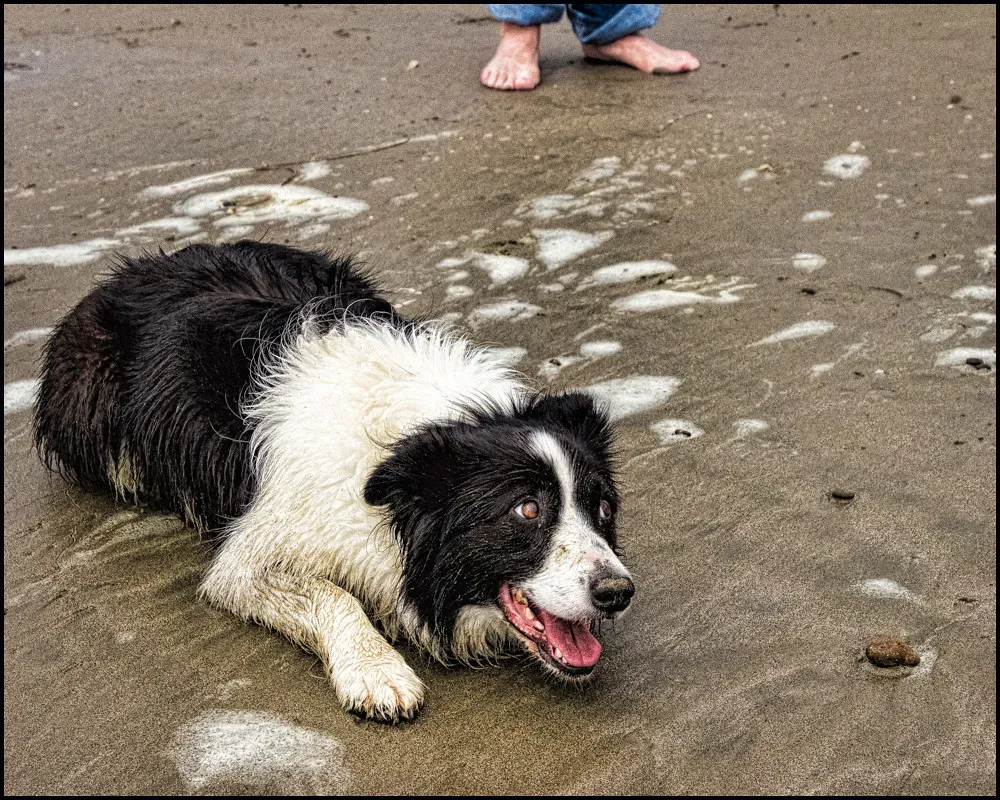
The bark is only half the story. Your dog’s body is the other half, and it’s the part most people completely miss. Humans often misread these signals – or focus on just one cue, like a wagging tail, instead of the whole picture. A wagging tail does not mean “I’m happy.” Context changes everything.
When a dog is feeling tense, their eyes may appear rounder than normal, or they may show a lot of white around the outside, sometimes known as a “whale eye.” Dilated pupils can also be a sign of fear or arousal – these can make the eyes look “glassy.” These signs indicate that a dog is feeling threatened, stressed or frightened. Check the eyes before you trust the tail.
Territorial or protective barking may start as low growls or barks that become sharper and more rapid as the intruder approaches. The dog’s posture is usually threatening – tail high, ears up and forward. That confident, forward-leaning stance is very different from what you see in a fearful dog.
Dogs who bark out of fear can generally be identified by their body language. Unlike the protective barker who leans forward with ears pricked and tail high, the fear-barker is likely to hold their tail low, flatten their ears, and back away from the fearful object. Same bark. Opposite emotional state. Wildly different response needed from you.
Why Your Own Energy Matters More Than You Think

I know it sounds strange, but your mood is basically your dog’s weather forecast. Pets can pick up the feelings of other people easily. If you, as their owner, are producing nervous or tense energy toward a particular stranger, your dog will likely take on the same stance. Your pet takes cues from you, so your feelings could cause them to react in a very specific way without you even trying.
Your dog is very sensitive and can detect your body language and tone of voice, so the way you react to a stranger will impact their reaction too. If you are calm and welcoming to new people, your dog will take your lead and probably react the same way. However, if you are anxious – or simply give a loud excited greeting – your pet will detect this and may become defensive by barking and growling.
Think about it this way: your dog is like a co-pilot reading your instruments. If your instruments say “turbulence incoming,” they brace for impact. There have been links established between an owner’s psychological status and behavioral problems in their dogs. This means that a dog may reflect their owner’s attitude when it comes to addressing strangers. If you hold your body or display signs of anxiety when meeting other people, it is possible your dog may be reflecting this approach by barking at them.
How to Actually Help Your Dog – Without Making Things Worse

Let’s be real: shouting “No!” at a barking dog rarely ends well. When your dog barks or growls, they are trying to get your attention. If you punish or shout at them instead of staying calm and acknowledging what your pet is trying to tell you, they may resort to something stronger to get your attention next time, like biting. Punishment silences the warning signal without solving what caused it.
Punishing behaviors like barking or growling won’t change how your dog feels about the person who triggered the reaction. Instead, it’s just suppressing the behavior. This can be dangerous since suppressing early warning signs of discomfort can lead to an escalation of the unwanted behavior. For example, if you punish a dog for growling, it increases the likelihood they might bite the next time. That is a sobering thought that deserves to sit with you for a moment.
The better path is a gradual, patient one. With desensitization and counterconditioning, you can change your dog’s negative emotions to positive ones. When your dog feels anxious or scared about something, it’s usually either because it’s unfamiliar or they associate it with something bad. For instance, your dog might be afraid of strangers or other dogs due to a lack of socialization as a puppy.
Desensitization involves gradually exposing your dog to strangers in a controlled way. Start at a distance where your dog is comfortable and slowly decrease the distance over time. Pair this exposure with positive reinforcement like treats or affection. Counterconditioning, on the other hand, changes your dog’s emotional response. When your dog remains calm around strangers, reward them. Over time, they’ll associate strangers with positive experiences. Simple in theory. Powerful in practice.
Conclusion: Your Dog Is Not Misbehaving – They’re Communicating

Every bark at a stranger is a sentence, even if you haven’t learned the language yet. Your dog isn’t being difficult, dramatic, or rude. They are doing the most honest thing they know how to do: telling you exactly how they feel. Barking can be a really important tool to learn what scares your dog or makes them uncomfortable. Remember, your job as a pet parent is to advocate for your dog, which means not putting them in situations that make them overly stressed.
The good news? With time, consistency, and positive reinforcement, you can modify your dog’s behavior for the better. Socialization is an ongoing process – your dog needs continued positive exposures to new things throughout their lifetime to stay comfortable and well-adjusted. There is no deadline, no failure. Just you and your dog, figuring it out together.
Once you stop hearing your dog’s bark as noise and start hearing it as a message, your whole relationship shifts. You become a better advocate, a calmer presence, and a more trusted partner. And that, more than any training technique, is what your dog has always been asking for.
So the next time your dog locks eyes with a stranger and lets rip – pause before you shush them. They might just be saying something worth listening to. What does your dog’s bark tell you that you hadn’t noticed before?


