
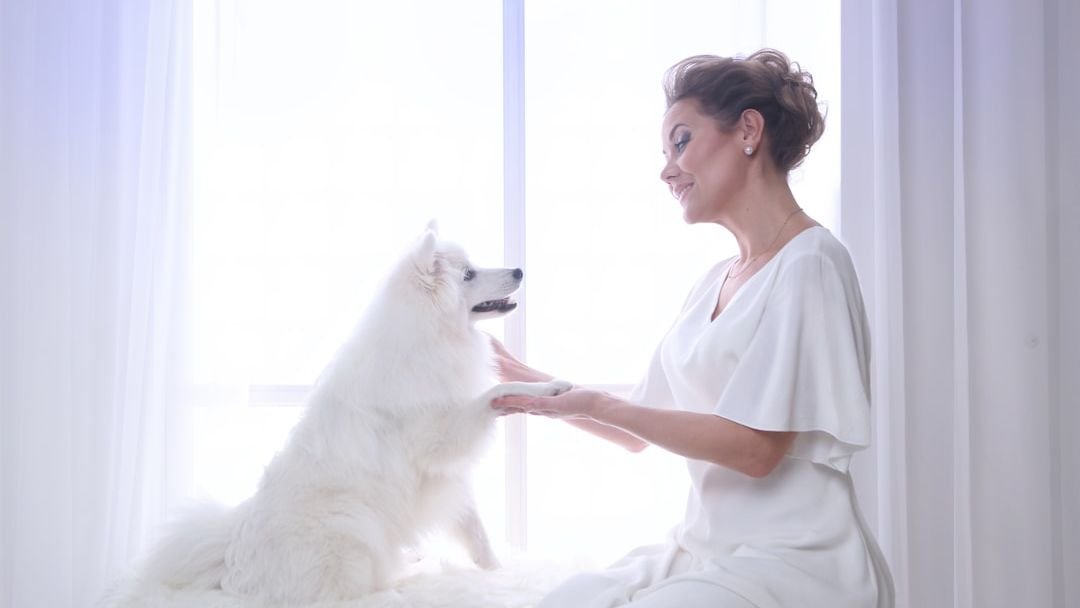
Have you ever caught yourself in a full conversation with your dog, narrating your grocery run, whispering soft reassurances after a thunderstorm, or delivering a dramatic monologue about what’s for dinner? You’re not alone, and honestly, you’re doing something more powerful than you realize. The words you choose, the pitch of your voice, the rhythm of your sentences – all of it lands on your dog with surprising precision.
Dogs are not simply reacting to noise. They are reading you. Every syllable, every shift in tone, every exhale of frustration or burst of laughter is data their extraordinary senses are actively processing. The relationship you build with your dog is being written in real time, largely through the sound of your voice. Want to know how deep this really goes? Let’s dive in.
Your Dog Is Listening More Than You Think
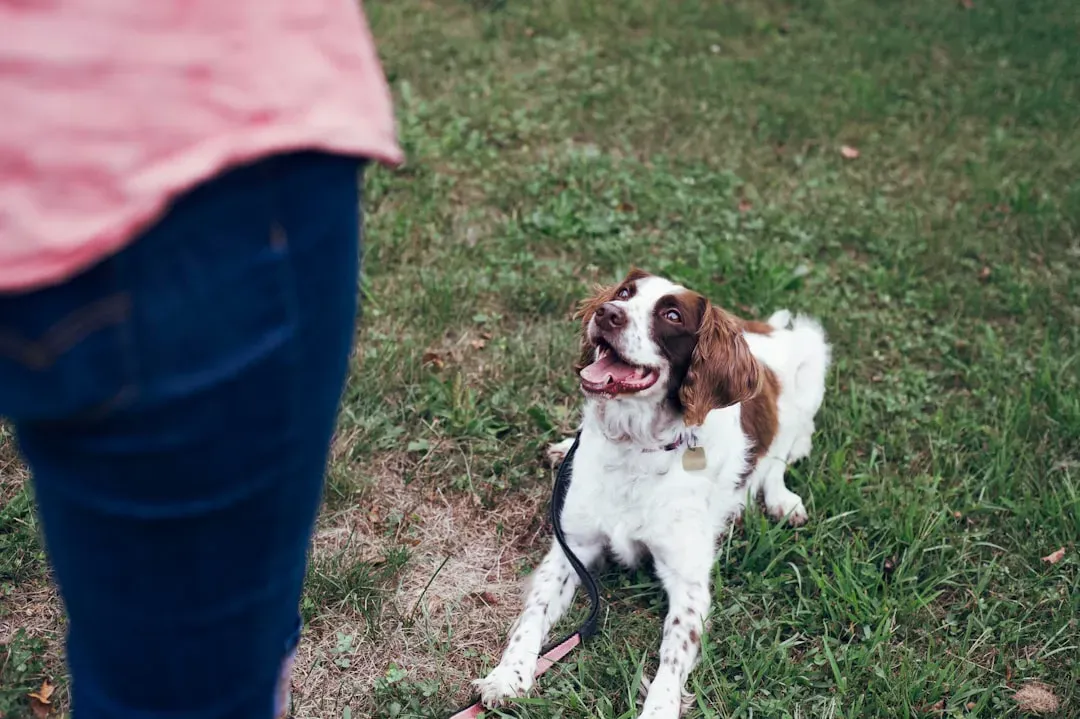
Here’s the thing that absolutely floors me every time I think about it: your dog is eavesdropping on you, even when you aren’t talking to them. Research published in Animal Cognition found that dogs actually “listen in” when humans are speaking, even when the speech is not directed at them, and they possess the neurological capacity to passively sift through information and commands relevant to them. Think of it like a radio signal. Your dog is always tuned in, waiting to catch their name or a familiar word buried in the chatter.
Pets have evolved to become acutely attuned to humans and our behavior and emotions. Dogs are able to understand many of the words we use, but they’re even better at interpreting our tone of voice, body language, and gestures. So when you mutter something under your breath while stressed, your dog is already picking up on it before you even look their way.
Dogs have a remarkable ability to understand human speech, even when it is not directed at them and spoken in a monotone voice, and they can identify meaningful content such as their names within streams of irrelevant speech. That is not a party trick. That is a deeply evolved survival skill, one that has been refined over thousands of years of living alongside us.
The Science Behind “Baby Talk” and Why It Actually Works
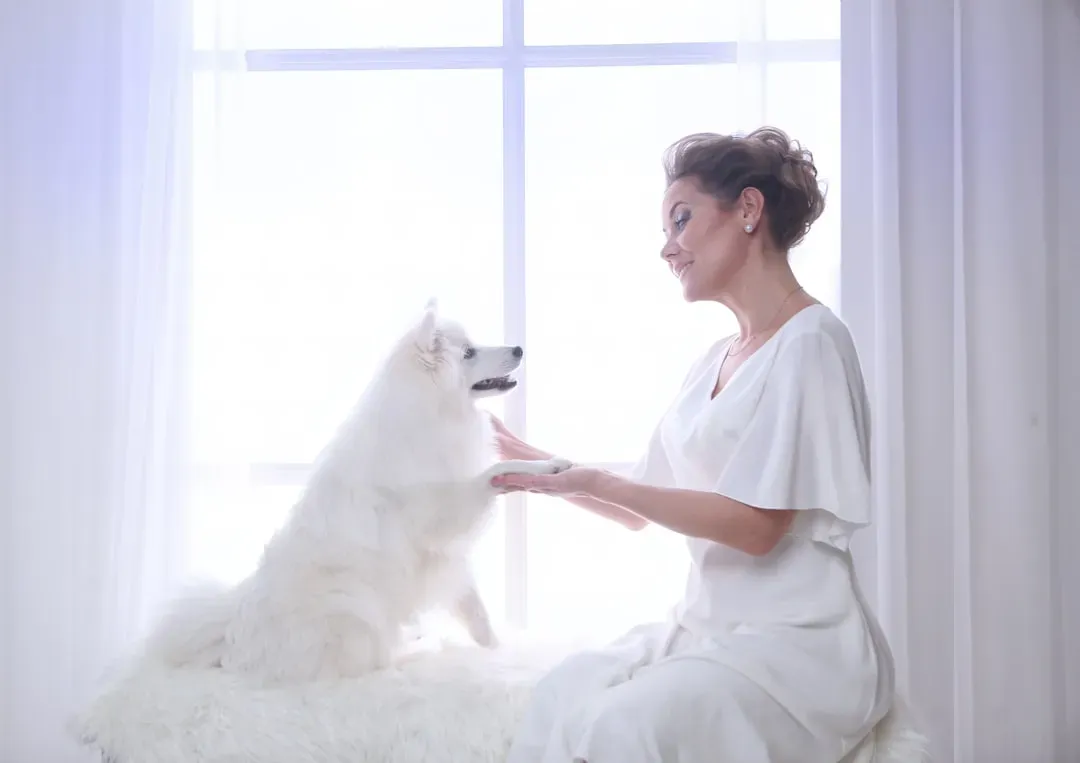
Let’s be real. Most of us go full baby-talk mode the moment we see our dogs. The voice gets higher, the sentences get shorter, and suddenly we sound completely ridiculous – and absolutely wonderful to our dogs. Humans speak to dogs using a special speech register called pet-directed speech, which is very similar to infant-directed speech used by parents when talking to young infants. These two types of speech share prosodic and syntactic features distinct from typical adult speech: a higher pitch, increased pitch variation, short utterances, and word repetitions.
Results from research show that adult dogs are significantly more attentive to pet-directed speech than to adult-directed speech, and their attention significantly increases along with the rise of the fundamental frequency of human speech. In other words, that squeaky, enthusiastic voice you use? It genuinely captures your dog’s focus more effectively than your normal speaking voice. Science confirmed what dog lovers have always felt in their gut.
When addressing family dogs, human speakers tend to utilize speech styles characterized by high and variable pitch and short utterances, similar to those used to address infants. This suggests that the exaggerated prosody used toward dogs and infants possesses general acoustic characteristics to call and maintain the attention of a social partner with limited linguistic competence. You are literally optimizing your speech for your dog without even thinking about it. How remarkable is that?
Tone Is Everything: How Your Mood Travels Down the Leash
Imagine you’re in a foreign country, no language skills, no guidebook, just the tones and gestures of those around you. That is exactly what happens with your dog – they are trying to comprehend what you are saying strictly on tone of voice and body language. So when you’re anxious, frustrated, or tender, your dog is reading all of it, all the time.
Yelling at dogs can have an immediate and profound impact on their emotional state. When a dog is yelled at, it can become anxious, frightened, or even terrified, because dogs are highly attuned to their owner’s tone of voice and body language and can pick up on the negative emotions conveyed through yelling. This is not about being overly soft. It’s about understanding that your dog isn’t being stubborn when they shrink back. They’re responding to real fear.
An angry voice can make you intimidating, producing a stressed dog who may become defensive. Instead, try to use a firm and neutral tone, even when upset. In a stressful situation like a house move or visiting family, communicating calm and gentleness to your dog makes them less likely to panic and more likely to listen. Calm begets calm. It really is that straightforward.
The Oxytocin Loop: Talking to Your Dog Changes You Both
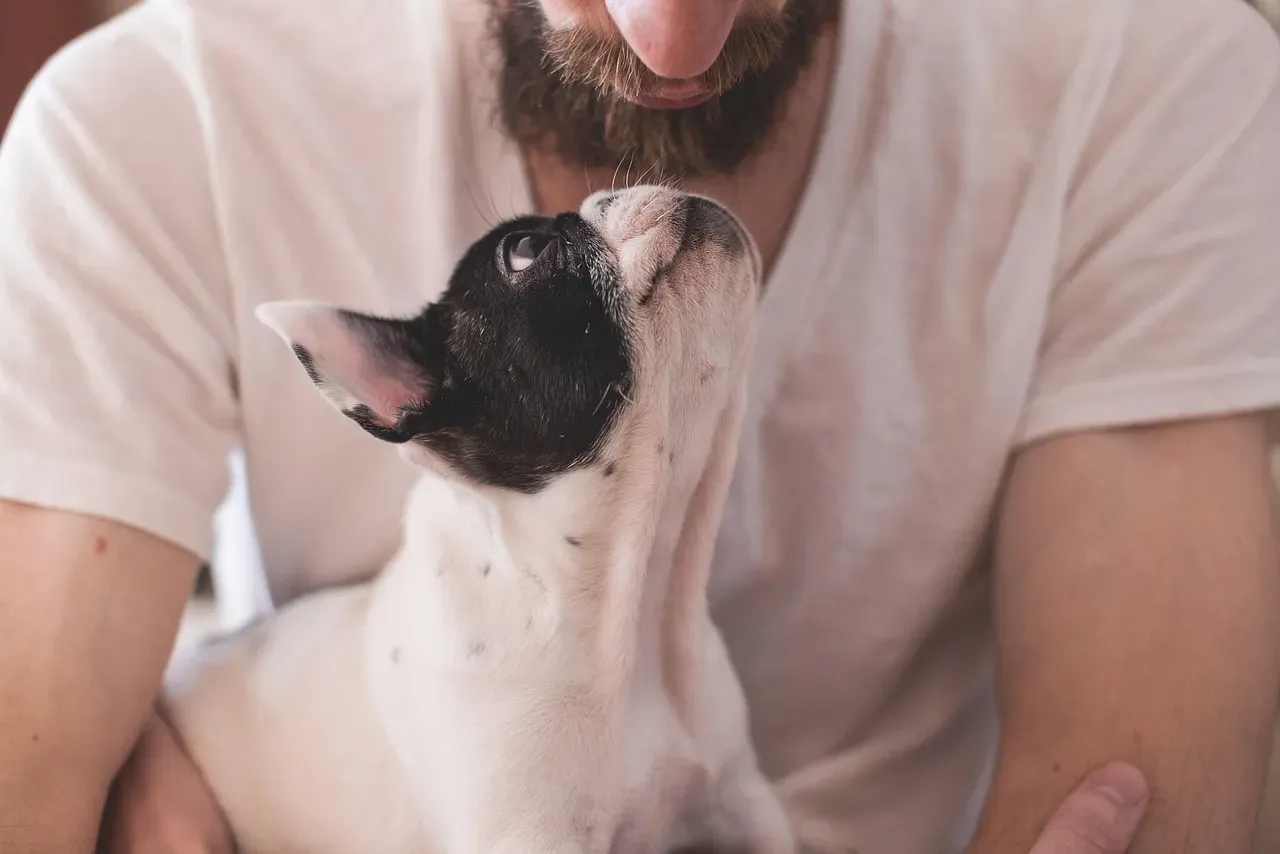
Here’s something genuinely beautiful. When you look into your dog’s eyes and speak to them warmly, something chemical happens. Speaking to your dog face to face and looking into their eyes means you’re both likely to experience a surge of oxytocin, often called the “love hormone,” and this mutual gazing behavior creates a “self-perpetuating oxytocin-mediated positive loop” that deepens the connection between people and their pups. You are literally building love, chemically, every time you have a soft chat with your dog.
Positive dog-owner interactions including stroking, petting, and talking have been shown to result in increased oxytocin levels in both dog owners and dogs, which has been related to the strength of the owner-dog relationship and dog-human affiliative behaviors. It’s a two-way street. You feel it, they feel it, and the bond deepens with every exchange. Think of each kind word as a deposit into a trust account you share with your dog.
Dogs’ relationship with the human speaker affects neural responses associated with reward and motivational processes, especially when it comes to the dog’s owner and praising speech. So when your dog lights up at the sound of your specific voice? That is not coincidence. Their brain is genuinely rewarded by you talking to them. Honestly, I find that deeply moving.
Practical Tips: Talking to Your Dog in a Way That Actually Helps Them
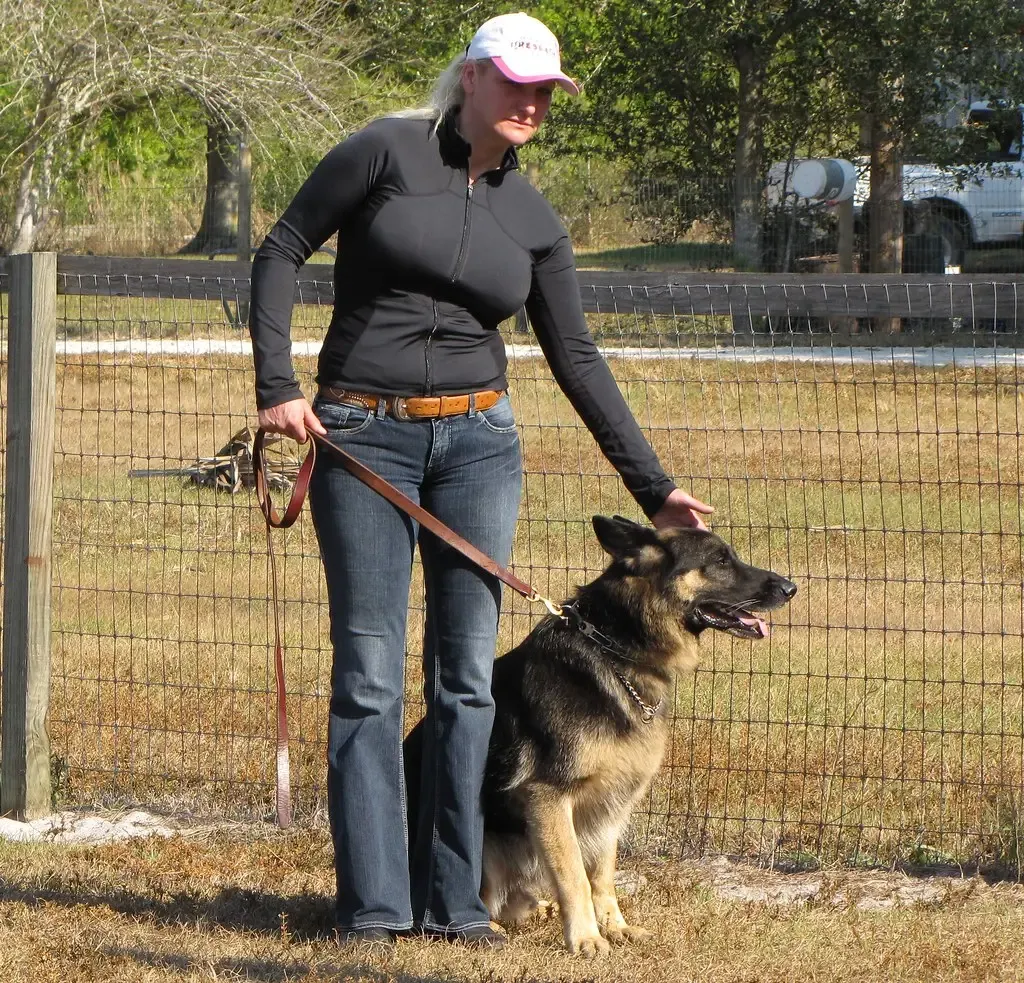
Knowing all this science is great, but what does it look like in practice? Here’s where it gets really useful. It is important to utter a request just once. If you say “Come, come, come,” your dog may respond only when they hear the third “come,” meaning “come” alone means nothing while “come, come, come” means get over here. Say it once, and give your dog time to respond. Repetition trains the wrong response. Patience trains the right one.
When you praise your dog, that praise must be sincere. Because dogs respond more to inflections and body language than actual words, if you tell your dog “good boy” with a scowl on your face or a neutral tone in your voice, the fact that he is a good boy is not the message he is receiving. Your dog is a truth detector. A hollow “good girl” fools absolutely no one in that house.
While using different tones for praise and corrections may seem natural, it’s essential to maintain consistency in your voice commands. Dogs primarily respond to the emotional content in your voice rather than the specific words. If you use a high-pitched tone to issue a command one day and a low-pitched tone the next, it can lead to confusion. To ensure effective communication, establish clear voice commands and stick to a consistent tone for each command. Consistency is the gift that keeps giving in dog communication.
Conclusion: Your Voice Is One of Your Dog’s Most Important Anchors
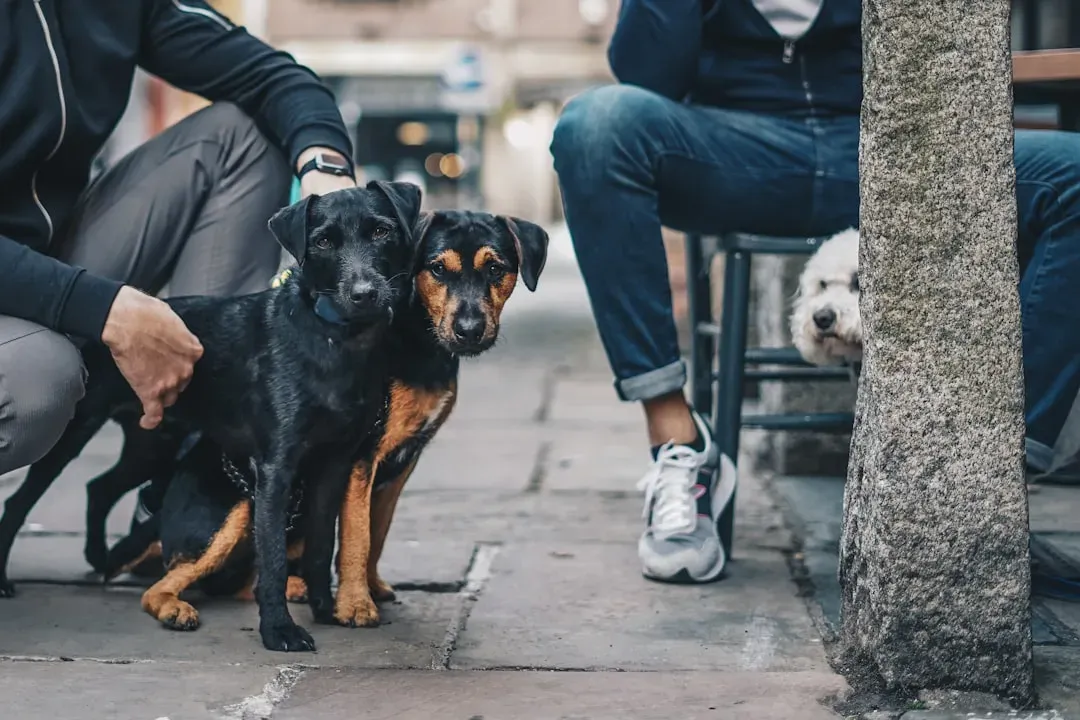
Your dog’s world is built around you. Your smell, your footsteps, your laugh. Your voice, above all else, is a compass they use to navigate everything from joy to safety. The science makes it undeniable, and honestly, any dog lover reading this has probably felt it long before reading a single study.
Talk to them more. Speak warmly, consistently, and with intention. Lower your voice when you need them calm. Lift it with genuine delight when they do something wonderful. Slow down, look them in the eyes, and understand that those few seconds of connection are doing something real inside both of you.
You don’t need a perfect vocabulary. You just need to mean it. Your dog already knows when you do. So next time you’re mid-conversation with your pup about absolutely nothing, know that it matters more than you ever imagined. What would you say to your dog if you knew they understood every emotional note in your voice?


