
New Guinea – Scientists confirmed the existence of two marsupial species in remote West Papuan forests, species long considered extinct based on ancient fossils.[1][2]
Unprecedented Double Lazarus Revival
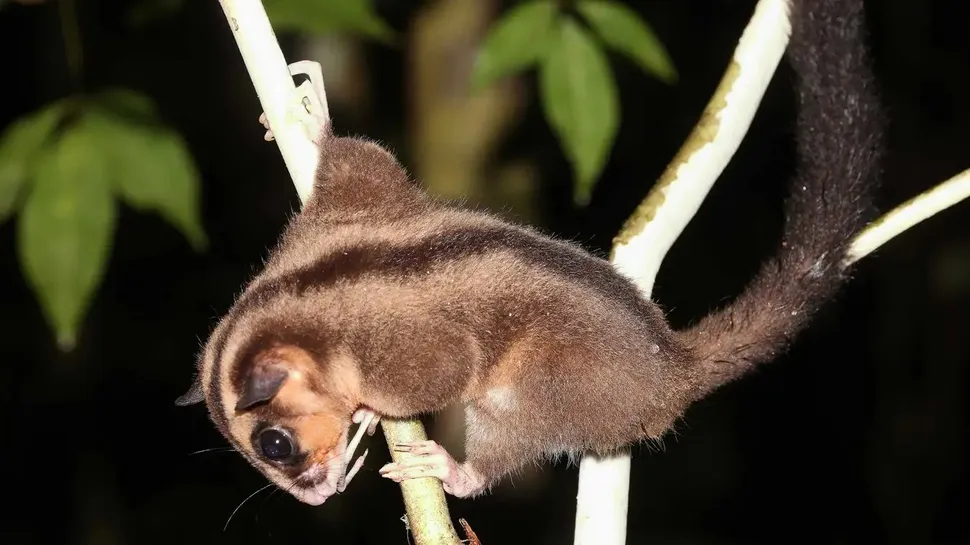
Researchers described the finds as groundbreaking after years of detective work. Both the pygmy long-fingered possum and the ring-tailed glider vanished from the fossil record more than 6,000 years ago. Fossils from Australia and West Papua had marked them as casualties of ancient environmental shifts.[3]
Tim Flannery, a zoologist at the Australian Museum, led the confirmation effort. He called the odds of rediscovering one such species “almost zero,” let alone two.[1] The team published details on March 6, 2026, in the Records of the Australian Museum. This marked the first new marsupial genus from New Guinea since 1937.[4]
Local Indigenous knowledge proved crucial. Members of the Tambrauw and Maybrat communities shared sightings and photographs that unlocked the mystery.[2]
Striking Adaptations of the Survivors
The pygmy long-fingered possum, or Dactylonax kambuayai, measures about 14 inches from nose to tail tip. Its standout feature is an elongated fourth finger on each hand, twice the length of others, ideal for extracting grubs from rotting wood. Specialized ears detect low-frequency sounds from wood-boring beetle larvae.[1]
The ring-tailed glider, Tous ayamaruensis, belongs to a newly erected genus. This nocturnal creature boasts a prehensile tail for gripping branches and unfurred ears distinguishing it from Australian relatives. It nests in tree hollows and forms lifelong pair bonds, producing one offspring annually.[3]
- Pygmy possum: Striped fur, palm-sized body, grub-hunting specialist.
- Ring-tailed glider: Photogenic glider, sacred to local clans as ancestor spirits.
- Both: Lazarus taxa, bridging fossil gaps with living proof.
- Habitat: Lowland mountain rainforests on the Bird’s Head Peninsula.
- Diet: Highly specialized, challenging for captivity.
From Fossil Clues to Camera Traps
Clues surfaced decades ago. A 1992 museum specimen of the pygmy possum had been misidentified. The ring-tailed glider appeared in a 2015 photo, while the possum showed up in 2022 images.[3] Flannery’s team pieced together Indigenous reports, sub-fossils, and modern photos from Carlos Bocos and Arman Muharmansyah.
Surveys targeted the rugged Vogelkop Peninsula, a former Australian landmass fragment now in Indonesian Papua. Remote terrain shielded the animals from prior exploration.[4]
Confirmation demanded rigorous evidence. “The discovery of two species, thought to have been extinct for thousands of years, is remarkable,” Flannery stated.[2]
Urgent Threats Loom Over Hidden Gems
Logging endangers these habitats. Rapid forest clearance in New Guinea raises alarms for undiscovered relics. Ecologist David Lindenmayer expressed concern over land clearing’s pace.[1]
Researchers withhold exact sites to deter traffickers. The specialized diets make pets impractical, Flannery warned: “It won’t live long.”[4] Collaborations with Indigenous groups, universities, and conservation organizations aim to secure protections.
Key Takeaways
- Two Lazarus marsupials confirm biodiversity surprises in unexplored regions.
- Indigenous partnerships drive scientific breakthroughs.
- Immediate conservation needed against logging threats.
These rediscoveries remind us that Earth’s wild places still harbor secrets, even as human pressures mount. What surprises might New Guinea’s forests reveal next? Share your thoughts in the comments.


