
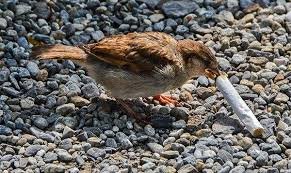
Łódź, Poland – Researchers have revealed how urban blue tits weave discarded cigarette butts into their nests, harnessing chemical compounds to fend off harmful parasites. This experimental study adds weight to earlier observations from Latin American cities, where similar behaviors emerged among city-dwelling songbirds. The findings underscore birds’ adaptability in human-altered landscapes, turning pervasive litter into a tool for survival.[1][2]
Blue Tits Experiment with Urban Waste
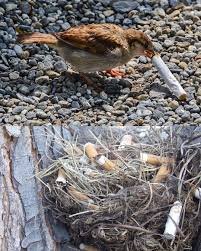
Observers first noted blue tits collecting cigarette butts in European cities, prompting questions about intent. A team from the University of Łódź conducted a controlled experiment during the 2024 breeding season. They monitored 33 blue tit broods in nest boxes across urban parkland and nearby forests.
Scientists divided the nests into three groups: controls received unsmoked butts, one treatment got smoked cigarette butts added on days 5 and 10 of the nestling period, and another featured sterile artificial nests of moss and cotton wool. Post-fledging analysis showed ectoparasites thrived most in natural nests, appeared slightly less in butt-supplemented ones, and vanished almost entirely from sterile setups. Nestlings in both experimental groups exhibited elevated hemoglobin and hematocrit levels, signs of better physiological condition.[1]
Roots in Latin American Cities
Evidence first surfaced in Mexico City over a decade ago. Studies there examined house sparrows and house finches, urban species prone to heavy parasite loads. Nearly 90 percent of surveyed nests contained remnants of smoked butts, averaging eight to ten per nest.
Higher butt content correlated directly with fewer mites. Thermal traps baited with smoked filter material drew far fewer parasites than those with unsmoked versions, pointing to nicotine as the key repellent. Researchers concluded that these birds actively incorporated butts to reduce ectoparasite burdens, mirroring natural self-medication with aromatic plants.
The Chemical Arsenal in Cigarette Butts
Smoked butts retain nicotine and thousands of other compounds, including arsenic and heavy metals. Nicotine disrupts arthropod nervous systems, acting as an insecticide at concentrations found in tobacco. This fumigation effect likely deters parasites from settling or developing in the humid nest environment.
Common invaders include:
- Blowfly larvae, which feed on nestlings’ skin.
- Fleas, causing blood loss and irritation.
- Mites, thriving in nest debris.
- Ticks, vectors for diseases.
The Polish experiment detected marginal reductions in blowflies and fleas with butts, though sterile nests proved superior overall.[1]
Boosted Chick Health Amid Urban Challenges
Parasites exact a heavy toll, weakening nestlings through stress and nutrient drain. Improved blood parameters in the experiments suggested butts offered real benefits, at least short-term. Wing lengths increased notably in sterile nests, hinting at growth advantages.
Yet concerns linger over toxins like polycyclic aromatic hydrocarbons, which could harm developing chicks. Long-term studies remain essential to balance these gains against risks. Urbanization amplifies parasite pressures, making such innovations vital for city birds.
| Study | Location | Parasite Reduction | Chick Benefits |
|---|---|---|---|
| Poland 2026 | Łódź | Marginal (blowflies, fleas) | Higher hemoglobin, hematocrit |
| Mexico 2013 | Mexico City | Significant (mites) | Inferred from lower loads |
These patterns span continents, from European blue tits to American finches.[1]
As cities expand, birds demonstrate remarkable ingenuity, repurposing human discards for protection. This behavior challenges assumptions about wildlife vulnerability and prompts reflection on waste’s unintended roles in ecosystems. While promising, it signals the urgent need for cleaner urban spaces. What do you think about birds’ trash-to-treasure tactics? Share in the comments.
- Cigarette butts reduce nest parasites via nicotine’s repellent properties.
- Blue tits and finches show improved nestling health with fewer pests.
- Urban adaptation highlights both innovation and pollution’s pervasive impact.


