

You love your dog deeply. You worry about them, protect them, comfort them every time they seem unsettled. You genuinely want them to feel safe. So here is a thought that might stop you in your tracks: what if some of that worry is actually making things worse?
It is not a judgement. It is science. There is a remarkable and deeply human story unfolding inside the bond between you and your dog, one that researchers are only just beginning to fully understand. The emotional life you live every day does not stay tucked neatly inside you. Your dog feels it too. Let’s dive in.
Your Dog Is Reading You Right Now
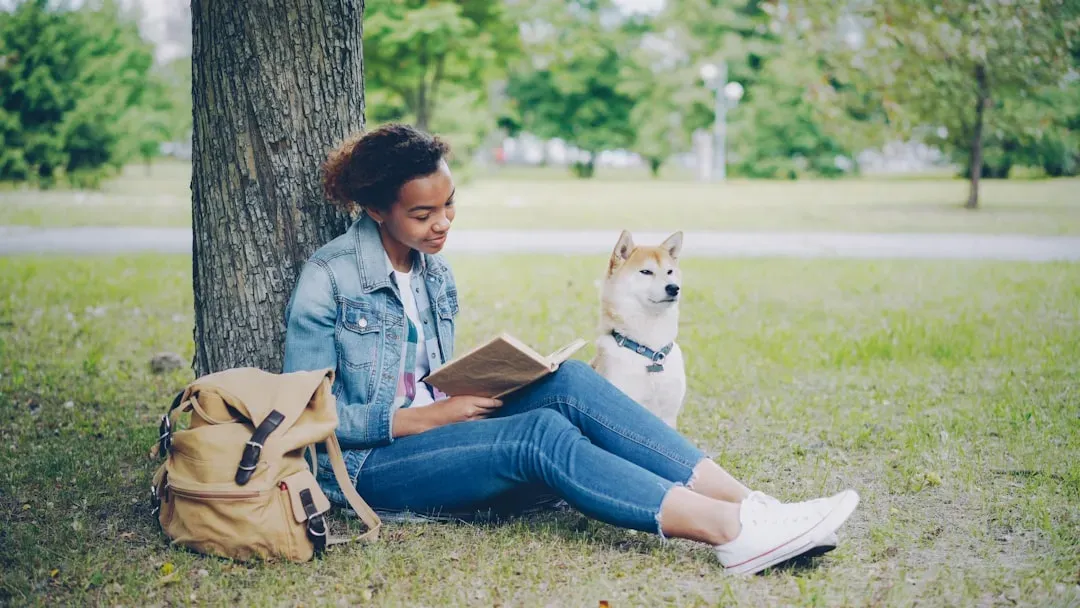
Here is something that honestly blew my mind when I first came across it: your dog does not need you to say a word to know you are stressed. Dogs rely on verbal and non-verbal cues to gauge their owner’s emotional state, and they can accurately discern subtle signs of stress such as elevated heart rate, changes in body language, and even the release of stress-related hormones like cortisol. That is not a metaphor. That is biology.
Dogs seem to discriminate human emotions and emotional expressions of human faces. Even human odors excreted during emotional situations of different valence can distinctly affect dogs’ behavioral and cardiac responses. Think about that for a second. Your scent changes when you are anxious, and your dog notices.
Dogs often react to your emotions before you have even fully processed them yourself. It is a little bit like living with someone who can read your poker face perfectly, every single time, no matter how well you think you are hiding it.
The Science of Stress Synchronization

Researchers at Linköping University in Sweden did something fascinating. They measured stress hormones, specifically cortisol, in strands of hair from both dogs and their owners over several months across different seasons. They found that the levels of long-term cortisol in the dog and its owner were synchronized, such that owners with high cortisol levels have dogs with high cortisol levels, while owners with low cortisol levels have dogs with low levels.
Cortisol, the stress hormone, accumulates over time in growing hair, so each shaft becomes a biological record of stress, not all that different from measuring droughts in tree rings or temperature in ice cores. That is a stunning image, honestly. Your dog’s fur is quietly keeping a diary of your emotional world.
What makes this even more striking? The dogs’ activity levels did not affect the cortisol levels, nor did the amount of training sessions per week. Though dogs’ personalities had little effects on their cortisol, human personality traits including neuroticism significantly affected dog cortisol levels. It is not how much your dog runs. It is how much you worry.
Personality Mirrors: How Anxious Owners Shape Anxious Dogs
Let’s be real for a moment. Most of us assume our dog’s behavior is mostly about the dog. Their breed, their past, their training. Researchers at the Clever Dog Lab and the Family Dog Project found not just correlations between personality traits in people and their dogs, but that the owners’ and dogs’ personality scores were most similar for neuroticism. In other words, nervous people tend to have nervous dogs.
Research has proposed that dogs may respond to their owners’ anxiety directly through emotional contagion, or that owners’ anxiety may affect dogs indirectly via owners’ overprotectiveness, thereby restricting the dog’s ability to familiarize itself with novel situations. Think of it like a helicopter parent who never lets their kid try anything new. The child never learns that the world is actually pretty safe.
Owners with higher levels of anxiety and depression had dogs with increased levels of attention-seeking behavior, separation-related behavior, stranger-directed aggression and fear, non-social fear, dog-directed fear, touch sensitivity, and excitability. That is quite a list. The connection between owner anxiety and dog anxiety is not a small or subtle one.
What Emotional Contagion Actually Looks Like in Real Life
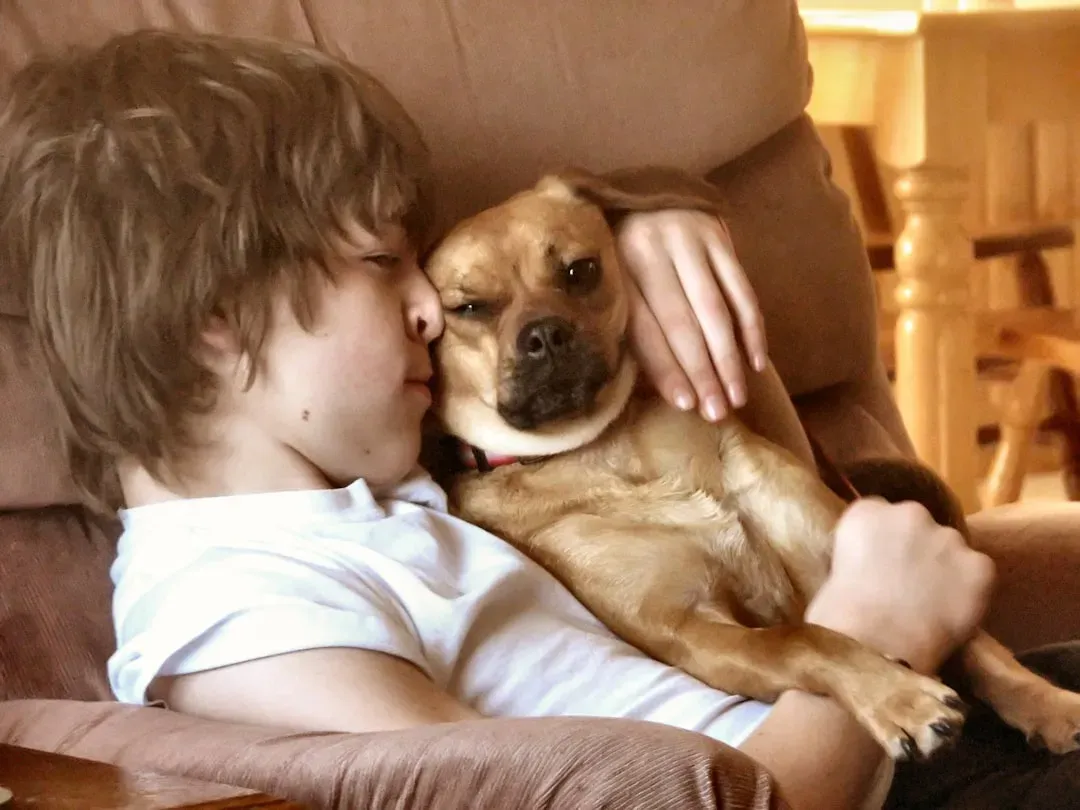
Picture this: you are heading out for your morning walk. You know there is a dog at the corner who always lunges. Your shoulders tense up. Your grip on the leash tightens. You hold your breath. Before that dog even comes into view, your dog is already on high alert, not because of the other dog, but because of you. Does your dog become more vigilant, clingy, or reactive at the same time you are experiencing stress or anxiety? That pattern is almost certainly not a coincidence.
The emotional state of an anxious owner may contagiously spread chronically or acutely to their dog. In line with the principles of emotional contagion, their dogs may both chronically and acutely develop a mirrored response. The word “chronically” there is important. This is not just a one-off reaction at the park. It can become your dog’s default way of experiencing the world.
Research suggests that emotional contagion from owner to dog can occur especially in female dogs, and the time spent sharing the same environment is the key factor in inducing the efficacy of emotional contagion. The longer you live together, the more deeply your emotional rhythms intertwine.
The Behavioral Signs Your Dog Might Be Carrying Your Anxiety
Knowing what to look for matters more than most people realize. An anxious dog may pant, pace, tremble, drool, withdraw from its owner, or hide. Alternatively, they may appear irritable or aggressive, barking or growling at someone. These are not bad behaviors. They are communications. Your dog is speaking to you.
Dogs with separation anxiety often show signs of distress such as whining, howling, barking, pacing, house soiling, or destroying household items after their owner leaves. While at home, they often prefer to be in the same room as their owners and start becoming stressed when they see their owner preparing to go out. Sound familiar? Separation anxiety is one of the most common expressions of an emotionally dysregulated dog-owner bond.
Dogs that are anxious all the time may become depressed or irritable, sleep more, and may lose interest in food, training, play, and social interaction. Chronic anxiety may also lower a dog’s threshold for allergies, inflammatory bowel diseases, and other medical problems. The stakes here are real. Emotional health and physical health are not separate conversations.
Breaking the Loop: Practical Ways to Become a Calmer Anchor for Your Dog
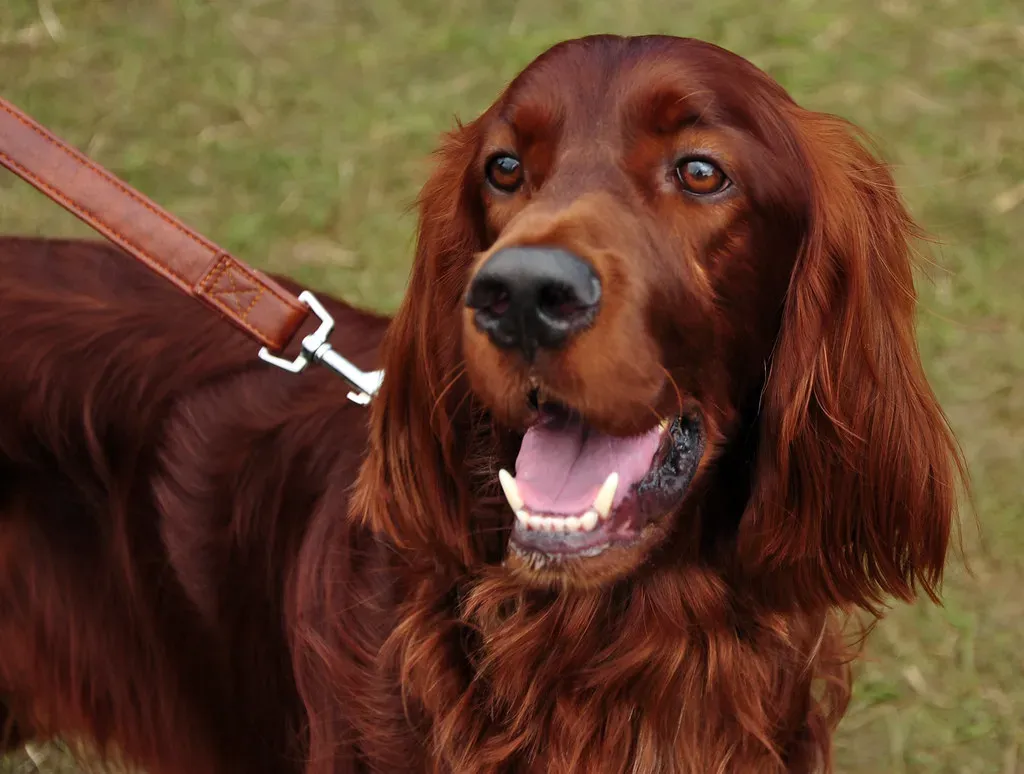
Here is the thing though: this is not about guilt. It is about possibility. A very easy going, laid back owner could lend the confidence needed so that a predisposition to anxiety in a dog is not actualized. You can be that steadying presence. It just takes some honest awareness and a few smart habits.
Structure and routine are essential aspects of the training process. Dogs tend to feel more at ease in their environment if they understand the boundaries of their home and what to expect throughout their day. Keeping your dog on a regular and predictable routine of feeding, walking, playing, and resting can help them relax and stay calm. Predictability is a form of love for a dog. It tells them: the world makes sense, and you are safe.
It makes sense that owners are quick to comfort their pets when they feel anxious, but even if well-intentioned, this can sometimes reinforce fearful behavior rather than help your dog overcome it. Instead, try rewarding good behavior and moments when your dog is calm. Once a dog starts to pick up on this positive reinforcement, they will start to trust that things will be okay the next time a similar situation arises. It sounds simple, but it genuinely rewires things over time.
Simple breathing exercises can help regulate your nervous system, indirectly communicating safety and calm to your dog. Your breath changes your dog’s nervous system too. That is an extraordinary thing when you sit with it. If you find yourself struggling with anxiety, depression, or other emotional challenges, consider whether you might benefit from outside support via a therapist or counselor. Caring for yourself is caring for your dog.
Conclusion: The Loop Can Run in Reverse Too
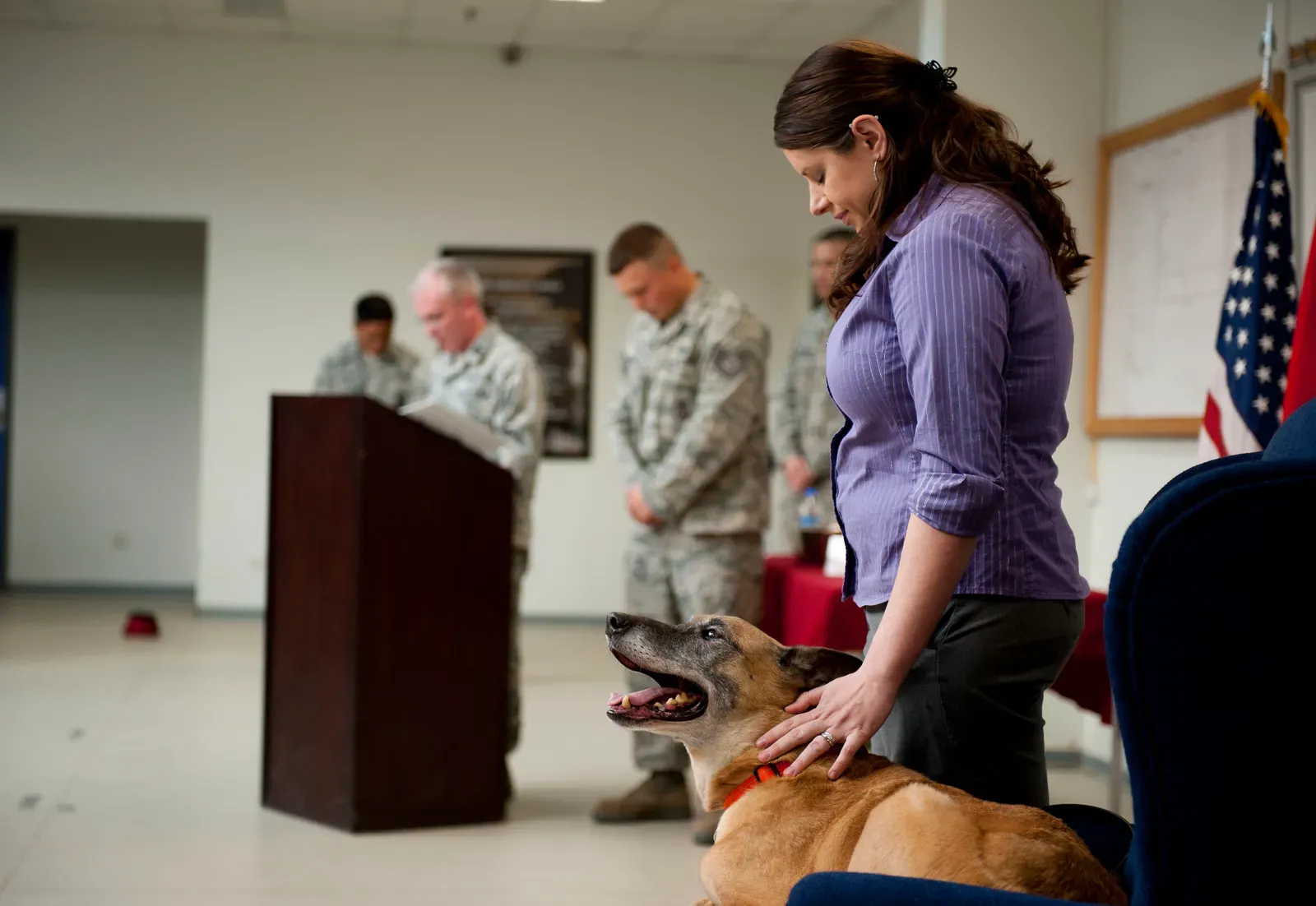
The emotional feedback loop between you and your dog is real, scientifically documented, and genuinely profound. It can work against you both, yes. But it can also work powerfully in your favor. When you grow calmer, your dog grows calmer. When you learn to read their signals with empathy instead of panic, the whole relationship shifts.
You do not have to be a perfectly zen person to raise a confident, settled dog. You just have to be willing to pay attention, to grow a little, and to extend the same patience to yourself that you so readily offer your dog.
The bond you share with your dog is one of the most emotionally intelligent relationships in all of nature. Dogs and humans are two social species that share a unique interspecies relationship as a result of living in close association for at least 15,000 years. That is a long time to learn each other. Honor that connection by tending to your own inner world as carefully as you tend to theirs. Your dog is not just watching you. They are becoming you, a little bit every day.
So, what small step could you take today to be a calmer, more grounded presence for the dog who loves you unconditionally? We would love to hear your thoughts in the comments below.


