
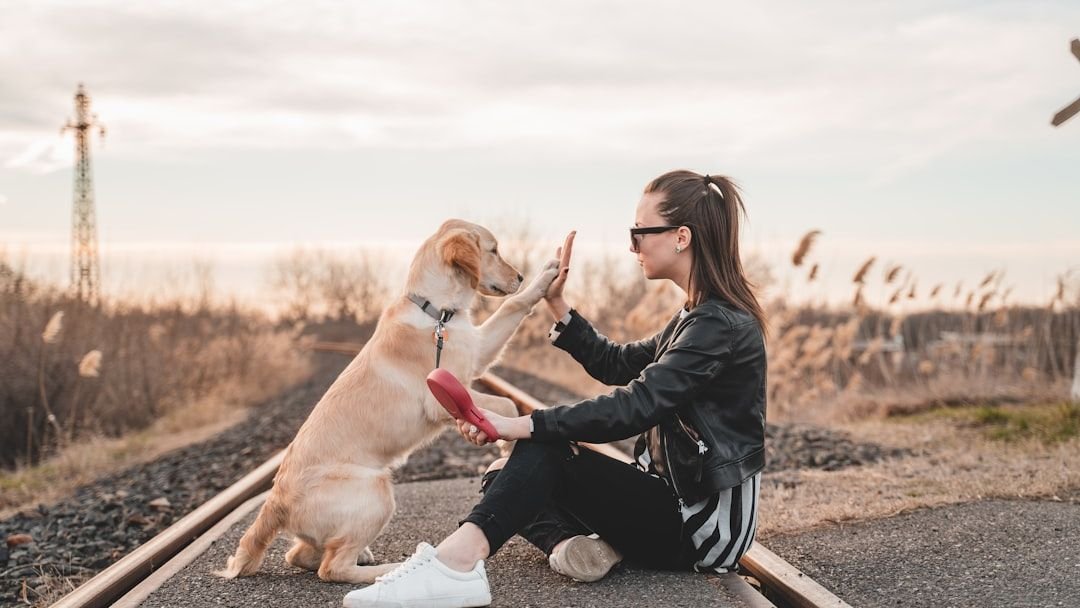
There’s a question that doesn’t get asked nearly enough in the dog world. Not “what breed should I get?” or “how do I stop the barking?” but something far more personal: “What kind of energy am I bringing into this relationship?” Because here’s the thing – your dog is watching you. Every single day. And science is starting to confirm what many of us have felt in our bones for years.
The bond between dogs and their humans is not just sweet and sentimental. It’s biological, psychological, and deeply rooted in the same attachment science that shapes how human babies develop into confident, emotionally healthy adults. If that surprises you, buckle up. The connection between your inner world and your dog’s behavior is more profound than most people ever realize. Let’s dive in.
What Is Attachment Theory, and Why Does It Apply to Dogs?
Attachment theory was originally developed by psychologist John Bowlby, who described attachment as a fundamental safety regulation system between an individual and a specific caregiver. Bowlby defined attachment as a safety regulation system via behavior targeted at specific individuals. His work was primarily about human infants, but it was grounded in ethology – the study of animal behavior – which already hints at its broader relevance.
Research suggests that dogs present the same attachment styles as those observed in children towards their caregivers, namely secure, insecure-avoidant, insecure-ambivalent, and disorganized. That’s not a small claim. It means your dog’s relationship with you may structurally mirror how a toddler relates to a parent. Think about that the next time your pup presses their nose against the window waiting for you to come home.
Dogs have shown behaviors indicative of an attachment relationship, including proximity seeking – where the animal will seek out the attachment figure as a means of coping with stress – and the “safe haven” effect, where the presence of a human can attenuate the effect of a stressful event. In plain terms, your presence is medicine for your dog.
Your Dog Is Literally Reading Your Stress Levels
Honestly, this one still gives me chills. Research suggests that dogs, to a great extent, mirror the stress level of their owners. This isn’t just behavioral mirroring – it’s hormonal. Scientists measured cortisol levels stored in the hair of both dogs and their owners over months, and the correlation was striking.
Research published in Nature Scientific Reports found that dogs and their owners show remarkably similar patterns in cortisol levels, the primary stress hormone. When owner cortisol rises, dog cortisol typically follows suit – creating parallel stress responses across species. This hormonal synchrony helps explain why your dog may become more reactive or aggressive during periods when you experience heightened stress or anxiety.
It goes even further. Studies show that dogs are sensitive to their owners’ emotional states and that emotional contagion between owners and dogs is possible. Results showed that owners scoring higher on trait anxiety reported higher fear and anxiety-related behavior problems in their dogs. Your dog isn’t misbehaving. In many cases, they’re just absorbing what’s in the air.
The Oxytocin Loop: Love Really Is a Two-Way Street
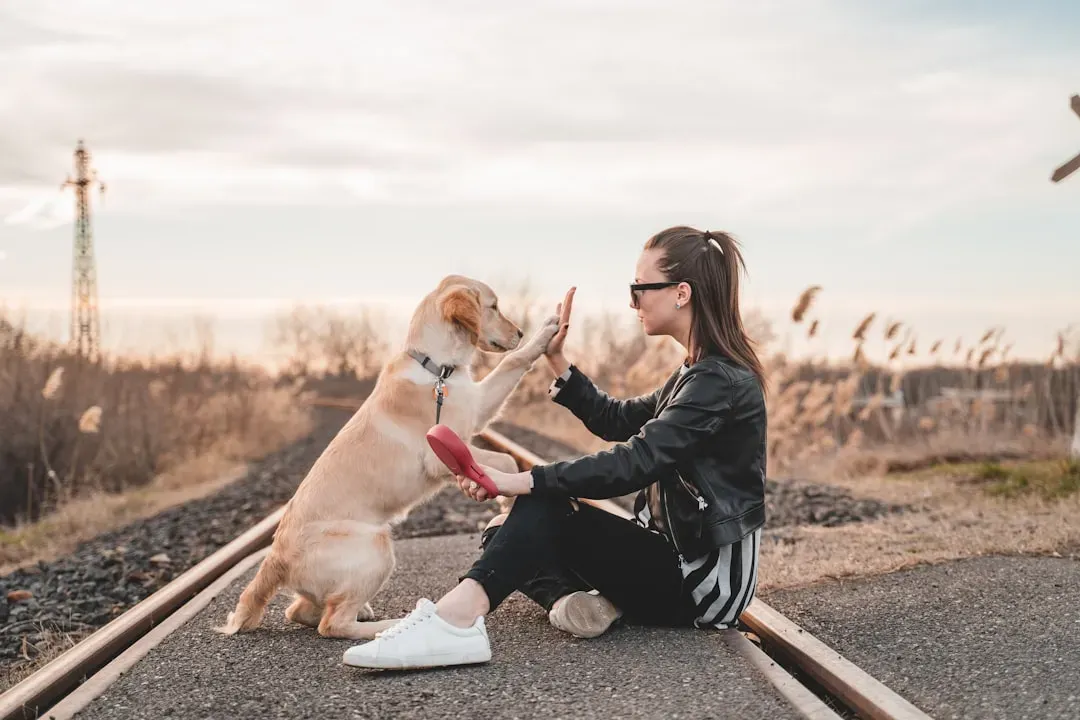
You’ve probably heard of oxytocin, sometimes called the “love hormone” or “cuddle hormone.” Here’s where it gets truly beautiful. Gazing behavior from dogs increased urinary oxytocin concentrations in owners, which consequently facilitated owners’ affiliation and increased oxytocin concentration in dogs. In other words, just looking into your dog’s eyes creates a biochemical loop of love – the same kind that bonds mothers to infants.
Studies have shown that when dogs and humans interact with each other in a positive way, such as cuddling, both partners exhibit a surge in oxytocin, a hormone linked to positive emotional states. This is not a metaphor. It is real chemistry, happening in both of your bodies at once.
The interaction induces oxytocin release in owners who display behaviors associated with anti-stress effects. The dogs seem to sense this and respond in a similar way. The calmer behaviors displayed by the dog then enhance the calming effect in the owners. It’s a beautiful feedback loop. You calm down, they calm down, and the whole thing spirals upward into connection.
Insecure Humans, Anxious Dogs: Recognizing the Pattern
Let’s be real. None of us are perfectly regulated, perfectly calm, perfectly “secure” all the time. Life happens. Work is stressful. Relationships are complicated. The good news is, your dog doesn’t need you to be perfect. From human studies, it seems that giving the right response about 60% of the time is enough to build a secure attachment style. More than half – not a hundred percent. That’s reassuring, isn’t it?
However, persistent patterns do matter. Some studies suggest that owners’ attachment avoidance may play a role in the development of separation-related problems in dogs. It is possible that these owners are less responsive to the dog’s needs and do not provide a secure base for the dog when needed. The dog then learns that the owner isn’t a source of comfort and safety.
High avoidance in dog owners has been associated with owner-directed aggression, with a theorized explanation being that emotional distance and a lack of affection and availability from an owner could result in a lack of perceived secure base for the dog, evoking fear and thus aggression. Fear-based behavior in dogs often has a human story behind it. That’s not blame – it’s an invitation to grow.
What a Securely Attached Dog Actually Looks and Acts Like
So what does this look like in practice? A securely attached dog has what researchers call a “secure base effect.” Dogs have demonstrated the so-called secure base effect, where the presence of an attachment figure allows dogs to more freely investigate novel objects. Think of it like a toddler at a playground – they wander off to explore, but only as far as they can still see their parent. Same principle.
Secure dogs play with their owners significantly more than with a stranger in all compared episodes during behavioral tests. They greet you warmly but don’t fall apart when you leave. They explore confidently, recover quickly from startling sounds, and settle calmly in their space. Soft eyes, a loose body, a tail that wags from the whole backend – not just the tip. These are your signals.
A dog living with a calm, emotionally stable owner is more likely to be relaxed, confident, and socially adaptable. That’s the vision worth working toward. Not a perfect dog. A happy, grounded one.
How to Build (or Rebuild) a Secure Attachment With Your Dog
The beautiful thing about attachment is that it’s not fixed. Attachment styles can change over a lifetime. Whether you’ve just adopted a rescue or you’re years into life with your dog, the relationship can deepen and heal. It starts with consistency – which is not the same as rigidity.
Dogs thrive on routine. Predictable mealtimes, walks, play, and rest help your dog feel safe and secure, especially if they’re new to your home. When your pup feels safe and like they can count on you to follow through with their routine, it’ll be easier for them to trust you. A consistent schedule also reduces anxiety and can make it easier to train your dog.
Beyond routine, it’s about emotional presence. This doesn’t mean you need to be perfect or suppress your own stress. It means that working on your own emotional regulation can be one of the most powerful gifts you give your dog. Mindfulness, therapy, support – whatever helps you feel more grounded helps your dog too.
Training your dog using positive reinforcement is not only effective, but it’s also a relationship builder. Rewarding good behavior with treats, praise, or playtime reinforces your bond and creates a safe space for learning. Avoid punishment-based methods, which can damage trust and create confusion or fear. Secure attachment is built with patience, kindness, and thousands of small, reliable moments of showing up.
Conclusion: The Most Important Training Happens Inside You
Here’s the takeaway that I think matters most. We talk endlessly about training our dogs – commands, leash manners, recall. Those things matter. But the foundation beneath all of it is the emotional relationship you’re building every single day.
We choose to have dogs in our homes, and therefore we choose to take care of them – not just their physical wellbeing, but their emotional health too. By taking attachment theory into account when we choose how to address behavior, we make a quantum shift in the quality of life for our dogs.
Your dog doesn’t need a trainer who has all the answers. They need a human who is doing the inner work – who is learning to regulate, to show up consistently, to be a safe place. Every calm interaction, every moment of connection, every time you respond to your dog’s needs with understanding – it all matters. You’re not trying to fix your dog because they’re not broken. You’re building a relationship so secure and trusting that your dog can begin to feel safe in the world, both with you and without you.
The most loving thing you can do for your dog might just be to take care of yourself. So, which part of this connection surprised you most? We’d love to hear your thoughts in the comments.


