
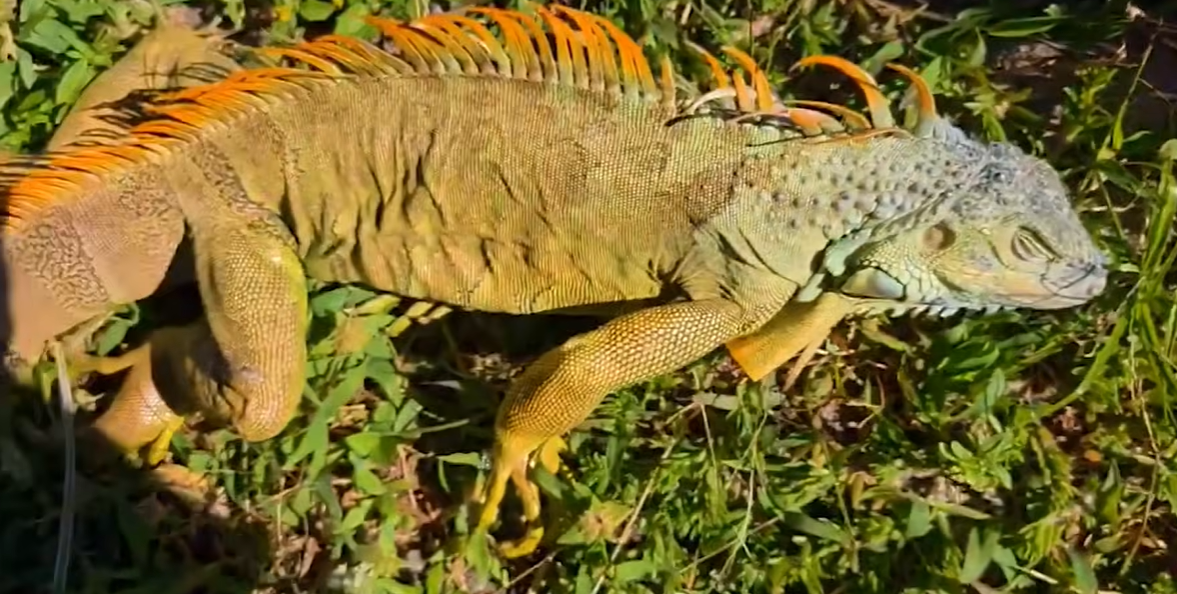
In South Florida, where subtropical warmth usually reigns, a rare cold snap last week delivered an unexpected twist to backyard life. Homeowner Kayla spotted a green iguana frozen solid on her patio, its body rigid from the plunge into the 30s. This sight hit differently for someone accustomed to viewing these reptiles as nuisances. Her story, unfolding amid thousands of similar reports across the region, challenges the straightforward “pest” narrative. Let’s dive into what this moment reveals about Florida’s iguana explosion and nature’s harsh checks.
The Unexpected Backyard Freeze-Out
Kayla’s discovery came during a historic chill that stunned iguanas statewide, leaving them tumbling from trees and littering lawns. Temperatures dipped below 45 degrees Fahrenheit, the threshold where these tropical imports lose muscle control and enter torpor. She recalled a prior visitor that remarkably knocked on her door before recovering, only for this one to succumb completely. Neighbors echoed her experience, with frozen reptiles piling up on fences, pools, and sidewalks. Local trappers scooped up thousands in days, turning the event into a frenzy of collection. What stands out here is how one stiff body in a familiar yard humanizes a species often dismissed outright.
Green Iguanas: Tropical Outsiders Gone Wild
Green iguanas hail from Central and South America, arriving in Florida via the pet trade decades ago. They exploded in numbers, with estimates topping 1.5 million across urban and rural spots. These climbers bask on rooftops, devour vegetation, and burrow into canal banks, racking up damages for homeowners and farms. Females lay up to 50 eggs per clutch, fueling rapid rebounds even after setbacks. State officials label them invasive, banning releases and urging humane removal year-round. Kayla’s close-up view adds a personal layer to these stats, blending frustration with fresh curiosity.
Cold Snaps as Nature’s Population Control
Florida’s occasional freezes expose the iguanas’ Achilles’ heel, culling herds without much human effort. Events in 2010, 2014, 2020, and now early 2026 wiped out local densities temporarily, though survivors adapt by huddling in warm microclimates. The Florida Fish and Wildlife Conservation Commission issued orders allowing public collection of stunned specimens to curb rebounds. Over 5,000 got removed in just two days this time, easing pressure on ecosystems short-term. Experts note populations bounce back quickly, but these chills highlight the mismatch between their origins and local whims. Kayla’s frozen find captures this cycle perfectly, vulnerability amid overabundance.
Balancing Empathy, Ecology, and Action
While iguanas disrupt by outcompeting natives, preying on eggs, and spreading invasive plants, their cold demise evokes sympathy for some. Kayla openly admitted the sight made her rethink “invasive,” a sentiment rippling through social media anecdotes. Communities launched cleanups to dodge disease risks from carcasses, with warnings against handling due to salmonella. Wildlife pros push education on not relocating them, as that fans the flames further. Programs explore sterilization and barriers alongside euthanasia for captures. Her tale underscores calls for smarter management, empathy tempered by ecological reality.
Climate Shifts and Future Iguana Fates
Unpredictable weather patterns, potentially amped by climate change, could ramp up these freezes, aiding control efforts indirectly. Historical die-offs show temporary dips, but resilient survivors repopulate fast. Iguanas now tolerate slightly lower temps than before, edging toward adaptation. South Florida braces for more such swings, stressing wildlife across the board. Kayla’s encounter mirrors broader tensions in a state overrun by exotics. It sparks vital chats on resilience, invasion, and human roles in the mix.
Final Thought
Kayla’s backyard iguana flips the script on invasives, revealing fragility beneath the nuisance facade. Florida’s wildlife dance demands nuance: remove threats, respect nature’s tools. Next cold front might deliver the same surprise. What shifts your view on these frozen invaders?
Source: Original YouTube Video


