
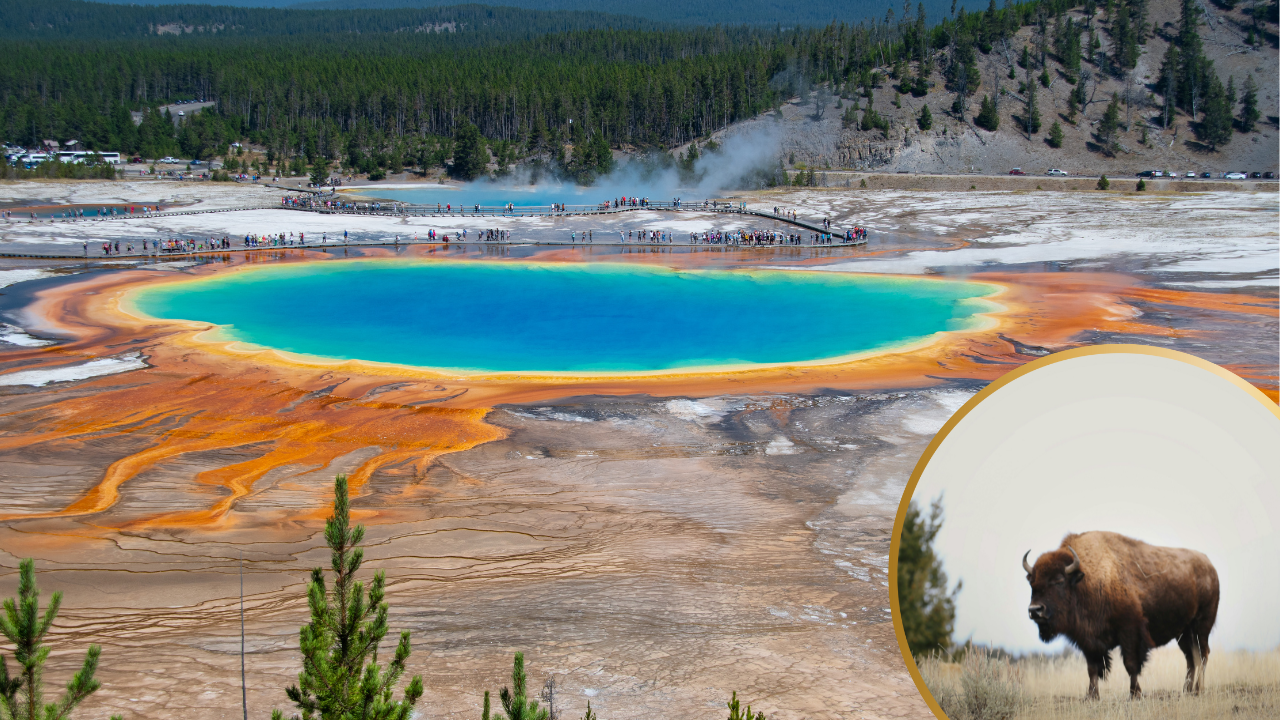
On the morning of Saturday, June 21, 2025, just before 7 a.m. MDT, visitors at Yellowstone National Park’s iconic Grand Prismatic Spring witnessed a chilling scene. A full-grown male bison wandered too close and stumbled into the scalding pool, at Midway Geyser Basin near Old Faithful early Saturday. As reported the temperature of the pool was around 160 °F (~71 °C)
Despite its initial attempt to scramble out, the powerful currents and boiling water overwhelmed the creature, and it tragically succumbed within the steaming confines of the spring
Eyewitness Accounts Stir Distress
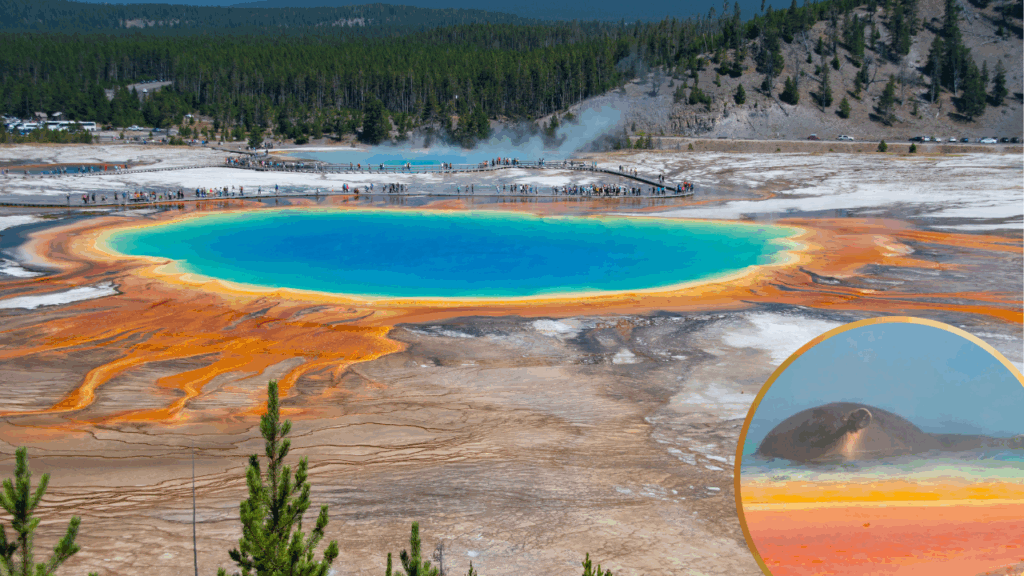
Tourists captured photos and videos of the horrific event and shared accounts on social media. Louise Howard, posting to the “Yellowstone Through the Lens” group, wrote:
“It took a few steps into a shallow area … then stepped into a deeper section then couldn’t get out despite trying its best.”
A Reddit user timestamped the ordeal at 6:52 a.m. and described watching the bison re-enter the spring after initially escaping, only to be unable to pull itself out the second time. By 6:58 a.m., the bison’s female companion appeared, sniffing and searching before realizing her mate had perished.
The Pool That Proves Fatal
The Grand Prismatic Spring—Yellowstone’s largest and the third-largest hot spring globally—is easily recognized by its vivid orange, yellow, and blue hues
Nestled in the Midway Geyser Basin, not far from Old Faithful, its vast 370-ft diameter and ~160 °F temperatures make it breathtaking yet deadly
Although many believe Yellowstone’s hot springs are acidic enough to dissolve flesh, Yellowstone Volcano Observatory scientist Mike Poland clarified that the water is usually neutral in pH; it’s the heat—not acidity—that kills
The Fate of the Fallen Bison

After the bison’s collapse, park officials opted not to remove the carcass from the spring. It was deemed too risky for both animals and humans—rangers would face serious danger working near the steaming edge of a one-ton beast
Instead, the park will let nature take its course: the heat will “poach” the bison much like cooking meat, stripping away soft tissue quickly and leaving bones behind .
Yellowstone’s Hidden Dangers: Why Hot Pools Should Be Avoided.
Yellowstone’s geothermal zones aren’t just scenic, they’re lethal. Temperatures can exceed boiling by a few feet below the surface, enough to cause immediate third‑degree burns on human skin
Acidic pools, though less common, still burn flesh and are unpredictable under shifting geothermal crust. At least 22 recorded deaths since 1890 attest to the peril of leaving boardwalks or trails—most visitors hear multiple warnings to “stay on the path” for this very reason
Even wildlife isn’t immune, as this tragedy proves. Whether human or bison, the hot springs respect no one’s expectations.
Lessons from the Heat
Mike Poland called the incident “a cautionary tale,” a grim reminder that wildlife sometimes misjudge danger, and that humans must exercise vigilance
While witnessing nature’s extremes can be mesmerizing, the consequences of missteps in Yellowstone’s volatile zones are unforgiving.
As the bison’s remains slowly dissolve, Yellowstone officials continue to urge visitors to stay safe stick to boardwalks, respect all warning signs, and leave nature undisturbed. Its beauty is matched only by its capacity for tragedy.


