
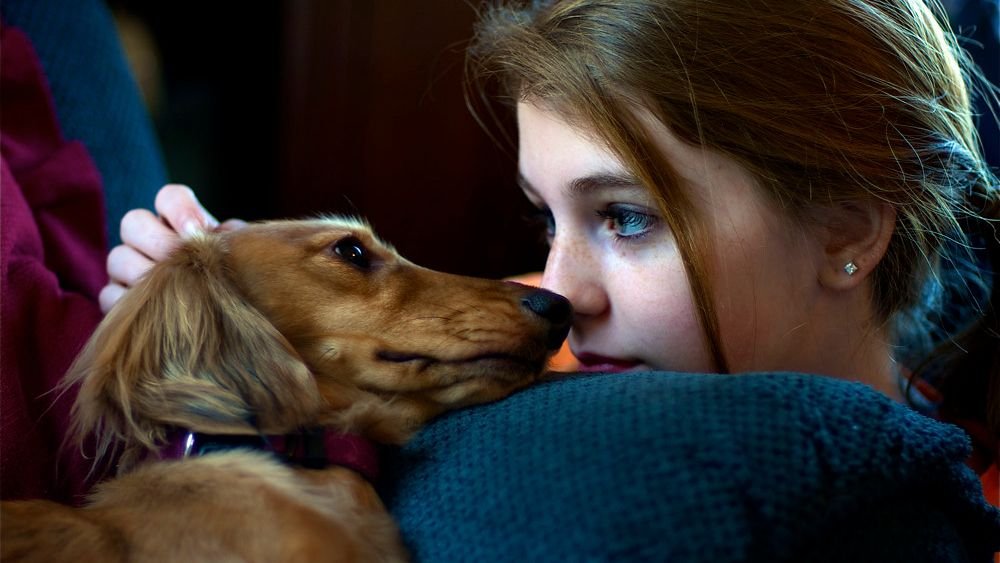
Picture this: you’re having a rough day, tears streaming down your face, and suddenly your dog nudges in close, tongue gently lapping at your cheeks. It’s one of those moments that feels almost magical, like your furry friend truly gets it. Yet, what drives this behavior goes deeper than simple curiosity.
Let’s uncover the real story behind those tender licks. You might be surprised by the science of canine empathy.[1][2]
A Remarkable Act of Comfort
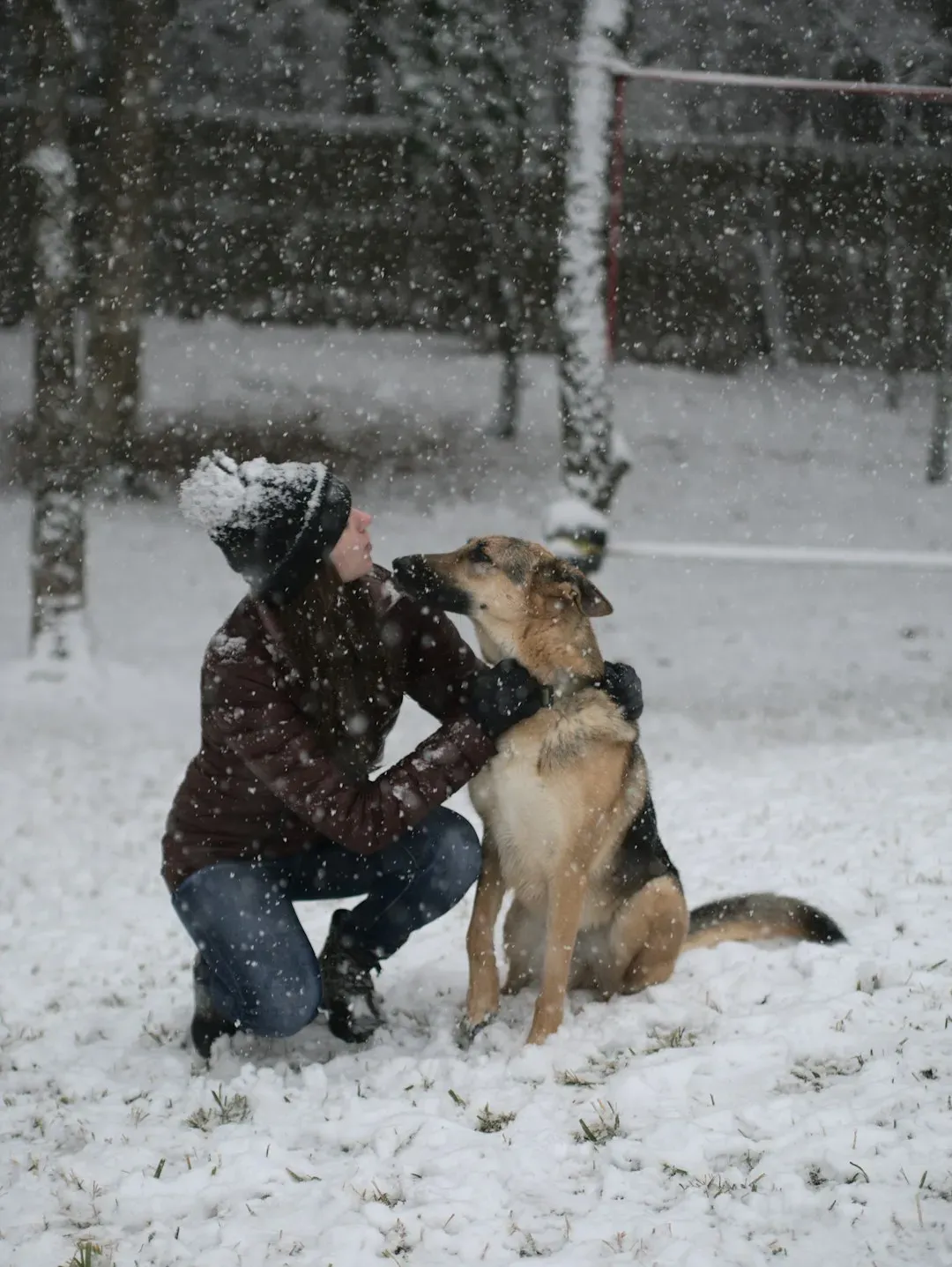
Ever notice how your dog zeros in on your tears during tough moments? This isn’t random. Dogs often respond to human crying by approaching and licking, a behavior rooted in their sensitivity to our distress.[3]
Studies show they pick up on emotional cues like sobs or facial expressions. It’s their way of offering solace, almost as if they’re wiping away more than just moisture. Honestly, it warms the heart to think about.[4]
Dogs’ Incredible Emotional Radar

Dogs read us better than most animals. They detect changes in our voice, scent, and body language when we’re upset. This radar helps them swing into comfort mode fast.
Research highlights how they show more concern toward crying owners. Anxious pups especially lean in with licks and cuddles. Here’s the thing: it’s not pity, but genuine connection.[3][5]
The Unique Chemistry of Tears
Tears aren’t all the same. Emotional ones pack extra proteins and hormones compared to basic reflex tears. Your dog might catch those chemical signals in the air or on your skin.
This difference could explain the targeted licking. It’s like their nose flags distress markers, prompting a response. Pretty clever, right? Far from mindless slobbering.[1]
Oxytocin’s Magical Role

Oxytocin, the love hormone, surges in both dogs and humans during bonding. When dogs reunite with owners, their eyes even tear up from it.[6]
Licking triggers more of this hormone release. It soothes everyone involved, turning a sad moment into shared calm. I know it sounds wild, but science backs this emotional loop.[7][8]
Experiments confirm oxytocin boosts tear production in dogs too. This mutual boost strengthens your pack bond over time.
Not Just Chasing Salt

Sure, tears taste salty, and dogs love flavors. But emotional tears offer more intrigue with their hormone mix. Licking goes beyond a snack; it’s investigative.
Owners report dogs ignoring plain water but homing in on real tears. That selectivity points to empathy over appetite. Let’s be real, it’s touching to see them prioritize your feelings.[9]
Licking as True Empathy

Dogs mirror our emotions in ways that stun researchers. They comfort crying people more than neutral ones. Licks serve as their hug equivalent.
This behavior ties to their history with humans. Bred for companionship, they’ve tuned into our vibes. It’s like they’re absorbing the heaviness, lightening your load metaphorically.[10]
Evolutionary Roots of This Bond

Thousands of years of living side by side shaped dogs’ responses. They evolved to sync with human signals for survival and partnership. Tear-licking fits this ancient playbook.
Modern studies echo this, showing cortisol rises in dogs hearing cries. Their licks then dial down stress for both. Remarkable how nature wired them for our hearts.[5]
Deepening Your Shared Connection

Next time your dog laps at your tears, recognize the gift. This simple act builds trust and releases feel-good chemicals. It reminds us why dogs feel like family.
Embrace these moments to nurture the bond. Your pup isn’t just comforting you; they’re weaving tighter emotional threads. What a profound takeaway from those wet kisses. Ever felt that instant mood lift?[7]


