

Picture this. You’ve had the worst day of your life. You walk through your front door, shoulders slumped, not saying a single word. Before you even sit down, your dog is already there, pressed gently against your leg, staring up at you with those soft, knowing eyes. You didn’t have to say anything. They just knew.
It’s one of those moments that makes you stop and think: how on earth do they do that? The truth is, your dog isn’t just being sweet. There’s real science behind this connection, and it goes far deeper than most people realize. What your dog picks up from you every single day would genuinely surprise you. Let’s dive in.
Your Dog Is Basically a Walking Emotion Detector

Here’s the thing most people don’t fully grasp: your dog isn’t guessing at your feelings. They are actively reading you through multiple senses at once. Studies have found that dogs use three main senses, sight, smell, and hearing, to determine human emotions. Think of it like having a full emotional surveillance system pointed at you every moment of the day.
It goes even further than that. Dogs have been empirically shown to be particularly sensitive to human emotions, and they discriminate and show differential responses to emotional cues expressed through body postures, facial expressions, vocalizations, and odours. Honestly, that’s extraordinary. They’re not just catching a vibe. They’re cross-referencing data points from every corner of their senses, like a tiny four-legged emotional analyst living in your home.
The ability to perceive and recognize human emotions may have developed in dogs over the long co-evolution process between dogs and humans, as it has been adaptive to perceive negative or positive emotions in humans and respond by either avoiding or approaching them. In other words, this isn’t some recent party trick. It’s thousands of years of evolution, fine-tuned to you.
The Nose Knows: How Dogs Literally Smell Your Stress
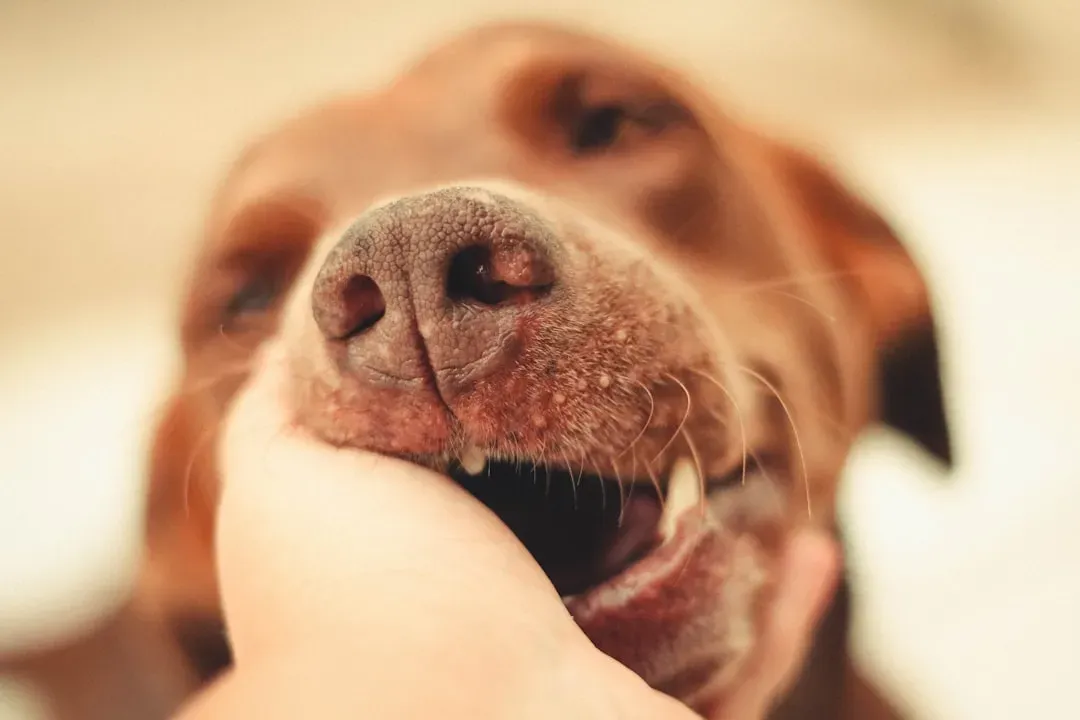
Let’s be real. When you think about your dog sensing your emotions, you probably picture them watching your face or hearing you sigh. What you probably don’t picture is them sniffing your stress hormones. Research out of the United Kingdom suggests that the smell of human stress affects dogs’ emotions as well as their decisions, leading them to make more pessimistic choices. That’s wild to think about.
Dogs experience emotional contagion from the smell of human stress, leading them to make more ‘pessimistic’ choices. So when you’re anxious before a big meeting, your dog isn’t just sensing a vague unease. They are chemically absorbing your cortisol-laced sweat and emotionally responding to it. Depending on the breed, their sense of smell is ten thousand to one hundred thousand times stronger than their owner’s, which means dogs can smell and sense changes in body odor that are magnitudes weaker than a person can detect.
Dogs can smell changes in blood sugar levels, hormones, and brain chemicals. So the next time your dog starts acting clingy and anxious for seemingly no reason, pause for a moment and check in with yourself. They might be reacting to something you haven’t even consciously registered yet.
Reading Your Face and Body: Your Dog Is Watching Every Move

A study found that dogs respond to human faces that express six basic emotions, including anger, fear, happiness, sadness, surprise, and disgust, with changes in their gaze and heart rate. That means when you frown, your dog notices. When you smile, your dog notices. Your face is essentially a live emotional broadcast, and your dog has their eyes glued to the screen.
When the owner was happy, dogs looked more often at the owner and then spent more time approaching a potentially scary object. When the owner looked fearful, the dogs were less likely to approach. The experiment showed clearly that dogs understood that a happy face means safety, while a fearful face means danger. Think of that classic moment at the vet’s office. If you’re tense and stiff, your dog escalates. If you stay calm and speak softly, they settle. Your body is their emotional compass.
When their people project feelings of calm and confidence, dogs tend to view their surroundings as safe and secure. This is actually something you can use practically. Slow your breathing, relax your posture, and you will literally calm your dog down. You are more powerful than any treat when it comes to their sense of safety.
When Your Mood Becomes Their Mood: Emotional Contagion in Dogs

Dogs behaved differently depending on the owner’s emotional state: they gazed and jumped less at owners when they were sad, and their compliance with the ‘sit’ command was also diminished. I think this is one of the most relatable research findings out there. Sad owner. Subdued, less responsive dog. Sound familiar?
Dogs exposed to fear-related smells showed more behavioral signs of stress, seemed to seek reassurance through contact with their owners, and had considerably higher heart rates than in happy or neutral conditions. This is what’s called emotional contagion. It’s not just understanding your emotion. It’s literally catching it, like a cold, but made of feelings.
We already knew that positive training, heavy on the rewards, is good for owner-dog relationships, and new research suggests that approaching training while stressed could have a negative effect on how a dog feels and learns. So that frustrating training session where nothing went right? Your own tension may have been a contributing factor. That’s not a guilt trip. It’s actually incredibly empowering once you understand it.
What Your Dog’s Behavior Is Actually Telling You About Yourself

Your dog uses body language to express emotion, and understanding their cues is important. You can grab the ball and start a game of fetch with a playful pup, offer reassurance to a nervous dog, or give a dog that feels threatened space to be left alone. Here’s the flip side of all this remarkable emotional sensing: your dog is constantly giving you feedback too.
Dogs yawn when they’re stressed, and according to animal behavior experts, dogs use yawning to calm themselves in tense situations and to calm others, including their owners. A dog that’s yawning repeatedly in a calm room is not bored. They may be trying to de-escalate tension in the room, possibly tension coming from you. People commonly misinterpret repeated licking and rolling over as a dog being friendly, but these behaviors are actually signs of stress.
We can usually read big emotions, such as fear and excitement, from our dog’s body language. But we tend to miss the more subtle signs of stress and discomfort. Misunderstanding your dog’s emotions and intentions can lead to problems with reactivity and aggression. Learning to read these quieter signals is one of the most loving things you can do for your dog. They’re talking all the time. We just need to get better at listening.
Conclusion: The Emotional Bond That Goes Both Ways

Your dog isn’t just a pet reacting to your commands. They are a sensitive, highly tuned emotional companion who is paying attention to you on a level that most humans never will. Every sigh, every tense moment, every burst of laughter. They catch it all. Dogs’ social cognition facilitates the interaction with humans, and the ability to read and respond appropriately to emotional cues may have been, and may still be, key for the establishment of these interspecific bonds.
This knowledge carries real responsibility. To improve your dog’s emotional wellbeing, try establishing consistent routines, since dogs feel safer and more confident when they know what to expect, and spend quality time together every day through walks, play sessions, or simply relaxing together to build trust and strengthen your bond. The relationship you have with your dog is a mirror. When you invest in your own emotional health and presence, your dog flourishes too.
The next time your dog curls up close to you on a hard day, know that it’s not coincidence. It’s connection. It’s thousands of years of evolution showing up in one warm, furry body saying: “I’ve got you.” What do you think? Have you ever noticed your dog picking up on a mood before you even realized you were feeling it? Share your story in the comments.


