
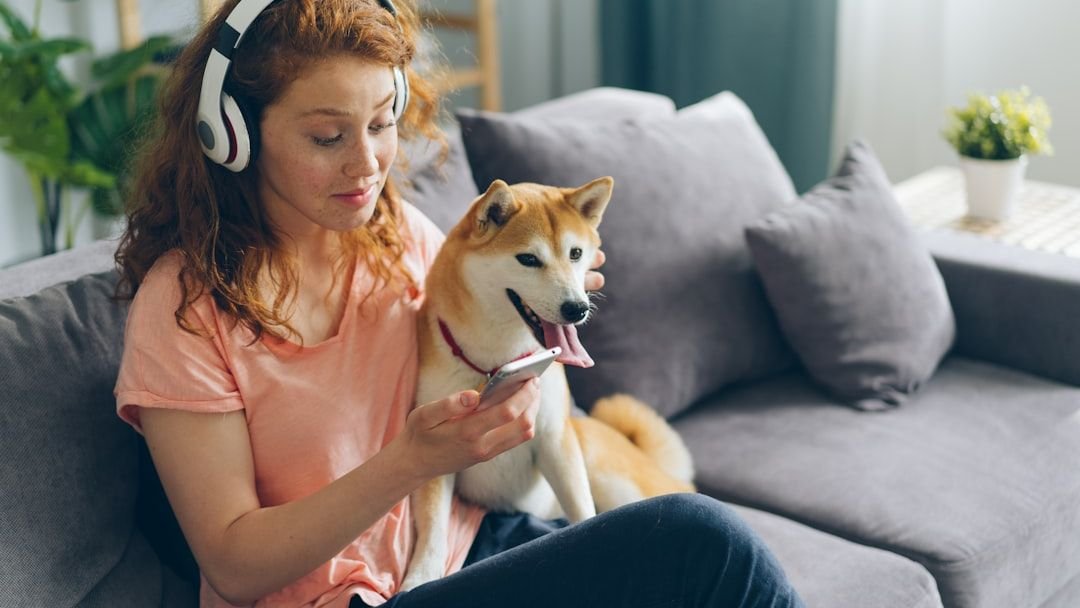
You know that look your dog gives you when you come home after a long day? That tail wagging, those bright eyes locked on yours, that unmistakable sense that they genuinely get you? Turns out, you’re not imagining things. Science is catching up to what dog lovers have suspected all along, and the findings are honestly mind blowing. Your furry companion isn’t just responding to commands or hoping for treats. They’re actually tuning into your words, emotions, and intentions in ways that researchers are only now beginning to fully understand.
The research is clear. Dogs aren’t simply well trained animals going through the motions. They’re processing human communication on multiple levels, picking up on subtleties we barely notice ourselves. So let’s dive into what science has discovered about your dog’s remarkable ability to understand you.
Your Dog Actually Knows What Words Mean
Recent research using brain activity recordings has revealed that dogs show different brain patterns when presented with matching versus mismatching objects after hearing their names, similar to what researchers observe in humans and widely accepted as evidence of understanding words. This isn’t about your dog simply associating the sound “ball” with playtime. Studies appearing in scientific journals have made the unexpected discovery that dogs generally know certain words actually stand for specific objects, and when they hear those words, brain recordings suggest they activate a matching mental representation in their minds.
Think about it this way. When you say your dog’s favorite toy’s name, their brain literally lights up with the memory of that object before you even show it to them. Results suggest that dogs have at least a rudimentary neural representation of meaning for words they’ve been taught, differentiating words they’ve heard before from those they haven’t. What’s even more fascinating is that this ability to understand referential language is generally present in dogs and isn’t dependent on the size of their object word vocabulary.
Your dog doesn’t need to be a genius with hundreds of words to understand this concept. They’re doing something far more sophisticated than we gave them credit for.
They Process Language Like We Do
Here’s where things get really interesting. Research shows that dogs process words with the left hemisphere of their brain and tone with the right, similar to humans. Your dog’s brain actually has specialized regions for handling different aspects of communication. Like humans, dogs process intonation separately from vocabulary in auditory regions in the right hemisphere of the brain, and they rely on both word meaning and intonation when processing the reward value of what’s said to them.
Let’s be real, this means your dog knows when you’re being sarcastic. Well, sort of. They’re paying attention to both what you say and how you say it, combining these elements to figure out your true intent. Recent studies show that dogs can absolutely find their name when presented in a monotone way and buried in a stream of irrelevant speech, a prerequisite for comprehending language.
So when you’re chatting away to your pup in baby talk versus giving a stern command, their brain is processing these as completely different messages. Humans slow down their speech when addressing their pets, and this modification brings them closer to the dog’s typical speech rate and could facilitate understanding. We naturally adapt our communication style, and honestly, that partnership has been evolving for thousands of years.
Dogs Read Your Face Better Than You Realize

The canine brain can pick up on emotional cues contained in a person’s voice, body odour and posture, and read their faces. Your dog isn’t just staring at you adoringly. They’re conducting a full emotional scan. Research has shown dogs display greater response and cardiac activity when shown photographs expressing arousing emotional states such as anger, fear and happiness. Their heart rate actually increases when they see you having a bad day.
Dogs tend to turn their heads to the left when they see human faces expressing anger, fear or happiness, while the reverse happens when faces look surprised, possibly because dogs view it as a non threatening, relaxed expression. This left right brain processing reveals something profound about how deeply dogs have adapted to living with us.
Studies have demonstrated that dogs differentiate between happy and angry human faces, and that dogs find angry faces to be aversive. Dogs engaged in mouth licking when they saw images of angry human faces, but not when they heard angry voices, emphasizing the importance of visual cues. They’re watching us constantly, reading the emotional landscape of our faces like a book we didn’t know we were writing.
They Recognize Languages and Adapt Communication
Dogs’ brains showed activity when they heard human speech regardless of language, and when dogs heard the language they were most familiar with, their brains showed stronger activity, suggesting they not only recognize human language but also process the specific language spoken most often by their families. Your multilingual household? Your dog notices the difference between Spanish and English, folks.
Research reveals that dogs and humans have coadapted to communicate with each other. It’s hard to say for sure, but this partnership seems less like training and more like coevolution. Brain imaging studies found that the dog brain distinguished, without training, a familiar from an unfamiliar language, and older dogs were better at discriminating one language from another, suggesting an effect of the amount of exposure to the language.
The more time your dog spends listening to you chat away in your native language, the better they become at recognizing it. They’re not understanding grammar or vocabulary in every language, obviously, but they’re tuning into the rhythm, patterns, and familiar sounds of the speech they hear most often. That’s some serious linguistic awareness for a species we once thought just barked and wagged tails.
Communication Is a Two Way Street

Studies show our furry friends use a combination of at least 19 distinct gestures to tell us what they want, with one mix of gestures, such as pawing and head tilting, potentially translating to wanting to go outside while another combination might convey the desire for food. Your dog is actively trying to talk to you using a sophisticated system of signals. The most common requests are give me food or drink, open the door, get my toy or bone, and scratch me.
Honestly, we’re often the ones failing at communication, not them. Studies reveal a lack of awareness of the meaning or interpretation of canine signaling and communicative behaviours, and poor socialisation or inappropriate handling may negatively affect a dog’s ability to learn human communication.
Unlike in people, canine body postures and olfactory cues are significant components of dog language and vocal communications are less significant; people are listeners while dogs are watchers. This fundamental difference means we need to pay attention to what they’re showing us, not just what we’re saying to them. Your dog is communicating all the time through tail position, ear angle, body posture, and facial expressions. We just need to become better at reading their language too.
What This Means for Your Relationship

Understanding that your dog genuinely comprehends more than basic commands changes everything about how we should interact with them. When communicating with a human, their level of comprehension is generally comparable to a toddler. Think about that for a moment. You’re essentially living with a perpetual two year old who happens to have four legs and fur.
Dogs tend to be highly responsive to human cues, especially the direction of a gaze and the direction in which a human points, and they rely on the gestures of humans more than verbal cues, with eye contact being most important. That eye contact you share with your dog? It’s building neural pathways, strengthening bonds, and facilitating genuine understanding between two very different species.
The science tells us to talk to our dogs more, not less. Explain things. Use consistent words paired with gestures. Be mindful of your facial expressions and tone, because they’re picking up on all of it simultaneously. Canines understand the meaning of some human words and perceive the emotional content of human vocalizations. Every conversation you have with your dog is contributing to their understanding of you and your world together.
Your relationship with your dog is built on thousands of years of coevolution, and modern science is finally giving us the tools to appreciate just how remarkable that partnership truly is. What do you think about it? Has your dog ever surprised you with how much they seemed to understand? Tell us in the comments.


