
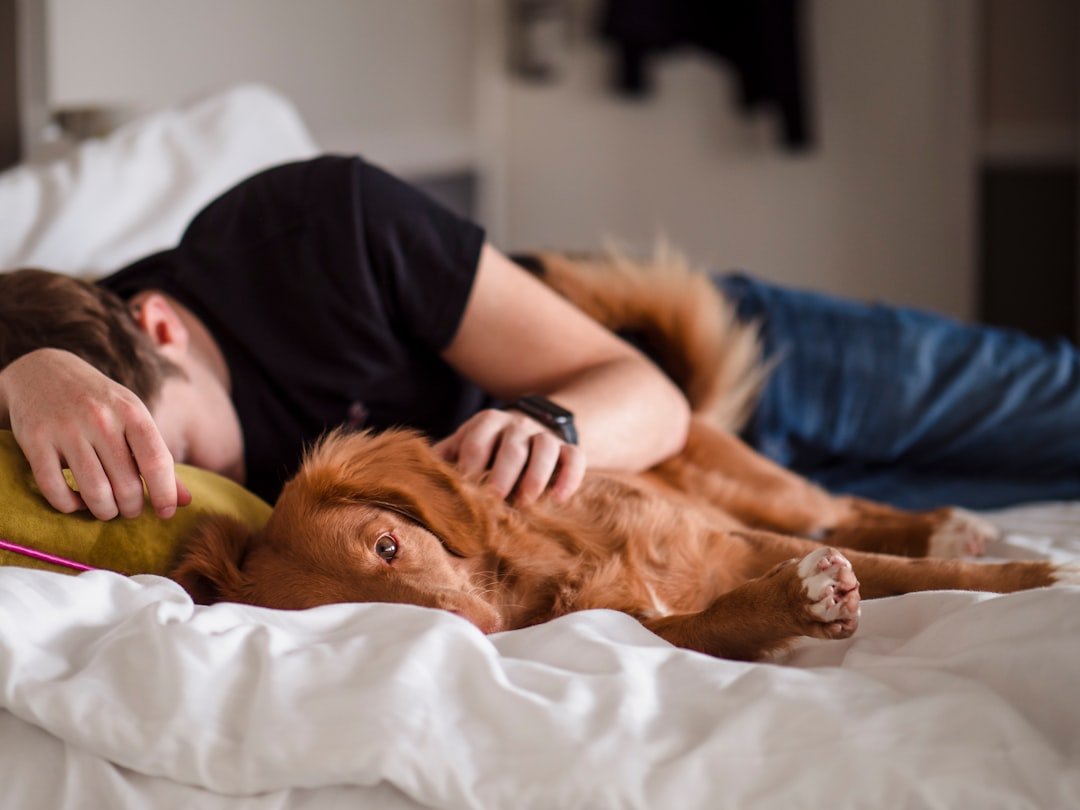
Many dog owners have witnessed it: a dog sleeping peacefully when suddenly their paws twitch, their ears flick, and soft whimpers escape as if they are reacting to something in a dream. It can be both touching and puzzling.
While it’s easy to assume dogs are having nightmares, scientists believe these nighttime sounds often reflect normal dreaming activity. Just like humans, dogs process memories and experiences during sleep—and many of those experiences revolve around the people they love.
1. Dogs Experience Sleep Cycles Like Humans
Dogs move through different stages of sleep, including deep sleep and rapid eye movement (REM) sleep. REM sleep is the stage where dreaming most often occurs.
During this phase, the brain becomes highly active while the body remains mostly relaxed. Small movements, soft vocalizations, or twitching paws are common signs that a dog is dreaming.
2. Dreams Often Reflect Daily Experiences
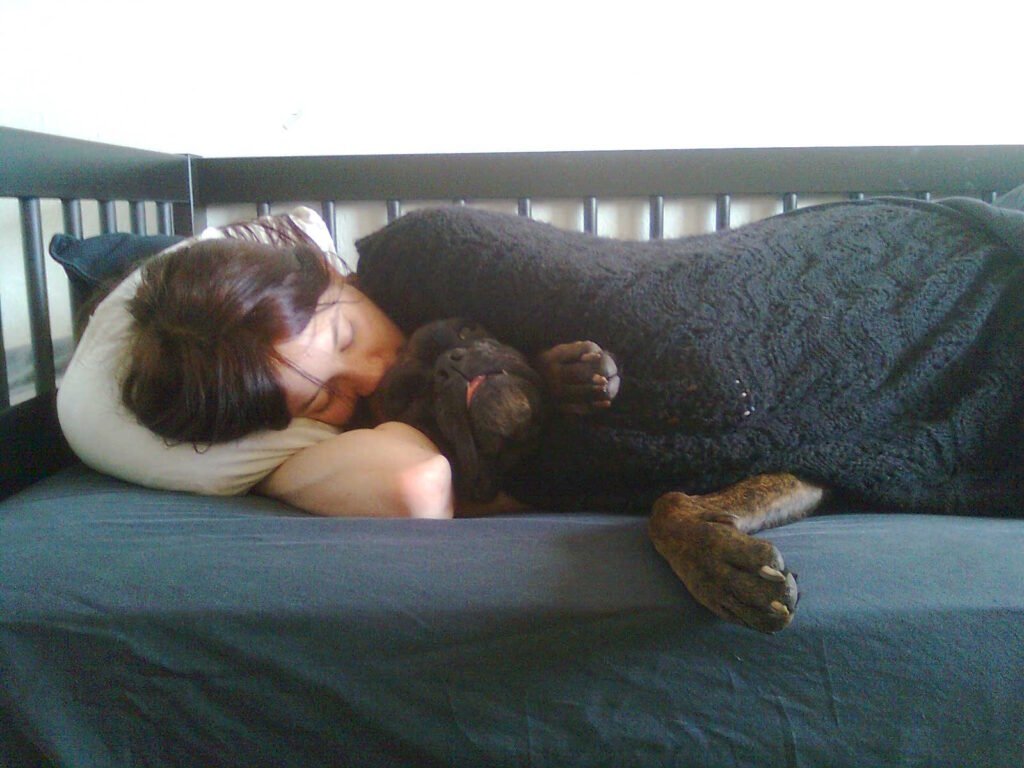
Dream research suggests that animals often dream about familiar activities. For dogs, that may include running, playing, or interacting with their owners.
Because dogs spend so much time bonding with their humans, it’s likely that many dreams involve familiar voices, scents, and moments of affection.
3. Puppies and Senior Dogs Dream More Frequently
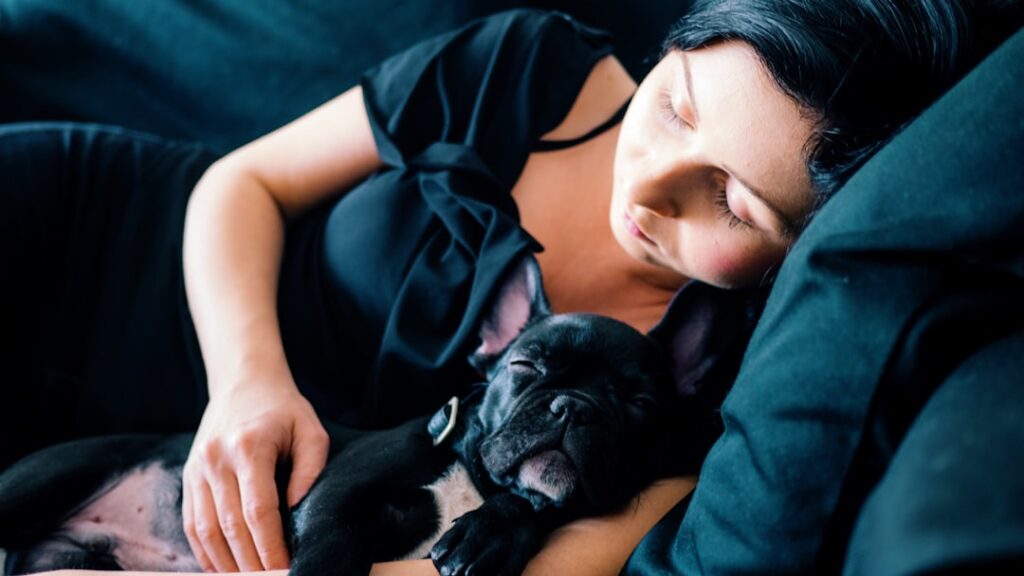
Younger and older dogs tend to experience more visible dreaming behaviors. Puppies are processing new experiences and learning about the world around them.
Senior dogs may also show more movement or vocalization during sleep as their brains revisit memories accumulated over years of life.
4. Whimpering Is Usually a Natural Sleep Response

Soft whimpers or quiet barks during sleep are typically harmless. They often occur when a dog’s dream becomes emotionally stimulating or exciting.
In most cases, it’s best not to wake the dog unless the behavior seems distressed or unusually intense. Letting the dog finish the sleep cycle naturally allows their brain to complete its processing.
5. Dreams Strengthen Emotional Bonds

Sleep plays a major role in memory and emotional processing. For dogs, dreaming may help reinforce positive experiences with their families.
Those small nighttime whimpers could simply reflect a dog reliving joyful moments—running beside their owner, hearing a familiar voice, or feeling safe in a loving home.
Conclusion
When a dog whimpers softly in their sleep, it often reveals the depth of their emotional world. Far from being frightening nightmares, these dreams may simply be the brain’s way of replaying meaningful moments. In many ways, those quiet nighttime sounds are a gentle reminder of the powerful bond between dogs and the people they love.


