
Have you ever wondered why your neighbor’s dog sits calmly at the park while yours is dragging you toward every squirrel in sight? Or why a dog who seemed perfectly fine suddenly starts destroying furniture or barking nonstop? Here’s the thing – those behaviors rarely come out of nowhere. They’re almost always a story being told, a message being sent.
Dogs are remarkably sensitive creatures. They absorb their surroundings like a sponge, responding to the emotional tone of your home, the consistency of your rules, and the quality of your guidance. Whether your pup is calm and confident or anxious and reactive, their daily behavior is essentially a mirror. It reflects every lesson, every experience, and every environment they’ve ever known. Ready to understand what your dog is actually telling you? Let’s dive in.
The Environment Your Dog Lives In Shapes Who They Are

Think of a dog’s environment as the soil in which their personality grows. Research has shown that the home rearing environment is indeed important for behavioral development, with nearly all environmental variables studied being significant predictors of behavioral outcomes. That means the world you create at home – the sounds, the spaces, the social interactions – is literally wiring your dog’s brain.
The largest associations between environment and behavior appear to be social in nature, suggesting that social factors may be the most important when it comes to shaping how a dog behaves. A dog who grows up around calm, consistent people tends to be calm and consistent. One raised in chaos often mirrors that chaos right back.
Most experienced dog trainers agree on one thing: the environment we are in will greatly influence the behavior of our dogs, and that influence isn’t always positive. Honestly, I think most pet parents underestimate just how much their home atmosphere matters. Your dog is not acting out of spite. They are reacting to what surrounds them.
Scientific studies have found that social fearfulness in dogs is associated with several factors including urban environment, poor socialization during puppyhood, and infrequent participation in training and other activities. Prevention is far easier than rehabilitation. Creating an enriching, stable environment from the start is one of the greatest gifts you can give your dog.
The Power of Consistency: Why Your Dog Needs Clear, Steady Rules

Dogs don’t need perfection from us. They need predictability. Dogs thrive on routine and predictability. It’s almost like how a child feels safer with a reliable bedtime routine. When your dog knows what to expect, anxiety drops and good behavior naturally follows.
Consistency doesn’t only impact short-term training results – it is key to shaping your dog’s overall behavior for the long term. Dogs that experience consistency in their interactions with their owners are more likely to exhibit well-behaved, stable, and balanced behavior. Mixed messages, on the other hand, create confusion. And confused dogs act out.
Consistency means making sure everyone in the household is on the same page. If one person rewards a behavior and another punishes it, it can confuse your dog entirely. So if Dad lets the dog on the couch on Sundays but Mom enforces an off-couch rule all week, your dog is essentially living in two different houses. That’s exhausting for them.
Consistency also reduces anxiety and helps dogs feel more secure. When they know what to expect, they are less likely to act out due to confusion or frustration. Think about it this way: structure isn’t restricting your dog’s joy. It’s actually freeing them from the mental weight of uncertainty.
Positive Reinforcement: The Training Method That Actually Works
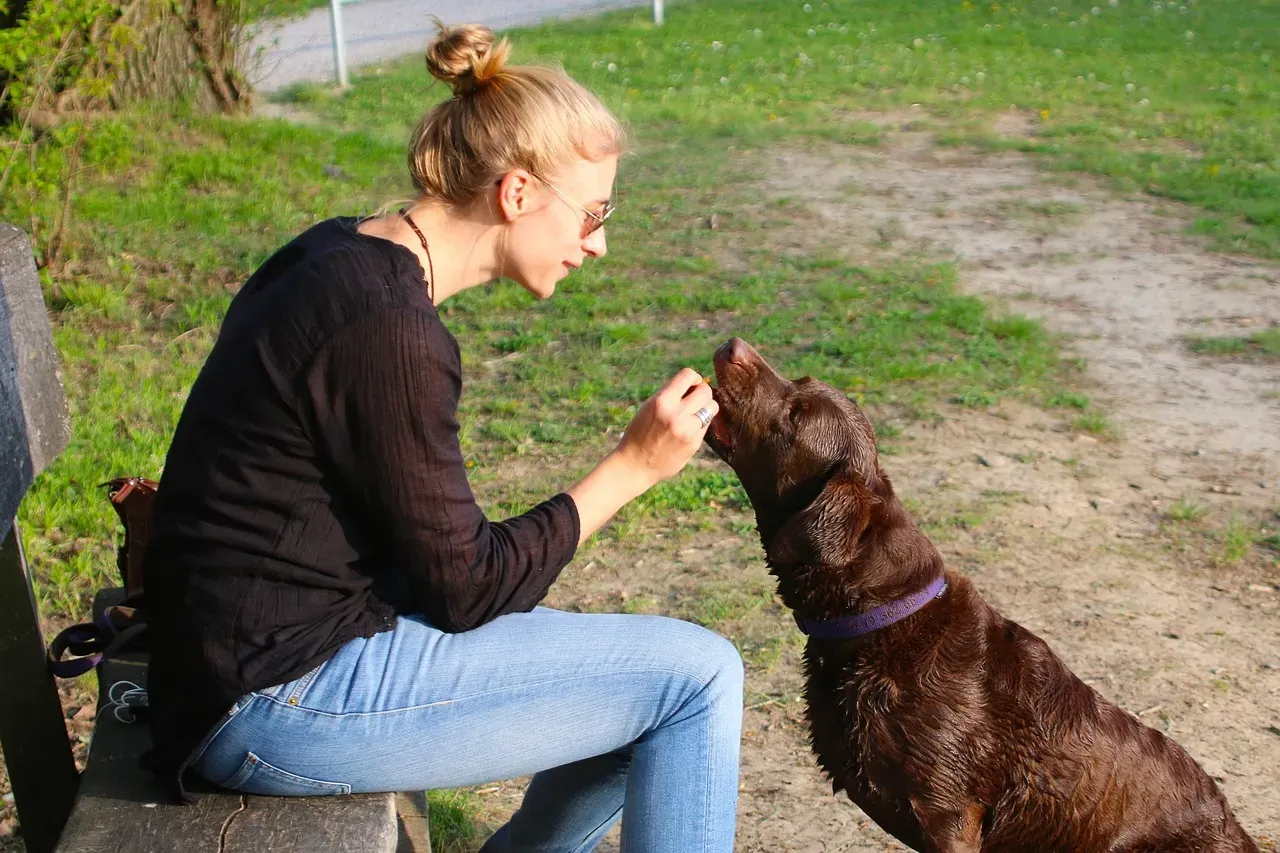
Let’s be real – there’s no shortage of dog training advice out there. Some of it is outdated. Some of it is frankly harmful. The science, though, is clear. Positive reinforcement training has become non-negotiable in modern dog care, and it is more science-driven than ever, with decades of research underlining that reward-based training is not just kinder, it is also more effective for long-term behavior change.
A dog that is given consistent guidance from an early age has the best chance of growing up to be a confident dog. A confident dog is more emotionally balanced and experiences less anxiety-based behaviors. Confidence is trained, not born. The treats and the praise are not just rewards. They are building blocks of trust.
In the first large-scale study of companion dog training, dogs trained with aversive stimuli displayed more stress behaviors during training, showed higher elevations in cortisol levels after training, and were more ‘pessimistic’ in a cognitive bias task than dogs trained with reward-based methods. That is a profound finding. Punishment doesn’t just hurt in the moment. It changes how a dog sees the world.
Positive reinforcement also strengthens the emotional well-being of dogs. Unlike punishment-based techniques that may cause stress or fear, this approach builds confidence and trust. A dog that is consistently rewarded for good behavior will feel secure and happy, reducing the risk of anxiety-driven behavioral problems. The goal has never been just obedience. It’s a genuine, joyful partnership.
When Behavior Signals Stress: Reading Your Dog’s Emotional Health

Research from Texas A&M University found that more than nearly all dogs in the United States show behaviors that are potentially problematic, with the top categories being aggression, separation and attachment behaviors, and fear and anxiety behaviors. That’s a staggering figure. It tells us that behavioral struggles are not a sign of a “bad dog.” They’re incredibly common.
Understanding dog behavior, especially in the context of the human social environment, is critical to maintaining positive human-dog interactions. Behavior can be an important indicator of health and welfare in companion dogs, and behavioral change can signal transitions in life stages, alert caretakers to potential illnesses or injuries, and is an important factor in understanding and measuring stress. In other words, your dog’s behavior is one of the most important health signals you have access to.
Watch for these key stress signals: dilated pupils, panting, yawning, salivating, trembling, and pacing are all signs that something feels wrong for your dog. They’re not being difficult. They’re communicating the only way they know how.
If a dog’s behavior becomes dangerous, owners need to look at what else is going on in the animal’s environment that may be triggering that behavior. Context is everything. A dog that snaps during bath time is not aggressive by nature. That dog may simply be overwhelmed. Understanding the trigger is always the first step toward a solution.
Separation Anxiety: What Your Dog Feels When You Leave

Research suggests that roughly eight out of ten dogs find it hard to cope when left alone. Yet nearly half will not show any obvious signs, making it easy for owners to miss. That number might surprise you. Many dogs are suffering quietly, and their owners have no idea.
Separation anxiety is a stress response a dog exhibits when they are away from the person they are bonded to. Certified separation anxiety trainers describe the experience as similar to a human having a panic attack. So when you come home to shredded pillows or scratched doors, the right response isn’t frustration. It’s empathy.
Practical prevention tips matter here. Making your dog’s day more predictable helps calm an anxious pet. Establishing a daily routine so that your dog knows when they can expect a walk, meals, playtime, and attention – and when they will be alone – creates a framework of safety. Routine is a form of love, truly.
Puzzle feeders, treat-dispensing toys, lick bowls, or safe chew toys keep dogs mentally engaged. Mental stimulation helps redirect anxious energy into something rewarding. This can also reduce destructive behaviors caused by stress. Think of it as giving your dog a “job” to do while you’re out. A busy dog is a calmer dog.
Conclusion: You Have More Influence Than You Think
Here’s the most empowering truth about dog behavior: you are not a passive bystander. The environment you create, the training approach you choose, and the emotional tone you carry into every interaction all shape the dog in front of you. Every calm moment, every rewarded behavior, every consistent boundary is a deposit into your dog’s emotional bank account.
Your dog is not trying to be difficult. They are trying to navigate a world that doesn’t always make sense to them, with you as their most trusted guide. The more clearly and kindly you guide them, the more beautifully they will show up for you.
So next time your dog does something unexpected, pause before you react. Ask yourself: what might their environment be telling them right now? What might they need from me? The answer to those questions is almost always the beginning of something better.
What’s one change in your dog’s environment or training routine that made the biggest difference? Tell us in the comments – we’d love to hear your story.


