
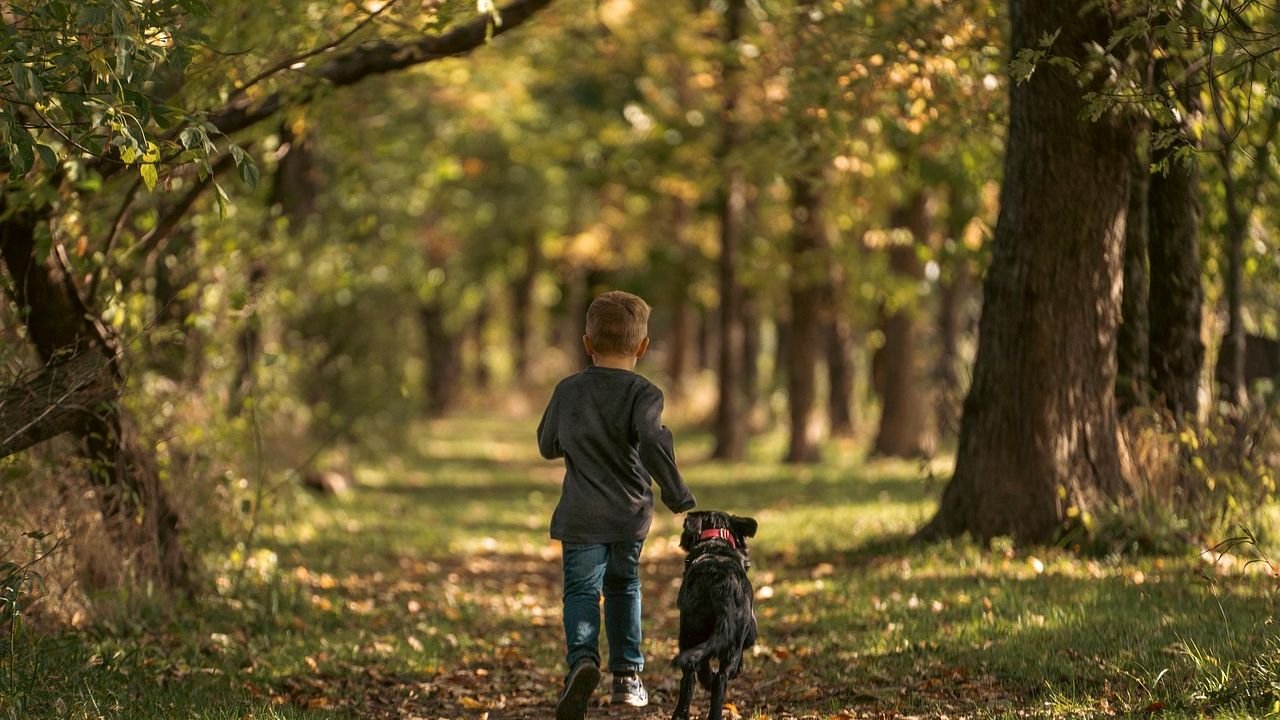
Picture this: you clip the leash on, step outside, and your dog immediately drops their nose to the ground and starts sniffing every blade of grass like it holds the secrets of the universe. Your instinct might be to tug them along. “Come on, let’s keep moving!” Sound familiar? Honestly, most of us have been there. We think a walk is about covering distance, burning calories, and getting back inside before the coffee goes cold.
Here’s the thing though – your dog’s daily walk is doing something far more extraordinary than you might realize. Every step, every sniff, every new sound they process is firing up their brain in ways that shape their mood, behavior, and even their long-term health. Stick with me, because what science is discovering about the canine mind on a walk will genuinely change how you see that leash in your hand. Let’s dive in.
The Nose Knows: Why Sniffing Is Serious Brain Business

Dogs have up to 300 million scent receptors, depending on the breed – and that’s not just a fun trivia fact. It means their entire experience of a walk is fundamentally different from ours. While you’re noticing a neighbor’s new car or the smell of someone grilling, your dog is reading an entire novel written in scent.
Dogs devote approximately 40 times more brain volume to decoding smells than we do. Think about that for a second. Their brain is literally wired to process the world through their nose. So when your dog stops to sniff that patch of grass for the fifth time, they’re not being stubborn. They’re working. Hard.
Sniffing has been shown to not only decrease a dog’s heart rate, decreasing their stress, but it also releases dopamine, the “happy” brain chemical. It’s calming, rewarding, and cognitively rich all at once. Think of it like your dog’s version of sitting down with a good book. The act of sniffing provides mental stimulation and enrichment as it activates their brain and engages their senses – it’s like solving puzzles or reading a captivating book for them.
Walk Routes, New Environments, and the Power of Novelty
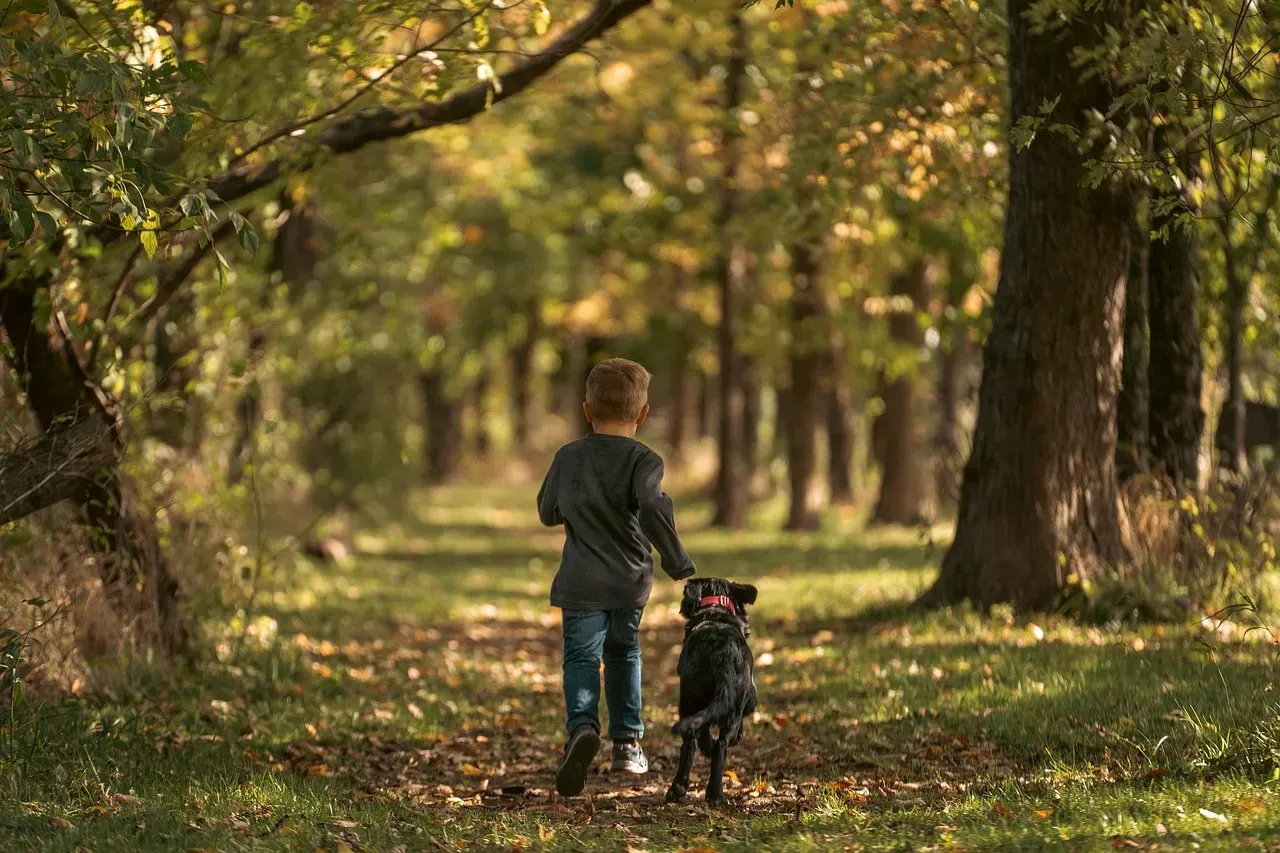
Let me ask you something. Do you eat the same meal every single day? Of course not. You’d lose your mind with boredom. Well, your dog feels the same way about that identical loop around the block – even if they never say a word about it.
Changing up your walking route can be very stimulating for dogs. Walking somewhere new allows them to see and smell new things. It doesn’t have to be dramatic either. A new street, a different park, a trail through the woods – each new environment floods your dog’s senses with fresh data to process and interpret. Walking exercises the mind as well as the body. Watching wildlife, exploring new paths, and seeing other people with their pets are great mental stimulation that a dog simply cannot get in the same fenced area all the time.
Changing routes and exploring new paths keeps walks exciting for your dog and keeps their brain engaged and alert. I genuinely think this is one of the easiest upgrades any dog owner can make – zero cost, zero equipment, just a different turn at the corner.
What Happens to the Brain When Dogs Walk: The Science Will Surprise You

Here’s a fact that stopped me in my tracks when I first read it. In a study with more than 15,000 dogs, physical activity was shown to be beneficial for brain function. Inactive dogs were 6.5 times more likely to develop canine cognitive dysfunction than active dogs that were the same age. That is not a small number. That’s a massive, science-backed reason to never skip a walk again.
Physical exercise triggers the release of a protein called brain-derived neurotrophic factor, which is one of the molecules that results in the growth of new brain cells. Your dog is literally building a better brain on every walk. Mental stimulation for dogs plays an important role in keeping them happy, sharp, and well-behaved. By engaging your dog’s mind, you help them create new neural pathways and stay mentally active.
There is evidence that lifelong training experiences in pet dogs have the potential to maintain cognitive function in aged dogs, in a similar way to higher education in humans. That’s a breathtaking parallel. Regular mental engagement through walks isn’t just a lifestyle perk – it may be one of the most protective things you can do for your dog’s aging brain.
Behavior Clues: What Your Dog Is Telling You After a Walk
Your dog can’t send you a text saying “that walk was too short and boring.” Instead, they speak through behavior. And honestly, once you know what to look for, the messages are pretty loud and clear.
Signs of boredom after walks include pulling on the leash, excessive barking, or destructive behavior at home. If your dog still seems restless after a long walk, they may need more mental stimulation. Destructive chewing, digging at the carpet, relentless zoomies around the living room – these aren’t a dog being bad. They’re a dog whose brain never got switched on. Mental stimulation during walks keeps dogs engaged, reducing boredom and the likelihood of destructive behaviors like chewing or barking. It helps prevent anxiety and stress, leading to a more satisfied and relaxed dog at home.
On the flip side, a dog who comes home from a truly enriching walk is a noticeably different creature. Calm. Settled. Ready to nap without drama. Mental stimulation can tire your dog out just as physical exercise does. A tired dog is a happy dog, and a happy dog makes for a harmonious home. Pay attention to your dog’s post-walk energy. It tells you everything.
How to Turn Every Walk Into a Brain Workout: Practical Tips That Actually Work
Good news: you don’t need a PhD in animal behavior or a bag full of fancy gadgets to make this happen. A few simple, intentional shifts can transform an ordinary walk into a full sensory workout for your dog’s brain.
Start with “sniff time.” Set aside specific walks where you allow your dog to take their time, explore wherever they’d like to go, and sniff all the smells. Sniffing releases dopamine and decreases heart rate, reducing stress. These walks are less about distance or time and more about quality. Try a longer leash too. Sniff walks are best done on long leashes of 10 or more feet to allow for more natural movement and freedom to roam.
You can also weave in quick training moments during a walk. Training is a phenomenal way to mentally stimulate and exhaust your dog. It also teaches them all sorts of new tricks. A simple “sit” at a corner, a “find it” game with a hidden treat in the grass, or practicing loose-leash walking all count. A 2019 study published in Applied Animal Behaviour Science found that dogs who participated in two weeks of daily nosework tasks performed better on a cognitive bias test than those engaged in traditional obedience training. Sniffing and scent games aren’t just enriching – they’re scientifically proven mood enhancers. Finally, both exercise and sniff walks are crucial for your dog’s health and happiness, and combining these can give your dog a well-rounded routine that meets all their needs.
A Final Thought Worth Carrying on Every Walk
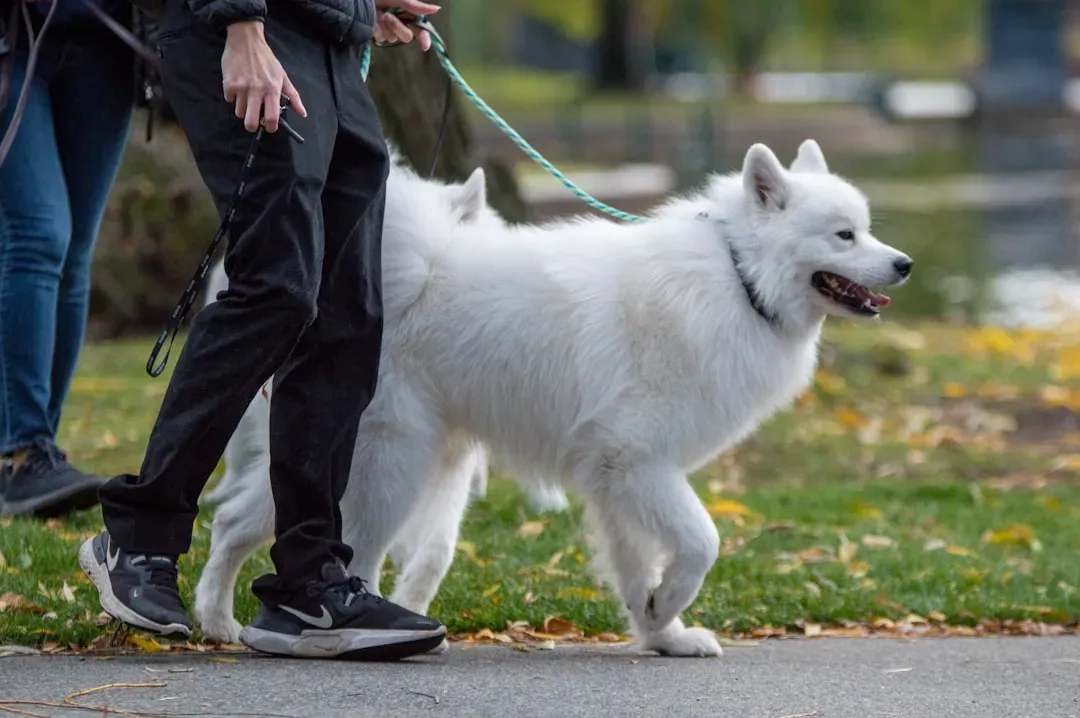
There is something quietly beautiful about realizing that a simple daily walk – something most of us consider a chore or a checkbox – is actually one of the most powerful gifts you can give your dog. It’s brain food. It’s therapy. It’s connection. Every time you clip that leash and head out the door, you’re investing in your dog’s cognitive health, emotional well-being, and happiness.
So the next time your dog stops dead in their tracks to obsessively sniff a fire hydrant, take a breath. Let them. They’re not wasting time. They’re reading the world. And you’re the one who made it possible. There’s something genuinely moving about that, I think.
Your dog is counting on those walks far more deeply than any of us ever imagined. The question is: what kind of walk will you give them tomorrow? Share your thoughts or your dog’s favorite walk moment in the comments – we’d love to hear!


