

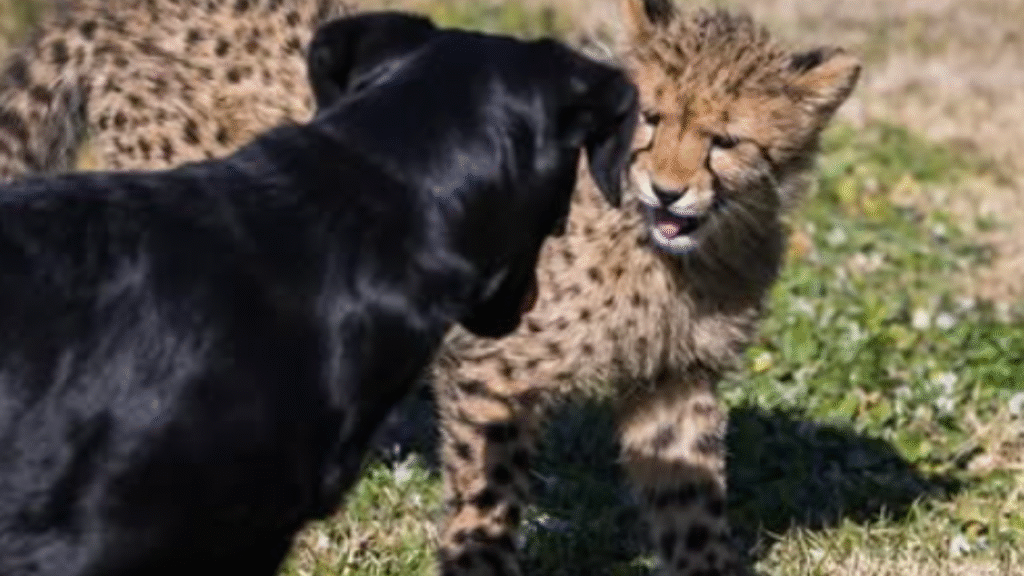
Companionship and Compassion are not the prerogative of humans; animals too are capable of being just as compassionate even when it is between different species as is being proved in an Australian zoo. In the heart of Dubbo, Australia, at the Taronga Western Plains Zoo, a touching story is unfolding. On July 28, 2025, the zoo revealed that their only cheetah cub, Rozi (meaning “rose” in Swahili), had been given a friend—an energetic labrador‑kelpie‑collie mix named Ziggy. Born in February via emergency cesarean, Rozi’s mother, Siri, was unable to nurse her. As a result, Rozi was hand‑raised by caretakers and grew up without cheetah siblings. This unique companionship with Ziggy isn’t just cute—it’s part of a deliberate strategy to help Rozi learn vital social behaviors and emotional skills she would have otherwise gained from siblings.
Rozi’s Early Days and Unusual Start
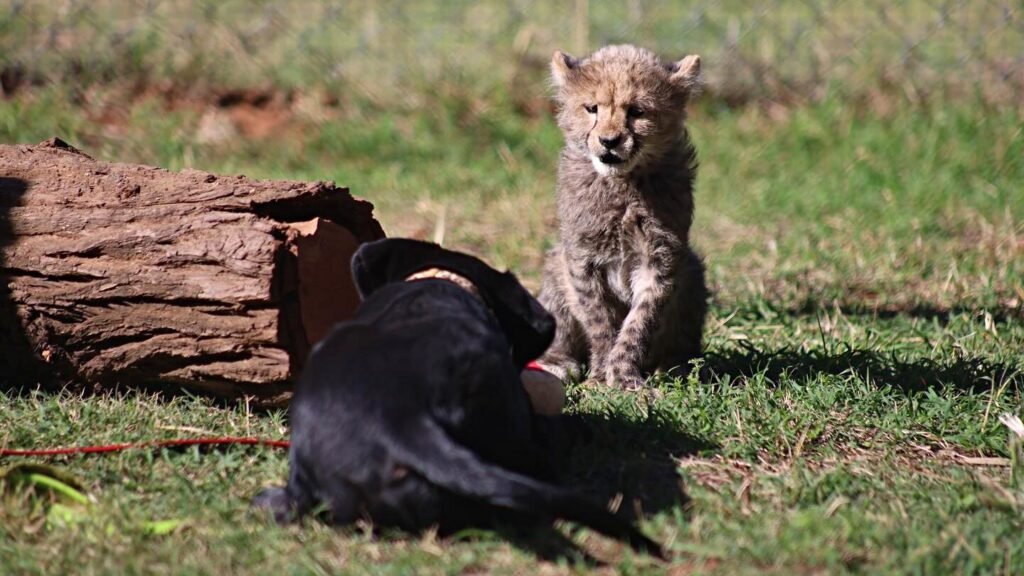
Rozi arrived in the world under complex circumstances: Siri underwent an emergency caesarean in February, recovered physically, but did not produce milk. Rozi ended up receiving round‑the‑clock care in intensive care and was raised by humans rather than her mother. Unlike natural litters, Rozi grew up without cheetah siblings, meaning many crucial milestones—like chasing, pouncing, grooming and stalking—were missing from her early development
Enter Ziggy: A Puppy with a Purpose
When Rozi and Ziggy were both just over two months old, keepers made the intentional decision to introduce them. Ziggy brought the boisterous enthusiasm typical of puppies, while Rozi was more reserved at first. Zookeeper Jordan Michelmore explained that Ziggy provided the kind of pseudo‑sibling dynamic Rozi desperately needed: playful chasing, mock stalking, and mutual grooming behaviors—an emotional and developmental mirror of a natural cheetah litter
A Bond Blossoms: Play, Trust, Confidence
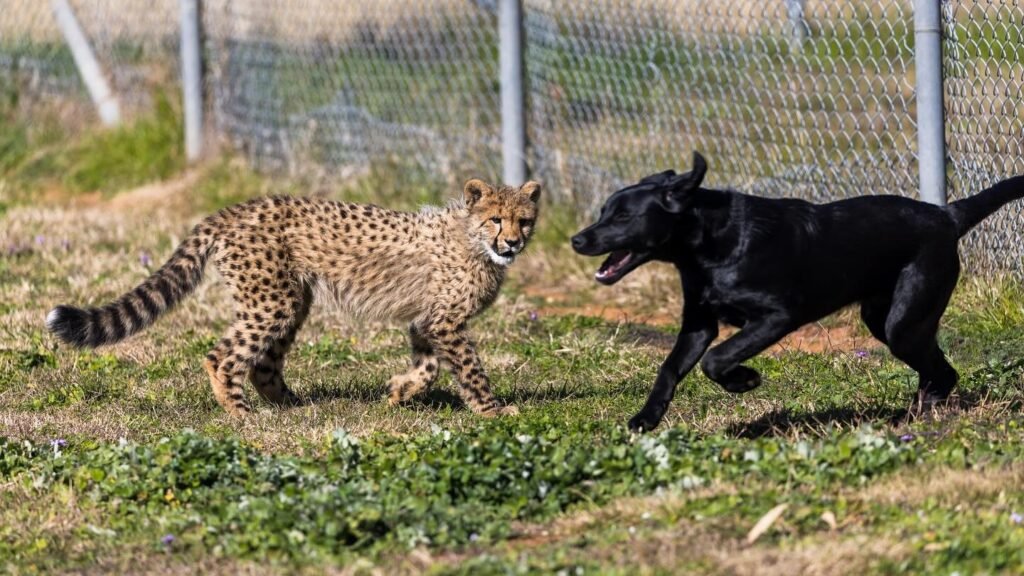
As weeks passed, the pair’s bond deepened. What began as tentative interactions grew into full-on play sessions. Rozi stalked Ziggy; he chased her back. They learned from each other. Michelmore described their relationship as “beautiful to watch”—both matched in size, energy, and play style. Ziggy’s carefree puppy personality complemented Rozi’s cautious curiosity, helping her adapt socially in ways she otherwise wouldn’t have had the chance to do
Conservation at Heart: More Than Just Friendship
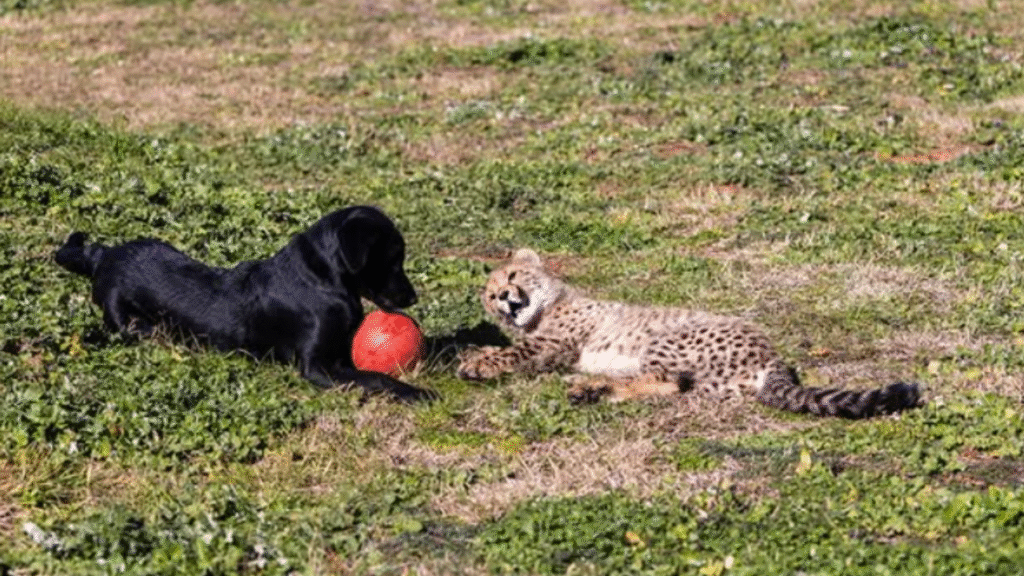
This isn’t the first time Taronga Zoo has used canine companions for hand‑raised cheetahs. Rozi’s mother Siri was similarly raised with a dog, a retriever‑mastiff mix named Iris, in 2015. That early relationship is credited with helping Siri mature into a confident, successful breeder. With fewer than 7,000 mature cheetahs left in the wild, every successful breeding counts. Rozi is expected to participate in the zoo’s breeding program once she reaches 12 to 18 months old, and Ziggy’s companionship is seen as a key factor in preparing her for that role
When Species Reach Out: Bonds Beyond Biology
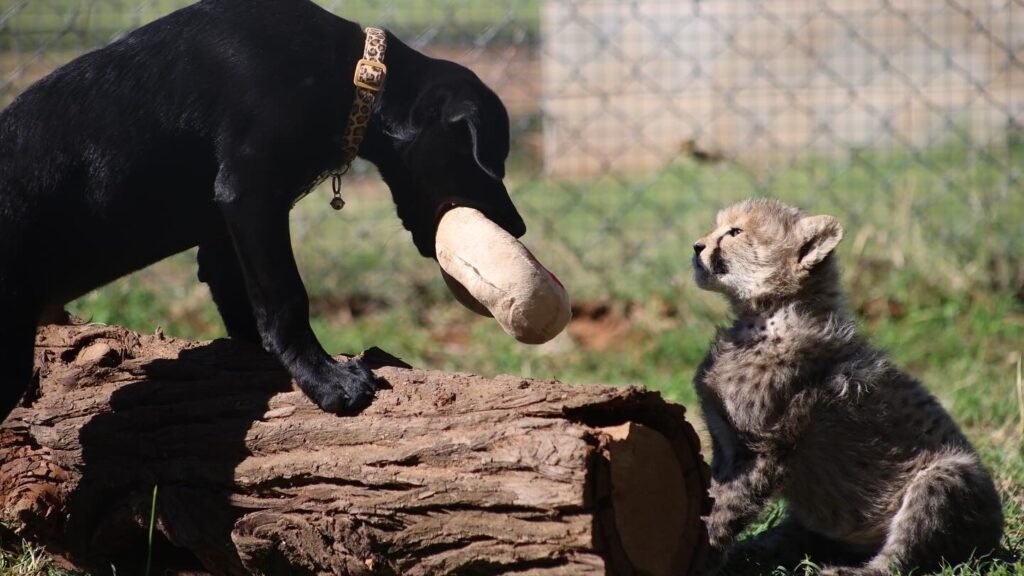
Sometimes emotional needs transcend species boundaries. Rozi and Ziggy remind us that animals—just like humans—can form profound connections even across species. Without cheetah siblings, Rozi lacked companionship and stimulation. Ziggy stepped in, offering safety, play, and emotional learning. Around the world, from San Diego Zoo to other wildlife rescue centers, companion dogs have helped orphaned or isolated cubs learn how to be themselves. These bonds are not forced—they emerge naturally from shared need, curiosity, and trust. They speak to empathy and emotional resilience that goes beyond biology.
Looking Ahead: Growth, Goodbyes, and Hope
Keepers expect Rozi and Ziggy to share their young lives together until Rozi begins to show independence—likely at around a year old. At that point, Ziggy will transition into life outside his role and likely be adopted by a member of the zookeeping staff—possibly even Michelmore herself. By observing their bond, the zoo remains hopeful that Rozi will follow in her mother’s footsteps and contribute meaningfully to the global cheetah conservation effort. Their story shows how unexpected friendships can nurture growth, healing, and hope for a vulnerable species
This story of Rozi and Ziggy is more than a charming headline—it’s a testament to how emotional bonds, even between different species, can shape development, support conservation, and show us something profoundly human. Watch more photos at Instagram/Tarogna Plains Zoo


