
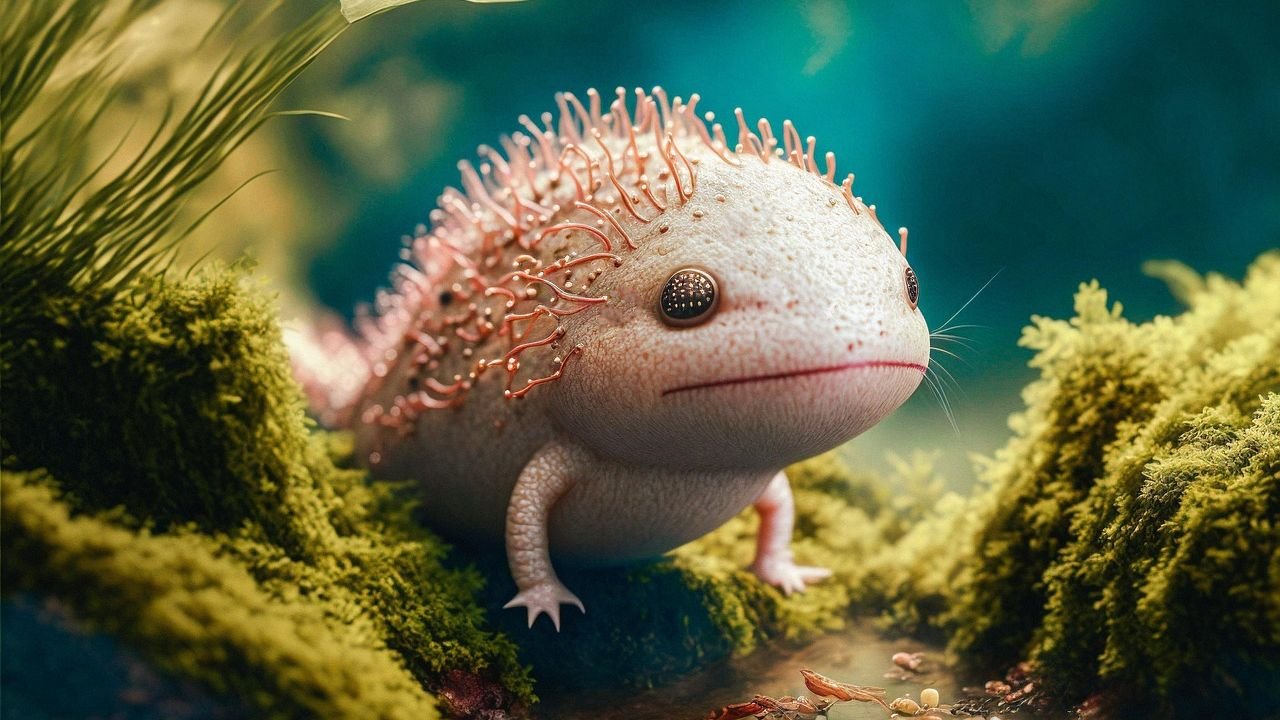
Near the River Ogmore in Wales, a routine play session under a bridge took an extraordinary turn for 10-year-old Evie. She spotted a peculiar creature gliding through the shallow waters, its frilly gills and pinkish hue standing out against the murky riverbed. What she had found was a Mexican axolotl, a species critically endangered in its native habitat and never before documented in the wild across the United Kingdom. Her quick action in retrieving the animal highlighted both her curiosity and the hidden vulnerabilities of exotic pets.
A Child’s Curiosity Leads to Rare Encounter
Evie had been exploring the riverbank, a familiar spot for her adventures, when the axolotl caught her eye. The animal, about the size of a small hand, moved with a distinctive undulating motion typical of salamanders. Rather than leave it behind, she carefully scooped it up and carried it home, unaware at first of the significance of her find. Local authorities and wildlife experts soon confirmed the identification, praising her instincts.
This sighting marked a milestone, as no other wild axolotls had been recorded in Britain. The River Ogmore, flowing through southern Wales, provided an unlikely backdrop for such a discovery. Evie’s mother later noted the girl’s knack for stumbling upon the unusual, adding a personal touch to the story.
Understanding the Axolotl’s Unique Biology
Axolotls hail from the ancient lake systems of Mexico, particularly Lake Xochimilco, where they thrive in aquatic environments. Unlike most salamanders, these amphibians retain their larval features into adulthood, a phenomenon known as neoteny, complete with external gills that resemble feathery crowns. Their ability to regenerate lost limbs and even parts of their organs has long fascinated scientists, positioning them as key subjects in regenerative medicine research. However, their wild populations have plummeted due to habitat loss, pollution, and invasive species.
The International Union for Conservation of Nature lists axolotls as critically endangered, with fewer than 1,000 individuals estimated in the wild as of recent assessments. In captivity, they remain popular in the pet trade for their docile nature and striking appearance, often available in pet stores worldwide. Yet this popularity contributes to risks when owners release them into non-native ecosystems. Evie’s find underscored how such releases can lead to unexpected appearances far from home.
Experts emphasize that axolotls require specific conditions – cool, clean water with a stable pH – to survive. In the River Ogmore’s temperate flow, the animal faced significant challenges, from temperature fluctuations to potential predators. This case illustrated the broader issues surrounding exotic pet ownership and the unintended consequences of abandonment.
Experts Trace the Likely Path to Wales
Wildlife specialists quickly theorized that the axolotl had been a former pet, discarded or escaped into the river. The pet trade frequently imports these creatures, and instances of owners releasing them when they outgrow tanks or become burdensome are not uncommon. In the UK, where axolotls are legal to keep but must meet welfare standards, such abandonments occasionally surface in waterways.
Confirming the first wild UK sighting required genetic and morphological analysis, which matched the specimen to Central American lineages. No evidence suggested a breeding population; rather, it appeared as a solitary survivor. Officials noted that while the animal posed no ecological threat due to its fragility outside controlled settings, the event raised awareness about responsible pet care.
Evie’s Role in a Life-Saving Rescue
By bringing the axolotl home, Evie ensured its immediate safety, preventing exposure to river hazards that could have proven fatal. Experts credited her with preserving a potentially valuable specimen for study and rehabilitation. The family coordinated with authorities to provide proper care, including a suitable aquarium setup mimicking its natural needs.
Evie’s mother shared that her daughter has a habit of uncovering oddities during playtime. “She’s always finding things,” she said, capturing the blend of innocence and serendipity in the tale. This rescue not only saved one creature but also sparked conversations on conservation and the global pet trade’s ripple effects.
Lessons from an Unlikely River Find
The discovery prompted calls for better education on exotic species ownership, urging prospective buyers to consider long-term commitments. Wildlife groups highlighted the axolotl’s plight as a microcosm of biodiversity challenges, where human actions intersect with fragile ecosystems. Evie’s story served as a reminder that vigilance and compassion can emerge from everyday moments.
As the axolotl receives ongoing care, its presence in Wales lingers as a cautionary tale. Future sightings could inform policies on invasive species, though experts doubt a sustained population will take hold. The event celebrated a young girl’s intuition while underscoring the need for collective responsibility in protecting vulnerable wildlife.


