

#1. Unexplained and Persistent Restlessness

One of the most commonly reported pre-disaster behaviors in dogs is a sudden, unexplained inability to settle. When dogs are sniffing or hearing something different in the air, they’re likely going to have a hard time staying calm. Your dog may become restless, antsy, anxious, and hard to settle down. This isn’t your dog being difficult. It’s your dog reacting to something real that you haven’t registered yet.
In a survey-based study following the 2011 Tōhoku earthquake and tsunami, over 60 percent of dog owners observed unusual behavior in their pets, such as restlessness, barking, and attempts to escape, in the minutes to days before the quake. That’s a striking pattern. If your otherwise calm dog suddenly can’t stop pacing from room to room and nothing obvious has changed in the environment, it’s worth paying attention.
#2. Barking at Nothing – Loudly and Repeatedly

A recent study of an earthquake in a region of Siberia noted that a small but significant number of dogs showed anxious behaviors, including barking for no reason, howling, whining, and running around, minutes to hours before the earthquake occurred. To you, the yard looks quiet. To your dog, something is already in motion. The disconnect between what you see and what they’re reacting to is the entire point.
Dr. Stanley Coren was conducting a study on whether dogs can have Seasonal Affective Disorder when, by chance, he collected data on activity and anxiety levels in 200 dogs the day before a level 6.8 earthquake hit the Pacific Northwest. On the day before the earthquake, 49 percent of the dogs showed a significant increase in anxiety, and 47 percent were considerably more active. Unprompted barking – especially at walls, the ground, or open sky – is one of the clearest behavioral flags owners often dismiss too quickly.
#3. Trying to Escape or Flee the Property

Behaviors can include barking, scratching, or trying to flee the area. Dogs that bolt for doors, dig under fences, or frantically scratch at exits are communicating something urgent. This is primal, survival-level behavior that goes deeper than everyday anxiety.
It may sound excessive, but frightened dogs have, in some cases, shown remarkable strength by breaking through doors and windows in their efforts to escape. When flight instinct takes over this completely, the dog isn’t being destructive for no reason. In many documented cases before seismic events or severe storms, this is exactly the behavior owners later recalled as their clearest warning sign.
#4. Unusual Howling or Whining With No Trigger

Vocalizing is a way dogs express fear. You might hear increased whining, howling, or barking that’s different from their usual tone. The key phrase there is “different from their usual tone.” Dogs communicate in registers, and owners who know their dog well often describe pre-disaster vocalizations as having a particular quality – more desperate, more sustained, somehow different from regular attention-seeking.
Historical texts describe how, before the earth shakes, animals began to behave strangely: snakes crawled out of their burrows even in winter, dogs barked all night long, and birds suddenly changed their flight paths. The howling of dogs at night before a disaster is one of the oldest documented animal behaviors in recorded history. It spans cultures and centuries, and it keeps showing up in the accounts of survivors.
#5. Panting and Trembling Without Physical Exertion

The behavioral signs of thunderstorm fear often begin before a storm arrives. Dogs who are fearful of storms look for signs like increasing wind and low barometric pressure, and may exhibit panting, pacing, whining, salivating, and trembling. What makes this behavior particularly notable is the timing. When it starts well before any visible weather change, it suggests the dog is reacting to environmental shifts that haven’t reached human perception yet.
Just like a person might shiver when anxious, dogs often shake or tremble when they’re feeling frightened. Excessive drooling can be a stress response and may appear suddenly when a storm is approaching. These physical symptoms – trembling, drooling, rapid breathing – are involuntary. They’re the body’s stress response kicking in well before the event is visible. Take them seriously, especially when there’s no obvious explanation.
#6. Hiding in Unusual or Enclosed Spaces

Many dogs instinctively seek shelter when they’re scared, under a bed, in a closet, or even trying to wedge behind furniture. Others might try to escape the house entirely. This pull toward tight, enclosed spaces is instinctive. In the wild, a small, enclosed space means protection. When a dog starts seeking those spaces without any obvious trigger, it’s following an ancient survival prompt.
Anecdotal accounts of animals behaving unusually before disasters are compelling: in Sri Lanka during the 2004 Indian Ocean tsunami, animals sought shelter or displayed signs of distress. Many pet owners in Japan observed their cats and dogs becoming restless, vocalizing excessively, or hiding in the days leading up to the 2011 Fukushima earthquake. The hiding instinct is often one of the first behaviors owners notice – and one of the easiest to dismiss as a dog just being shy or tired.
#7. Excessive Clinginess or Shadowing Their Owner
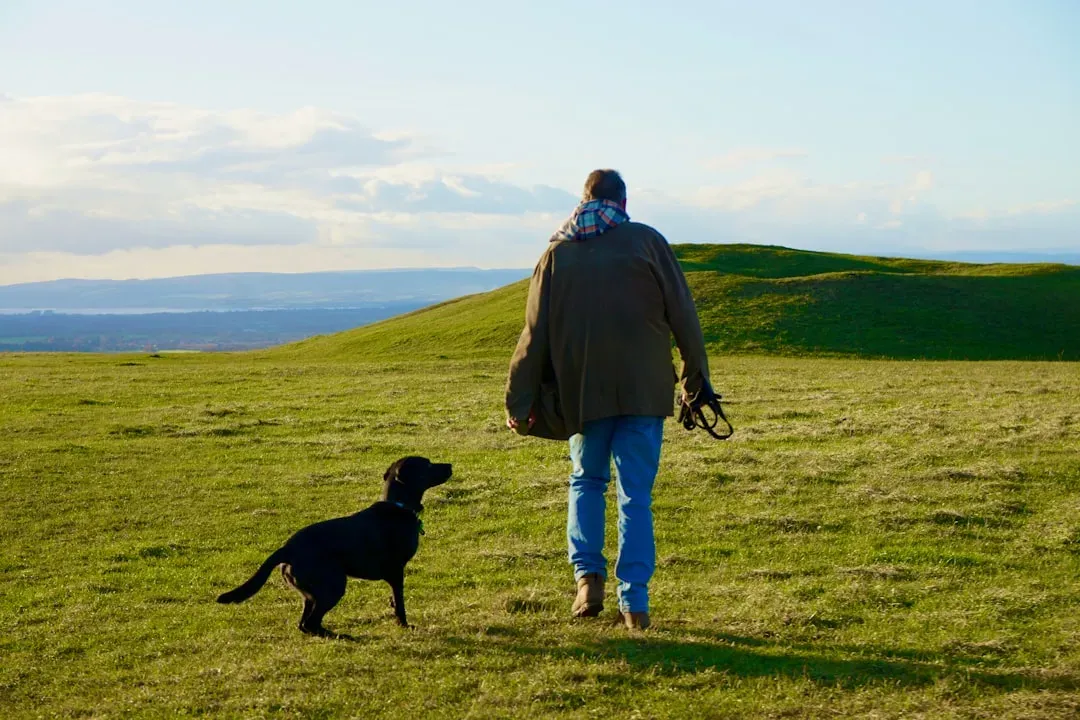
It’s also possible that your pup will become more protective than usual. If you find that your restless dog is having a hard time leaving you alone, is trying to herd you, or is constantly trying to lick, sniff, or touch you, something might be up. Dogs instinctively look to their pack when something feels wrong. When they start shadowing your every move, they may be trying to keep you close because their senses are telling them the situation is dangerous.
This behavior is different from ordinary affection. It has a frantic, almost urgent quality. The dog doesn’t want to be near you for companionship – it wants to keep you in sight. Reported pre-disaster behaviors include showing signs of anxiety or distress, and some owners have even shared stories of their dogs guiding them to safety before an impending disaster. That instinct to stay close, to herd, to nudge – it may be more purposeful than it looks.
#8. Refusing to Eat or Drink

A dog that skips a meal now and then isn’t cause for concern. A dog that suddenly refuses food entirely, especially alongside other unusual behaviors, is a different story. If a dog won’t eat, it means their stress level is too high. Appetite suppression under stress is a real physiological response, and when it happens without an obvious cause like illness, it signals that the dog’s nervous system is already in a high-alert state.
Moderate anxiety in dogs can present as panting, pacing, seeking hiding spots, and not eating or drinking during a storm. Before any visible weather event or seismic sign, a sudden loss of appetite in an otherwise healthy, food-motivated dog is worth filing away alongside any other behavioral changes you’ve observed that day. When multiple signs line up together, the combined picture becomes harder to ignore.
#9. Sensitivity to Ground Vibrations or Sudden Alertness to the Floor

Earthquakes are trickier to explain, but dogs may sense the earliest seismic waves that travel faster than the stronger shaking we feel. These micro-vibrations can register through a dog’s paws or inner ear, triggering an instinctive response to seek safety. If you’ve ever seen your dog suddenly stop still, press its paws flat to the floor, or tilt its head in a way that suggests it’s listening to the ground rather than the air, this may be exactly what’s happening.
Researchers have suggested that seismic activity may produce low-frequency sounds and vibrations that dogs can perceive, leading to their behavioral changes. This makes physiological sense. Dogs’ hearing is several times more sensitive than humans’, capable of detecting sounds in frequencies as high as 65,000 Hz, compared to the human range of about 20,000 Hz. The ground speaks at frequencies we simply can’t hear. Your dog very likely can.
#10. Reacting to Changes in Air Pressure or Static Electricity

Dogs have finely tuned senses that can detect minute changes in barometric pressure and electrostatic charges that precede a tornado, hurricane, storm, or any other type of bad weather. We can record these same variations with barometers and other meteorological equipment, but it appears dogs can naturally sense the weather without such things. This biological sensitivity is one of the most scientifically plausible explanations for why dogs react to approaching weather systems well before humans do.
Research suggests that dogs feel static electricity when a storm is approaching. This static buildup in their fur can cause visible discomfort – dogs seeking grounded surfaces, rubbing against walls, or moving toward the bathroom, where the ceramic tiles and pipes help dissipate the charge. Air ionization is one factor that can fluctuate before an earthquake, and changes in the air can cause dogs to exhibit signs of anxiety or restlessness. These chemical and electrical shifts in the environment are real and measurable. Your dog is just measuring them differently.
#11. Compulsive Pacing or Circling

A dog may walk in circles or move from room to room, unable to settle down. This is often one of the earliest signs of discomfort. There’s a recognizable quality to pre-disaster pacing – it’s not the bored lap around the kitchen. It’s purposeless, repetitive movement that doesn’t stop when the dog reaches a comfortable spot. Nothing satisfies it. The dog keeps moving because something inside is telling it to keep moving.
Whether it is pacing, whining, hiding, or sticking extra close to you, these behaviors often show up right before big weather changes or seismic activity. The important thing to note is that pacing on its own isn’t alarming. Pacing alongside two or three other behaviors from this list, with no identifiable trigger, is a different pattern entirely. That combination is the signal worth acting on.
#12. Agitation That Intensifies the Closer to the Event

Animals repeatedly showed unusually high activity levels prior to an earthquake. The sooner the animals reacted, the closer they were to the earthquake’s epicenter. This is a compelling detail – the intensity of the behavioral response may actually correspond to proximity and magnitude. Dogs nearer to the source of a seismic event tend to react earlier and more dramatically than those further away.
Some dogs become agitated, whining or pacing restlessly, in the lead-up to a hurricane. When that agitation visibly escalates over hours, becoming more frantic and harder to calm as time passes, it may track with an approaching event getting closer. While it may seem like your dog is predicting the future, they are really reacting to signals we simply miss. Their heightened awareness makes them incredible early responders, not fortune tellers. That distinction matters. They’re not mystical. They’re just paying closer attention to the world than we are.
What You Should Actually Do With This Information

Here’s the honest, grounded take on all of this: while there is no definitive proof that dogs can predict natural disasters, there is enough anecdotal and early-stage scientific evidence to merit further research. That ambiguity doesn’t mean you should dismiss what your dog is telling you. It means you should layer your dog’s behavioral signals alongside other preparedness tools, not replace one with the other.
Despite the lack of conclusive scientific evidence, some countries are exploring ways to utilize dogs’ potential disaster-sensing abilities. In China and Japan, there have been efforts to incorporate animal behavior monitoring into earthquake early warning systems. If governments are taking it seriously enough to study, there’s no reason a dog owner shouldn’t take it seriously too. Keep an emergency kit prepared, stay current on local alerts, and – perhaps most importantly – learn your individual dog’s baseline well enough to notice when something genuinely shifts.
Your dog can’t explain what it senses. It can only show you. The dogs that have gotten their owners moving before disasters struck weren’t performing tricks. They were communicating the only way they know how, through behavior, urgency, and persistence. Whether you live in a seismic zone, a flood plain, or a region with violent storm seasons, keeping one eye on your dog’s demeanor costs you nothing. What it might give you in return is time – and sometimes, a few minutes of extra time is everything.


