
9 Dog Breeds That Stay Mischievous Long After They Should Know Better
Most people assume dogs “settle down” by age two or three. That the wild puppy phase burns itself out, and somewhere around the third birthday you get a calm, couch-loving adult who finally respects the trash can.
Ask any vet, trainer, or exhausted long-time owner, and they’ll tell you a different story. There’s a quiet list of breeds that never really grow up – dogs still counter-surfing at eight, outsmarting baby gates at ten, and treating stolen underwear like an Olympic event. Owners either learn to laugh through the chaos, or swear off the breed forever… and somehow end up adopting a second one anyway. Here’s what actually happens behind closed doors with the 9 breeds that never quite know better.
#9 – Beagle: The Nose-Driven Escape Artist

Beagles look innocent, but behaviorists quietly rank them among the most likely dogs to bolt the second a gate is cracked open. They’re scent hounds, built to follow a smell instead of a command. If a cheeseburger wrapper blows across the yard, your Beagle’s brain turns into one flashing word: CHASE. This is the dog that will pretend not to hear you while methodically tracking last week’s barbecue drippings, tail wagging, nose glued to the ground.
Inside the house, the mischief doesn’t stop. Beagles are notorious counter-surfers, trash divers, and sock thieves, and their nose insists the garbage can is basically a treasure chest. Many owners report their Beagles learning to nudge latches, work levers, and squeeze through doors “just enough” to escape. Trainers often say you don’t train a Beagle out of mischief – you outsmart it with high fences, locked lids, and enough scent games to drain that hunting drive before it drains your patience.
Fast Facts
- Bred centuries ago in England as a pack hound for tracking rabbits by scent, not sight
- One of the most popular family breeds in the U.S. for decades running
- Stands roughly 13-15 inches tall, but the nose does most of the decision-making
- Typical lifespan of 12-15 years, meaning the mischief has a very long runway
#8 – Dachshund: The Stubborn Comedian With a Digging Problem

Dachshunds are small, but their troublemaking is not. Bred to chase badgers into their own dens, they carry an instinct to dig, burrow, and investigate every tight space in your home. A pile of clean laundry becomes a fort. A tiny gap under the fence becomes a construction project by afternoon. Many owners report their Doxies tunneling under blankets just to nip toes or ambush the family cat like a furry landmine.
Their stubborn streak is legendary, and trainers consistently list Dachshunds among the hardest breeds to fully house-train – not because they can’t learn, but because they see no reason to comply without a payoff. They remember exactly what gets a reaction: stealing tissues, barking at the TV, shredding paper, and they repeat it like a rehearsed bit. This is a breed that can be ten years old, gray around the muzzle, and still snatch a whole slice of pizza off the coffee table without blinking.
#7 – Siberian Husky: The Furry Prison Break Expert
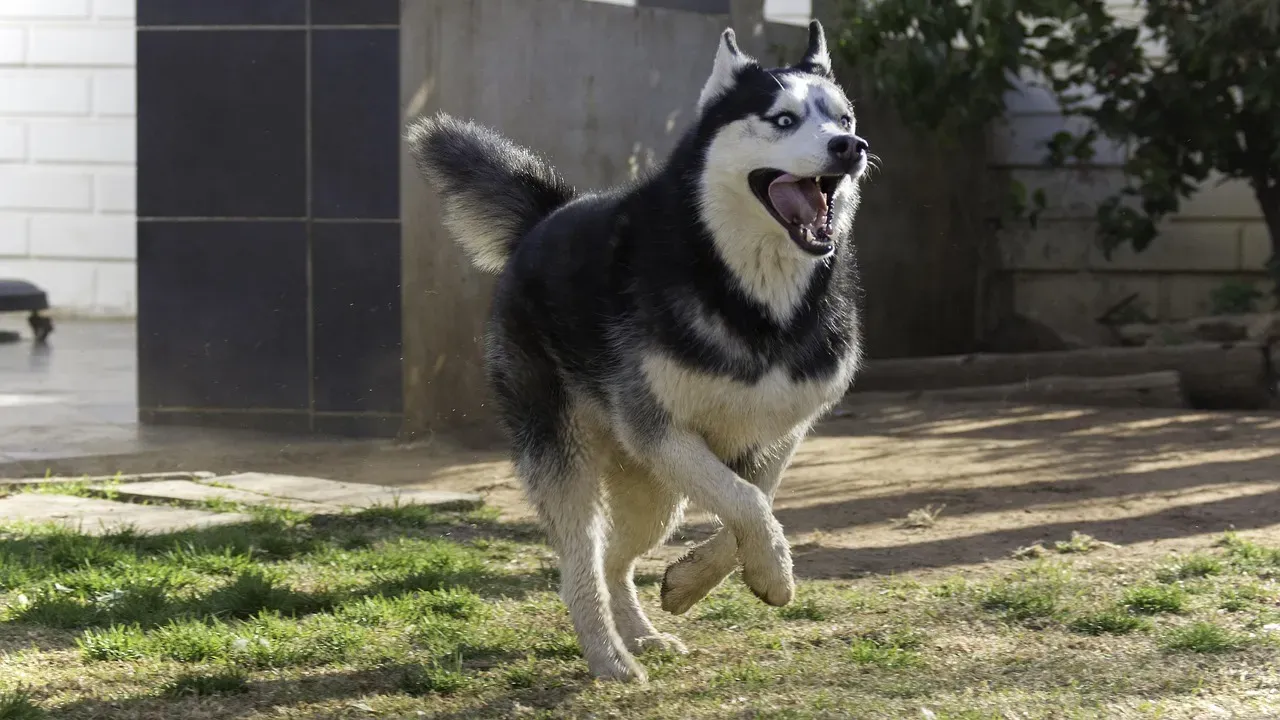
Husky owners joke that their dogs are half wolf, half stand-up comedian, and they’re only half kidding. Siberian Huskies are world-class escape artists, and rescues report that standard fences feel like optional suggestions to them. They climb, dig, squeeze, and probe every weak point in a yard. Some have learned to open sliding doors or work in tandem – one dog distracts you while the other slips out the gap.
Indoors, the chaos just changes shape. Huskies are clever, vocal, and easily bored, which is a rough combination if you underestimate them. Left alone with nothing to do, they’ll “remodel” your home – chewing molding, rearranging cushions, excavating couch stuffing like it owes them money. What shocks new owners most is how long this teenage energy sticks around; plenty of Huskies stay hyper and mischievous well into their senior years if the exercise doesn’t keep pace with the instinct.
#6 – Border Collie: Too Smart to Behave Quietly
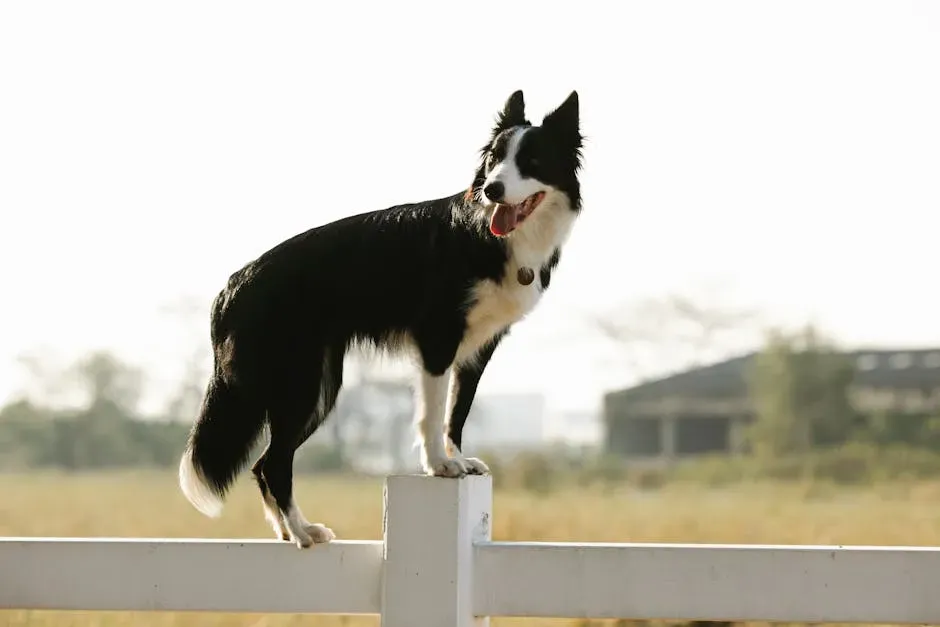
Most people assume a smart dog is an easy dog. Border Collies prove that assumption wrong on a daily basis. Widely considered one of the most intelligent breeds on the planet, they learn commands in minutes – then immediately go hunting for loopholes. Tell a Border Collie not to jump on the counter, and it may start placing only its front paws up there, technically obeying while still stealing your toast.
Because they were bred for nonstop sheep herding, they need a job, and without one they’ll invent their own: herding kids, chasing bikes, stalking the vacuum like it’s a rogue sheep. A bored Border Collie can turn a living room into a full psychological experiment in under an hour. What’s wild is that this doesn’t fade with age – many senior Border Collies are still inventing new games to outsmart their owners, right up until the gray hairs show.
Quick Compare
- The “smart dog = easy dog” assumption: expect a dog that just quietly obeys once trained
- The Border Collie reality: routinely ranked the single smartest working breed, learning new commands in only a handful of repetitions
- The catch: that same speed of learning means they master your habits and routines just as fast as they master commands
- The result: a dog that isn’t disobedient, just relentlessly one step ahead
#5 – Jack Russell Terrier: Eternal Toddler Energy in Dog Form
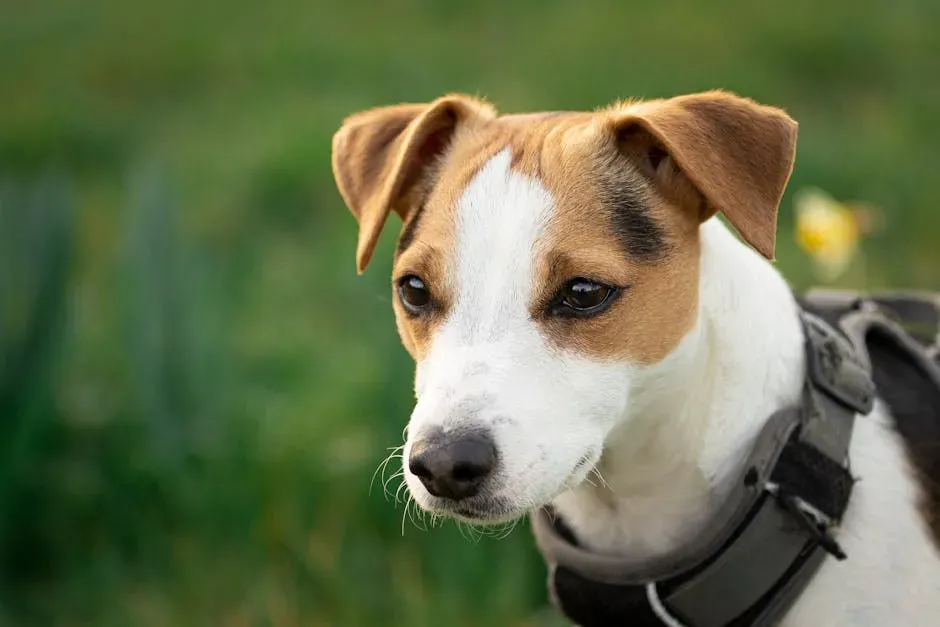
If you condensed the energy of three toddlers into one 15-pound body, you’d get a Jack Russell Terrier. Bred for fox hunting, they’re wired for speed, pursuit, and relentless curiosity. Many owners say their Jack Russell still bounces off the walls at ten years old, acting like a puppy that’s had three espressos. They’re famous for launching off furniture, sprinting laps around the house, and leaping straight up like popcorn on a stove.
Mischief is basically a lifestyle for them. Jack Russells invent their own “sports” that cause chaos – chasing reflections, hunting imaginary critters behind the fridge, digging craters in the yard for something only they can sense. When they’re locked onto a squirrel, your recall command might as well be elevator music. Many trainers quietly admit this is one of the worst breed choices for a low-activity household, no matter the dog’s age.
#4 – Labrador Retriever: The Food-Obsessed Goofball
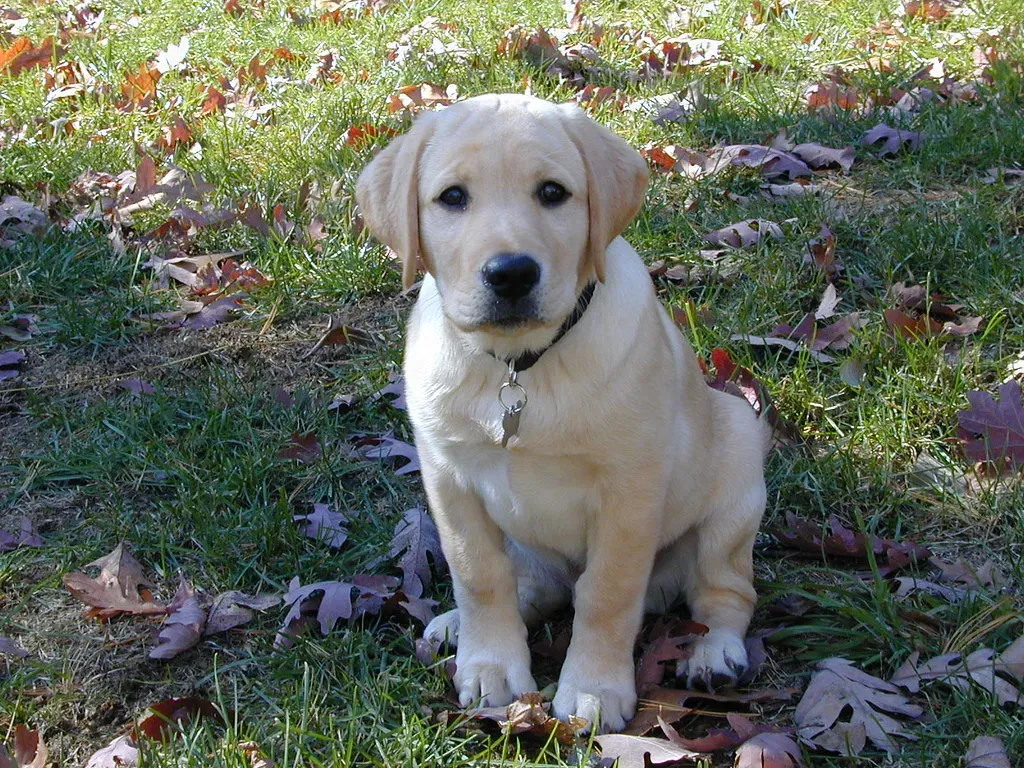
Labradors are America’s favorite family dog, and secretly one of the most relentlessly food-motivated mischief-makers on this list. Even into old age, Labs are infamous for counter-surfing, dumpster diving, and inhaling anything remotely edible. Vets routinely report Labs coming in after eating socks, rocks, whole loaves of bread, sticks of butter, and yes, entire birthday cakes. Their motto is simple: if I can reach it, it’s mine, and if I can’t reach it yet, give me a minute.
Because they’re so social, Labs weaponize charm better than any breed on this list. They steal shoes, dish towels, and toys not always to destroy them, but to start a game of chase-me. Many never fully grow out of this permanent-teenager phase; they just get bigger, stronger, and better at raiding pantries and opening fridges. Without structure, they become whirlwinds of muddy paws and stolen snacks, delivered with that guilty-but-not-really grin.
Worth Knowing
- Cambridge researchers found roughly a quarter of Labradors carry a POMC gene mutation tied to constant hunger
- Dogs with the mutation don’t get the usual brain signal that says “you’re full,” so the food hunt never really stops
- The same food drive that raids the counter also makes Labs exceptionally easy to train with treats
- That trainability is part of why Labs remain one of the most popular family and service breeds nationwide
#3 – Australian Shepherd: The Overachieving Chaos Coordinator
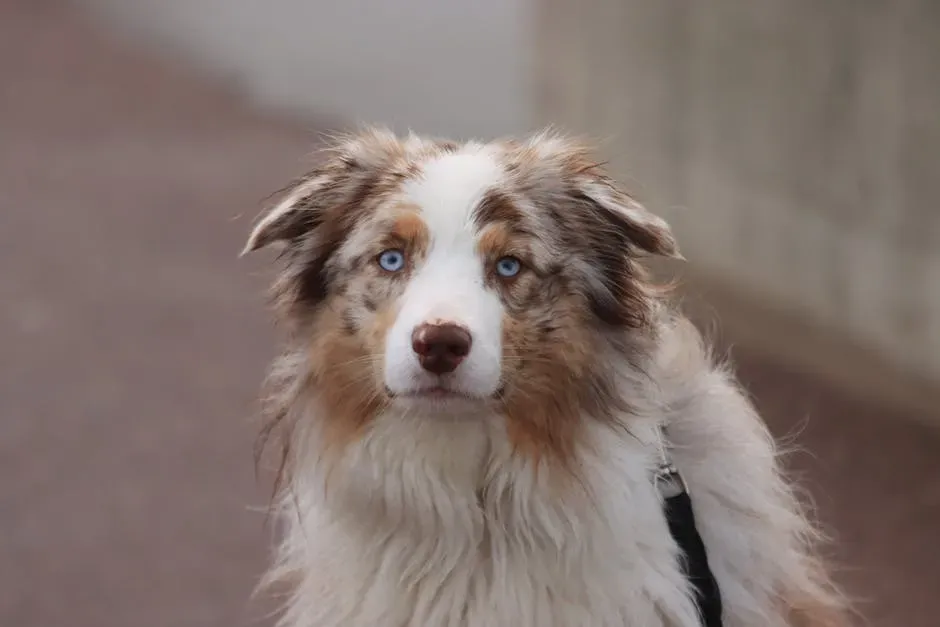
Australian Shepherds are the overachievers of the dog world – athletic, brilliant, and always switched on. That’s a dream for competitive sports and a nightmare for casual owners who just wanted “a smart family dog.” Aussies often act like self-appointed household managers, herding kids, escorting guests, supervising your every move. Ignore them, and they’ll manufacture drama on purpose – nudging you with toys, dropping balls in your lap, barking pointedly at nothing at all.
Their mischief is rarely random; it’s calculated. Aussies notice exactly what gets a reaction and repeat it with unnerving precision – jumping counters, opening cabinets, ringing bells for attention. Left under-stimulated, some will chase cars or nip at heels, not out of meanness but because their working instincts are screaming for a task. A bored Aussie can outsmart baby gates and puzzle toys by age one, and keep pushing boundaries straight through to ten.
#2 – Yorkshire Terrier: Tiny Body, Giant Chaos Agenda

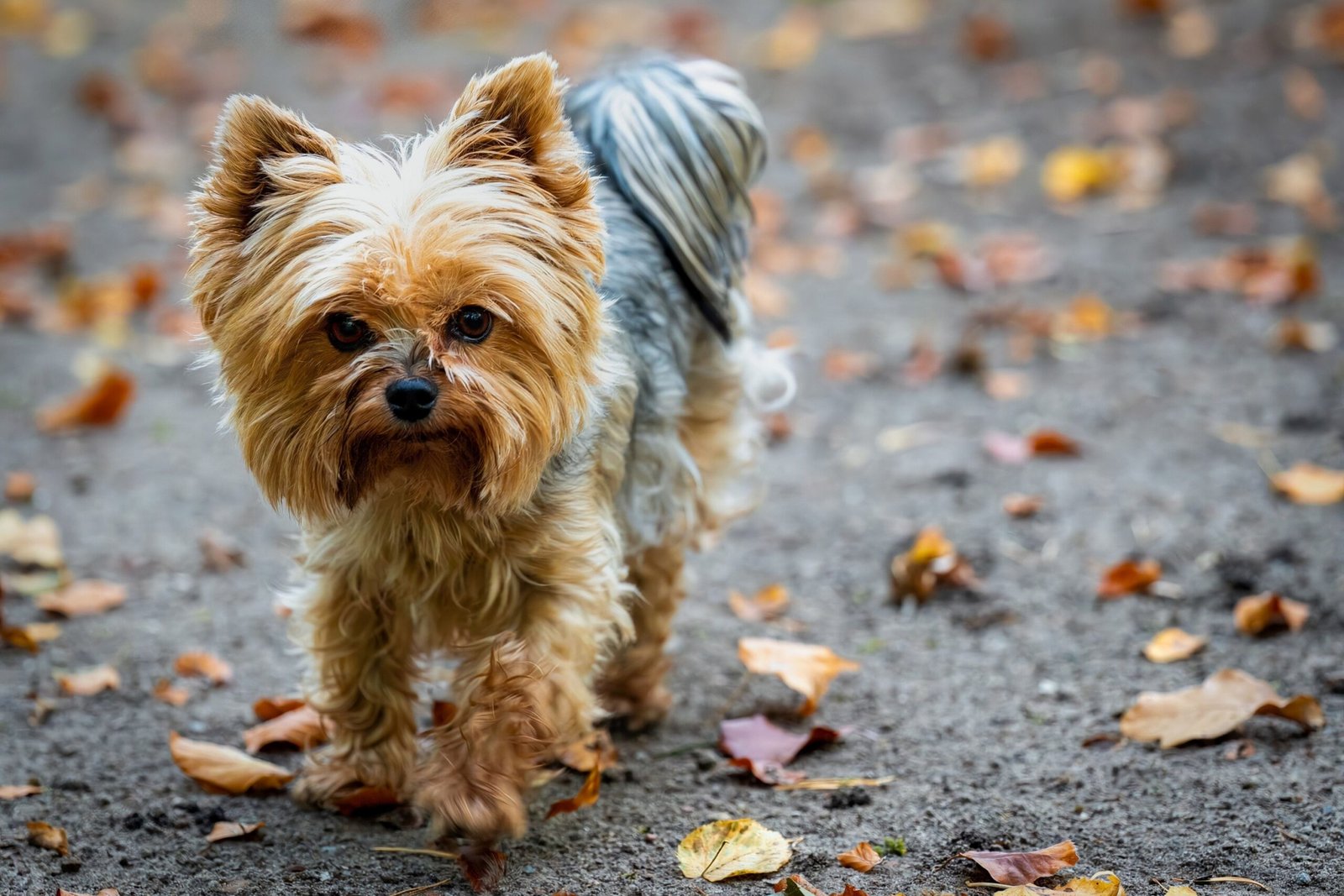
Yorkies may look like purse accessories, but plenty of behaviorists quietly file them under “spicy gremlin.” Bred as ratters in mills and mines, they carry a serious prey drive and a fearless streak wildly out of proportion to their size. This is the dog that will try to boss around a Great Dane, bark furiously at motorcycles, and launch off the back of the couch to chase a falling leaf. Age doesn’t soften them the way people expect – plenty of senior Yorkies still patrol the house like tiny, self-appointed security guards.
Their mischief runs on noise and attitude. Yorkies quickly learn that barking, whining, or theatrical “suffering” when left alone gets them picked up and petted, and many become expert manipulators because of it. Because people underestimate them, bad habits go unchecked until they’re deeply set in. The result is a twelve-year-old Yorkie still shredding toilet paper, stealing socks twice their size, and acting personally betrayed every time you leave the room.
#1 – Poodle (All Sizes): The Mischief Mastermind in Disguise
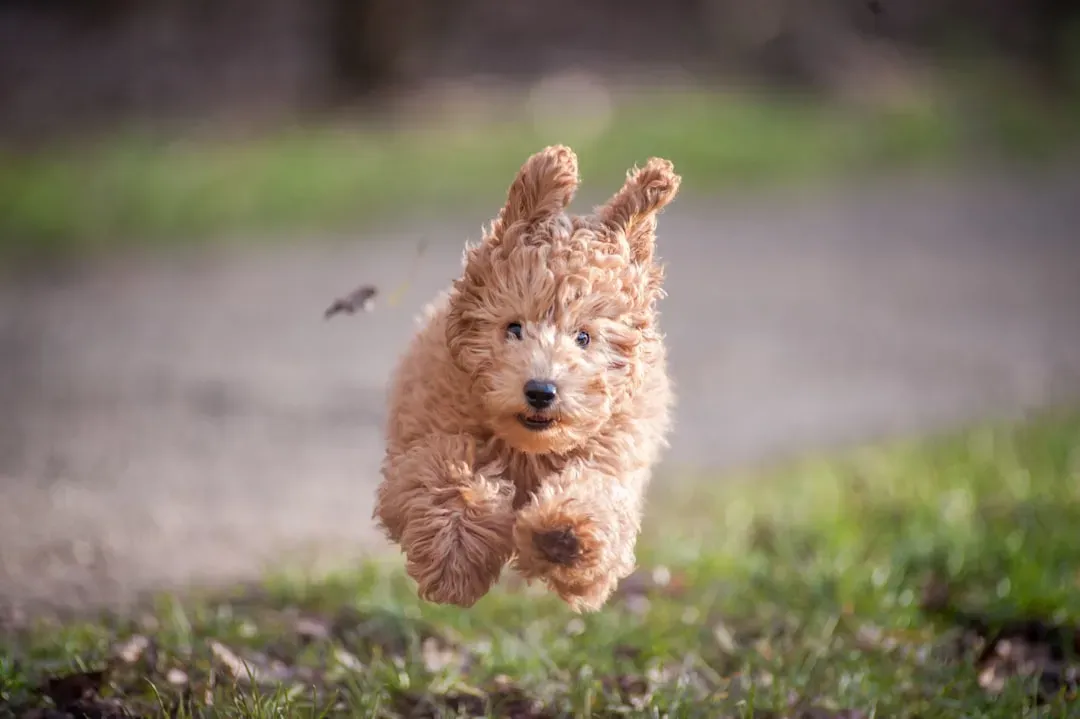
Poodles might surprise people at the top of this list, but trainers know the truth: a bored Poodle is one of the most ingenious troublemakers in the entire dog world. Standard, Miniature, and Toy Poodles all rank near the top for learning speed and problem-solving, and that intelligence doesn’t fade with age – if anything, older Poodles get sneakier. They memorize household patterns, figure out doorknobs, and quietly clock which humans are pushovers.
Their mischief is rarely chaotic; it’s targeted experimentation. Poodles test what happens if they nudge a gate, tap a cabinet, or ease open a drawer, and many owners swear their dog deliberately hides a prized toy just to “lead” them to it later, like showing off a trick. That’s not a training gap. That’s strategy.
Why It Stands Out
- Consistently ranked the second-smartest breed of all, right behind the Border Collie, in the most widely cited canine intelligence research
- Comes in three official sizes – Standard, Miniature, and Toy – so the same sharp brain fits almost any household
- Originally developed in Germany as a water retriever, with a history of wartime supply work that demanded quick problem-solving
- The famous curly, low-shedding coat is often a draw for allergy-prone families, masking just how strategic the dog underneath really is
Emotionally, Poodles are tuned into human reactions in a way that makes their pranks feel personal. Zoomies during your video call, barking exactly during movie night, dropping a toy in the shower – if it gets a reaction, they log it and repeat it. They’re athletic enough that jumping baby gates and clearing fences feels almost effortless, and without daily mental work, that brilliance gets channeled straight into problem-making: puzzle toys solved in minutes, treat cabinets raided, laundry baskets overturned for one forbidden sock. If you enjoy training as a hobby, living with a Poodle feels like sharing your house with a very hairy, slightly chaotic roommate who always has a new plan.
There’s a harsh but honest truth buried in this list: the breeds people call “naughty” are usually the ones we underestimate or underwork. Beagles, Dachshunds, Huskies, Border Collies, Jack Russells, Labs, Aussies, Yorkies, and Poodles aren’t misbehaving at random – they’re doing exactly what they were bred and wired to do. When that instinct collides with a modern, low-activity lifestyle, mischief isn’t a possibility. It’s a guarantee, and often a lifelong one.
The real mistake was never choosing one of these breeds. It’s expecting them to retire into couch-potato life by age three. If you want a dog that stays clever, a little wild, and occasionally infuriating in the funniest possible way, these nine will keep your life interesting well into their gray-muzzle years. If you don’t want that, you’ll spend a decade blaming the dog for being exactly who it always was.