

#1: They Won’t Leave Your Side
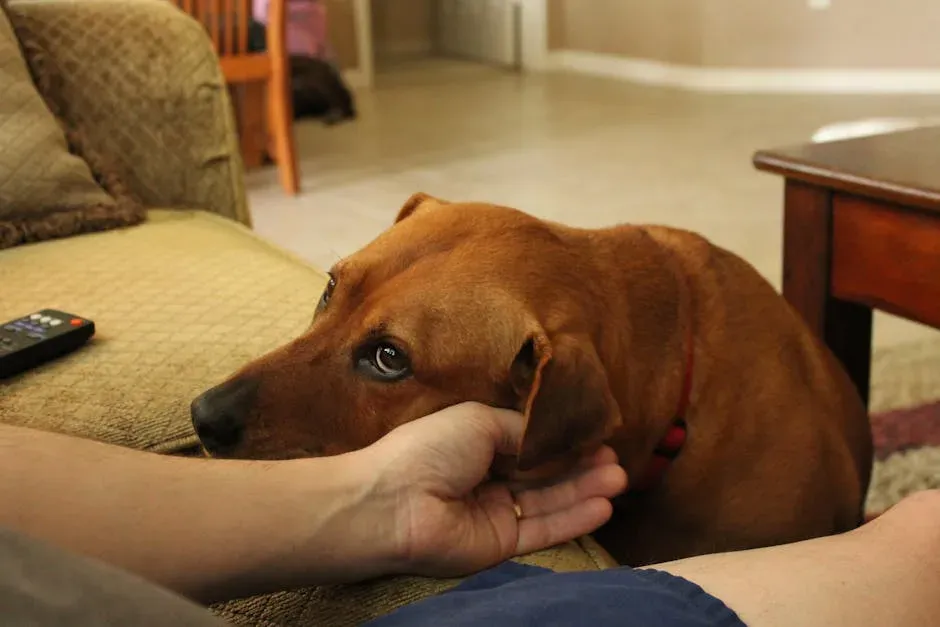
One of the most frequently reported signs across pet owners, hospice workers, and veterinarians is sudden, intense clinginess. A dog that normally sleeps in another room starts following you everywhere, pressing against your legs, refusing to be separated even for a moment.
When dogs sense impending death, they may respond with unusual clinginess. You might find your dog following you from room to room, seeking comfort through proximity as if trying to offer solace. This isn’t just separation anxiety in the ordinary sense. It’s different in quality, more urgent and persistent, as though they’re anchoring themselves to you deliberately.
Dogs also pick up on subtle behavioral cues from their owners, which can lead them to become more protective, refuse to leave their side, or show signs of anxiety or restlessness. If your dog suddenly upgrades their need for closeness without any obvious life change, that shift is worth paying attention to.
#2: Unusual Howling or Whimpering

There’s a particular kind of vocalization that’s hard to describe unless you’ve heard it. Not a playful bark, not a protest whine. Something low, sustained, and mournful that seems to come from somewhere deeper than ordinary communication.
There is a persistent belief held by many people that dogs have some sort of “sixth sense” that allows them to sense when somebody is about to die. There are some psychological explanations as to why such beliefs come about in the first place, and which behaviors of dogs might explain them. One documented account from Psychology Today describes a beagle named Maggie who howled continuously until a neighbor’s ailing mother passed, despite having no contact whatsoever with the woman.
Howling or restlessness may be a dog’s reaction to stress, confusion, or sensing changes in their environment. Dogs are highly attuned to emotional energy and may respond to the tension or sadness surrounding a dying person. If your dog begins vocalizing in a way that feels unfamiliar and out of character, it may be responding to something very real that it can sense but you cannot.
#3: They Start Sniffing You Intensely and Repeatedly
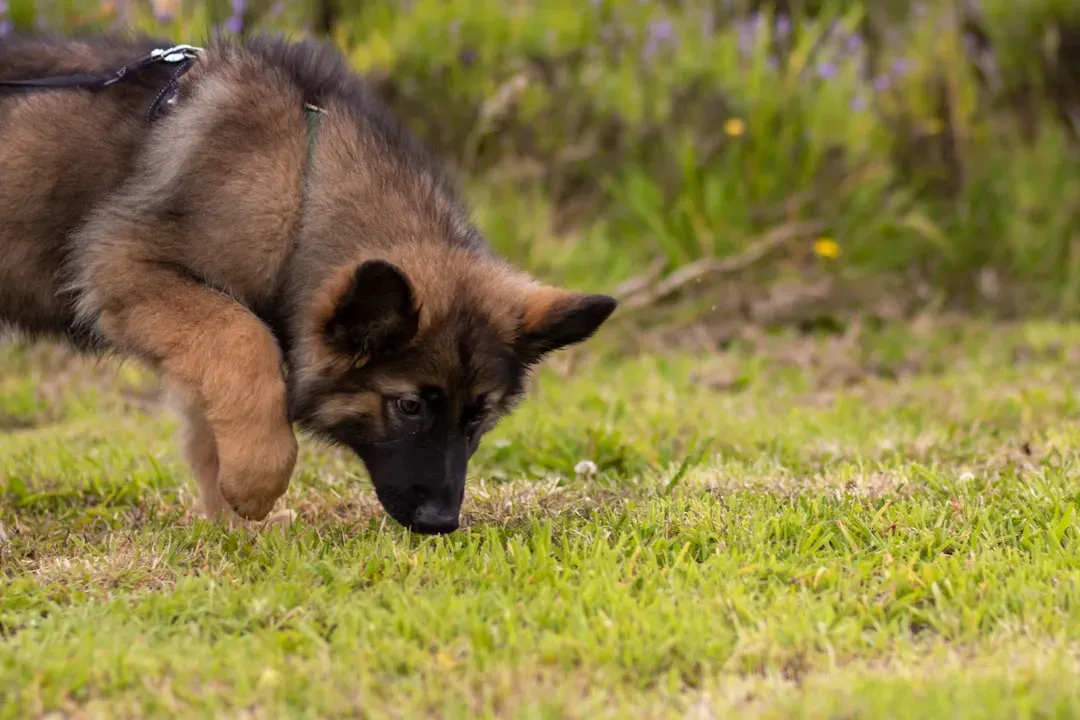
Dogs sniff. That’s just what they do. But there’s a noticeable difference between casual sniffing and the kind of focused, repeated, almost investigative nose-work that sometimes precedes a significant health event in their human.
As the body approaches death, it undergoes various physiological changes, including shifts in body temperature, breath odor, and the release of specific chemicals. Dogs’ acute sense of smell allows them to detect these subtle changes, providing them with cues about the approaching end. The canine nose is genuinely built for this kind of work.
Dogs can detect minute amounts of volatile organic compounds (VOCs) released by the human body, including those linked to infections, metabolic changes, and even cancer. Specially trained dogs can detect various diseases, including cancer, diabetes, and epilepsy, by sensing changes in a person’s body odor, based on their ability to pick up volatile organic compounds emitted by diseased tissues. When your dog lingers around your abdomen, your chest, or your breath with unusual attention, that behavior deserves more than a dismissive pat on the head.
#4: They Become Visibly Distressed Around You
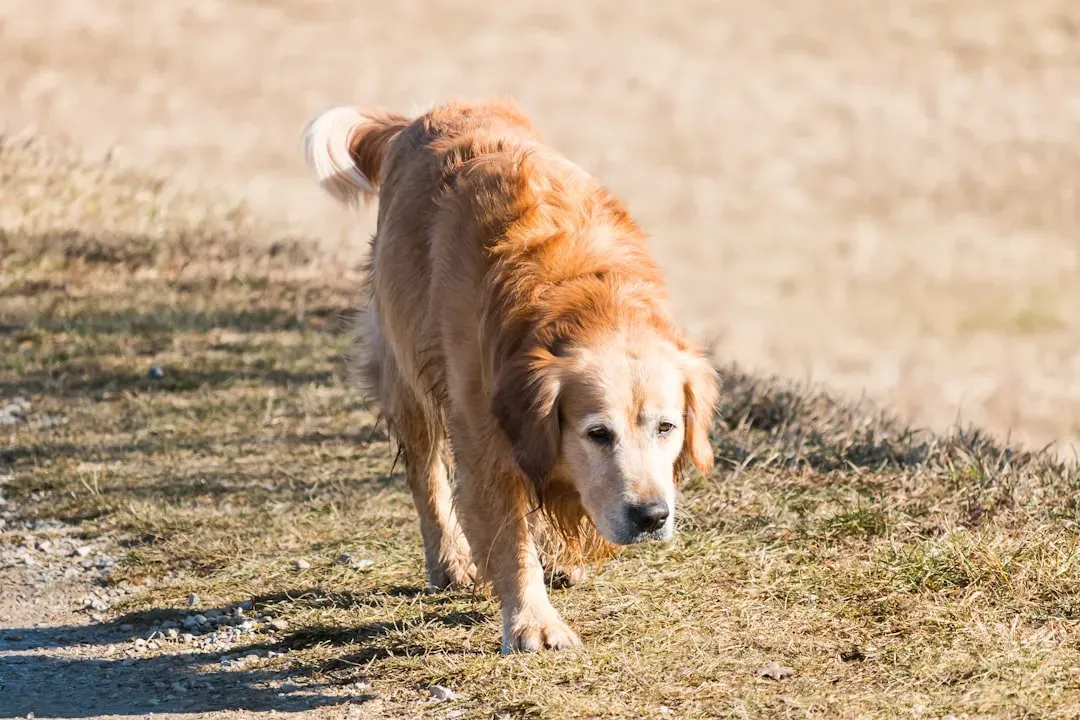
Some dogs don’t lean in with comfort when something is wrong. They pace. They seem unable to settle. They move from one corner of the room to another, lie down, stand back up, and repeat the cycle without explanation.
Dogs also become restless and anxious when they feel that someone is close to death, and they may pace, whine, or refuse to leave the dying person’s side. This kind of restlessness is different from boredom or a need for a walk. It has a frantic, helpless quality, as though the dog is trying to solve a problem it doesn’t have the tools to fix.
Some dogs may exhibit signs of restlessness or pacing when they sense death in a human. This behavior can be a way for the dog to release pent-up energy or anxiety in response to the situation. If this kind of behavior appears suddenly and persists over days, particularly in a dog that’s otherwise calm, it’s a signal worth taking seriously. Unexplained agitation in a pet that knows your routines intimately rarely has a trivial cause.
#5: They Begin Sitting Vigil

There’s something almost ceremonial about the way some dogs behave around a person who is gravely ill. They don’t play. They don’t demand attention. They simply sit, watching, present in a way that feels different from their usual companionship.
Many people report instances where their pets will sit vigil at a loved one’s bedside during final moments, an instinctual behavior reflecting loyalty and love beyond words. Hospice workers across various settings have noted this pattern repeatedly, and it’s hard to explain away purely as coincidence.
Dogs show different behaviors around individuals who are dying. Owners and veterinarians say that dogs become more clingy, attentive, and protective. Sometimes, they even lay next to or on top of the person who is dying, trying to offer comfort and warmth. That instinct to hold a quiet, physical presence near someone at risk may be one of the most poignant things dogs do, and one of the clearest signs they understand more than we give them credit for.
#6: They React to Changes in Your Breathing or Body Temperature

Breathing changes are among the first physiological shifts that occur when the body begins to decline. The pattern shifts, the rhythm slows or becomes irregular, and the temperature of the skin can change noticeably. We may not clock these changes ourselves, but our dogs almost certainly do.
Owners and veterinarians have noticed that dogs are sensitive to physical changes in the dying person, like changes in breathing and mobility. Dogs process physical cues constantly and at a level of detail that far exceeds human perception. A change in breathing rhythm alone can trigger a visible behavioral shift in a dog attuned to its owner.
More than verbal communication, dogs rely on body language to talk to each other and understand their favorite humans. Even without their impressive noses, their ability to understand body language gives them a heads up whenever something is wrong. A dog that suddenly presses its nose against your chest, rests its head on your abdomen, or stares at your face intently during rest may be doing what it was biologically built to do: reading you, closely, for signs of distress.
#7: They Become Uncharacteristically Gentle
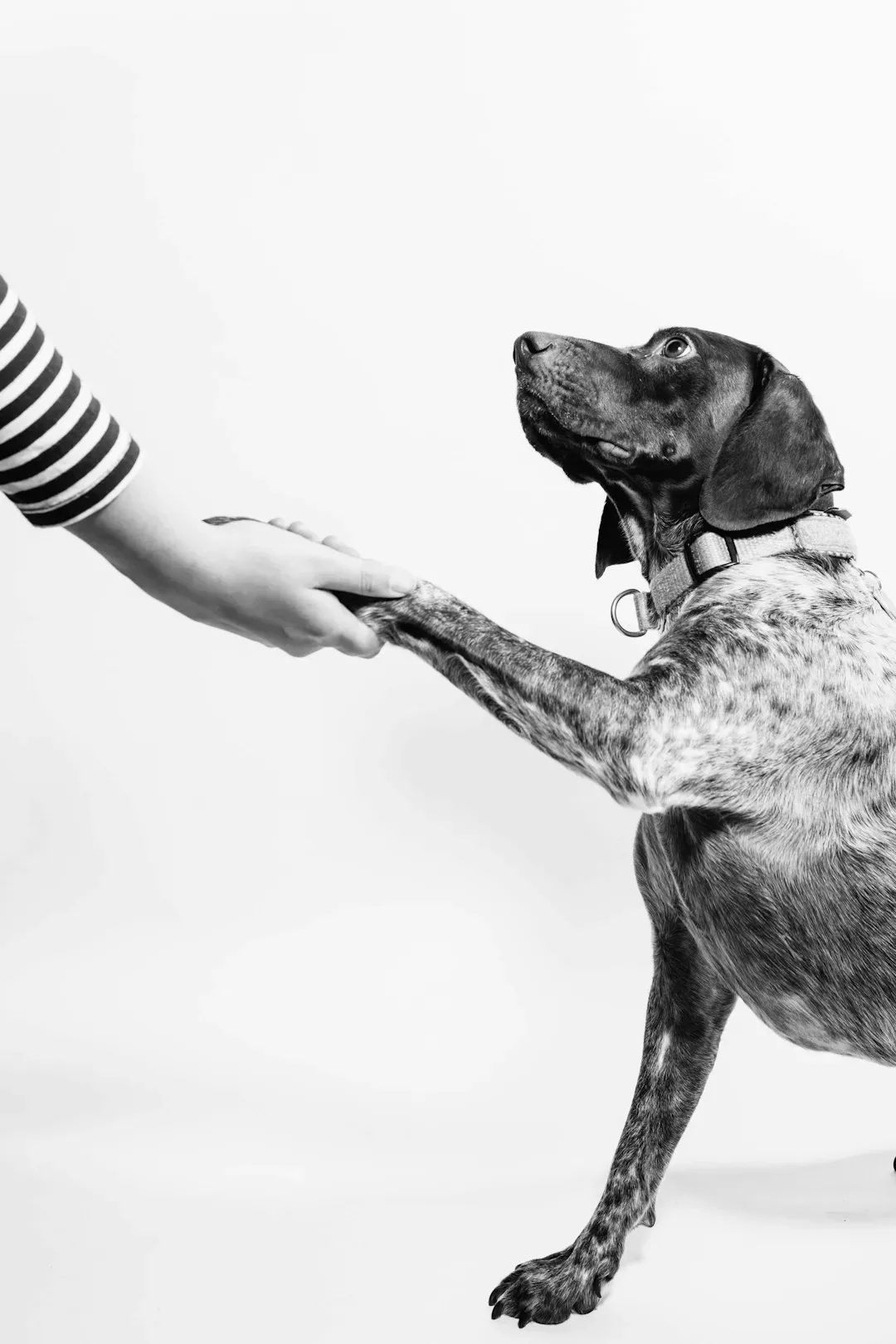
This one tends to catch people off guard. A dog that’s usually boisterous, demanding, or playfully rough suddenly shifts into a mode of unusual tenderness. It moves slowly around you, it leans without pushing, it looks at you in a way that feels almost deliberate.
Dogs may show increased affection towards the person who is nearing the end of life. This can manifest as cuddling, licking, or nuzzling the person in a comforting manner. That shift is broadly consistent across many accounts from families who’ve witnessed a dog’s behavior change in the weeks before a loved one’s death.
Current research suggests dogs may try to offer comfort to people in distress, which could explain why they’re nearby people in these situations. This instinctive caregiving behavior is not limited to their owners; therapy dogs in hospitals and hospices often display similar sensitivity toward patients they have never met before. Their ability to detect emotional suffering and respond with calm presence has made them invaluable in palliative care settings. Gentleness, in a dog that hasn’t earned that reputation, is a form of communication all its own.
#8: They Seem to Detect Your Emotional State Before You Do

Fear, grief, and physiological stress all have a chemical signature. They alter hormones, change body odor, shift how we breathe and carry ourselves. And dogs, as it turns out, can read those signatures with striking accuracy.
Research indicates that the physiological processes associated with an acute psychological stress response produce changes in the volatile organic compounds emanating from breath and/or sweat that are detectable to dogs. That’s not anecdote. That’s peer-reviewed science. What we feel internally leaks out through our biology, and dogs are essentially wired to receive that signal.
There is no coincidence here. Scientific studies have shown that dogs can detect changes in human cortisol levels, heart rate, and even scent. These keen senses allow them to act as emotional mirrors, sometimes reflecting what we are feeling, other times being aware of it, and providing companionship. A dog that becomes suddenly anxious or unusually attentive when you’ve said nothing, done nothing, and shown no obvious outward sign of distress may simply be reading you on a frequency you didn’t know you were broadcasting.
#9: They Begin Grieving Before Anyone Has Died

Perhaps the most eerie of all the signs is the one that looks most like mourning. Before any death has been confirmed, before a hospital visit, before the family has processed the gravity of the situation, the dog sometimes knows. It stops eating well. It loses interest in toys. It sleeps more, stares at nothing, and withdraws in ways that mirror human grief.
When a person or another pet in the household dies, dogs often show signs of mourning. They may search for the deceased, lose interest in food, or sleep more than usual. These behaviors suggest that dogs experience grief in their own way, shaped by their attachment and understanding of loss. The troubling observation, reported by multiple families, is that this behavior sometimes begins before the loss, not after it.
Dogs are highly attuned to human emotions and can pick up on feelings of fear, sadness, and anxiety. When a person is nearing death, their emotional state often changes, and dogs may sense this shift, prompting them to respond with increased attentiveness and concern. In addition to chemical and emotional changes, dogs observe the behavior of those around them. If family members or caregivers are acting differently, showing signs of grief or distress, dogs may interpret these cues as indicators that something significant is happening. A dog that’s grieving before there’s anything to grieve might, in the most heartbreaking way, already be saying goodbye.
What Does This All Mean?

Here’s an honest opinion: we’ve spent too long dismissing these behaviors as coincidence, projection, or sentimental thinking. The science is still catching up to the stories, but the direction of the evidence is clear enough. Dogs may not possess supernatural powers, but their ability to sense death stems from a remarkable combination of biology, empathy, and shared experience. Their acute senses allow them to detect changes in scent, sound, and behavior that accompany illness or the dying process, while their emotional intelligence drives them to respond with compassion. This blend of instinct and empathy gives rise to the impression that dogs can foresee death, when in reality they are perceiving the subtle signs of life’s final transition.
We should be paying more attention. Not because the dog is a prophet, but because a dog that’s acting strangely around a person who appears fine might be alerting us to something medicine hasn’t caught yet. Their ability to pick up volatile organic compounds emitted by diseased tissues has been documented, and some dogs have accurately detected cancer in their owners, sometimes even before medical diagnosis. This demonstrates dogs’ ability to sense significant physiological changes, supporting the idea that they could detect approaching death.
If your dog is showing several of these signs around someone you love, the wisest response isn’t superstition. It’s a doctor’s appointment. Your dog doesn’t have the words to tell you what it knows. It only has behavior. And sometimes, that’s exactly enough.


