

At the desolate heart of the Chernobyl Exclusion Zone in Ukraine—an area best known for silent ruins and ghost towns—an utterly unexpected scene has emerged: stray dogs with bright blue fur. While the vivid imagery might evoke nuclear-mutation fantasies, the reality appears far more earthly, albeit no less intriguing.
Who are the “dogs of Chernobyl”?
The pack of canines roaming the exclusion zone aren’t feral in the purely wild sense—they are essentially the descendants of domestic pets abandoned after the Chernobyl nuclear disaster in April 1986. As the town of Pripyat and surrounding villages were evacuated, many residents had to leave behind their dogs. Over decades these animals survived, bred and adapted in the restricted zone.
Currently, organisations such as Dogs of Chernobyl (operating under the umbrella of Clean Futures Fund) estimate around 700 stray dogs inhabit the zone. Their wild-meets-pet heritage makes them fascinating subjects for ecology, radiation-impact and animal-behaviour studies.
What’s going on with the blue coats?
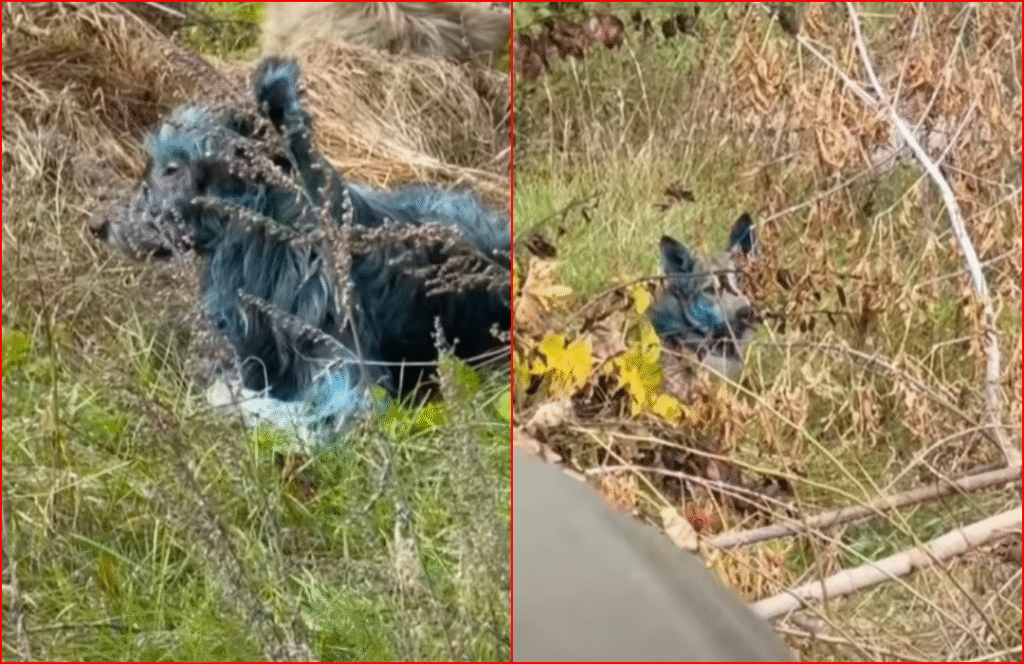
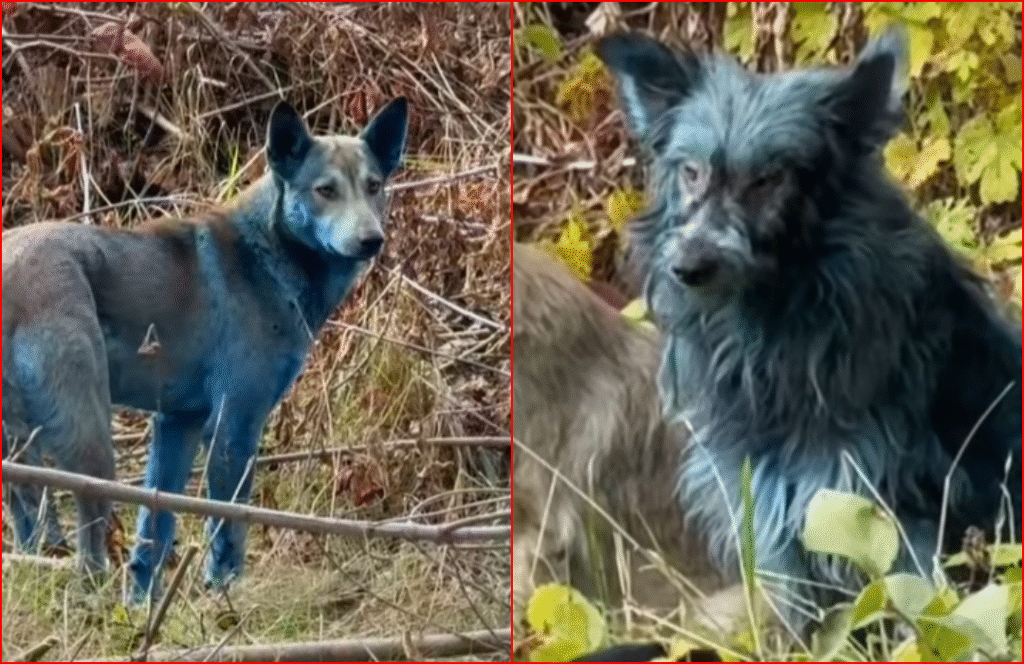
In October 2025, rescuers working inside the zone spotted at least three dogs whose fur had turned vivid blue. Instagram posts by Dogs of Chernobyl confirmed the discovery:
“We are on the ground now catching dogs for sterilisation, and we came across three dogs that were completely blue.”
Unlike typical stray-dog stories, this one has caught wide attention. Local staff noted the animals had looked normal just a week earlier.
So, what might explain it?
– Radiation? Experts say that’s extremely unlikely—changes in fur colour from radiation would be far rarer than, say, fur loss or mutations.
– Chemical exposure? Very likely. The leading theory: the dogs rolled in or came into contact with bright-blue chemical fluid leaking from a portable toilet (porta-potty) or other source of dye-laden waste.
– Other possibilities (paint, dye dumping) are less well supported at present.
The chemical-exposure theory seems the most plausible. It also tracks with observations of healthy activity from the dogs despite their striking hue.
The broader context: survival in and beyond the exclusion zone
The story of the blue dogs intersects with longer-term ecological and animal-welfare narratives inside the exclusion zone. After the 1986 disaster, human presence dropped dramatically—but nature did not vanish. Instead, wild species returned in surprising numbers.
For the stray dogs, life is a mix of independence and hardship:
They occupy territory in a landscape abandoned by people but still influenced by contamination.
The Dogs of Chernobyl programme, active since about 2017, provides medical care, sterilization and feeding to reduce suffering and manage population dynamics.
Genetic studies have shown that the dog population in the zone has diverged significantly from nearby dog populations—possibly because of isolation, in-breeding, and unique environmental pressures. In short, these dogs are living at the intersection of human abandonment, wildlife resurgence and the long-shadow of nuclear catastrophe.
Beyond the immediate “wow” factor of blue-furred dogs, there are several important take-aways:
1. Ecological signals. The phenomenon may highlight leaks, chemical exposure or unmonitored waste in the exclusion zone. If dogs are rolling in bleaching or dye liquids, it suggests broader environmental safety issues.
2. Public perception & myth-busting. In a place like Chernobyl, where myths about mutants abound, the fact that these dogs are not the result of radiation but rather likely chemical exposure helps clarify real vs imagined risks.
3. Animal welfare. These are sentient beings living in challenging conditions. The blue coats may be a visual symptom of underlying hazards that deserve veterinary and ecological attention.
4. Research potential. The dogs of Chernobyl remain a unique population for studies of adaptation, radiation biology, genetics and zoonotic disease risk in post-disaster zones.
In the end, the blue dogs roaming the silent streets of Pripyat and the forests near Reactor 4 are a vivid reminder that even in places emptied of people, stories of survival, adaptation and mystery continue to unfold. And while a cobalt-hued coat may catch the eye, the deeper story is about the interplay of abandonment, environment and the resilience of life.


