
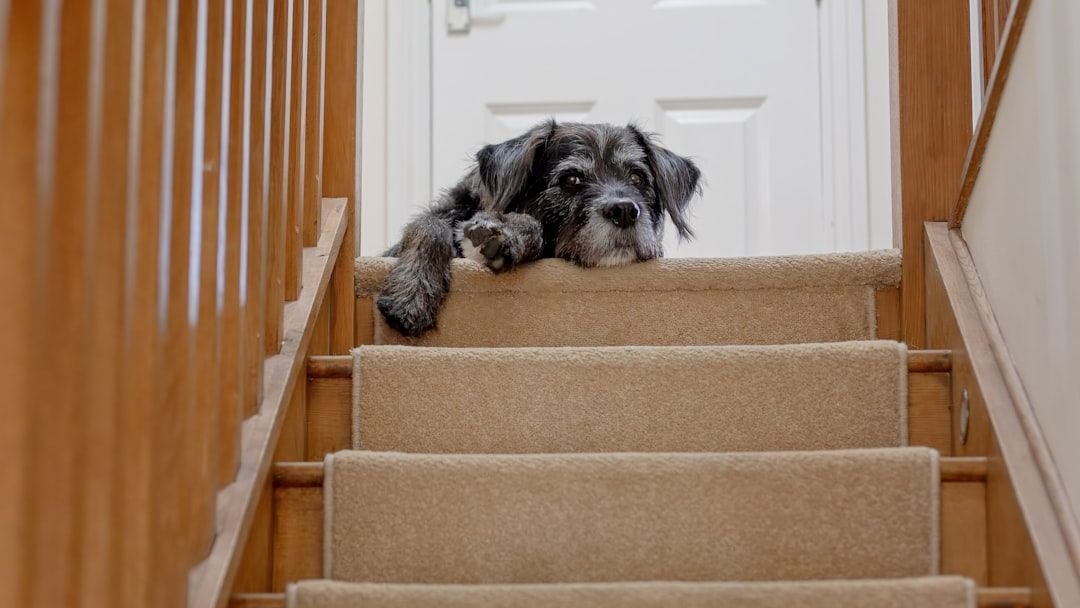
Picture this: you call your dog from the bottom of the stairs, expecting them to come bounding down like they always do. Instead, they stand at the top landing, staring at you with those big soulful eyes, perfectly still. No movement. Just that long, contemplative pause.
Sound familiar? If you’re a dog parent, chances are you’ve been in that exact moment, half-amused, half-puzzled, wondering what on earth is going through your dog’s head. The truth is, that brief pause can mean a dozen different things, and some of them matter more than you might think.
From quirky puppy nerves to serious health signals your dog can’t put into words, that moment at the top of the stairs is actually packed with information. Let’s figure out what your dog is really telling you. Let’s dive in.
The Staircase Feels Like a Mountain to Some Dogs
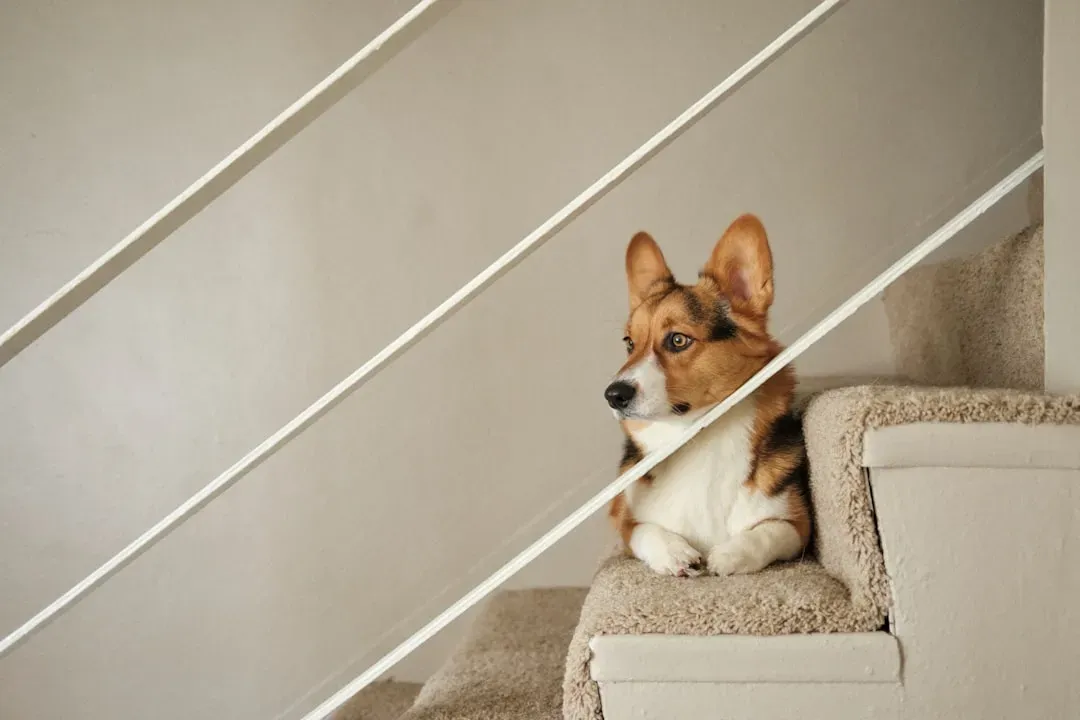
Here’s the thing: not every dog sees a staircase the way you do. To a small breed or a young puppy, those steps look enormous. Stair risers are typically between 7 and 7.75 inches high, which can feel huge for a puppy or a small dog with short legs. The climb up takes considerably more effort and energy than it would for a larger dog, and the descent can feel even more daunting, as dropping down from one stair to the next while looking all the way to the bottom can feel genuinely unsafe.
Young puppies don’t typically have great depth perception, which is why you may see some of them struggling with going down a ramp or stairs. To them, the stairs can appear like one long slide rather than individual steps. Honestly, that’s not irrational. That’s actually a pretty logical fear for a tiny creature navigating a very steep drop. Give them grace.
Stairs are a common fear for most young puppies. Going up a full flight can seem like an endless obstacle course, and at the top, looking down, a puppy may genuinely be afraid of falling. Puppies tend to take stairs one at a time, and it helps to give them a chance to adjust, or even carry them up or down until they know it’s safe.
Your Dog Might Be Reading the Stairs for Safety
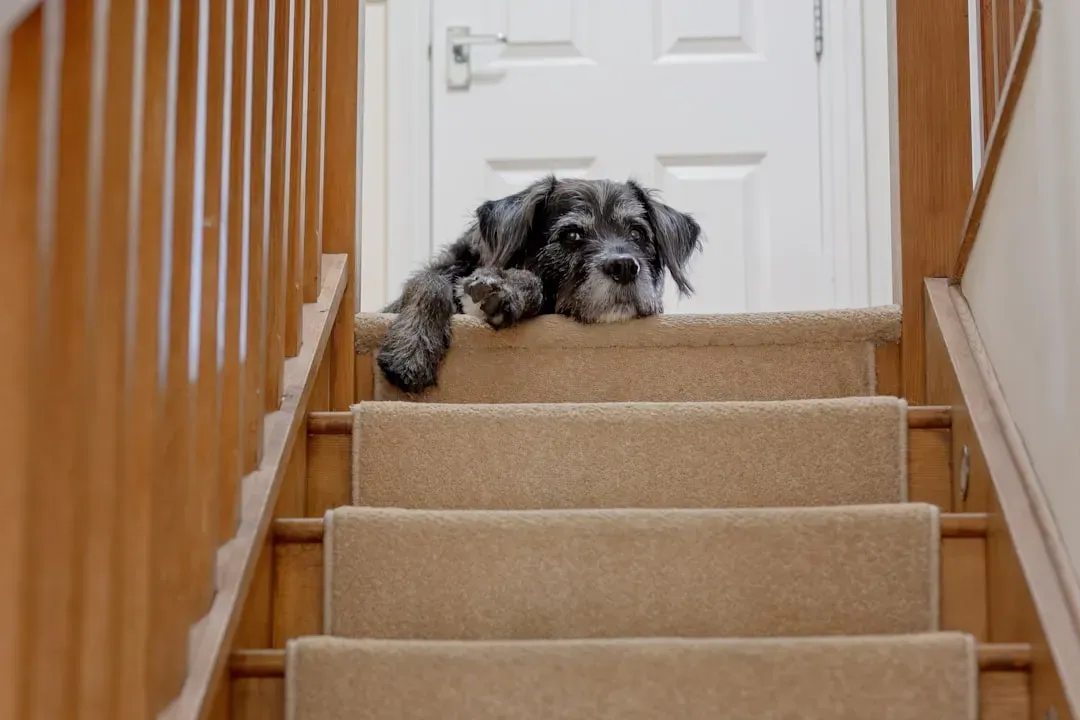
If your dog seems hesitant to go downstairs, it could be because they feel a little wobbly. It can take a lot of work for dogs to find their balance, and feeling uneasy while looking down a long flight of stairs can make almost any dog feel anxious. Think of it like standing at the top of an escalator that isn’t moving. Even humans hesitate for a split second.
Environmental factors, such as slippery or unfamiliar stairs, can induce anxiety in dogs and lead to hesitation. Some dogs may need gradual exposure and positive reinforcement to overcome their fear and build confidence in negotiating stairs. Smooth hardwood? Forget it. Hardwood stair treads are more challenging for dogs to grip, which increases the risk of slipping and falling. If your stairs are polished wood without any traction, your dog may simply be deciding, “Nope, not today.”
Breed and size play a significant role in stair hesitation. Smaller breeds or those with shorter legs may find it challenging to tackle stairs, especially if the steps are too high or steep. Conversely, larger breeds might struggle due to their size and weight, which impacts their agility and confidence on stairs. It’s not laziness. It’s smart self-preservation.
Fear From a Past Experience Could Be the Real Culprit
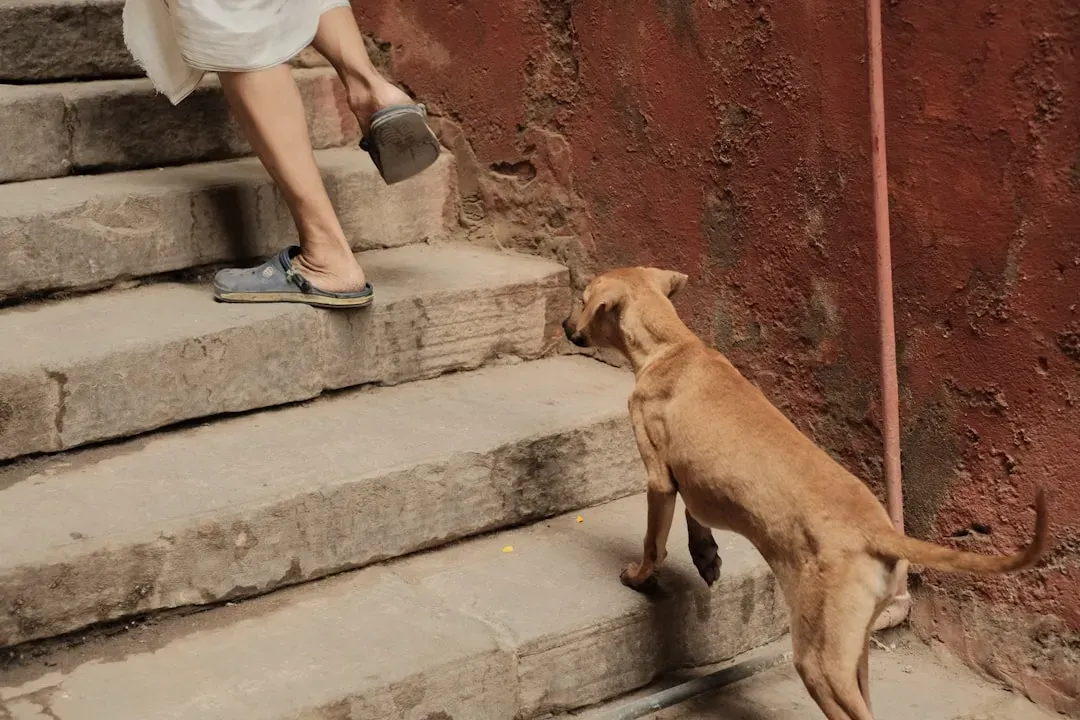
When something scary or traumatic happens to a dog, those memories can affect future behavior. If your dog has had a bad experience on stairs, they may become scared of climbing staircases. There are many reasons a dog could associate trauma with stairs, the most obvious being falling down them, especially if the fall caused injury or pain. Getting scared by a loud noise while on the stairs could also make a dog fearful, even if the stairs didn’t actually cause the noise.
A scary event like taking a tumble down the stairs, or even being punished for using stairs, can be enough to deter your dog from trying again. Remember, it’s always possible that something happened while you weren’t around, so it’s important to be mindful of your dog’s behavior even if you can’t recall any specific incident. Dogs carry emotional memories the way we do, maybe even more quietly.
Although unintentional, we may accidentally teach our dogs to be afraid of stairs. For example, if a dog isn’t allowed on the second floor when you’re not home, and you use a barrier or punish them for going upstairs, you may have inadvertently planted a fear of the stairs in their mind. The staircase pause might actually be your dog double-checking whether the rules have changed.
Pain Is Often the Quiet Message Behind the Hesitation
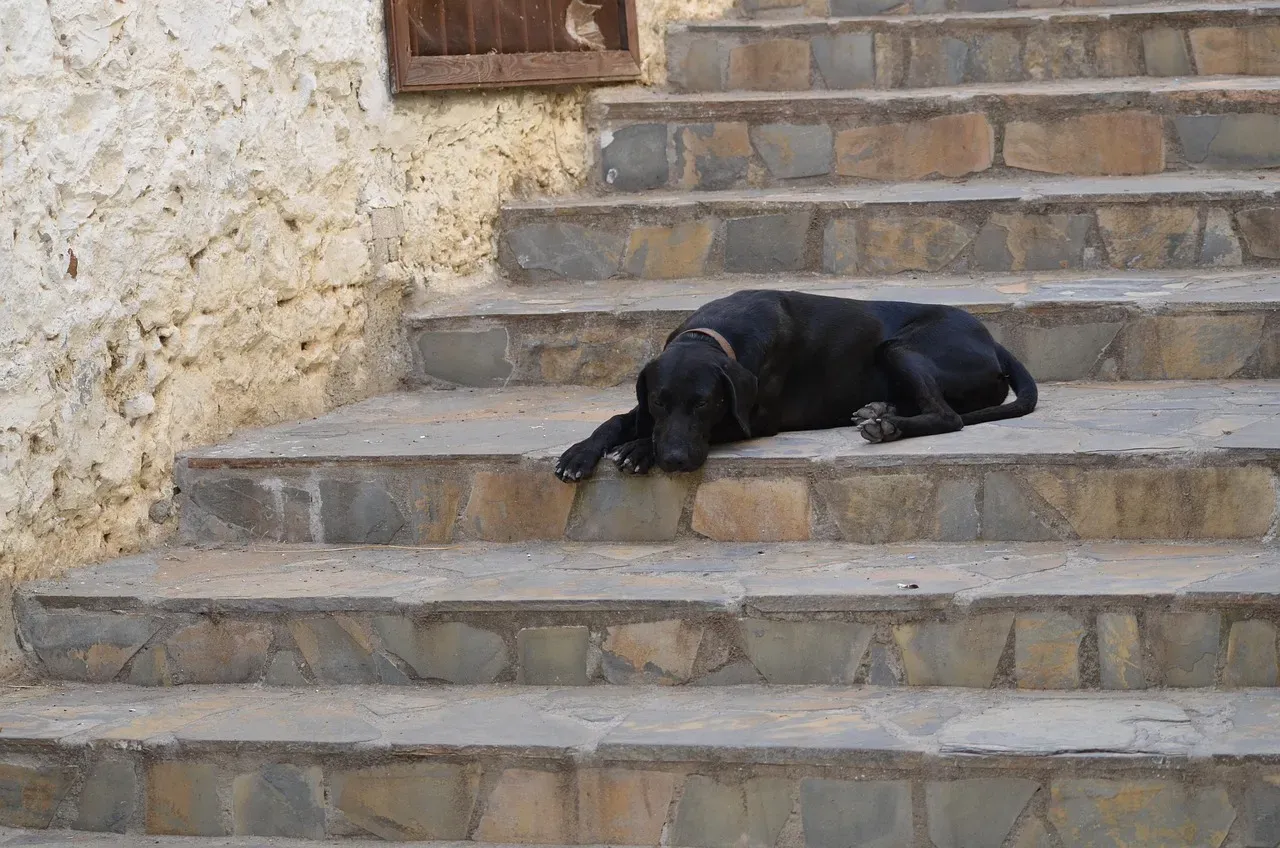
Let’s be real: this is the one that matters most, and it’s the one dog parents most often miss. For many dogs, avoiding stairs isn’t about fear at all. It’s about pain. Joint problems, arthritis, and hip dysplasia are some of the biggest reasons older dogs struggle with stairs, and even younger dogs recovering from an injury might hesitate, knowing that climbing will make them uncomfortable.
Pain is one of the most common reasons a dog might stop climbing stairs. Staircases put extra strain on the joints and muscles, aggravating discomfort and making a dog reluctant to go up or down. Osteoarthritis is one of the most common causes, and it’s thought to affect over 80 percent of dogs older than eight years, although it can develop in dogs of any age. That statistic is honestly shocking when you stop and think about it.
Some dogs with medical conditions will have trouble going down stairs but not up, or vice versa. Dogs with orthopedic conditions affecting the hips, knees, and hind legs may struggle or hesitate going up, while dogs with elbow or shoulder problems may experience pain going down but not up. That direction detail is a clue worth paying attention to. Watch which way your dog struggles and mention it to your vet.
Their Eyesight May Be Changing Right Under Your Nose

This one often catches dog parents off guard. Dogs who take on the stairs like nobody’s business may suddenly hesitate if their vision starts to change. If you couldn’t quite see where your next step would be, you’d be cautious too. It’s that simple, and that easy to miss.
Unlike cataracts, which block incoming light completely, a condition called nuclear sclerosis still allows light to reach the retina. This means vision disturbances are usually subtle and can seem more like faulty depth perception, where the pet sometimes misjudges their footing on stairs or misjudges jumps onto furniture. Your dog isn’t being dramatic. They literally cannot judge the drop accurately.
Changes in a dog’s normal routines may indicate vision loss. Many dogs will start to alter their behavior, such as not wanting to walk up or down stairs, or resisting their normal daily walk routine. Dogs with vision difficulties will also often start hesitating when trying to jump on or off things. Scheduling an eye examination when concerns first arise is encouraged, because the eye has a limited capacity to repair itself from injury.
How You Can Help Your Dog Navigate the Stairs Safely Again
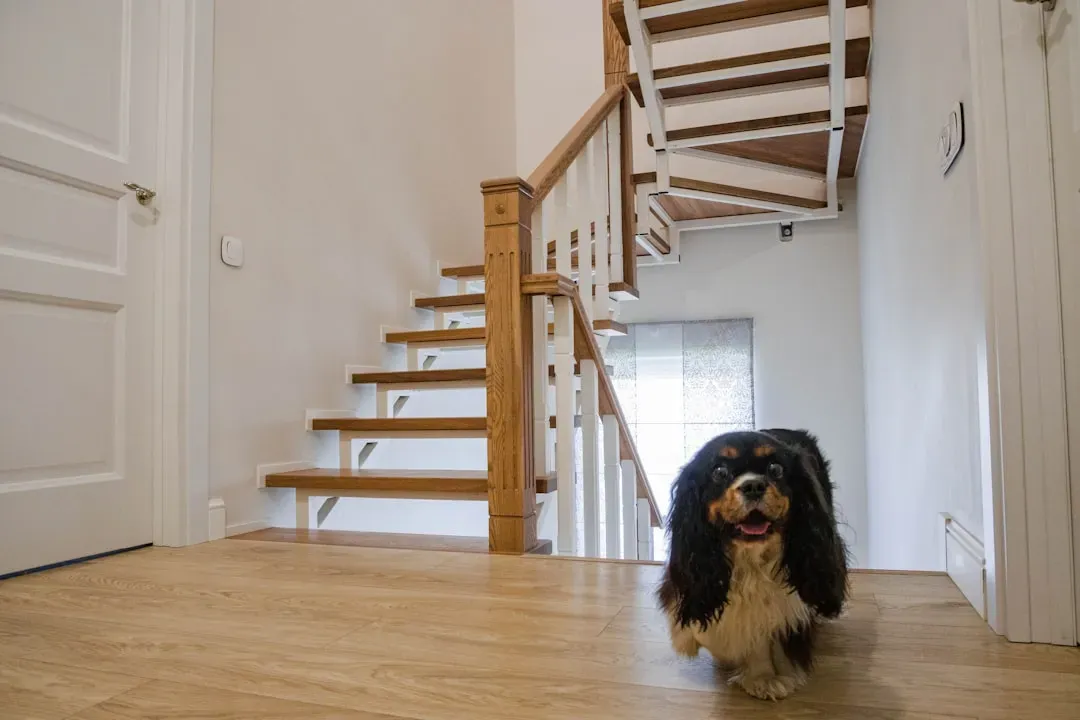
The good news is that most stair hesitation is fixable, once you understand what’s actually behind it. Start with positive reinforcement, gentle encouragement, and treats. Avoid forcing your dog. Use non-slip surfaces and ensure the stairs are well-lit. Gradual exposure and patience help rebuild confidence safely. That’s the golden formula, and it works for both fearful and physically challenged dogs.
Never punish your dog for not progressing, as it will make them more anxious and weaken your bond. Remember, your energy and emotions affect your dog’s comfort level and self-confidence. Stay calm and grounded, which will help your dog feel emotionally supported. Have a patient, relaxed attitude, and don’t focus on making progress; instead, ensure that you are always kind and encouraging without putting any pressure on your dog.
For older dogs dealing with physical challenges, there are practical home fixes worth considering. For dogs with joint pain, adding a non-slip surface or using a ramp can make a huge difference. Rest for one to two weeks may help in some cases, and glucosamine and chondroitin supplements may help keep cartilage in good shape, as well as slow down the progression of degenerative joint disease seen in older dogs. Always loop your vet in before starting any supplement routine, though.
Conclusion: That Pause Is a Conversation Worth Listening To
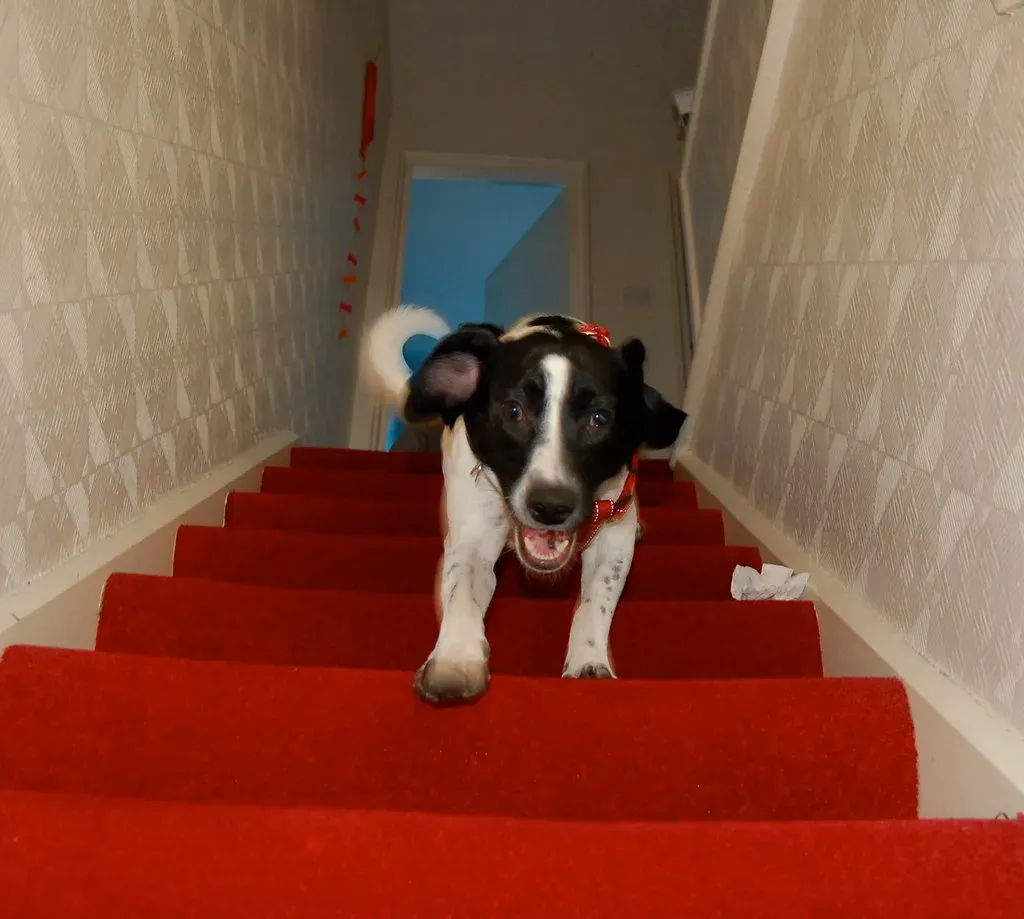
That little moment at the top of the stairs is not nothing. It’s your dog communicating with you in the only language they have, body language, hesitation, and quiet trust. As a pet parent, it’s essential to pay attention to any changes in your dog’s behavior or any sudden fear or anxiety. This may be your dog’s way of telling you something’s wrong, and that they need your help.
I think what makes dog ownership so profound is exactly this: learning to read the small things. A pause at the top of the stairs might be nerves, might be pain, might be fading eyesight, or might just be a puppy figuring out the world one step at a time. If your dog hesitates at the stairs, stops midway, or avoids them altogether, something is off, whether it’s fear, pain, or both. Signs like limping, stiffness, whining, or sudden refusal to climb should never be ignored.
Your dog can’t say “my hip hurts” or “I’m scared I’ll slip.” All they can do is stop, look at you, and wait. The question is whether you’re paying close enough attention to hear it. What has your dog’s behavior at the stairs been trying to tell you? Share your story in the comments, you might just help another dog parent figure theirs out too.


