
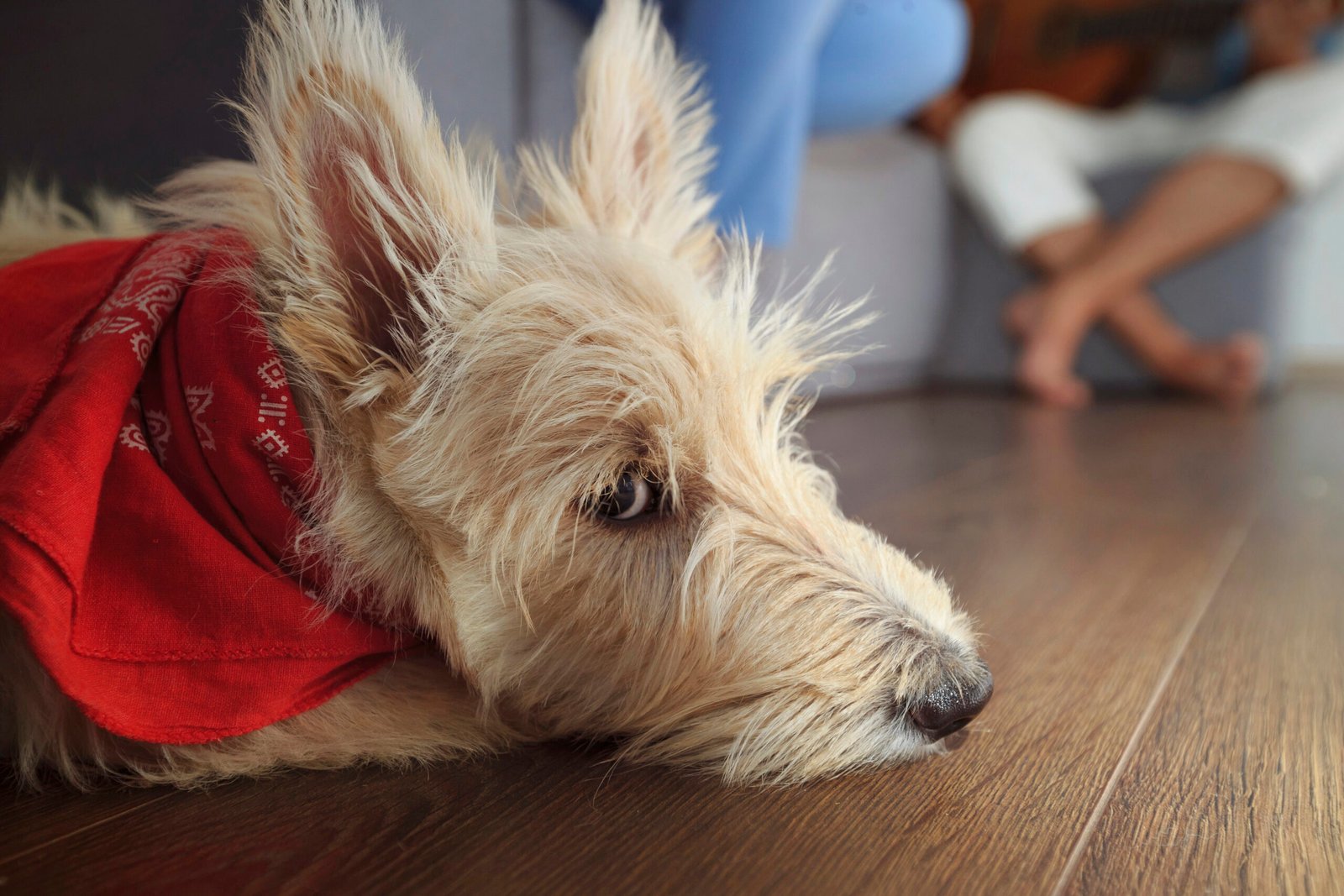
Most pet owners believe that if their senior dog isn’t whining, limping, or howling, they must be perfectly comfortable. However, veterinary pain management specialists reveal that dogs are evolutionarily programmed to hide physical vulnerability to avoid appearing weak to “predators.” By the time a dog starts crying out, their discomfort has likely reached a crisis point. In reality, the most profound signs of suffering in older dogs are silent, subtle, and often dismissed as “just getting old.” Here is what the veterinary data actually says about identifying hidden agony in your aging companion.
#13 — The “Staring at the Wall” Phenomenon

If you catch your senior dog standing still and staring blankly into a corner or at a wall, they aren’t just “spacing out.”
This behavior, often mistaken for canine dementia (CCD), is frequently a neurological response to chronic, internal pressure or localized pain that the dog cannot escape. When a dog’s nervous system is overwhelmed by constant inflammatory signals from joints or organs, they may enter a “trance-like” state as a coping mechanism to disassociate from the physical sensation.
While some owners find this behavior “cute” or “quirky,” it is actually one of the most common ways dogs signal that their internal “battery” is drained from fighting constant discomfort. Studies show that over 60% of senior dogs showing cognitive decline symptoms are actually suffering from undiagnosed osteoarthritis.
But as concerning as the staring is, it’s nothing compared to the subtle “grooming” habit we found at #12…
#12 — Obsessive Licking of One Specific Joint

Most owners assume a dog licking their paws or legs just has allergies, but if they focus on one specific joint, it’s a red flag.
When a dog experiences deep bone pain or the “grinding” sensation of bone-on-bone arthritis, their natural instinct is to apply “first aid.” By licking the area repeatedly, they are attempting to engage the gate control theory of pain, using tactile stimulation to dull the nerve signals reaching the brain. This saliva-soaked fur or “lick granuloma” is essentially a biological heating pad they are trying to apply to themselves.
If you notice your dog’s carpal joints (wrists) or hips are constantly damp, they aren’t just cleaning themselves; they are trying to soothe a fire you can’t see. Veterinary orthopedists note that concentrated licking is often the very first clinical sign of joint degradation.
Wait until you see how their “bedtime routine” changes at #11…
#11 — The Frequent “Pacing and Retrying” at Night
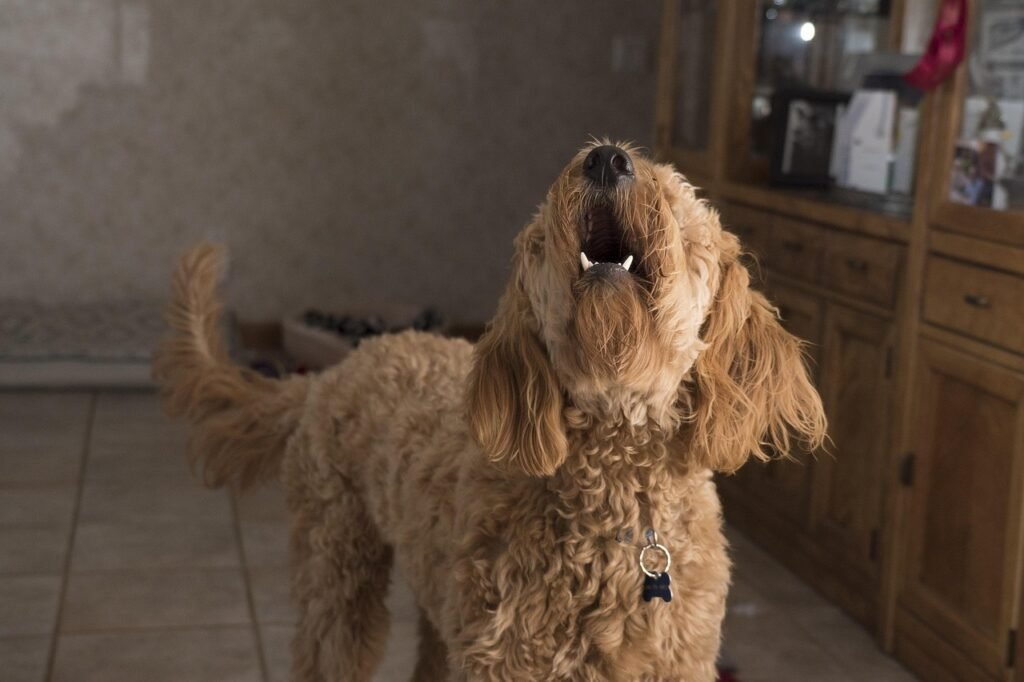
If your dog used to flop down and sleep but now circles their bed ten times before laying down, they are struggling.
This isn’t a personality shift; it’s a desperate search for a position that doesn’t put pressure on inflamed nerves. Senior dogs often suffer from “settling pain,” where the act of lowering their weight onto the floor causes a sharp spike in spinal or hip pressure. Experts state that a dog who gets up and moves multiple times during the night is likely experiencing “breakthrough pain” as their joints stiffen in stasis.
Many owners dismiss this as restlessness or “old dog seniority,” but it is actually a sign that their current bedding or pain management isn’t sufficient. A dog that cannot find a comfortable position is a dog in a state of constant physical stress.
The way they eat is also a major giveaway, as we’ll see in #10…
#10 — Hesitating Before the Food Bowl

You might think your dog is just becoming a “picky eater” in their old age, but the truth is often much more structural.
When a senior dog stands over their bowl but hesitates to lower their head, they are often protecting their cervical spine. For dogs with neck arthritis or IVDD, the downward “reach” to a floor-level bowl can cause an electrical-shock sensation through the front legs. This is why many “miraculously” start eating again if the bowl is raised to chest height.
- Watch for “shifty” front feet.
- Notice if they take a mouthful of food and walk to the rug to eat it.
It’s not about the flavor of the kibble; it’s about the painful mechanics of the posture required to consume it. This is one of the most overlooked signs in the domestic kitchen.
But the most heartbreaking change is the “look” in their eyes, which we cover in #9…
#9 — The “Heavy” or Glossy Eyebrow Expression
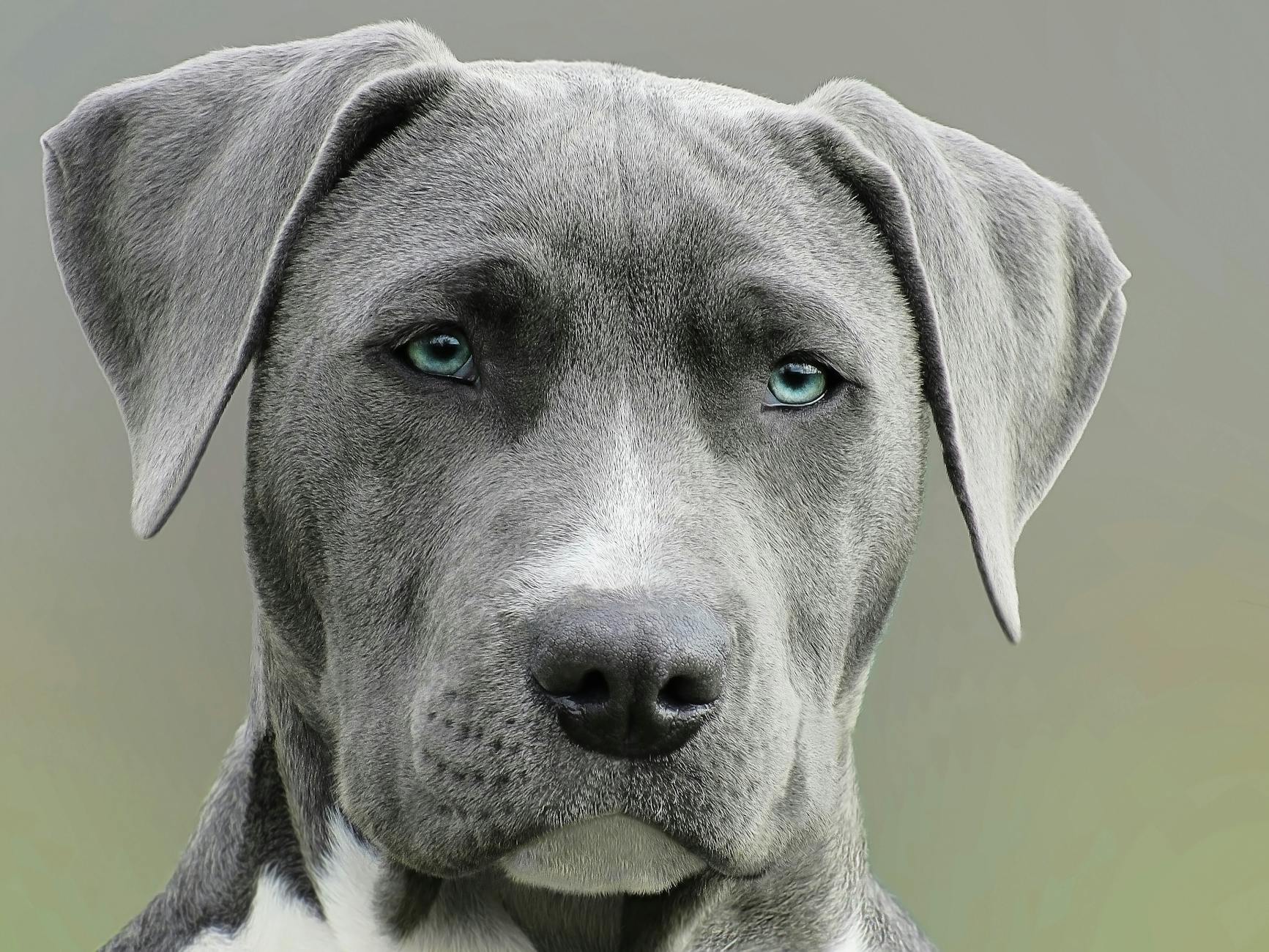
There is a specific facial tension known as the “pain grimace” that exists in the animal kingdom, and dogs are masters of it.
When a dog is in chronic pain, the muscles around their eyes and forehead tighten, causing a “worried” or “heavy-browed” look that doesn’t go away even when they are resting. This is often accompanied by mydriasis (dilated pupils), which is a direct physiological result of the body’s “fight or flight” response to persistent throbbing.
Owners often think their dog just looks “wise” or “soulful” as they age, but clinical observation proves that this facial squinting is a direct correlate to high levels of cortisol in the bloodstream. If your dog looks like they are “thinking hard” all the time, they are likely concentrating on managing their own discomfort.
However, the change in how they greet you at the door at #8 is even more telling…
#8 — The “Social Withdrawal” Shifting

If your once-velcro dog now stays in another room when you come home, they aren’t “valuing their alone time.”
In the wild, a wounded pack member retreats to avoid being a burden or a target. In your home, this manifests as your senior dog choosing to sleep in a quiet laundry room rather than the busy living room. Social withdrawal is one of the most reliable indicators of chronic pain in mammals. They lack the “social battery” to deal with the bumps, pets, and unpredictable movements of a household.
Veterinarians warn that a dog who stops seeking affection isn’t “getting grumpy”; they are guarding their body from the potential pain of being touched. It is a defensive strategy for survival.
If you think that’s subtle, look at the “bunny hop” behavior in #7…
#7 — The “Bunny Hop” on Stairs or Grass

Next time your dog trots away from you, look at their back legs—are they moving independently or together?
When a dog begins to use both back legs simultaneously (the “bunny hop”), they are consciously trying to distribute their weight to avoid putting full pressure on a single, agonizing hip joint. This gait shift allows them to use their core muscles to propel themselves forward, bypassing the need for a full range of motion in the hips.
While it can look “cute” or “bouncy,” it is a textbook clinical sign of hip dysplasia or advanced arthritis. If your dog has stopped “running” and started “hopping,” they are effectively compensating for a mechanical failure in their skeletal system.
But even more dangerous is the “panting” mistake owners make at #6…
#6 — Panting When It Isn’t Hot

If your dog is panting while lying in a cool, air-conditioned room, they aren’t “just catching their breath.”
Excessive panting is a primary clinical sign of distress and elevated heart rate. When the body experiences a pain spike, the sympathetic nervous system kicks in, increasing respiration. Unlike the panting after a walk, “pain panting” is often shallow and accompanied by a tight, retracted “smile” where the corners of the mouth are pulled back.
Experts note that owners often mistake this for “happiness” because it looks like a grin. In reality, it’s a physiological red flag that the dog’s internal stress levels are peaking. If the panting happens at rest, something is fundamentally wrong.
The way they “sit” is another hidden clue, which we reveal in #5…
#5 — The “Lazy” or “Sloppy” Sit

Does your dog sit squarely on their haunches, or do they “slump” to one side with one leg tucked under?
A healthy dog should sit with their legs tucked neatly beneath them. A “sloppy sit” occurs when a dog cannot flex their knees or hips comfortably. By “sliding” onto one hip, they are avoiding the 90-degree flexion that causes sharp pain in arthritic joints.
Many owners have seen this for years and assumed it was just a “cute habit,” but ortho-specialists call this the “Sit Sign.” It is an intentional postural compensation to avoid crushing inflamed cartilage. If your dog can no longer “sit pretty,” they are likely dealing with significant lower-body inflammation.
But that’s nothing compared to the “stiff tail” revelation at #4…
#4 — The “Low-Battery” Tail Wag

We equate a wagging tail with happiness, but for a senior dog, the height of the wag is what matters.
The tail is an extension of the spine. If a dog has lower back pain or lumbosacral stenosis, lifting the tail high for a “full-speed” wag becomes excruciating. Instead, you’ll see a “low wag” where only the tip moves, or the tail remains tucked between the legs even when the dog is clearly excited.
Studies in canine biomechanics show that a rigid or “guarded” tail base is a primary indicator of spinal neuropathy. If your dog’s “happy dance” has lost its swing, it’s because the “engine” (the spine) is misfiring.
Wait until you see the “weight shift” trick at #3…
#3 — Shifting Weight While Standing

Watch your dog while they are standing at their food bowl or waiting at the door. Do they keep their feet still, or do they constantly “dance”?
If a dog is constantly shifting their weight from one back leg to the other, they are trying to manage “static pain.” Just like a human with a bad back can’t stand still for long, a dog with joint issues finds stationary standing to be more painful than walking.
Veterinarians suggest that this “restless standing” is one of the most overlooked signs of chronic discomfort. If they can’t stay still for 30 seconds without shifting their weight, they are likely dealing with bilateral joint inflammation that never truly “turns off.”
#2 is perhaps the most misunderstood “senior” trait of all…
#2 — The Sudden “Clumsiness” or Tripping

Does your dog seem to “scuff” their paws on the sidewalk or trip over the threshold of the front door?
This isn’t just “clumsiness” or “getting old.” It is often a sign of proprioceptive deficits—a condition where the nerves in the limbs aren’t communicating properly with the brain due to spinal compression. When a dog’s back hurts, they lose the ability to know exactly where their feet are in space.
Knuckling (where the top of the paw drags on the ground) is a serious neurological “shout” for help. If you hear that “click-click-scuff” sound on your walks, your dog isn’t being lazy; they are losing the neurological “road map” to their own limbs because of inflammation or disc issues.
But the #1 sign is something almost every owner sees but fails to recognize for what it actually is…
#1 — Reluctance to Jump (The “Invisibility Barrier”)

The single most definitive sign of hidden pain in a senior dog is the “hesitation” before a jump they used to do with ease.
This isn’t about “getting slower.” If your dog stops at the edge of the couch or the car trunk and looks at you, they are performing a mental cost-benefit analysis of the pain they are about to endure. They want to be with you, but the “launch” and the “landing” have become so painful that they are literally afraid of the furniture.
Experts agree that the “look” a dog gives you when they want to be picked up is the closest they can get to saying “It hurts.” By the time they stop jumping entirely, the arthritis or spinal issue is likely advanced. This “invisibility barrier” is the ultimate silent plea for medical intervention.
The Bottom Line
Our senior dogs are incredibly stoic, often choosing to suffer in silence rather than show weakness. As owners, we must stop dismissing these shifts as “just old age” and start seeing them for what they are: clinical symptoms of treatable pain. Whether it’s the “bunny hop,” the “sloppy sit,” or the “silent stare,” these are 13 ways your best friend is asking for help without making a sound. Modern veterinary medicine offers everything from specialized biologics to laser therapy that can give these dogs a second lease on life.
Did we miss a sign you’ve noticed in your own senior dog? Drop your experiences in the comments—your observation might just save another dog from silent suffering.


