

You grab your favorite shoes off the rack, only to find them chewed beyond recognition. Your dog just knocked a guest flat on the floor with a full-body launch. The barking hasn’t stopped since the mail carrier walked past. Sound familiar? Before you reach for the word “naughty,” pause for a second. What if none of it was actually bad behavior at all?
Here’s the thing – dogs don’t misbehave out of spite or malice. Every dig, bark, jump, and destructive chew is really a message written in a language most of us haven’t been taught to read. Once you start seeing it that way, everything changes. So let’s dive in, because understanding your dog might be the single most powerful thing you can do for your relationship with them.
Excessive Barking: Your Dog’s Version of “Hello, Can Anyone Hear Me?”

Think about the last time your dog went absolutely wild with barking. Was it at a stranger approaching the door? Or maybe it started the second you left for work? Barking is one of the most noticeable forms of vocal communication in dogs, and these vocalizations are as varied as the contexts in which they occur – each reflecting a different layer of a dog’s complex communication system. A dog that barks to alert you to something unusual is, honestly, doing their job.
Defensive barking often occurs when a dog is agitated by something unfamiliar, such as a stranger, an unknown dog, or a stressful situation they perceive as threatening. These continuous barks tend to sound deeper in tone than normal and are frequently accompanied by growling. Health can also play a role. Dogs may bark when they are in pain to communicate their injury with you. So before you shush your dog for the fifteenth time, it might be worth asking: what exactly are they trying to say?
Effectively managing barking begins with recognizing its cause. Owners can use positive reinforcement training, where dogs are rewarded for remaining quiet, associating silence with positive outcomes. If the barking stems from anxiety or fear, desensitization and counter-conditioning can reduce sensitivity to triggers. The golden prevention tip? Never reward barking with attention, even negative attention counts as a reward in a dog’s mind.
Destructive Chewing: Not Vandalism, Just Communication (and Teeth)

I know it feels personal when your dog shreds that couch cushion you specifically told them to avoid. But here’s a more compassionate lens: chewing serves as a fundamentally important activity for dogs, extending from early upbringing through to adulthood. While it poses challenges, understanding its roots helps in redirecting the instinct effectively. Much of a dog’s understanding of its environment is developed through chewing, as gnawing on different objects gives them sensory information, much like humans do by touching or examining things closely.
Dogs that chew may be scavenging for food, playing, teething during the three to six month stage, or simply satisfying a natural urge to gnaw, which can actually help keep teeth and gums healthy. Anxiety is another big driver. Chewing and destructive behaviors may be a direct response to anxiety. Dogs confined in areas where they feel insecure may dig and chew in an attempt to escape. Think of it like a stressed human stress-eating or biting their nails. Same emotional root, different mouth.
One of the best ways to determine why the dog is chewing is to keep a diary of the pet’s daily activities – noting when and where the chewing occurs, what happened immediately before the behavior, and how family members respond when they catch the dog chewing. This diary can also reveal whether the dog’s daily schedule provides enough enrichment and routine. Prevention tip: redirect chewing to appropriate toys early, and never punish after the fact – your dog genuinely won’t connect your anger to what they did an hour ago.
Jumping Up: Pure Joy or a Desperate Bid for Connection?
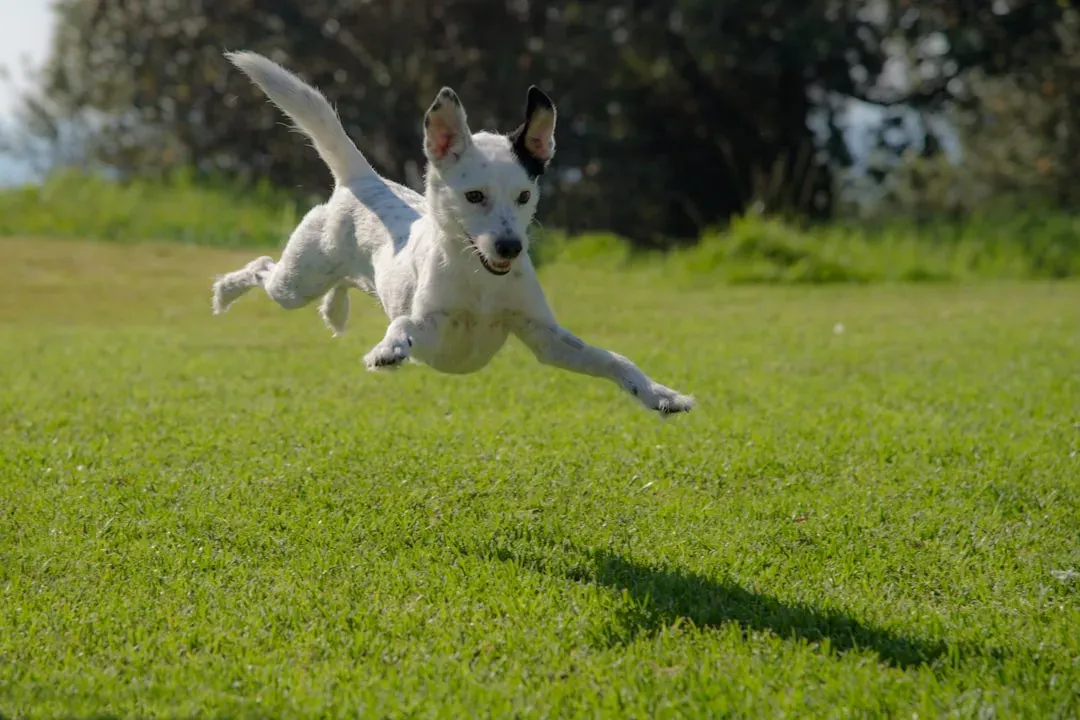
Few things are simultaneously adorable and infuriating like a dog launching themselves at every person who walks through the door. Excited jumps are frequently misread as bad manners. Most dogs jump because they’re thrilled to see you and simply don’t know a calmer way to say hello. Their enthusiasm just needs guidance, not punishment. Think about it this way – they’re not being rude, they’re celebrating you.
One study found that dogs are far more likely to jump on familiar people, especially when greeting their owners at home or during walks, than on strangers. That means jumping is, at its core, a social behavior driven by love and attachment. Still, it can knock over children or elderly visitors, so it does need managing. Jumping is a habit that is important to break early on. Your dog should learn as soon as possible that jumping is not an appropriate way to greet people. If your dog jumps on you or others, give them zero attention, positive or negative. Turning your back and waiting calmly for four paws on the floor is genuinely one of the fastest fixes out there.
Growling: The Warning You Should Actually Be Grateful For
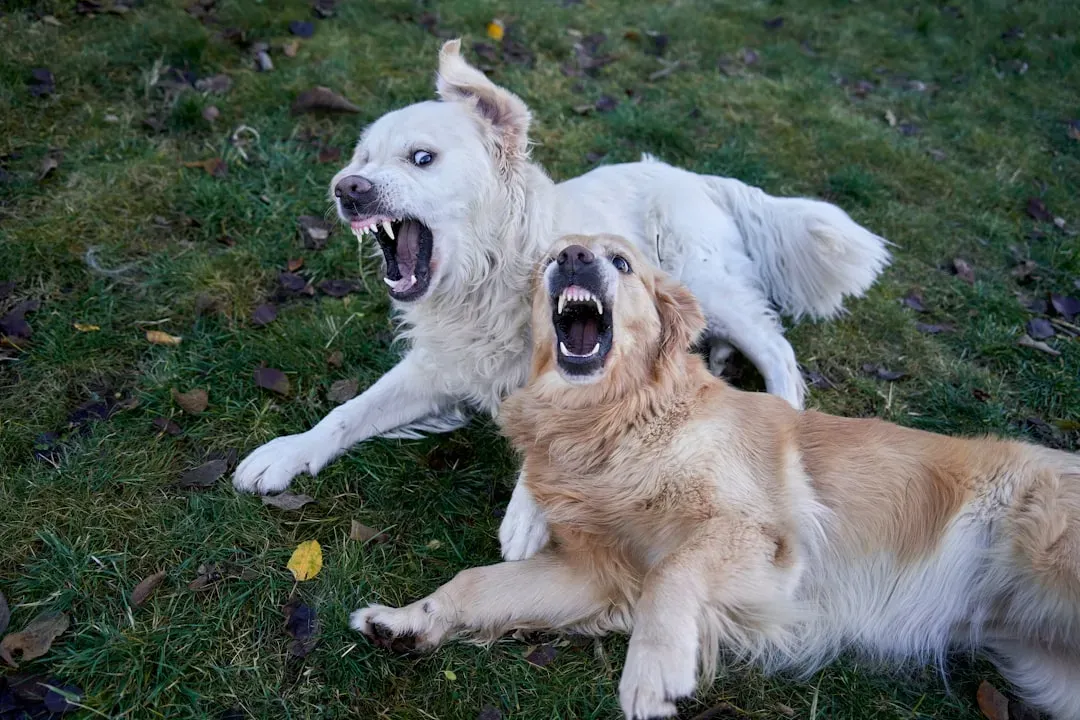
Many people immediately see growling as aggression. In reality, many studies show that dogs use growling to communicate all sorts of things – including, most commonly at home, a sign of discomfort and a need for more space. Here’s the counterintuitive part: a dog that growls is being incredibly communicative and transparent. They are doing you a favor.
Dogs that escalate from subtle to severe aggression signals quickly do so because their aggressive language has been ignored, misread, or punished. That is why you should never punish a growl. Punishing the growl doesn’t remove the aggression – it just silences the alarm system. That is honestly one of the most important things any dog owner can understand. It is actually positive when your dog communicates discomfort through growling, because you can act on it and prevent escalation. If you punish a dog for expressing discomfort through growling, they may feel they have to skip straight to snapping or biting next time. Give them space, identify the trigger, and address the root cause rather than the symptom.
Digging: Ancient Instincts Dressed Up as a Garden Disaster
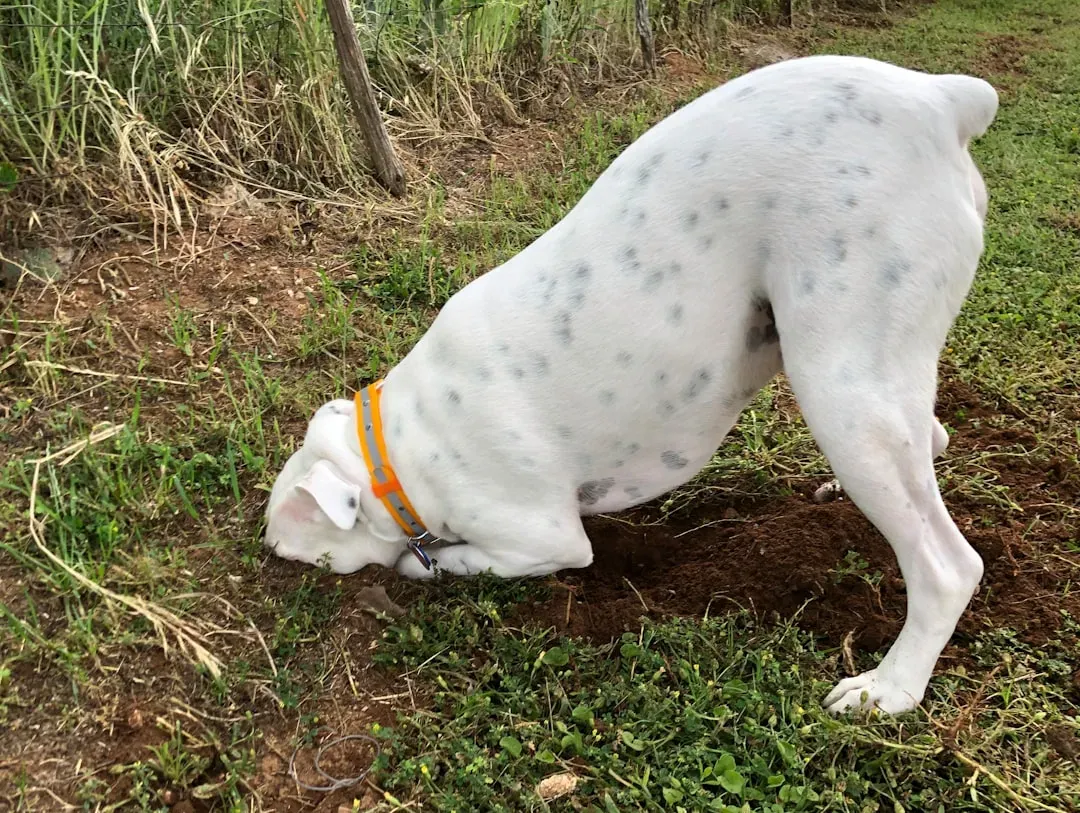
You step outside and your flowerbeds look like a construction site. Your dog, meanwhile, is wearing an expression of pure accomplishment. Digging is an instinctual behavior that traces its origins back to canine ancestors. Though it seems unpredictable, several motivations drive it – historically, dogs excavated burrows to chase after prey or create cool resting places in hot climates, a practice seen in the wild. It’s deeply wired, not willful destruction. Honestly, you can’t really be mad at evolution.
Some dogs dig in attempts to escape from a confined space due to curiosity or the pull of interesting stimuli outside their environment. Similarly, digging might also be employed as an attention-seeking tactic. Many dogs dig out of boredom, so digging can be curtailed by consistent supervision and plenty of exercise. Some breeds are specifically bred to dig, so redirection to an allowed digging area is a smart option. Creating a dedicated sandbox or digging zone in your yard is a surprisingly effective solution – give them their own turf, and many dogs will respect the boundary. Regular exercise and engaging activities not only mitigate boredom but help manage energy levels, reducing the tendency to dig out of restlessness. Creating a designated digging zone allows the dog to indulge its instincts in a controlled manner.
Separation Anxiety Behaviors: “Please Don’t Leave Me” in the Loudest Possible Terms

This is the big one. The one that breaks hearts on both sides of the door. One of the most common complaints of pet parents is that their dogs are disruptive or destructive when left alone – urinating, defecating, barking, howling, chewing, digging, or trying to escape. Although these problems often indicate that a dog needs training, they can also be symptoms of real distress. There’s a massive difference between a bored dog and a panicking one, and it matters enormously for how you respond.
It’s common to mistake separation anxiety behaviors for a dog being upset with you for leaving, but that’s not it. Separation anxiety arises when dogs haven’t learned the right coping strategies to deal with alone time. Their behavior results from genuine fear of being alone – it’s somewhat like the puppy equivalent of a human panic attack. The behaviors can feel like they are aimed at you, but they’re really just a dog drowning in distress. When treating a dog with separation anxiety, the goal is to resolve the underlying anxiety by teaching them to enjoy, or at least tolerate, being left alone. This is accomplished by setting things up so the dog experiences being alone without fear. Gradual desensitization, puzzle toys, and in more serious cases, working with a certified behaviorist, are all proven approaches worth exploring.
Conclusion: Listening Is the Most Loving Thing You Can Do

Ultimately, your dog is not plotting against you. They are not trying to embarrass you in front of your in-laws or punish you for going to work. If your dog is constantly acting out, they’re not trying to be bad or make you upset. There’s likely a deeper cause for the behavior, and solving that could change everything. Once you flip that switch in your mind – from “bad dog” to “dog with an unmet need” – everything about the relationship gets easier.
Your dog is talking to you all the time. If you learn what they are saying, you will develop a deeper bond of trust and respect. Your newfound understanding of your dog’s emotional state can also help you predict their behavior and prevent problems before they arise. That’s not just good pet ownership. That’s a genuine partnership built on empathy and attention.
The behaviors covered here are not flaws to be stamped out. They are conversations waiting to be understood. So the next time your dog does something that makes you sigh or roll your eyes, pause and ask yourself: what are they actually trying to tell me? You might be surprised by the answer. What would change in your relationship with your dog if you approached every “bad” behavior with curiosity instead of frustration? Share your thoughts in the comments below – we’d love to hear your story.


