
National Park Service Worker Makes Rare Discovery While Snorkeling
A routine scientific survey in one of California’s most ecologically rich landscapes has led to a discovery that researchers are calling historic—offering a rare glimpse into the early life of one of North America’s most elusive amphibians.
In September 2025, a National Park Service biologist made what is now believed to be the first-ever documented photograph of newly hatched California giant salamanders in the wild—an observation that could reshape scientific understanding of the species.
A Routine Survey Turns Into a Historic Discovery
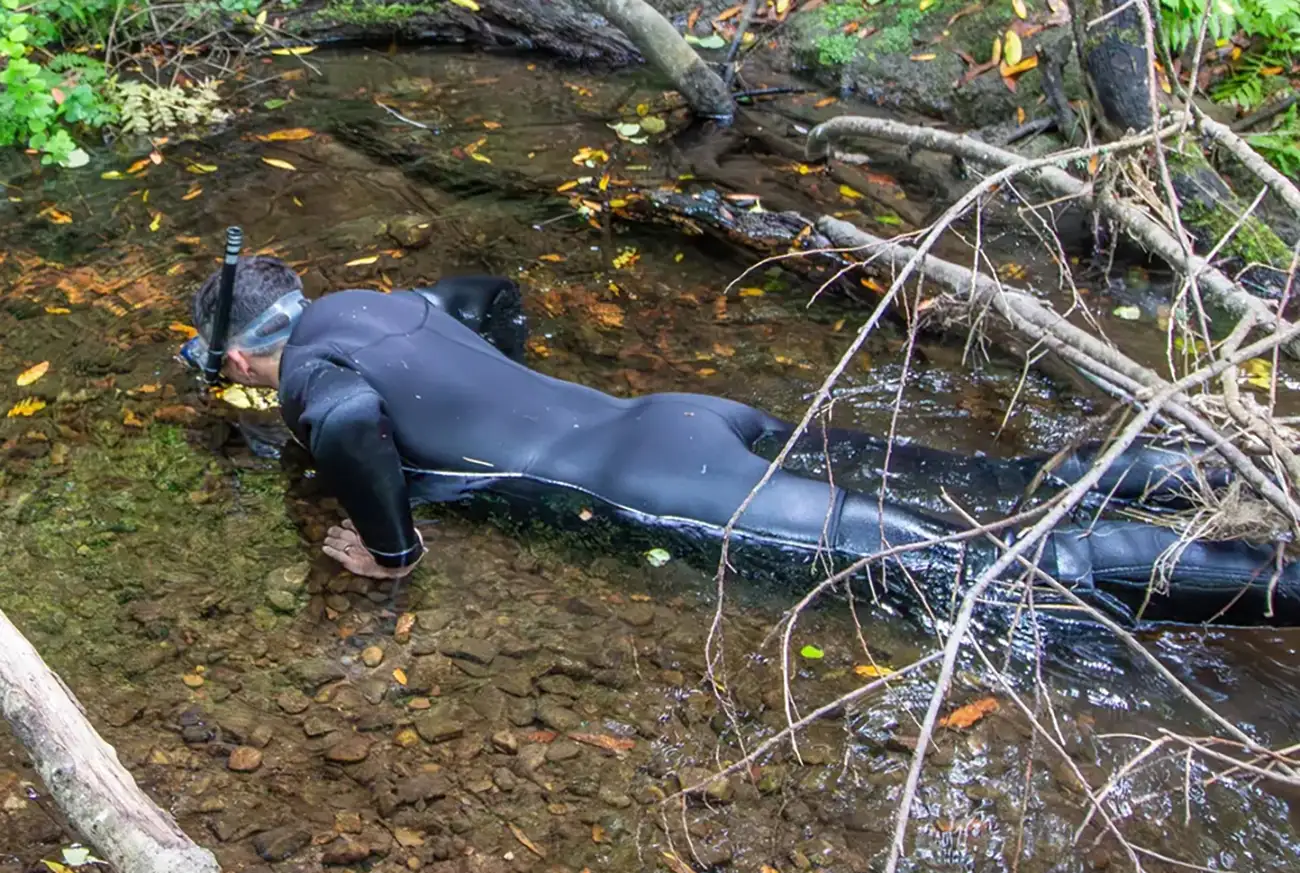
The breakthrough occurred on September 10, 2025, at Point Reyes National Seashore, where fisheries biologist Michael Reichmuth was conducting a routine snorkel survey in Olema Creek. His work typically focuses on monitoring endangered juvenile coho salmon in the region’s cold, shallow streams.
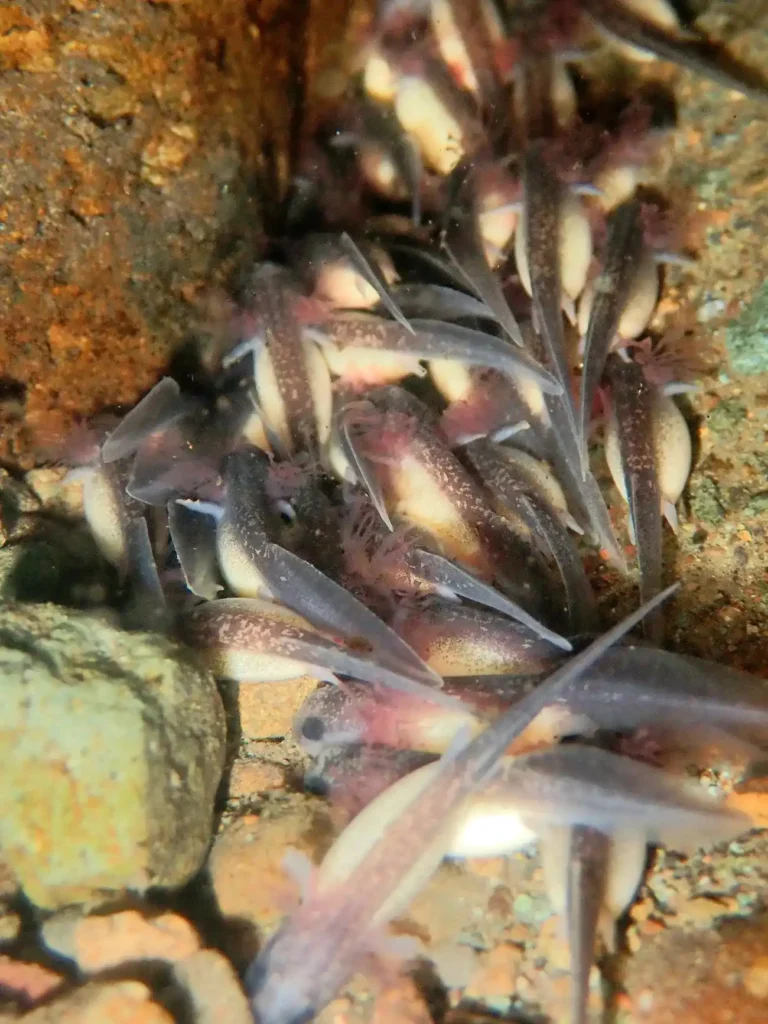
While scanning beneath submerged rocks, Reichmuth noticed a cluster of tiny, fish-like creatures. Initially assuming they were small fish, he quickly realized something was different. Closer inspection revealed that the organisms were in fact newly hatched larvae of the California giant salamander—something never before photographed in their natural habitat.
First-Ever Images of a Hidden Life Stage
The species, scientifically known as California giant salamander, is notoriously difficult to study, particularly in its earliest stages of life. Despite adults growing up to a foot long, sightings of eggs, nests, or hatchlings in the wild are exceptionally rare.
According to scientists, there had been no prior photographic documentation of newly hatched larvae in their natural environment. Reichmuth’s images therefore represent a first in scientific observation, capturing a stage of development that had largely remained hidden from researchers until now.
Scientific Confirmation and Key Observations
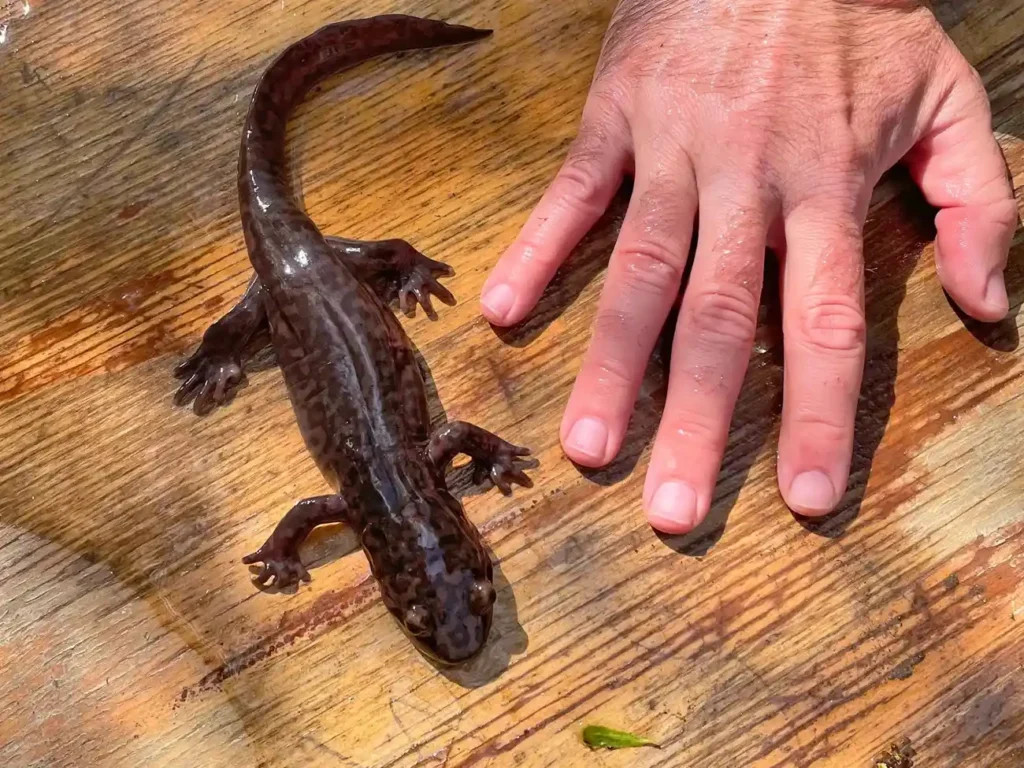
The discovery was later confirmed by amphibian expert Patrick Kleeman of the U.S. Geological Survey, who identified the species based on habitat and physical characteristics. “The location… makes it the most likely species,” Kleeman explained, noting that similar amphibians in the region display different markings at this stage.
Several features indicated that the larvae had only recently hatched. The group was tightly clustered beneath rocks, and each individual displayed a large, whitish yolk sac—an energy reserve that sustains them for months before they begin feeding independently. These details provided critical clues about the species’ early development and behavior.
Why This Discovery Matters for Conservation
The California giant salamander is currently classified as a species of special concern in California and listed as “near-threatened” globally. Scientists believe its population may be vulnerable due to habitat limitations and environmental changes, but data on the species remains limited.
This discovery fills crucial gaps in understanding its breeding habits, nesting environments, and early-life habitat requirements. Researchers say such insights are essential for developing effective conservation strategies, particularly for species that are difficult to observe using traditional field methods.
A Rare Glimpse Into an Elusive Species
For decades, much of what scientists knew about the species came from scattered observations or comparisons with related salamanders. The larvae’s tendency to avoid traps and remain hidden in cold, rocky streams has made them especially challenging to study.
“This one photo… helps us understand giant salamander nesting habitat,” researchers noted, emphasizing that even a single observation can significantly advance knowledge when data is scarce.
As climate pressures and habitat disruptions continue to threaten sensitive amphibian populations, discoveries like this serve as a reminder of how much remains unknown—and how critical each new finding can be in protecting the fragile ecosystems they inhabit.