
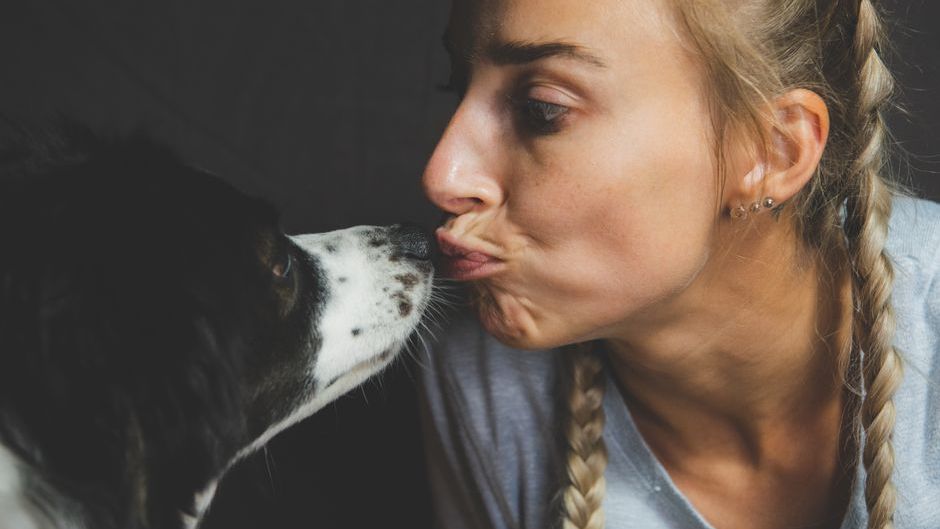
You’re bundled up on the couch, tissues piling up, barely able to lift your head. Then you feel it: two eyes locked on you with an intensity that almost borders on uncomfortable. Your dog hasn’t moved in twenty minutes. They’re just watching you, steady and unblinking, like they’re waiting for something only they can see. Most people chalk it up to loyalty, or maybe a quiet hope that a walk might still happen. The real story, it turns out, is far more layered than that.
What vets and animal behaviorists have uncovered about this kind of focused staring goes well beyond simple affection. It touches on biology, chemistry, thousands of years of co-evolution, and a canine sensory system that makes our own look almost embarrassingly limited. Your dog isn’t just keeping you company. They’re processing you in ways that science is only beginning to fully understand.
#1: Their Nose Already Told Them Something Was Wrong Before You Did
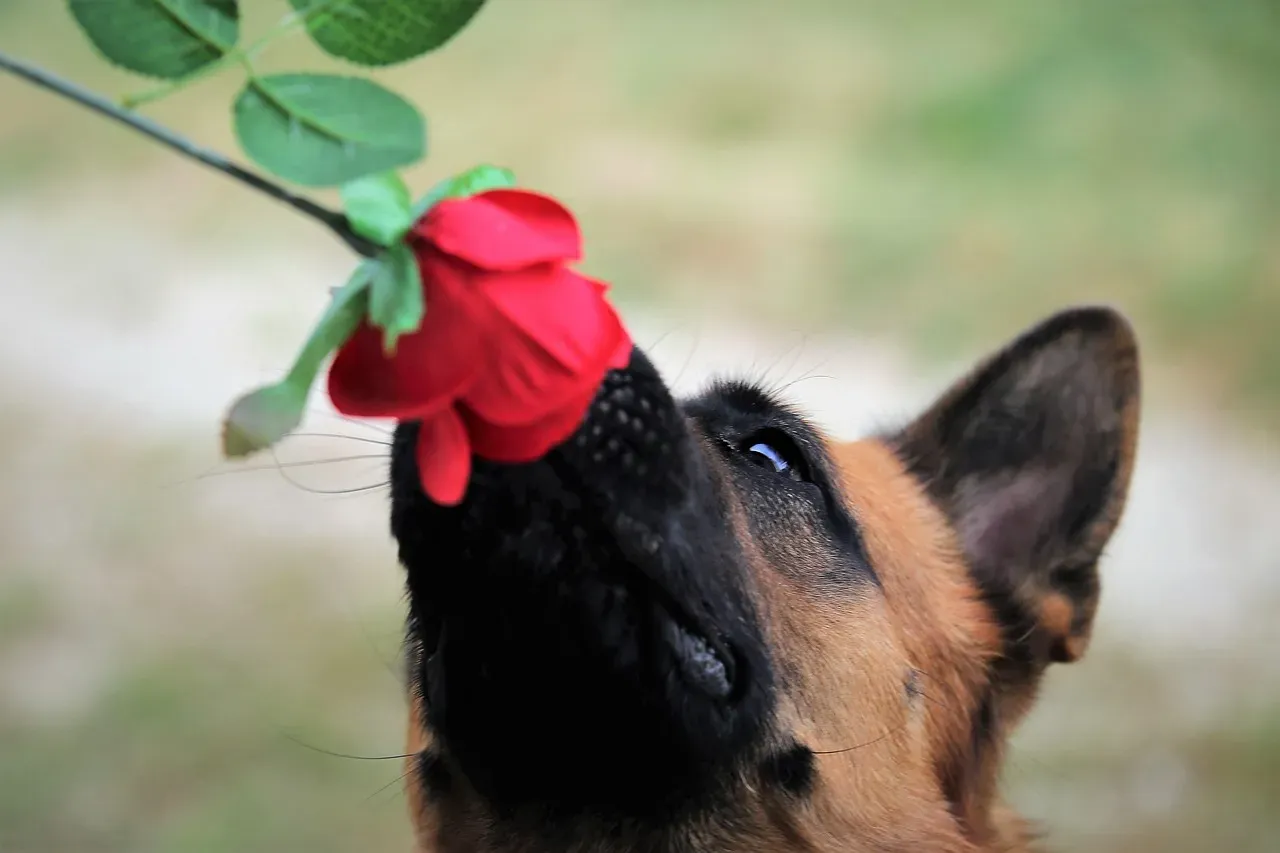
Certain breeds of dogs can have up to 40 to 50 times the scent receptors we humans have, making their sense of smell roughly 100,000 times stronger than ours. That’s not poetic license. That’s an olfactory system so precise it picks up on shifts in your body chemistry that would be completely invisible to everyone else in the room.
When a person is ill, their body chemistry changes, and a dog’s sensitive snout may be able to detect these subtle changes. When we’re sick, our happiness receptors and hormones like serotonin, dopamine, and oxytocin reduce, and dogs can pick up on these small changes. They may even know you are getting sick before you become aware yourself.
Their sense of smell allows them to pick up volatile organic compounds, known as VOCs, which are chemical markers of disease that the human body releases through breath, sweat, or urine. So that steady stare? It may have started the moment you walked into the room smelling subtly different from the day before. The staring is what happens after the nose has already delivered the alert.
#2: That Stare Is a Form of Communication, Not Just Observation
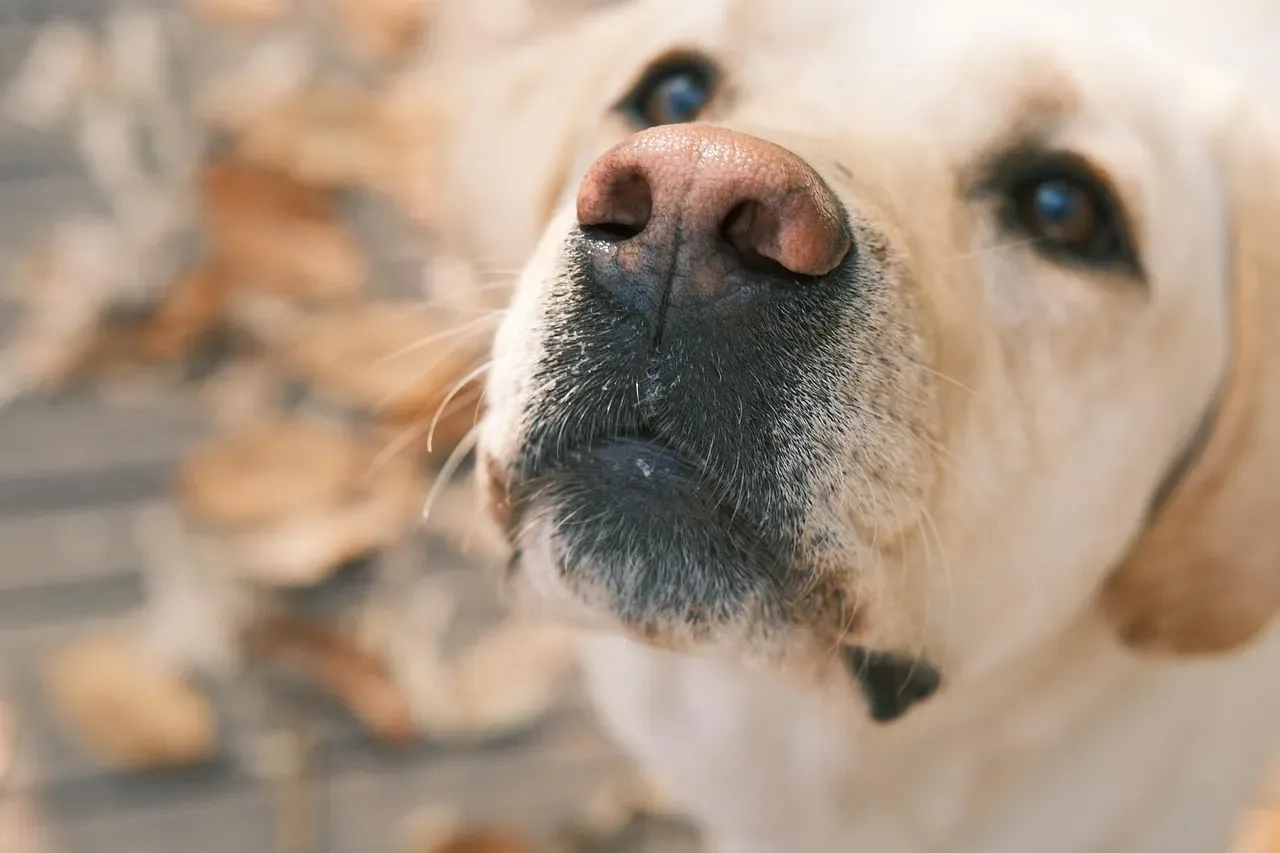
Dogs can’t talk, so they rely on their body language and facial expressions to communicate with us. When they stare, they use their eyes to tell us something, and it’s up to us to figure out what that something is and respond accordingly. This is a form of deliberate, targeted expression, not passive watching.
Dogs depend on us to take good care of them. If a dog is injured or not feeling well, staring at you is its way of telling you that something is wrong and it needs your help. The same logic works in reverse: when you are the one who is unwell, your dog turns that same communicative stare back on you, this time checking in rather than checking out.
Staring is also something dogs do when they want to communicate with the people around them. They cannot talk, so they try to use their eyes instead of their mouths. When your dog stares at you while you’re sick, they’re having a conversation. You just don’t speak the language fluently enough to hear everything they’re saying.
#3: They’re Reading Your Body Like an Open Book
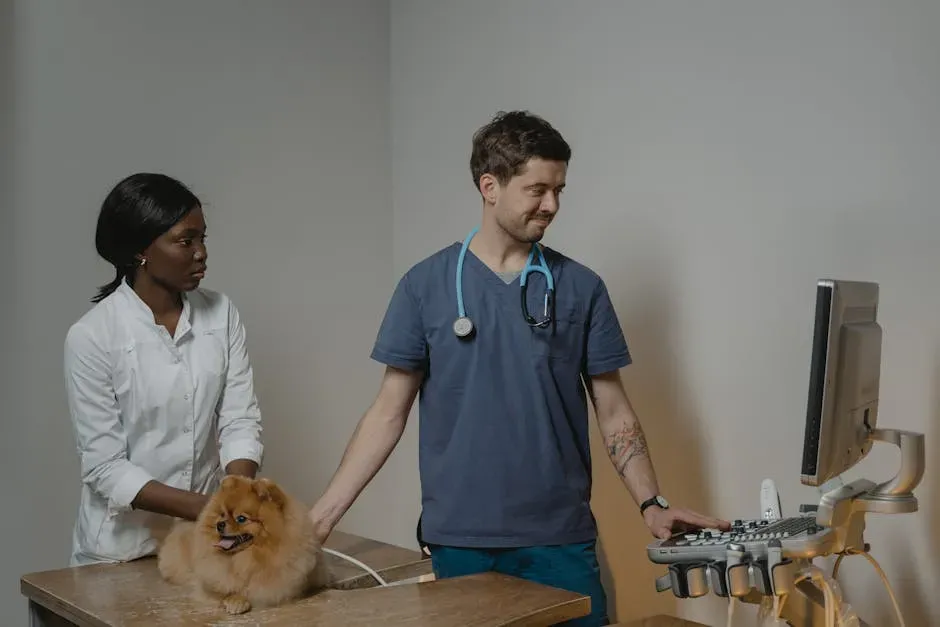
Dogs are incredibly observant and notice changes in their owner’s behavior, posture, voice, or routine. A sick person may move slower, sound different, or have altered moods. Your dog’s stare isn’t random. It’s an active scan, cataloguing every tiny deviation from your normal self.
Dogs can also recognize our facial expressions. When we are tired and sick, the energy often leaves our faces, and dogs see this happen. A dog sees this change in our behavior and expression, and a common response is that of appeasement. They’re not confused. They’re responding to a version of you that reads as different, quieter, and more fragile than usual.
When a normally active owner gets in bed in the middle of the day or takes to the couch and doesn’t move, the dog knows something isn’t quite right. Depending on the illness, the owner may be exhibiting symptoms that are easy for the dog to detect. Sneezing, a runny nose, or gastrointestinal issues are other signs for the dog that the owner is not well. Your symptoms, to you, are misery. To your dog, they’re data points in a real-time health assessment.
#4: The Stare Is Also a Hormonal Event for Both of You
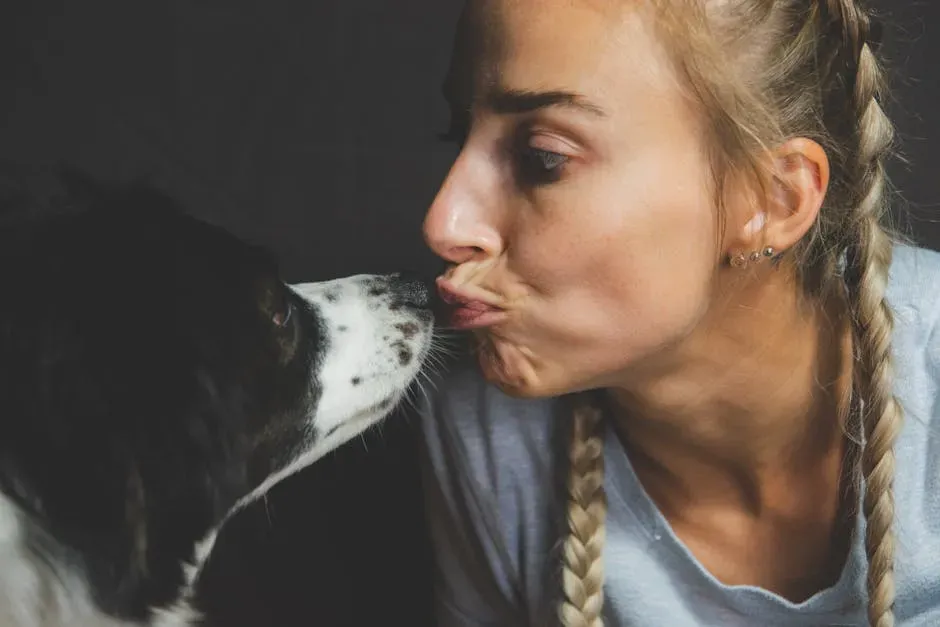
Here’s the part that genuinely surprises most people. That mutual gaze between you and your dog isn’t just emotional. It’s biochemical. Dogs may have tapped into a uniquely human bonding mechanism through eye contact. Researchers at Azabu University in Japan found that oxytocin levels rose not just in the humans but in the dogs themselves.
During dog domestication, neural systems implementing gaze communications evolved that activate the human oxytocin attachment system, as did gaze-mediated oxytocin release, resulting in an interspecies oxytocin-mediated positive loop to facilitate human-dog bonding. Put more simply: when your dog stares at you and you look back, you are both getting a dose of the same bonding hormone that connects mothers to newborns.
Dogs can smell and sense the rise and fall in our feel-good hormones. When we are ill, these hormones often plummet, and our dogs are usually the first to know it. This might explain why many pets are known to curl up next to a sick or depressed owner. Offering comfort and physical closeness many times will boost these feel-good hormones, and your dog is probably sensing that their presence increases your happiness. Your dog staring at you while you’re sick isn’t just loyalty. It’s instinctive therapy.
#5: Some Dogs Are Already Doing What Trained Medical Dogs Do – Naturally
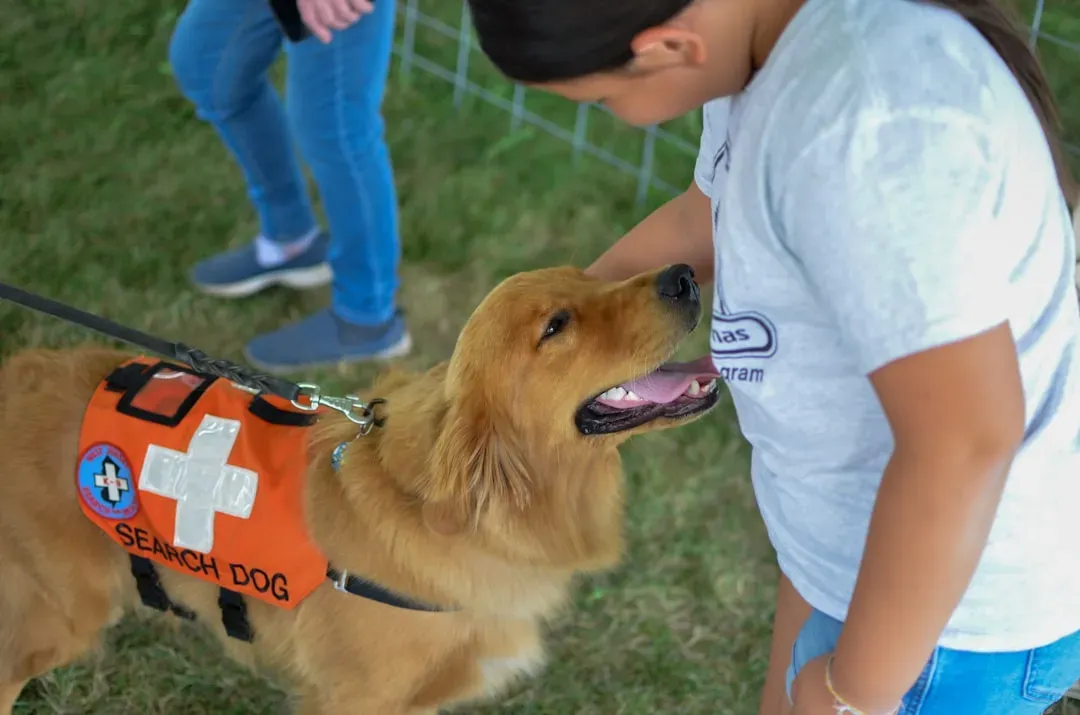
Some dogs excel at observing humans so much that they’re trained to be medical alert dogs. They can watch for signs of change in their humans, like the beginning of a seizure or a drop in blood sugar. Your dog at home hasn’t been through formal training, but the underlying biological capacity is the same.
Over the past two decades, multiple studies have confirmed dogs’ ability to detect illness. A 2004 study published in the British Medical Journal found trained dogs could detect bladder cancer in urine samples at a rate significantly higher than chance. A 2011 German study showed dogs were able to detect lung cancer in breath samples with 71% sensitivity and 93% specificity. These aren’t flukes. They represent a documented biological reality that every dog owner with a watchful companion is living a version of every day.
You don’t need a formally trained detection dog for your pup to notice that something is off. Many dog owners report very similar behaviors when they’re sick, stressed, or going through medical treatment. These behaviors can be your dog’s way of responding to changes in your scent, posture, facial expression, or overall energy. They don’t know the medical terminology, of course. They just know that their favorite human smells or behaves differently, and they feel compelled to respond.
The Takeaway
The stare your dog fixes on you when you’re sick isn’t about wanting food or a walk. It’s an expression of something that runs far deeper than most of us give it credit for: a biology fine-tuned over thousands of years to be attuned to human health, reinforced by a bond that literally changes hormone levels in both species simultaneously.
Dogs likely don’t understand sickness in a human way, but they sense when something is different and adjust their behavior out of instinct, emotional intelligence, and love. They may not know the cause, but they know something’s off, and they want to help. That, honestly, is more than enough. Next time you’re flat on the couch and those eyes are locked on yours, know that you’re being monitored by one of the most sophisticated biological detection systems on earth. It just happens to have a tail and an unconditional love for you.


