

You leave for work, the house goes quiet, and your dog is left to figure out the next eight hours on their own. Most of the time, they sleep. Sometimes, they stare at the wall. Other times, they redecorate your living room with what used to be a couch cushion.
A bored dog will make their own fun, most likely in ways that don’t work for you. Left to their own devices, bored dogs chew furniture and shoes, shred pillows, or even unroll the toilet paper, doing whatever they can find to pass the time. The thing is, they’re not being spiteful. They’re simply doing what comes naturally when there’s nothing else to do.
Understanding how your dog entertains themselves during boredom is the first step to responding with empathy instead of frustration. Once you see the behavior for what it is, you can meet your dog’s real needs rather than just managing the symptoms.
Chewing Everything in Sight

Chewing is probably the most common way dogs pass the time when they’re under-stimulated, and it’s far more purposeful than it looks. According to the ASPCA, chewing is normal behavior for all dogs, young and old. Puppies chew to relieve pain caused by teething, while adult dogs chew to relieve boredom and anxiety. Chewing is a self-soothing action that should be encouraged, so making sure your dog has appropriate chew toys and treats is important.
The problem arises when there are no appropriate outlets available. When left to their own devices, bored dogs chew furniture and shoes, shred pillows, or even unroll your toilet paper, doing whatever they can find to pass the time. If your dog seems to have a taste for your shoes specifically, that’s not personal. It’s just an accessible object with an interesting scent.
What starts as one small behavior, like chewing on a shoe from boredom, can turn into a more serious condition like compulsive licking or chewing that requires medical or behavioral help. These conditions can eventually involve your dog swallowing something they shouldn’t, which can lead to GI issues or obstructions, or even a broken tooth. The prevention tip here is simple: keep a rotating selection of safe, durable chew toys available at all times, especially when you’re away.
Digging Up the Yard (or the Carpet)
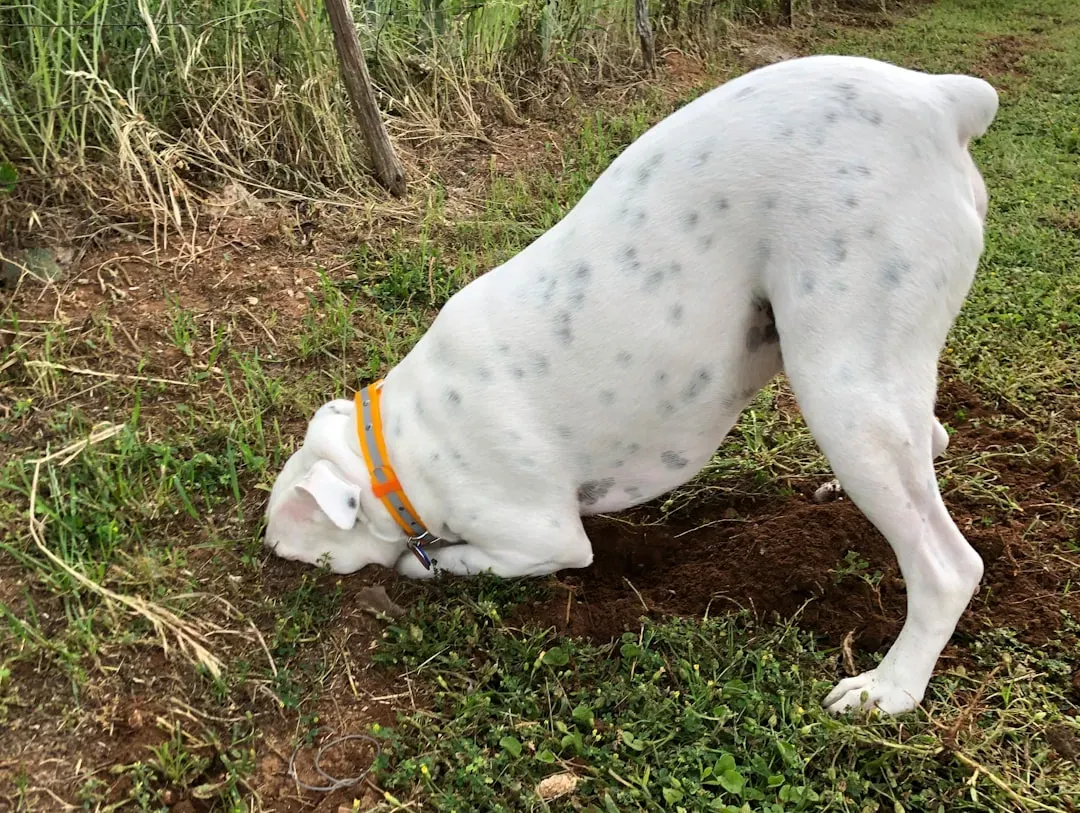
Few things are more disheartening than stepping outside to find your garden has been excavated. Some dogs just love to dig, especially breeds like Dachshunds or Schnauzers that were originally bred to hunt small critters. Digging is a natural dog behavior, and many dogs will dig out of boredom if they have nothing else in the yard to keep them busy.
Digging is a normal canine activity, but bored dogs can tear up furniture or carpet, or leave holes around the yard, when they resort to digging. Dogs without enough entertainment turn to digging simply because it’s fun and gives them something to do. It’s worth noting that digging also releases pent-up physical energy, which makes it doubly satisfying for a dog who hasn’t had enough exercise.
Rather than fighting this instinct entirely, redirect it. To save your garden, provide your pup with somewhere they are allowed to dig. You can use a kiddie pool or sandpit container filled with kid-safe dirt or sand, or designate a specific corner or area of your yard that’s okay to dig in, marked with small garden dividers to help your dog learn where it’s acceptable. Bury a few treats or toys in the designated spot and let your dog discover them. You’ve essentially turned a destructive habit into an enrichment activity.
Excessive Barking and Vocalizing

A dog that barks at absolutely everything outside the window isn’t being dramatic. They’re creating their own stimulation. Constant barking or window watching, barking at every sound or staring out the window and barking at every passerby, is often a dog’s way of creating their own entertainment when they’re bored. It’s essentially the canine version of scrolling through social media with the volume turned up.
Vocalizing without a clear reason, especially repeated barking or whining just to get attention, can be a sign of boredom. This is different from alert barking, which is short and purposeful. Boredom barking tends to be repetitive and sustained, and it often escalates if nobody responds. Increased barking, howling, panting, or whining could mean your dog is bored or lonely.
If you’re seeing this pattern consistently, it signals an unmet need rather than a behavioral flaw. Boredom often noticeably improves when your dog’s routine is changed to include predictable exercise, social interaction, and mental enrichment, such as training games or puzzle feeders. Giving your dog something meaningful to do before the window-watching cycle begins is far more effective than trying to stop the barking after it starts.
Self-Grooming and Repetitive Behaviors

When dogs run out of other entertainment, they sometimes turn to themselves. Excessive licking, paw chewing, tail chasing, and repetitive spinning are all ways a bored dog can self-stimulate. Licking and chewing are part of the normal canine self-grooming routine, but dogs sometimes groom and scratch themselves too much when they’re bored. Excessive licking and grooming can cause hair loss and tender spots on their skin, and will require prompt veterinary attention before it gets worse.
Tail chasing, excessive licking, or spinning in circles can develop into compulsive behaviors when dogs don’t have enough enrichment or healthy outlets to focus their mind and body on. What starts as a quirky boredom habit can gradually become a compulsive loop that’s difficult to break. Pets can develop impulsive actions as a form of obsessive-compulsive disorder. Usually, as a result of stress, anxiety, or boredom, they will continually repeat a behavior.
This is one area where it’s especially important not to dismiss the behavior as “just something my dog does.” If your dog’s behavior appears repetitive or out of context, or is accompanied by physical signs like redness, hair loss, or limping, a vet visit can help rule out underlying health or behavioral issues that can appear similar to boredom, such as skin or neurologic issues, or generalized pain. Always check with your vet before assuming it’s purely behavioral.
Raiding, Scavenging, and Getting Into Mischief

Tipped trash cans, stolen socks, and mysteriously empty countertops are classic signs of a dog who’s gone looking for something interesting. Without enough mental enrichment, any dog may get bored and create their own entertainment, like getting into the trash or whining for attention. This scavenging behavior is deeply rooted in instinct. In the wild, dogs used to get plenty of enrichment through chasing prey, sniffing things, and scavenging food.
From a dog’s point of view, the trash can is basically a treasure chest. It’s full of novel smells, it responds to interaction, and the payoff is sometimes edible. Dogs that are bored have a tendency to get into trouble by looking for ways to entertain themselves. Boredom can lead to excessive chewing, barking, digging, and other destructive behaviors. The mischief isn’t malicious. It’s problem-solving in the absence of a better puzzle.
The most practical fix is a combination of management and enrichment. Secure anything you don’t want investigated, but also give your dog legitimate foraging outlets. Kibble hide-and-seek is an easy way to turn mealtime into entertainment. Simply sprinkle your dog’s meal around the house or backyard and let them sniff out each morsel. Channel that scavenging drive into something you’re both happy about.
Seeking Attention and Shadowing You

Some dogs don’t act out when they’re bored. They just find you. They sit on your feet, nudge your hand, bring you toys, and follow you from room to room like a small, determined shadow. A dog that follows you from room to room, refusing to leave your side, can be displaying a sign that they’re bored and are relying on you to entertain them. It’s one of the sweeter boredom behaviors, honestly, though it can get overwhelming during a busy workday.
Signs of boredom include increased attention-seeking behaviors, such as pawing, barking, or bringing toys to initiate play. This kind of behavior is your dog communicating clearly. They’re not being needy without reason. They’re understimulated and asking for help. Like people, dogs need emotional connection to feel secure and fulfilled. If your dog doesn’t get enough interaction, they might follow you around or lose interest in things they used to enjoy.
The distinction worth making here is between normal affection-seeking and anxiety-driven clinginess. Be sure to rule out separation anxiety if you’re seeing destructive behavior and a clingy attitude. Most of the time, this is simply your dog relieving boredom and enjoying a lack of supervision, but occasionally it indicates intense distress about being left alone. If you have concerns, consult a dog trainer or an animal behaviorist. When in doubt, professional guidance is always worth it.
What You Can Do: Turning Boredom Into Balance

Understanding these six behaviors shifts the whole dynamic. Instead of seeing a destructive dog, you see a dog with unmet needs. That’s a problem you can actually solve. Dogs do get bored, and chronic boredom can harm their physical and emotional health. Boredom often stems from a lack of exercise, mental enrichment, social interaction, or variety in their daily routine.
Small, consistent changes make a real difference. Even a short game that lasts 10 to 15 minutes can be extremely beneficial for your dog’s mental and physical wellness. You don’t need to redesign your entire schedule. Studies have found that dogs get bored with their old toys. You can either buy your dog a new toy to get their enthusiasm going, or you can rotate their toys to keep things feeling fresh without spending a fortune.
To tackle your dog’s boredom, don’t focus only on physical exercise. Your dog needs mental exercise as well. Puzzle feeders, scatter feeding, sniff games, short training sessions, and simply switching up the walking route all contribute to a richer, more satisfying day for your dog. The goal isn’t constant entertainment. It’s a life that feels purposeful and varied enough to keep a curious, intelligent animal content.
Your dog isn’t trying to make your life difficult when they chew the baseboard or bark at clouds. They’re telling you something. The good news is that the message is usually simple, and the response doesn’t have to be complicated. A little more engagement each day goes a long way toward a calmer, happier dog, and a more peaceful home for everyone.


