
Kent – A specially trained therapy dog named Lily recently joined the team at East Kent Hospitals University NHS Foundation Trust, offering comfort to patients managing bleeding disorders. This floodle, a cross between a flat-coated retriever and a poodle, targets those gripped by needle phobia during essential medical procedures.[1][2] Her owner, Becca Dodds, who serves as the principal clinical psychologist for the haemophilia team, brought Lily into the Haemophilia and Thrombosis Centre at Kent and Canterbury Hospital to ease anxieties and improve experiences.
A Fluffy Distraction Changes Everything
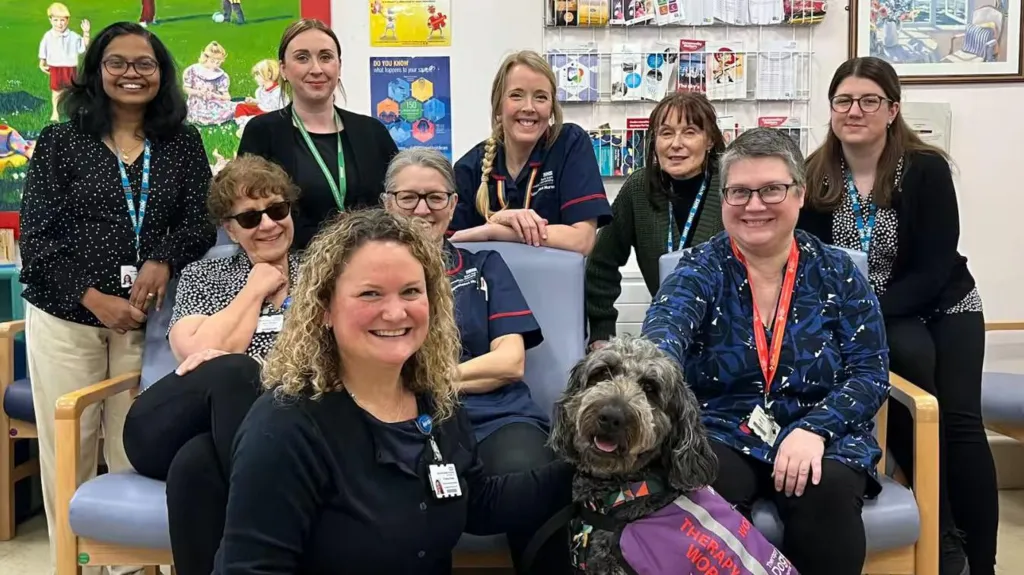
Patients facing blood draws often tremble with fear, their focus consumed by the looming needle. Yet Lily’s arrival shifted that dynamic entirely. She sensed distress immediately and provided an instant calming presence, allowing individuals to redirect their attention.[2]
Becca Dodds noted the rapid impact. “Lily is a great distraction for people, particularly those with needle phobia, and she can also help with emotional regulation,” she explained. “She’s already proving very popular and she has the perfect nature for her work. It’s been fantastic to see the difference she makes to our patients, and the team.”[2] On World Haemophilia Day, April 17, Lily even supported children with haemophilia, helping to soothe their worries during visits.
One Patient’s Journey from Dread to Calm
Bethany Newland, a 31-year-old from Hythe, arrived at the centre dreading her blood test for high platelets. She also lives with fibromyalgia and postural tachycardia syndrome, conditions that heightened her vulnerability to fainting. In past attempts, she shook uncontrollably, felt overheated, and blacked out despite reassurances from staff.[1]
This time proved different. Lily approached her directly in the corridor, drawn by her anxiety. “I had a horrible feeling the morning of the blood test, and I felt sure I was going to faint again,” Newland recalled. “But when I got to the centre, I saw Lily walking up the corridor. She came straight over to me… Becca and Lily came into my appointment, and it made such a difference… But this time I just stroked Lily and I didn’t think about what was going on. She made me so calm and she was so friendly, I loved having her there.”[2] The procedure completed without incident, marking a breakthrough for Newland.
Lily’s Journey to Becoming a Certified Helper
Lily did not enter the role unprepared. She and Dodds first completed the Kennel Club’s Good Citizen dog training programme. At age two, they registered with Therapy Dogs UK, where Dodds finished required modules and assignments.[2]
The duo then advanced through rigorous evaluations. Lily passed a temperament test and the Pets as Therapy assessment with distinction. Before patient interactions, she familiarized herself with the centre’s environment. Key steps in her preparation included:
- Basic obedience via Kennel Club Good Citizen scheme.
- Registration and owner training with Therapy Dogs UK.
- Temperament testing for suitability.
- Pets as Therapy assessment.
- Acclimation visits to the haemophilia centre.
Her non-shedding coat also suited patients with allergies, a deliberate choice by Dodds.
Why Therapy Dogs Fit Seamlessly into Modern Care
East Kent Hospitals integrated Lily to address a common barrier in treating bleeding disorders: procedure-related anxiety. Patients with conditions like haemophilia require frequent blood work, yet phobias often complicate compliance. Lily’s intuitive responses filled this gap effectively.[1]
Dodds highlighted Lily’s appeal across ages, from children to adults. The dog’s gentle demeanour fostered trust quickly, turning tense rooms into relaxed spaces. Staff reported boosted morale as well, with Lily enhancing the overall atmosphere at the centre.
Key Takeaways
- Lily excels as a distraction and emotional anchor for needle-phobic patients.
- Her training ensures safety and reliability in clinical settings.
- Early successes, like Bethany’s smooth appointment, signal broader potential.
Lily’s debut underscores a simple yet powerful truth: sometimes, a wagging tail outperforms words alone in healing. As East Kent Hospitals expands this approach, patients stand to gain even more. What do you think about therapy animals in healthcare? Tell us in the comments.


