
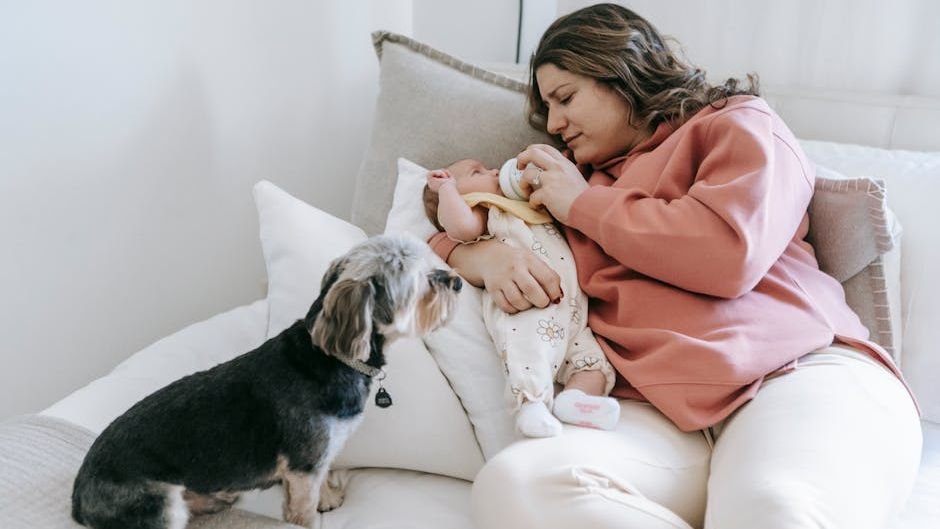
There’s a particular kind of anxiety that settles over expecting parents who also happen to share their home with a dog. You love them both, deeply, and yet the question of how they’ll coexist is genuinely complicated. Bringing home a new baby is a life-changing experience, not just for you, but for your dog as well. Dogs are creatures of habit, and a major household change can be confusing or even stressful if not introduced properly.
While we all have hopes and ideas about how things will be when the baby arrives, the reality might be different. It’s normal that your dog needs time to adjust, since a real baby is very different from anything they’ve encountered before. The good news is that with thoughtful preparation, this transition can be managed calmly, carefully, and with far less stress than you might expect.
Start Preparing Your Dog Months Before the Due Date
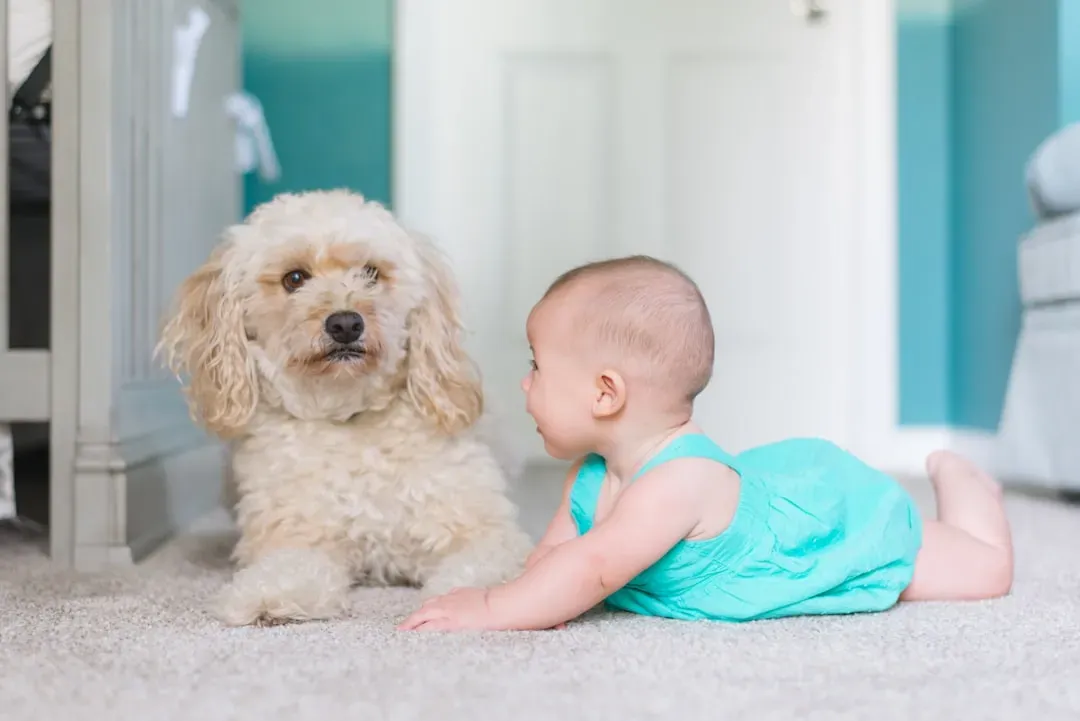
Most expecting parents have months to prepare themselves for a new arrival, but their dogs get no such warning. A new baby arriving overnight can be a dramatic experience for dogs. Dogs tend to like routine as they feel confident knowing what to expect and when, and unless they’re thoroughly prepared for the changes, they might feel very unsettled.
A phased timeline can support expecting pet owners as they prepare: around eight to twelve weeks before the due date, gentle sound exposure, the introduction of baby equipment, and short separations behind a gate can begin. This approach gives your dog time to absorb changes gradually, rather than facing everything at once when the baby finally walks through the door.
Schedule a Veterinary Check-Up Early
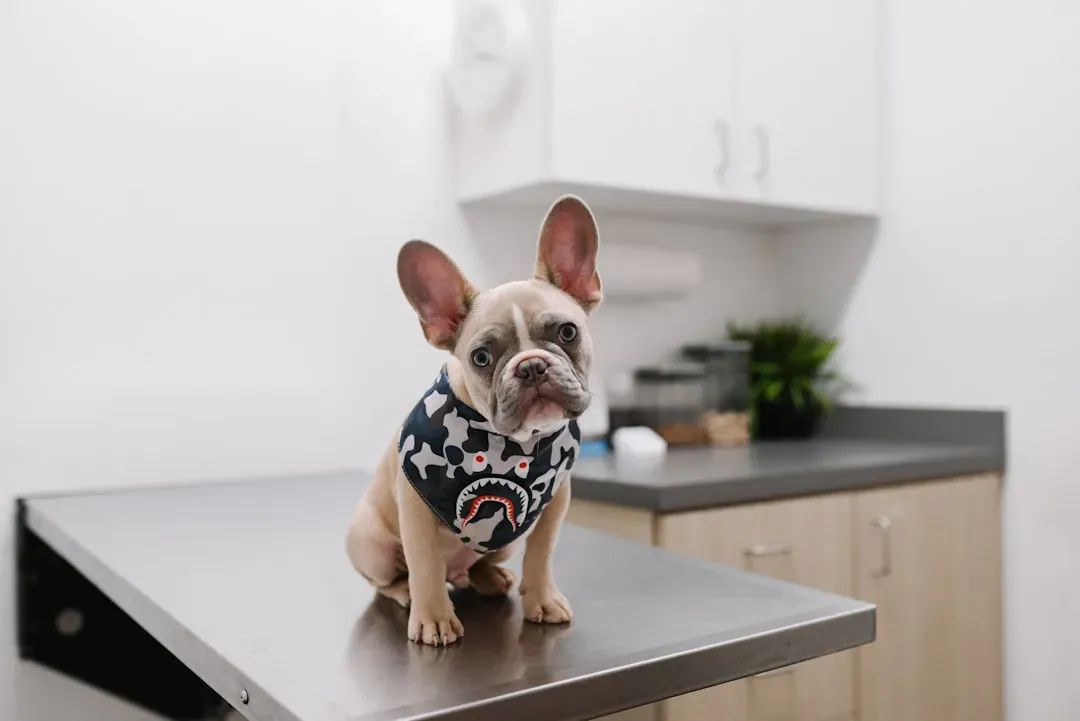
Before the baby’s arrival, get a check-up for your dog and update vaccinations. This will ensure your dog is healthy, or allow you to address any problems before bringing the baby home. If your pet is a naturally anxious dog or has ever shown any signs of aggression, this check-up is a great time to discuss your concerns with the veterinarian.
Make sure your dog is up-to-date on vaccinations and has no underlying conditions that could lead to behavioral issues. This is also the time to address dental hygiene, flea and tick prevention, and nail trimming, all of which contribute to safer interactions once the baby arrives. Think of this appointment not just as a health check, but as your first deliberate step toward a smoother homecoming.
Desensitize Your Dog to Baby Sounds
Dogs process the world differently than we do. New smells and sounds can be both stimulating and overwhelming. Before the birth of your baby, you can start to adjust your dog by introducing different sounds, like searching for audio of a newborn crying or cooing. Playing these sounds in the house throughout the day will help desensitize your dog, making it less likely for them to become stressed when your baby comes home.
Play recordings at a low volume while your pet is eating or playing. With each session, raise the volume just a little until your pet appears more comfortable with the sounds. The goal isn’t to flood them with noise, it’s a steady, gentle progression that turns something unfamiliar into something unremarkable.
Introduce Baby Scents Before the Homecoming
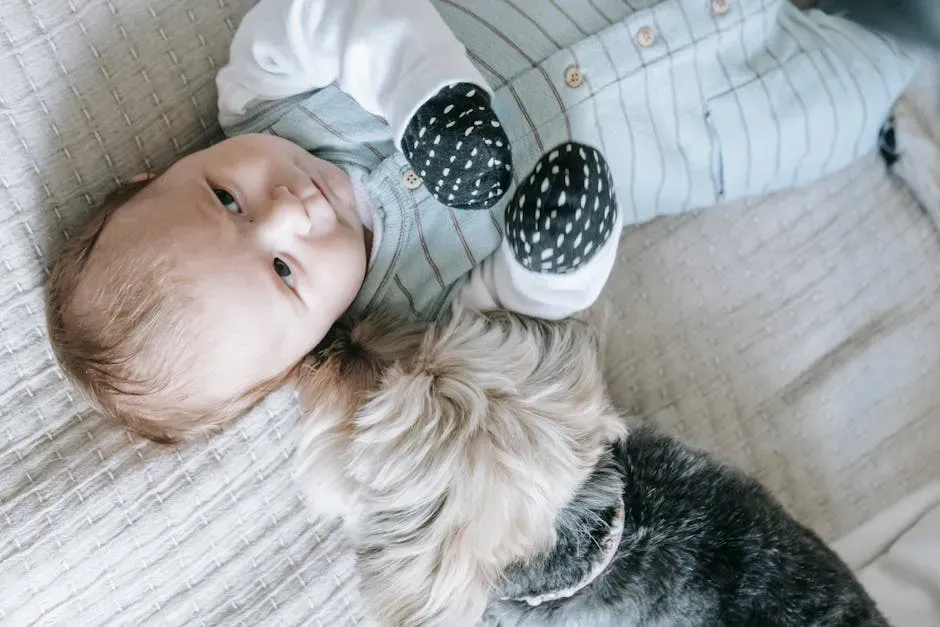
When your baby is born you can begin to introduce new smells to your dog. Collect a few items from the hospital that your baby has been wrapped in, like a swaddle suit or blanket, and bring them home. Take time to let your dog adjust to the smell and set the standard that you only allow your dog to sniff the clothing if they remain calm and obedient.
Introducing the newborn’s new and unique smell will start the bonding process for your dog, and they will be able to recognize your baby from the very first second you and your little one come home for the first time. It’s a small step that carries remarkable weight. By the time the baby crosses the threshold, your dog has already met them in the only way a dog truly can.
Gradually Shift Routines Before the Baby Arrives
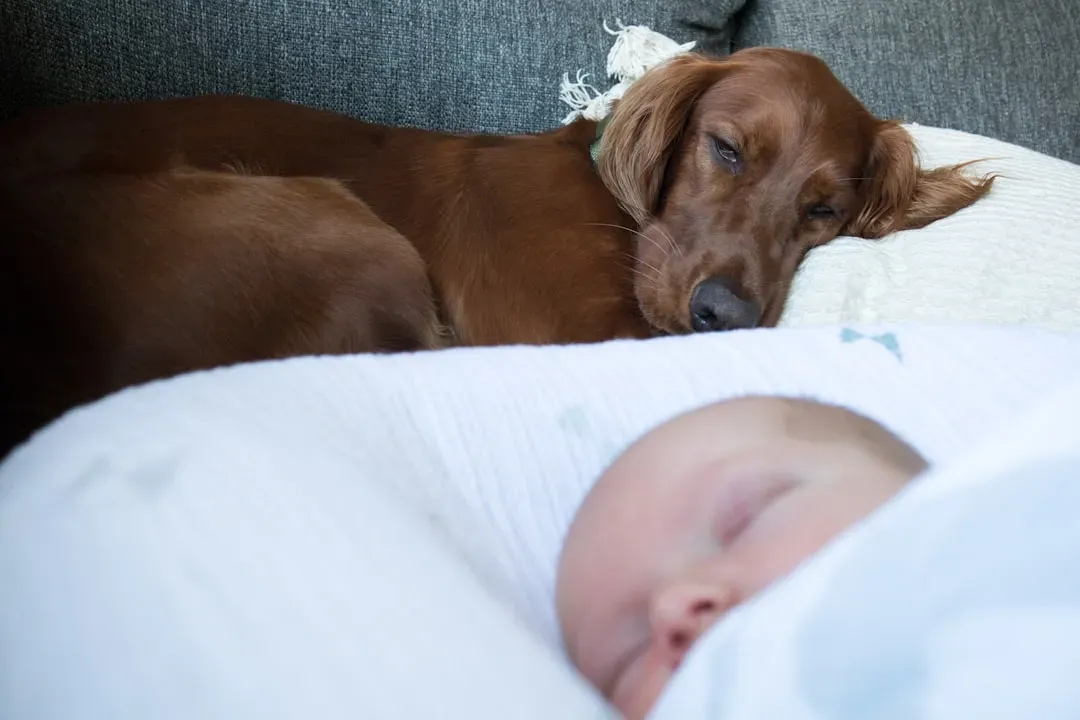
Any changes you plan to make once the baby comes, such as removing your dog from the bedroom at night or keeping your dog off the couch, need to happen well before the baby arrives. You don’t want the dog to associate the new baby with the frustration of big changes like new sleeping arrangements. The same goes for schedule changes.
Introducing slight routine changes before the baby arrives, rather than after, will also help to prevent your dog from associating disruption solely with the newborn. It seems like a subtle distinction, but it matters enormously. A drastic change in the amount of time you spend with your dog can cause jealousy and depression, which can lead to behavioral problems. Weaning your dog away from undivided attention slowly can help them adapt more easily.
Reinforce Obedience Training and Key Commands
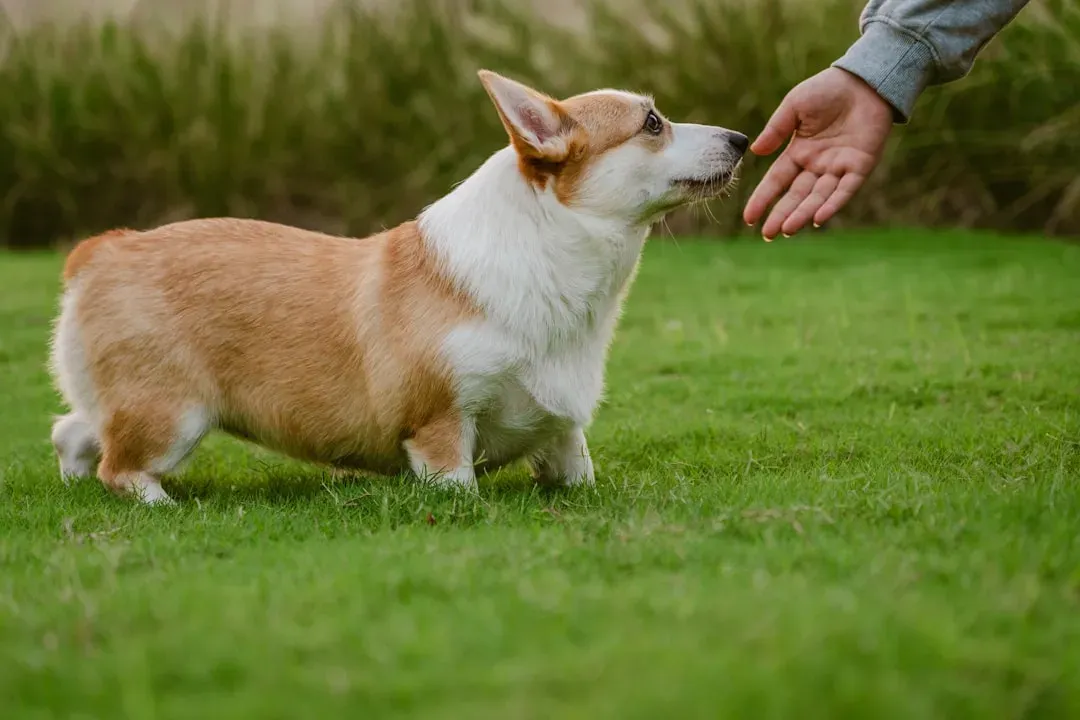
Reliable obedience is critical when introducing your dog to a new baby. If your dog hasn’t mastered basic cues like “sit,” “stay,” “leave it,” or “down,” now is the time to reinforce them. These simple commands allow you to redirect or manage your dog’s behavior in high-stakes moments, such as when they become too curious about the baby.
Ensuring your dog is capable of basic commands like “sit,” “drop it,” and “stay” gives your dog the opportunity to get rewarded and will serve as a nice distraction if they start to show anxiety or overactive behavior around the baby. Obedience training isn’t about control for its own sake. It’s about giving both you and your dog a shared language to fall back on when things feel uncertain.
Use Baby Gear to Practice and Familiarize
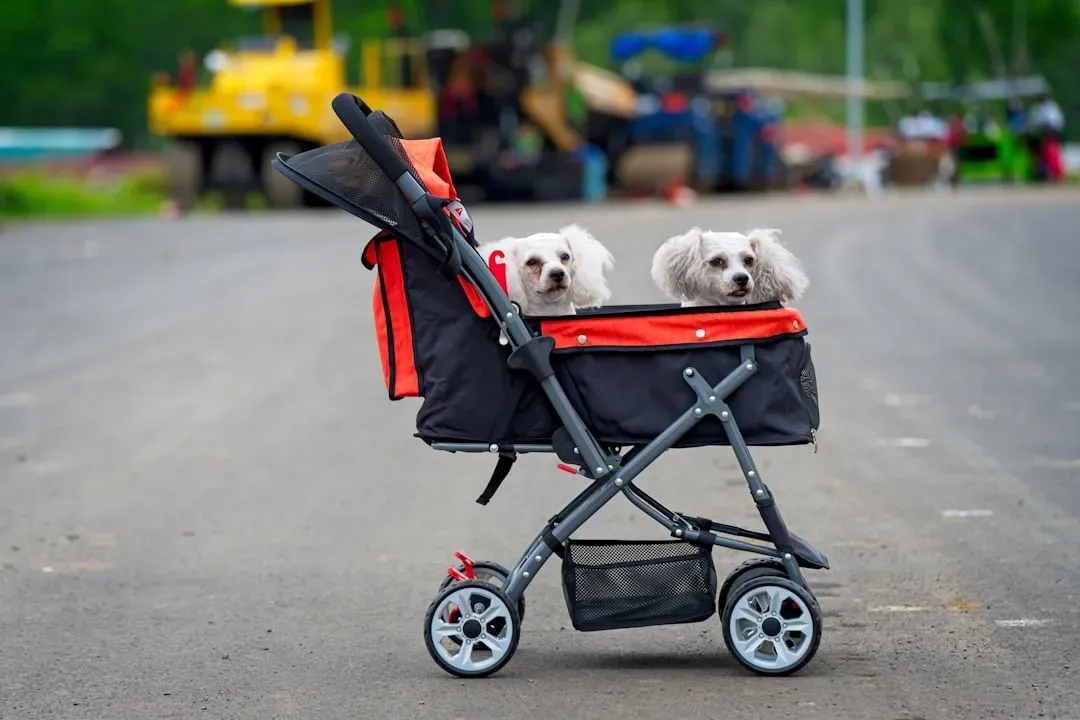
Let your dog sniff and check out any new baby gear, including strollers, car seats, and cribs. Take your pet on walks with an empty baby carrier so they get comfortable with it. Have your pet ride in the car in their normal spot, or the one they’ll be moved to, with the empty car seat set up.
Once your baby arrives, your walks will be very different. You’ll potentially be juggling a baby, a buggy, and your dog all at once. Things will be easier if your dog already knows how to walk alongside the buggy, so practice before your baby arrives. These trial runs take very little effort but remove a significant amount of potential chaos from your future daily life.
Manage the First Meeting with Care and Calm
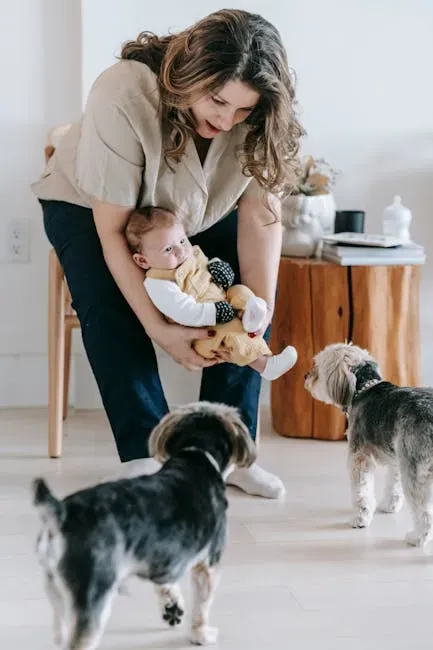
The initial meeting between your dog and baby should take place in a quiet setting. If your dog is prone to becoming excitable, greet them first without the baby in hand to help reduce arousal. The baby can then be held securely while the dog is allowed to approach at a controlled pace. Brief sniffing, followed by immediate rewards for calm behaviour, supports a positive association.
Allow your dog to approach and sniff your baby gently if they want to, but don’t force your dog to interact. You may prefer to allow your dog to sniff the baby’s feet at first. Praise your dog for keeping calm. Forcing closeness too soon is one of the most common missteps. Let the dog lead the pace of the investigation.
Set Up Safe Spaces and Clear Boundaries at Home
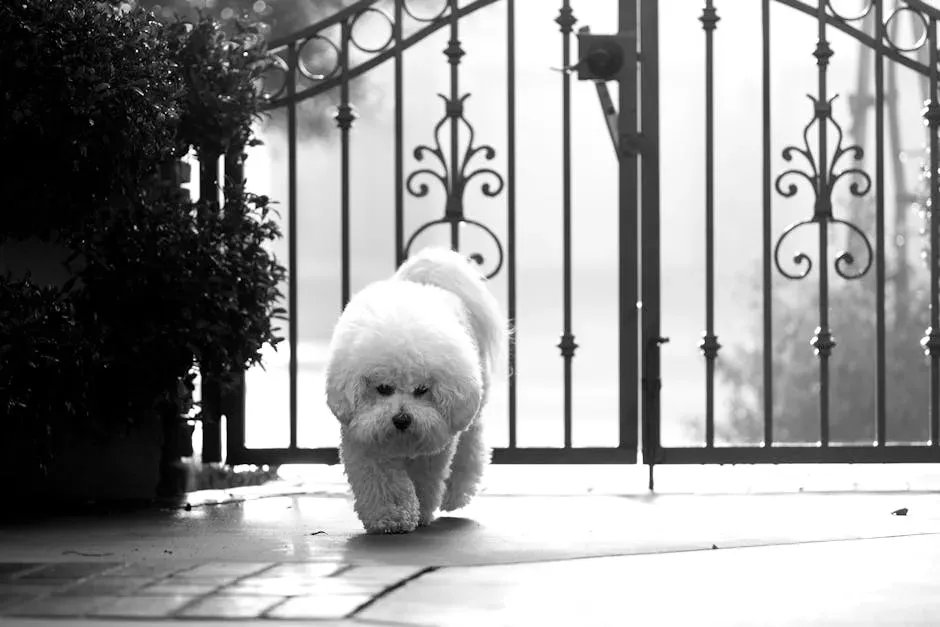
To set up safe spaces, you will need some gates and exercise pens to create an area for the dog to relax. This is where your dog can eat, have treats, and have downtime. This will also be an off-limits area for your baby. Having a designated zone isn’t a punishment; it’s a gift of predictability for a dog who is still making sense of the upheaval.
Installing a sturdy baby gate will allow your dog to observe family activity without direct contact, reducing the likelihood of overwhelming situations. A quiet, restful area away from the home’s central activity also provides your pet with a predictable and safe place to retreat when needed. Over time, this space becomes a source of comfort rather than confinement.
Reward Calm Behavior and Maintain Quality Time with Your Dog
When you’re tending to the baby, especially during crying or feeding episodes, encourage your dog to sit calmly nearby. Reward their patience and reassure them with praise and treats. Over time, your dog will learn that the baby’s presence means good things happen. This is the foundation of a lasting positive association, built one quiet moment at a time.
There’ll be some days where you or your helpers can’t manage two dog walks a day or even a game of fetch. Have options ready to engage your dog with chew toys, food puzzles, snuffle mats filled with treats or kibble, and lick mats, which all engage your dog by keeping them mentally stimulated. Your dog still needs to feel seen, even when your hands and heart are full.
Never Leave Your Dog and Baby Unsupervised, No Matter What
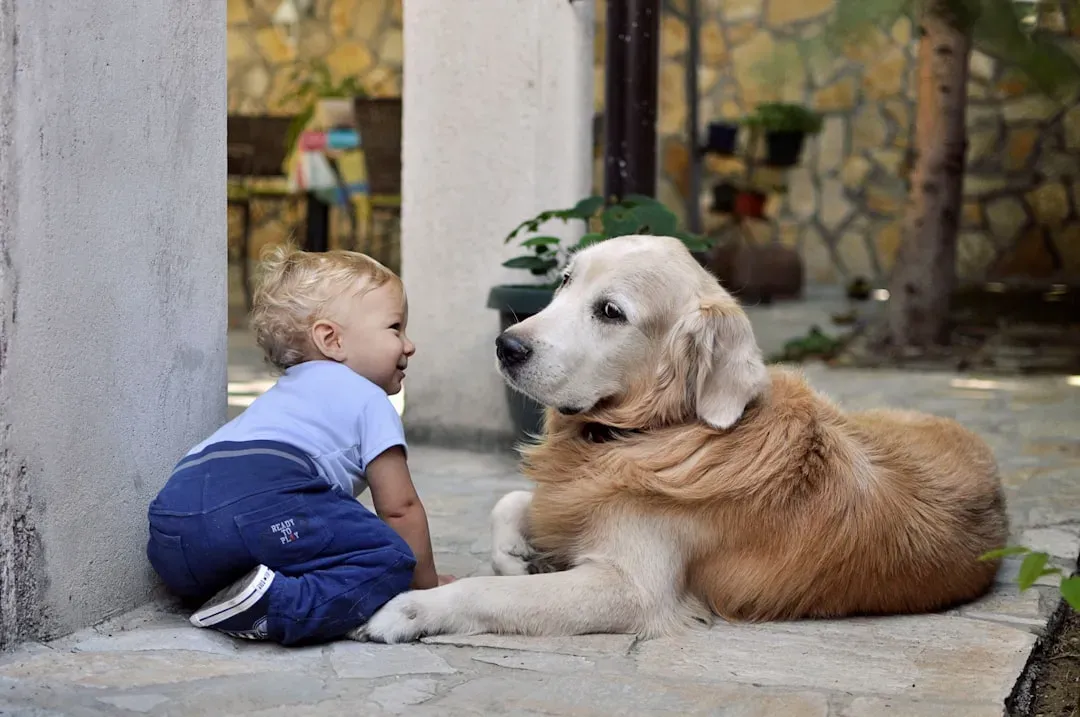
It remains essential that dogs and babies are never left unsupervised, regardless of your dog’s temperament or previous behaviour around children. Whilst you may fully trust your dog, feelings of threat, anxiety, or over-excitement can cause them to exhibit unusual behaviour, so always ensure you’re overseeing and in control of interactions.
Even the most tolerant pets should never be left unsupervised with babies or young children. It’s very tempting to leave the room to answer the phone or turn down the oven, but the baby should go with you or the pet should be in their safe room. This isn’t a commentary on your dog’s character. It’s simply an acknowledgment that even the gentlest dog is still an animal responding to a world full of new and confusing signals.
Know When to Seek Professional Help
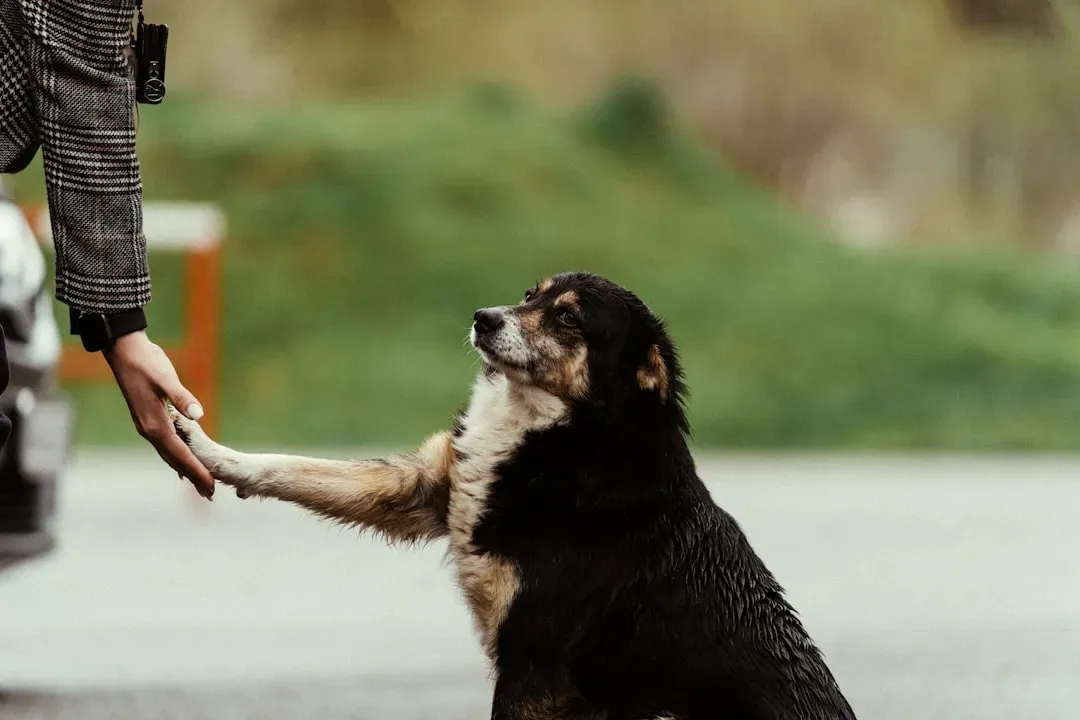
If your dog shows aggressive behavior around your baby in any situation, or if you think they might, keep them away at all times and immediately contact an animal behavior expert. Certified Applied Animal Behaviorists, board-certified veterinary behaviorists, and Certified Professional Dog Trainers are all qualified to help.
If your dog is hiding, refusing to enter a room, or doing anything that seems extreme, seek out the help of a certified behavior professional immediately. There’s no shame in asking for support. When faced with behavioral challenges or resistance to boundaries, veterinarians, veterinary behaviorists, and expert trainers can provide useful insights that may correct unwanted behavior and help pet parents establish healthier boundaries.
Conclusion
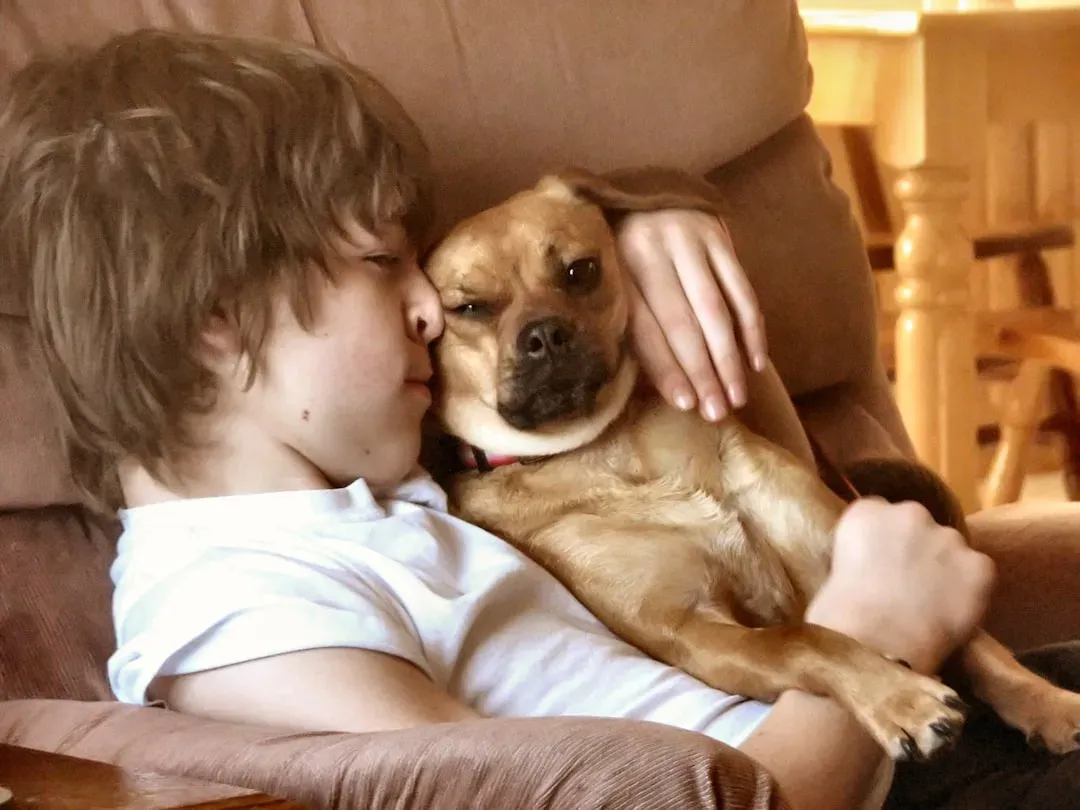
The relationship that can develop between a dog and a child is one of the most quietly beautiful things a family can experience. It rarely happens automatically, though. It’s built through patience, consistency, and a willingness to see the situation from your dog’s perspective as much as your own.
Think of each dog and newborn encounter as an opportunity for a positive interaction. Rather than focusing too much on a single first meeting, the adjustment period extends across weeks and months as the dog gets used to a new being in their former turf.
Every small, calm moment between your dog and your baby is a deposit into something that will grow steadily over the years. The effort you put in now, before the chaos of sleepless nights and feeding schedules takes over, is the foundation for a friendship that neither of them will ever be able to articulate, but both will carry for the rest of their lives.


