
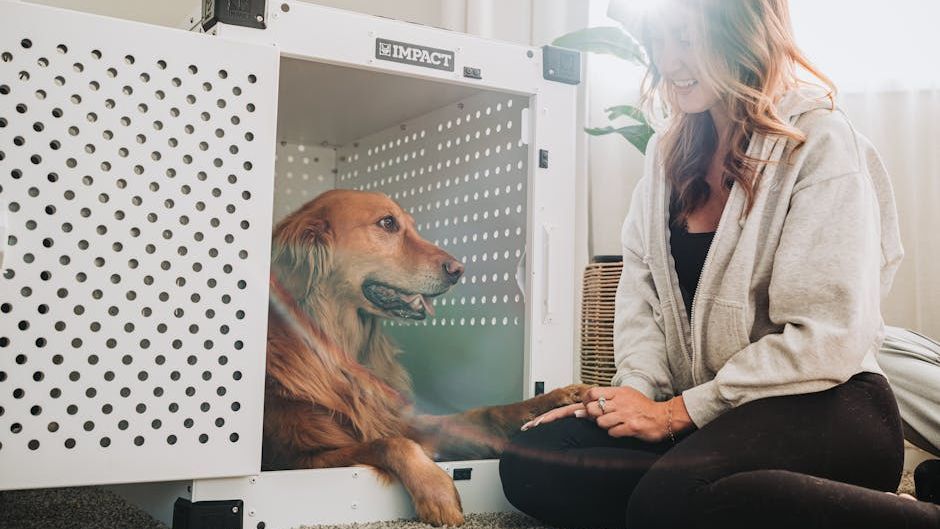
Picture this: you’ve spent weeks guilt-tripping yourself every time you latch that crate door. Your dog walks in calmly, circles once, flops down, and lets out a long, slow sigh. That sigh isn’t resignation. It’s relief. Yet somehow, we’re still out here treating the crate like a dirty word.
The truth is, millions of dog owners misread the crate entirely. They see bars and think “jail.” Their dog sees walls and thinks “finally, mine.” There’s a real gap between how humans perceive confinement and how a well-introduced crate actually feels to a dog. Once you understand what’s happening on your dog’s side of those bars, the whole thing shifts.
1. It Taps Into Something Ancient and Instinctive
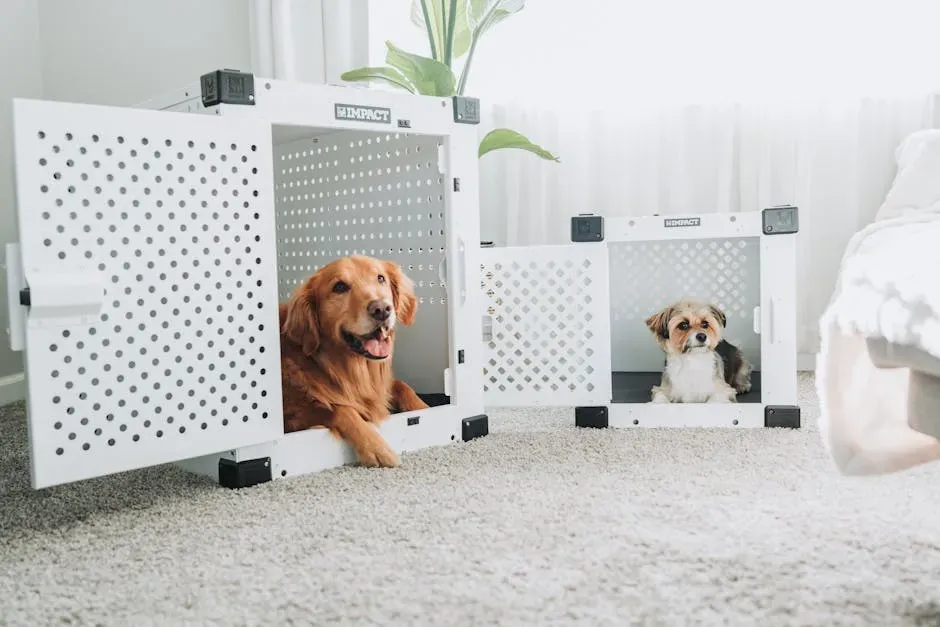
Dogs are naturally inclined to seek out small, enclosed spaces to rest and feel secure. According to the American Kennel Club, dens helped wild dogs and wolves protect themselves from predators and harsh weather, and even today, domesticated pups carry that same instinct. A crate doesn’t fight that instinct. It works with it.
Dogs instinctively try to find small spaces to hide if they feel overwhelmed or nervous. Anyone with a dog that hides in the closet during a thunderstorm can tell you that. The crate simply gives them a designated, safe, predictable version of that hiding spot. No more squeezing under the coffee table.
Dogs need a den, or a small space just for them, to feel safe, cozy, and secure. When a crate is used appropriately, it can give dogs this feeling of a safe space and it can be a sanctuary. Dogs will sometimes find small spaces to hide if they don’t have crates, like under furniture or by digging holes and curling up in them. The crate just makes that behavior a little more dignified.
2. It Gives Them a Space That’s Truly, Completely Theirs
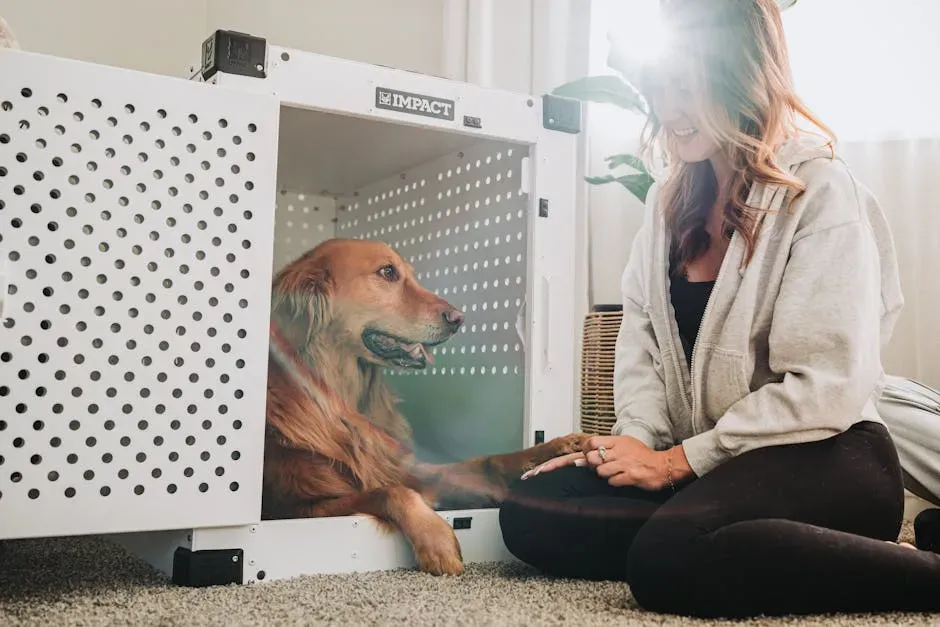
Many dogs love their crates because it resembles a den they would seek out or build if they didn’t have cozy houses to live in. It’s probably the only place in the house that is truly theirs, where they can be undisturbed and feel safe. Think about that for a second. In a home shared with humans, kids, other pets, and constant activity, your dog may have zero real estate that belongs entirely to them.
Dogs are social creatures, and they want to be part of a family. That does not mean, however, that they do not need a place of their own. Imagine if you were with your family all the time, without a bedroom or a quiet, calm retreat available when you need space. Crates are a dog’s equivalent of that type of sanctuary.
The crate is the only space in the entire house that truly belongs to the dog, and if used appropriately, will become a safe haven for years to come. That’s not a small thing. Ownership, even in the animal sense, matters deeply to a dog’s sense of security.
3. It’s a Powerful Anxiety-Management Tool
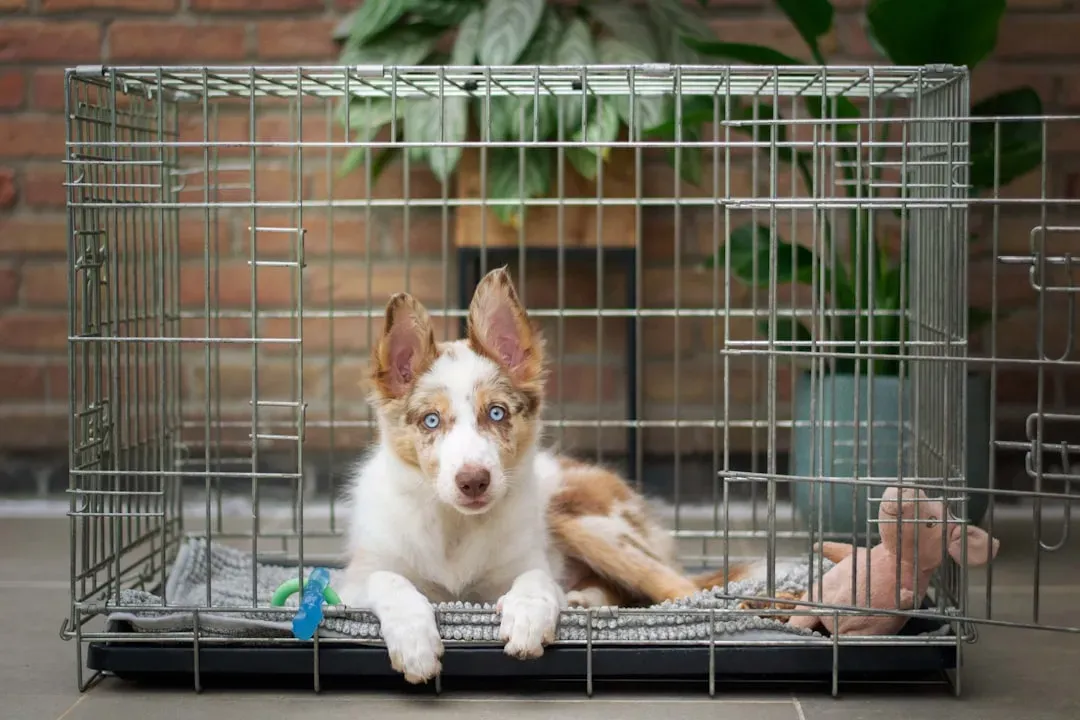
Crates help dogs learn to self-soothe or deal with their anxiety during situations where they become distressed, like during fireworks, thunderstorms, or construction. Dogs can retreat to their crates when situations are too chaotic or scary. That’s not a trained behavior so much as a natural gravitational pull toward comfort when the world gets loud.
According to a 2020 study published in Frontiers in Veterinary Science, dogs with a designated “safe space” like a crate showed fewer signs of stress and recovered faster from anxiety-inducing situations. The crate doesn’t just feel good to a dog. It appears to have measurable effects on how quickly they bounce back from stressful events.
A bed provides comfort, but not the 360-degree security of a den. For anxious or high-energy dogs, the “walls” of the crate are what provide the psychological relief. That enclosure isn’t a constraint. For many dogs, it’s a pressure that feels like a hug.
4. It Makes Housetraining Faster and Less Stressful for Everyone
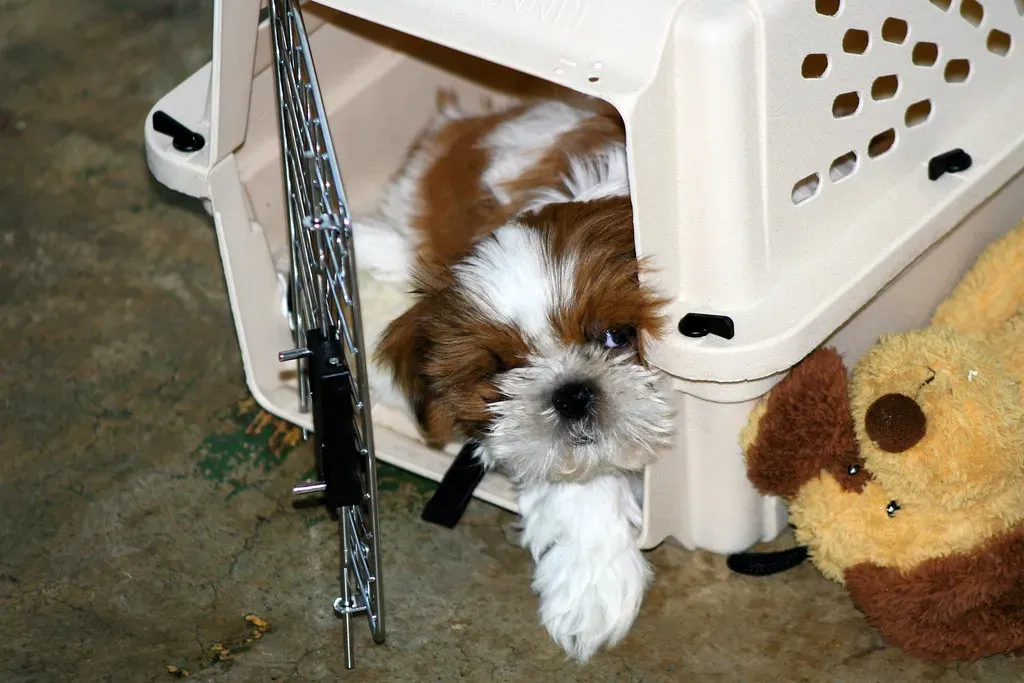
Dogs typically avoid urinating or defecating where they sleep. When housetraining a puppy, routinely putting them in their crate and taking them on scheduled walks teaches them the appropriate time and place to relieve themselves. This isn’t about control. It’s about working with a deeply hardwired cleanliness instinct your dog already has.
In the wild, wolf and canid pups are taught to eliminate outside of the den by their mother. She shows them it is not acceptable to eliminate where they sleep; not only is it unsanitary, but it can lead predators to the den. It is, in essence, a survival instinct. You can use a crate to stimulate the same instincts in your domestic dog.
Puppies under six months shouldn’t be crated for more than three to four hours at a time, and adult dogs need regular breaks too, even during a busy workday. Keeping that in mind is key. The crate helps, but it only works fairly when you respect your dog’s limits and schedule regular outdoor trips.
5. It Keeps Them Safe When You Can’t Watch Them
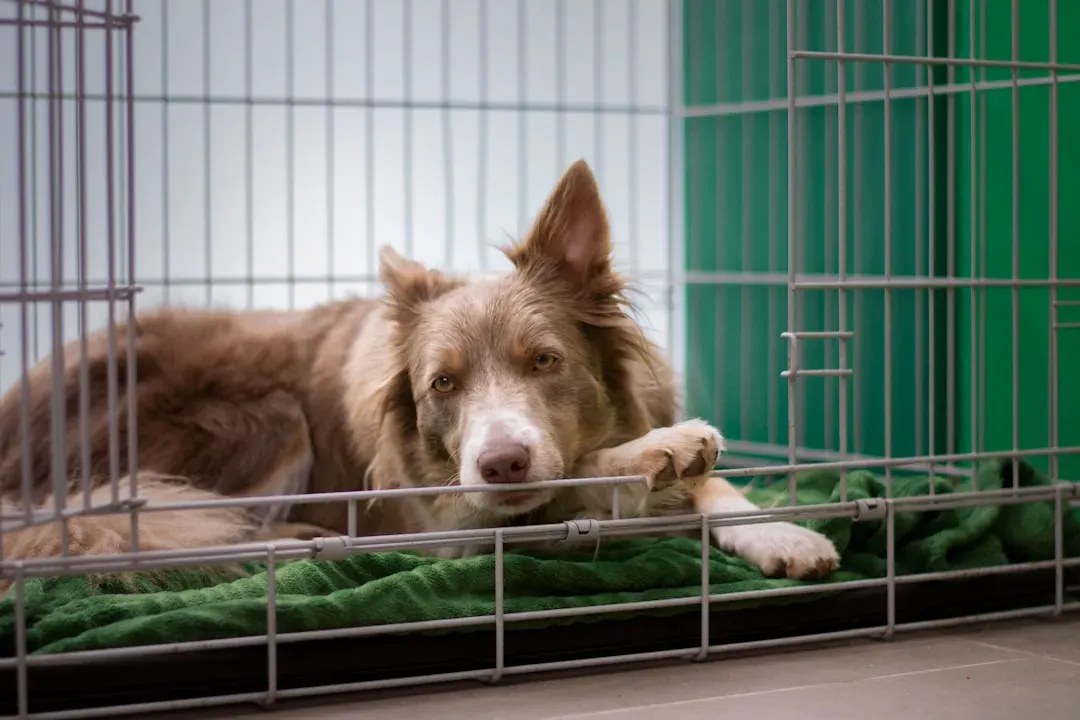
Putting your dog in a secure area can prevent accidental injury and keep them away from toxic materials, especially if you’re not home. Chewed electrical cords, ingested socks, countertop foods that are toxic to dogs, an unlocked trash can. The list of household hazards for an unsupervised dog is genuinely long.
Anxiety and boredom are common reasons dogs destroy things. Crate training limits your dog’s access to furniture and other items if they get bored and want to chew. It can also help alleviate their anxiety; if your dog feels safe and secure in their crate, this can deter the instinct to chew destructively. So the crate isn’t just protecting your sofa. It’s also protecting your dog from their own impulses.
While safely in their crate, your dog won’t be able to practice bad habits, like stressing out, soiling your carpet, barking at the windows, pestering your other dog, or destroying your home while you’re out. Prevention here is far kinder than correction after the fact, both for you and for your dog.
6. It Builds Calm, Confident Behavior Over Time
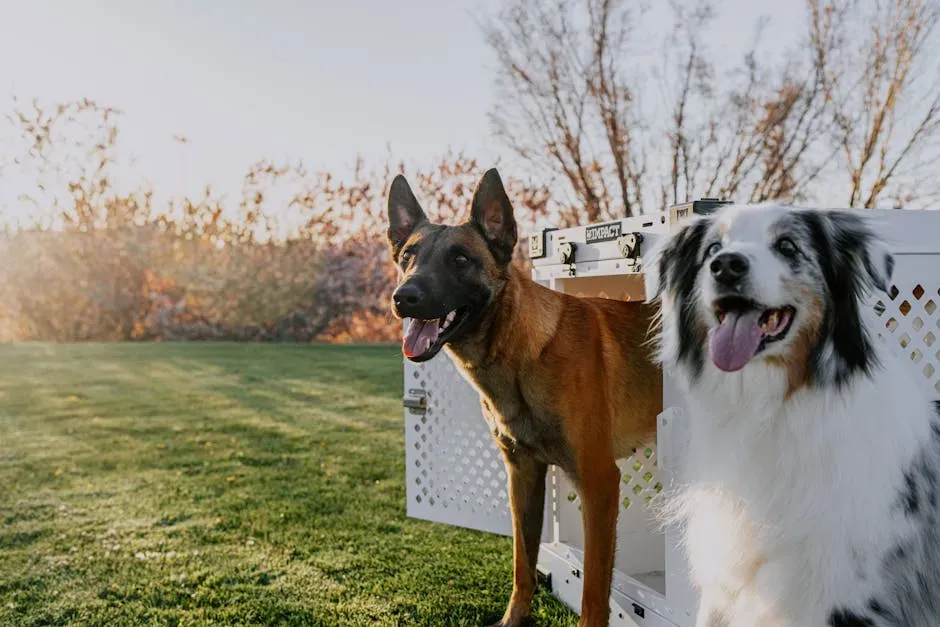
Crate training is a big component of teaching a dog to be calm on command. Most of the dogs who come in for training have been practicing anxious, nervous, fearful reactions or bossy, pushy behaviors. Crate training helps to resolve all of these, not alone, but as one key component of creating structure and not allowing the dog to practice unwanted behaviors in your absence.
For rescued dogs, a crate provides a safe space to adjust to their new surroundings as well as the luxury of not having to fight for their own space. Crates provide comfort to rescued dogs, since they may be fearful around certain people or environments. This is particularly true for dogs with a traumatic past of neglect or abuse. Crates allow rescued dogs to know they have their own territory and no one will hurt them in it.
The initial stress from being confined can give way to “increased feelings of security, safety, and comfort” after repeated exposure to the crate. In other words, patience really does pay off. What starts as hesitation can shift into genuine preference when the process is handled gently and consistently.
7. It Prepares Them for Life’s Inevitable Curveballs
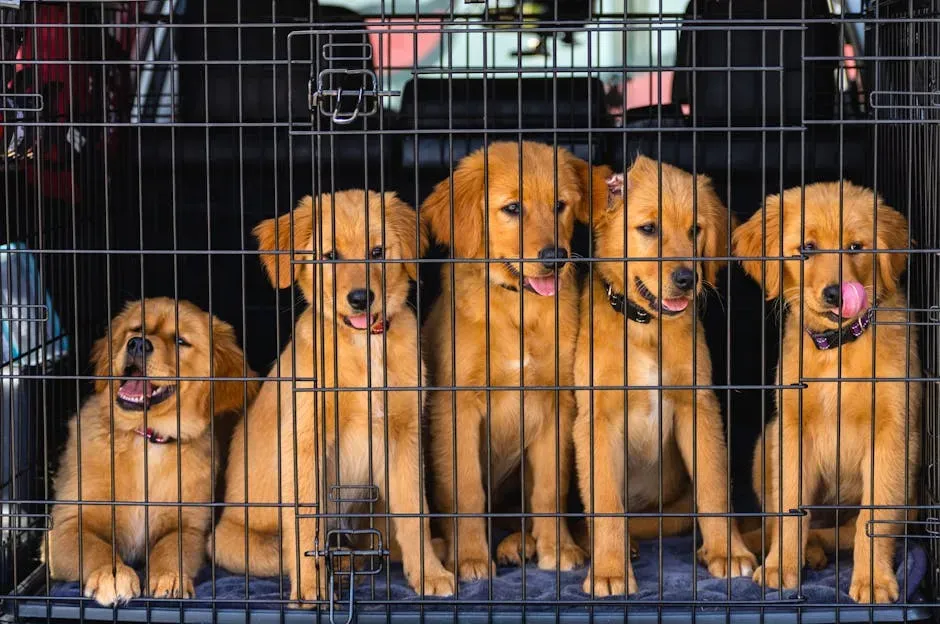
In emergencies, crate training can be the difference between safety and uncertainty. You must be able to evacuate your dog efficiently, so having a cooperative dog get into a crate quickly saves crucial time. Having dogs secured during evacuations reduces the chance of them getting lost or injured. It also allows your dog to stay with you during an emergency because dogs typically have to be crate trained in order to remain in shelters with their owners.
In worst-case scenarios, dogs may be required to be on crate rest when recovering from surgery. Dogs are less likely to have complications following surgery when they can peacefully relax, rather than accidentally aggravate injuries because they can’t settle down in a crate. A dog who already loves their crate won’t need to be coaxed during recovery. That familiarity becomes a genuine comfort.
Dogs who are comfortable with crates travel better, experience less stress during vet visits, and adapt more easily to boarding environments. Crate training today can set your dog up for a lifetime of easier transitions. Whether it’s a road trip, a stay at the vet, or a flight across the country, the crate becomes a familiar anchor in an unfamiliar world.
How to Make the Crate a Place Your Dog Actually Loves
The crate should always be a positive experience for your dog. They should never be forced into the crate as punishment for bad behavior. This will make the dog associate the crate with negative feelings and eventually fear it. That one rule is non-negotiable. Everything else builds from there.
Add a soft blanket or bed to make the crate inviting. A few safe chew toys can also help keep them occupied. Begin with short periods in the crate while you’re home, gradually increasing the duration before leaving them alone. Encourage your dog to enter the crate with treats and praise. Slow and steady isn’t just advice here. It’s the difference between a dog who tolerates the crate and one who genuinely chooses it.
Location matters too. Place the crate in a room where the family hangs out, so it doesn’t feel like exile. Start by feeding all of your dog’s meals inside the crate with the door open. This creates a powerful positive association between the space and something your dog loves deeply. Mealtime inside the crate is one of the simplest and most effective first steps you can take.
A Final Thought
There’s something quietly generous about giving your dog a space they can count on. It doesn’t have to look fancy or cost much. What matters is consistency, positive association, and the understanding that your dog isn’t looking at that crate the way you are.
In fact, many dogs start choosing their crate over the couch when they need a nap or a little alone time. That voluntary retreat, the unprompted walk-in when the house gets noisy or the day gets long, is your dog telling you exactly how they feel about their space. That sigh you hear when they settle in? That’s the sound of a dog who feels at home.


